DD
MM
YYYY

PAGES

DD
MM
YYYY

spot_img

PAGES

Home Blog Page 489

From $0.01 to $1 Launch: Why Ozak AI’s Presale Growth Means 10,000% Returns for Visionary Investors Entering Early

0

Ozak AI will make the crypto world a new modern world with its presale price of only $0.01 and its estimated launch price of 1, providing the first mover with the potential to achieve 10,000% returns. With the use of the latest AI technology, Ozak AI can emerge as a significant force in the digital environment. Since the presale will have momentum, the visionary investors who do not wait will have the opportunity to do so. Ozak AI is one of the most dynamic projects of the year, and it can offer a great deal of excitement and profitability due to its innovative approach and explosive growth potential. This is an investment that you will not want to miss.

Ozak AI’s Presale Surge Beyond $3M

The presale of Ozak AI is experiencing unbelievable hype, with retail traders and whales buying its tokens at a very modest price of only $0.01, and the total funds raised are taking off to over 3.3 million. Such a fast expansion is an indication that Ozak AI is not just a hypothetical development, but it is finding favor with investors.

Ozak AI brings together two key trends in the world: using AI technology in conjunction with blockchain to generate excitement and practical value. Having such rapid success with the presale, Ozak AI is becoming one of the most promising projects of 2025, which both small investors and whales have a lot of confidence in.

Ozak AI’s Presale Surge: A Rare Investment Opportunity

With its presale, Ozak AI is generating a lot of hype, where purchasers initially pay only $0.01 and the target price is 1, which involves the potential of up to 10,000% gains to early adopters. Having already raised over $3.3 million, the project is growing rapidly, which is one of the indicators of high investor confidence. Combining the latest AI-based solutions with blockchain technology, Ozak AI is establishing itself as a massive disruptor of the digital realm and attracting retail traders and high-net-worth investors who are interested in investing in its potential. This presale is quickly turning into one of the most exciting things in 2025.

Ozak AI x Pyth Network: Boosting Financial Predictions with Real-Time Data

The Prediction Agents created by Ozak AI provide trading signals within 30 ms, and Pyth Network gives real-time market data of 100+ blockchains using 120+ trusted sources.

We are thrilled to combine the Pyth fast, verifiable price feed into the system of Ozak AI to improve the market prediction, risk analysis, and on-chain trading applications for our consumers. Such a partnership enhances financial forecasts.

Conclusion: A Game-Changing Opportunity

The presale boom of Ozak AI, coupled with our disruptive integration with Pyth Network, is a new landmark in the blockchain and AI industry. There is a possibility of 10,000% returns to the initial investors, and with the ability to have real-time and verifiable data, enhancing our ability to forecast, Ozak AI is set to transform the nature of financial forecasting and trading. It is an exceptional opportunity to invest in one of the most likely projects of 2025, which puts both AI and blockchain technologies in the place of exponential growth. You should not waste your chance to be part of something that is really game-changing.


For more information about Ozak AI, visit the links below:

Website: https://ozak.ai/

Twitter/X: https://x.com/OzakAGI

Telegram: https://t.me/OzakAGI
 

Paramount Skydance Eyes $22–$24 Per Share Bid for Warner Bros. Discovery, Echoing Past Media Megadeals

0

Paramount Skydance is preparing to make a formal offer for Warner Bros. Discovery (WBD), with a potential bid in the range of $22 to $24 per share, CNBC’s David Faber reported Friday.

Faber, citing sources familiar with the matter, cautioned that the price range remains speculative and that a formal offer could land later than previously anticipated. WBD shares edged higher following the report, gaining about 1.5% Friday morning to trade around $19 apiece.

The development marks the latest twist in what could become one of the year’s most consequential media deals. Paramount Skydance — the newly merged entity combining Shari Redstone’s Paramount Global with David Ellison’s Skydance Media — has been widely expected to make a play for Warner Bros. Discovery. The offer, if finalized, would potentially preempt WBD’s recently announced plan to separate its global TV networks business from its streaming operations and film studios.

Deal Structure and Financing

According to Faber, the bid could be structured as roughly 70% to 80% cash, with the balance in stock. The cash portion would be backed in part by Larry Ellison, the Oracle co-founder and father of Paramount Skydance CEO David Ellison, whose fortune and influence have been seen as critical to the merger’s financing.

A large cash-heavy offer could prove attractive to WBD shareholders, many of whom have endured steep losses since the 2022 merger of WarnerMedia and Discovery that created the current company. Despite a deep content library, sports rights, and marquee networks like CNN, TNT, and Discovery Channel, Warner Bros. Discovery has been weighed down by debt and questions over streaming profitability.

Echoes of Past Media Megadeals

If consummated, the transaction would mark one of the most significant consolidations in Hollywood since Disney’s $71 billion acquisition of 21st Century Fox in 2019. That deal gave Disney access to Fox’s film studio, TV assets, and a controlling stake in Hulu — transforming it into a streaming juggernaut. Paramount Skydance’s potential tie-up with Warner Bros. Discovery could similarly reshape the balance of power, creating a rival media giant with two storied studios, a vast television portfolio, and expanded streaming platforms in Paramount+ and Max.

At the same time, the deal would carry risks reminiscent of AT&T’s $85 billion purchase of Time Warner in 2018, a transaction that saddled AT&T with debt and ultimately ended in a spin-off of WarnerMedia into Discovery just four years later. Analysts caution that Paramount and WBD, both facing restructuring and heavy leverage, may encounter similar difficulties in aligning corporate cultures, cutting costs, and turning their streaming services profitable.

The proposed structure — heavily reliant on cash financing and backed by Ellison’s fortune — would also draw parallels to Comcast’s 2011 acquisition of NBCUniversal. Comcast used its balance sheet strength to pull off that deal, but integration challenges tested its ability to balance legacy cable revenues with a growing digital footprint.

The potential Paramount Skydance–WBD deal comes amid renewed consolidation pressure in the media industry. With streaming growth slowing, cord-cutting accelerating, and Wall Street demanding profitability over subscriber counts, scale has once again become the sector’s guiding logic. Paramount Skydance’s bid reflects the same survival instinct that fueled earlier combinations, though success will hinge on whether the merged company can leverage its expanded assets without being overwhelmed by debt and integration challenges.

Against this backdrop, if Paramount Skydance’s offer materializes in the reported range, it would represent a significant premium over WBD’s current trading price. But as history shows, the road from announcement to success is fraught with risks.

Cybersecurity Firm Netskope Hits $8.79bn Valuation, Shares Jump 21% in Blockbuster IPO

0
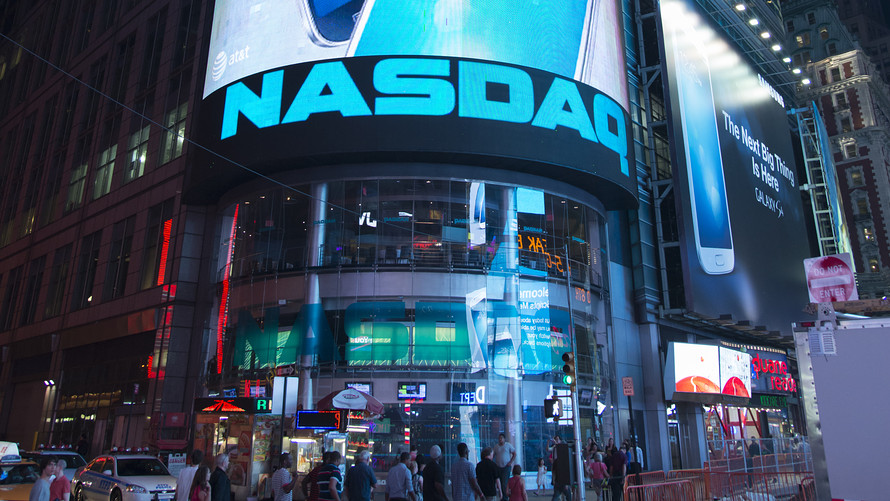
NASDAQ

Cybersecurity firm Netskope soared in its Nasdaq debut on Thursday, commanding an $8.79 billion valuation after its shares jumped 21% on opening. The Santa Clara, California-based company’s stock opened at $23 apiece, well above its $19 offer price, marking one of the year’s strongest tech IPO performances.

Netskope raised $908.2 million in its initial public offering, selling 47.8 million shares at the top end of a tightened range of $17 to $19 apiece. The offering was heavily oversubscribed — 20 times over, according to CEO Sanjay Beri — underscoring the intense demand from investors eager to buy into one of the few tech sectors with consistently rising structural demand: cybersecurity.

The listing comes as the U.S. IPO market stages a comeback after years of uneven activity. A string of high-profile debuts — including design software maker Figma — has highlighted pent-up appetite for growth companies. Netskope’s strong reception, analysts say, could encourage more late-stage tech firms to test public markets in the months ahead.

Founded in 2012, Netskope provides cloud-based security software that shields applications, websites, and data from breaches and cyberattacks. Its pitch has become especially resonant in an era where AI is reshaping both opportunity and risk.

“AI is kind of right in our wheelhouse,” Beri told Reuters. “Securing it, enabling companies to say yes to leveraging it, by putting guardrails around it.”

The company’s public debut also helps extend its brand recognition, Beri said, stressing that listing on the Nasdaq was as much about visibility as raising capital. Netskope had previously been valued at more than $7.5 billion in a 2021 funding round led by ICONIQ Capital.

Yet analysts caution that the real test lies ahead. “Netskope’s debut will be closely watched because cybersecurity remains one of the few technology sectors with clear structural demand, yet recent IPO performances have been mixed,” said Kat Liu, vice president at IPO research firm IPOX.

Rival Rubrik has seen its shares more than double since last year’s listing, while SailPoint has struggled to sustain momentum, trading below its February offer price.

Greg Martin, managing director at Rainmaker Securities, noted that Netskope’s long-term performance will hinge on its ability to balance profitability with growth in an increasingly competitive space. The firm is up against sector heavyweights, including Palo Alto Networks and Zscaler, both of which have been aggressively expanding their offerings as enterprise clients boost cybersecurity budgets.

Comparative market analysis

Investors are keenly comparing Netskope’s debut to the trajectory of its peers. Palo Alto Networks, one of the sector’s largest and most established players, has continued to see strong demand for its platform despite heightened competition. Zscaler, which went public in 2018, has more than quadrupled in value since its debut, validating investor appetite for high-growth cloud security companies. Rubrik’s doubling in share price since last year reinforces that appetite, while SailPoint’s struggles serve as a reminder that execution risks remain real.

Against this backdrop, Netskope’s positioning around AI-driven security — and its emphasis on protecting applications in an increasingly cloud-first world — may prove to be a differentiator. The firm enters public markets at a moment when corporate IT departments are racing to adopt AI but remain wary of the vulnerabilities it introduces. That makes Netskope’s narrative of “guardrails for AI” compelling to investors who see the space as a structural growth story.

If enterprise security spending accelerates as expected — particularly to address AI-related threats — Netskope could leverage its technology stack to capture outsized growth, narrowing the gap with entrenched rivals. The heavy oversubscription of its IPO suggests institutional investors see this potential.

But some analysts expect Netskope to face the same pressures that tempered enthusiasm for SailPoint if broader market conditions sour or if profitability lags expectations. Its ability to execute, scale, and differentiate from giants like Palo Alto and Zscaler will ultimately determine whether Thursday’s surge was the beginning of a long rally or a short-lived burst of optimism.

However, Netskope’s blockbuster debut has placed it squarely in the spotlight, reinforcing cybersecurity’s place as one of the few tech sectors investors believe can thrive regardless of broader market headwinds.

Solana and Tron Eye Gains, But BlockDAG’s 38x ROI Keeps It in the Spotlight

0

Market energy often comes from both price action and user growth. Solana (SOL) holds steady near $28 with rising DeFi activity and strong builder support. Tron (TRX) stays firm in the stablecoin arena, trading around $0.096 while leading in transfer volumes. Both show reliable performance with real-world traction and steady network use.

BlockDAG (BDAG), however, draws attention for new reasons. Its dual referral rewards and a projected 38x ROI give it standout appeal. The project has raised nearly $410 million, reached batch 30, and sold over 26.2 billion coins. With 3 million users on the X1 miner app and nearly 20,000 miners distributed, BlockDAG is fueling a global movement that goes beyond price. The story here is about both growth and user-driven strength.

Shared Rewards Build BlockDAG’s Community Power

BlockDAG turns every supporter into a growth driver through a referral system that benefits both sides. Unlike typical setups, this one gives 25% in BDAG coins to the inviter, while the new buyer earns 5% extra coins. This fair split has created viral traction worldwide. The network now spans over 325,000 members across more than 130 nations, and those numbers are still climbing every week.

The stats underline its momentum: $410 million almost raised and 26.2 billion BDAG coins sold before launch. The model not only grows accounts but also ties users together. Each deal fuels the network instead of benefiting just one side. This cycle has helped BlockDAG become one of the most talked-about presales of the year.

Returns have been dramatic. Since batch one, participants have seen 2,900% ROI. In batch 30, the price stands at $0.03, but for a limited time, early buyers still access coins at $0.0013. With a confirmed launch price of $0.05, that’s a projected 38x ROI. Few other projects in recent memory have shown this level of consistency in returns before launch.

Combined with 3 million app users and nearly 20,000 miners already sold, BlockDAG blends growth and reward into one system. The setup proves that when price and community work hand in hand, expansion accelerates. This is why many see BDAG as more than just another cryptocurrency; it is a movement powered by shared success.

Tron (TRX) Chart Signals Balanced Growth

Tron trades near $0.096 after rebounding from $0.088 earlier this month. Buyers defend the $0.093 line, forming a stable zone. The 50-day average is edging upward, and the MACD points to mild strength that could build momentum. Daily volume also shows steady inflows, suggesting ongoing confidence in the coin’s price action.

Key resistance sits at $0.10. A clean push above could lift TRX toward $0.112–$0.115. If Bitcoin stays above $26,000 and the wider market holds, Tron may ride higher alongside altcoin peers. If not, the coin could dip to $0.090, where previous buyers are waiting to rejoin. This floor has proven reliable in the past, making it a level to watch closely.

For now, TRX leans on a steady footing, with cautious optimism guiding its moves. Its strong role in powering stablecoin transfers continues to underpin long-term demand, making it a steady performer when compared to many of its rivals.

Solana (SOL) Eyes Breakout Above $30

Solana trades at $28.70, holding above the $27.50 floor after a failed test of $31. Price action is consolidating, with the 20-day EMA acting as resistance near $29.40. RSI rests at 48, and MACD shows no clear bias at the moment. Recent trade volumes suggest more buyers are watching key levels for the next move.

A push above $29.50 may turn the tide, opening a path to $32.20. If Bitcoin stays firm, Solana could test $30 again before September ends. Short-term sentiment leans neutral but could flip bullish quickly if these conditions hold.

On-chain data remains strong. Solana’s DeFi, NFT, and memecoin use is growing, boosted by its high-speed, low-fee chain. Developers continue to back the network, making long-term fundamentals solid. A dip below $27, however, could drag the coin to $25.80, where the 100-day moving average may hold. This support is critical because it has protected SOL in previous downswings.

Overall, Solana’s speed and expanding user activity continue to set it apart. If momentum builds, SOL could break above $30 and shift sentiment in its favor once again.

Why BlockDAG Holds the Edge

Solana and Tron show steady growth through activity and use. BlockDAG, however, builds momentum differently. Its referral model rewards both the inviter and the buyer, sparking community-led expansion past 325,000 members.

With nearly $410 million raised, 26.2 billion coins sold, and early access still open at $0.0013 while the batch 30 price is $0.03, BlockDAG mixes massive ROI with user growth. Add 3 million X1 app users and nearly 20,000 miners already sold, and the case becomes clear.

For those seeking coins that combine upside with user power, BlockDAG’s 38x launch ROI and active ecosystem make it a standout play in today’s crypto market. It is both a coin with strong price potential and a platform where the community itself drives the growth forward.


Presale: https://purchase.blockdag.network

Website: https://blockdag.network

Telegram: https://t.me/blockDAGnetworkOfficial

Discord: https://discord.gg/Q7BxghMVyu

Nigeria Sees 84% Drop in Spam SMS as Airtel Onboards AI in Its System Across Africa

0

Airtel Nigeria has recorded an 84% decline in spam text messages following the rollout of Airtel Africa’s Artificial Intelligence (AI)-powered spam detection tool, Spam Alert.

The free service, introduced earlier this year, has flagged more than 205 million fraudulent and unsolicited SMS across 13 African markets in the past six months.

In a statement signed by the Vice President, Corporate Communications and CSR, Airtel Africa confirmed that Kenya accounted for the highest spam volume with 68 million flagged messages, followed by Tanzania with 47 million and Zambia with 33 million. But Nigeria stood out for its steepest decline, underscoring the impact of the system in curbing unwanted and often fraudulent text messaging.

How the system works

The Spam Alert tool prefixes suspicious SMS with “SPAM Alert,” giving subscribers real-time protection without the need for any extra apps. Airtel said it is tackling phishing scams and nuisance texts that have long plagued mobile money users and smartphone owners by intercepting messages before they reach end users.

“We are proud to pioneer an advanced tech solution powered by AI in tackling spam messages that are a major concern in Africa as smartphone penetration increases,” Airtel Africa CEO Sunil Taldar said.

Currently active in 13 of Airtel’s 14 markets, including Nigeria, Kenya, Zambia, Uganda, Gabon, Congo Brazzaville, Malawi, Madagascar, DRC, Rwanda, Tanzania, Chad, and Niger, the company said Spam Alert has already reduced spam SMS across Africa by 12%. Seychelles is expected to be added soon.

Nigeria’s experience

In July, Airtel Nigeria disclosed that the system had intercepted 9.6 million suspicious messages between March 13 and May 20, 2025. Of that figure, 528,080 originated from Airtel users, while over 9.1 million came from off-network sources.

The system runs on advanced AI models that scan every incoming SMS against more than 250 parameters such as sender identity, link structure, message volume, and regional anomalies. Messages flagged as malicious are tagged “Suspected SPAM” and filtered before delivery.

Importantly, Airtel emphasized that the solution preserves user privacy by avoiding the storage or analysis of message content, with each SMS processed in under two milliseconds.

Regulatory support

The Nigerian Communications Commission (NCC) welcomed the initiative, describing it as a critical addition to the country’s digital security arsenal.

“Spam messages and fraud are becoming more sophisticated, and this AI-powered solution provides a much-needed layer of security,” said the NCC’s Executive Vice Chairman, Dr. Aminu Maida.

The NCC has, in recent months, been pushing for stronger collaborative frameworks between operators and regulators to strengthen consumer protection. Its 2023 Industry Risk Report had flagged phishing via SMS and unsolicited bulk messaging among the top five risks facing mobile users, particularly rural subscribers and first-time smartphone owners.

A growing digital threat

Experts have warned that spam and phishing attempts in Africa often target mobile money transactions, which have surged in recent years. With smartphone penetration climbing and digital payments expanding, operators face pressure to protect users from schemes that can erode trust in mobile platforms.

Airtel has put itself at the center of a continent-wide effort to shore up defenses by leveraging AI. The success in Nigeria, where spam volumes dropped by more than four-fifths, may set a precedent for other operators and regulators to adopt similar tools in combating digital fraud.