DD
MM
YYYY

PAGES

DD
MM
YYYY

spot_img

PAGES

Home Blog Page 4909

The Wonders of Big Eyes Coin, Polkadot, and PancakeSwap

0

The fusion of blockchain and cryptocurrency has to be the most impressive discovery of the decade. The new type of digital currency, breaking traditional finance barriers, improving the quality of life, and bringing profiting assets to users came at the best time.

Although it took years to settle on a trajectory to adoption, cryptocurrency has achieved imaginable heights and reached unforeseen parts of the world.

Some countries have made crypto-coins their legal tenders, building cities dedicated to mining activities. Outperforming the currency the world once knew, crypto has found a permanent place in the hearts of many.

Big Eyes Coin (BIG) is one of the movement’s proponents, preaching and delivering the message of a transformative technology without barriers governed by holders.

Understanding Big Eyes Coin (BIG)

To fully understand what Big Eyes Coin (BIG) represents, knowing the use of meme crypto and what the DeFi niche entails is a vital requirement. Meme crypto started with a backstory linked to online viral memes. They provided a base users could connect with before delving into trading, buying, selling, etc.

DeFi, decentralized finance, is a new phenomenon, perhaps the biggest in finance history. It brings upgraded financial products like peer-to-peer exchange, decentralized banking, and money markets.

DeFi pushes traditional finance aside by reducing the cost of financing activities. It brings an innovative structure, adding needed tweaks to TradFi (traditional finance).

Big Eyes Coin (BIG) combines these elements- meme crypto and DeFi to create the best source of financial interaction in an ecosystem that portrays a  people-loving theme. It promises the best for users and is bent on providing detailed benefits with the help of blockchain and cryptocurrency.

Interoperability with Polkadot (DOT)

While blockchains can achieve a lot individually, more can be done when communication is present. Polkadot (DOT) allows investors to create new chains that can interact with one another yet possess distinct qualities.

Polkadot (DOT) is newer than most blockchains on its level; however, the clever introduction of “parachains” running alongside each other helps speed up transactions. It enables the network to avoid congestion, lowers gas fees, and generates high scalability.

Polkadot (DOT) has been dubbed “Ethereum killer” for the edge it gives to developers looking to leave the Ethereum (ETH) network.

The Decentralized Exchange (DEX)- PancakeSwap (CAKE)

There are several exchanges in the crypto market, but PancakeSwap (CAKE) is one of the infamous choices for traders and buyers. It is built on the BNB chain, allowing users to swap tokens with others without needing intermediaries.

PancakeSwap (CAKE) offers income-generating opportunities through yield farming and liquidity provision.

Cryptocurrency has been praised as a transformational technology, yet it needs all hands on deck to keep the plan for financial freedom going. Big Eyes Coin (BIG) has pledged itself a worthy tool, wielded to benefit users.

For more information on Big Eyes Coin (BIG);

Presale: https://buy.bigeyes.space/

Website: https://bigeyes.space/

Telegram: https://t.me/BIGEYESOFFICIAL

The Good, the Bad and the Ugly of Opinion Polls Ahead of Nigeria’s Elections

0

There must be a number of electoral activities at every stage of the election cycle before local and national elections in any nation. Campaigns, personality assessments of candidates, and agendas for the people are typically among the main activities. Political parties, candidates, and their supporters are expected to conduct campaigns under the auspices of the electoral body or any other recognized organizations tasked with ensuring the sustainable conduct of various activities throughout the electoral cycle.

On the other hand, voters, the media, and civil society organizations are expected to do the majority of the candidate evaluation. Most voters and civil society organizations evaluate candidates based on what the media wants them to think about the candidates through the selection of parts of their lives (candidates) and existing issues or needs perceived to be relevant for understanding the candidates’ ability and capacity.

On a larger scale, when groups or organizations evaluated candidates using polls or surveys with the goal of collecting the opinions of potential voters, the results typically drew mixed responses. While some beneficiaries who received high ratings or performed well are jubilant and anticipating the results to be reflected in the general election, those who received low ratings typically viewed the results as a pointless exercise with no scientific foundation.

Sometimes those who rejected the results were correct in their assessment of the results due to perceived flaws in the polling processes. Several political scientists and respected pollsters have documented the best practices for conducting public opinion polls. According to them, three essential guidelines for scientific polling are followed by all reliable surveys. First, the questions need to be phrased in a straightforward and objective way. Second, the sample’s subjects must be chosen at random. Third, the survey or poll’s sample size needs to be large enough for the sampling error to be considered acceptable. Sampling error is a common variation that happens when samples are taken.

Mediatizing and Journalistic Framing of Poll Results

The results of any poll in which one of these principles is missing will be controversial for a long time unless the pollster addresses the problem. Aside from breaking these standard rules, the results of a poll with a single question should be used with caution. This is largely based on the fact that a question is insufficient for transforming individuals’ perspectives into a concrete assessment of candidates due to the devil of using a unit of analysis to judge complex personality traits and competencies of candidates in relation to issues and challenges that must have been mediatized by selecting and priming certain perceived realities in such a way that the audience considers the realities as more important than others.

Apart from mediatizing issues and challenges relating to candidates and their political parties, media organizations also prefer framing poll results in ways that potential voters should consider any candidate before voting. For example, various media outlets have reported the results of a recent poll conducted by NOI poll, which was commissioned by another organization, using various frames and agendas.

While reporting the poll, The Premium Times used “2023: Poll shows Peter Obi leads Tinubu, Atiku, Kwankwaso” as its headline. Vanguard considered “2023: Peter Obi leads in presidential Poll”. It is clear from the inclusion of candidates that the two newspapers reported the same thing about the main presidential candidates ahead of the election. However, as used by The Premium Times, the poll indicates how the public should interpret candidates’ potential performance during the election. In contrast, Vanguard’s inclusion of the word “presidential” alongside the poll depicts Mr Peter Obi as the winner of the 2023 presidential election. Despite Vanguard’s headline risky positioning of the Labour Party’s candidate to the public, the newspaper still conveyed the pollster’s message.

Strategic Options

There is no denying that public opinion can have a significant impact on a nation’s political and electoral development. However, it must be carried out with sincerity and a true sense of patriotism. Pollsters should make sure that the previously stated correct scientific principles are strictly followed when conducting polls. Our analyst recommends that pollsters take into account big data from new media in addition to conventional polling techniques.

This will go a long way toward addressing the risks of relying on the small amounts of data that conventional polling methods typically produce. For instance, 3,000 potential voters out of a million registered voters is a small sample size, making it impossible to generalize the results.

Join Cinderbuild Network, Africa’s Leading Building Materials Marketplace; [Tekedia Capital Portfolio]

0

Our CinderBuild Inc. team is ramping growth. More and more independent vendors are now in the Cinderbuild network. Through that network, those selling building, construction and home furnishing materials receive massive support. For example, if you sell only cement today, through our marketplace, we can help you add paints. And the most exciting part: with Cinderbuild, you have the best prices. Learn more at cinderbuild.com: “CinderBuild brings bulk off-takers and suppliers onto one collaborative platform streamlining the materials procurement process from requisition to delivery.”

Note: if you buy from a Cinderbuild in-network seller, let me know. I have a special Thank you gift. Cinderbuild is a Tekedia Capital portfolio startup, and the pioneering firm on organizing how people buy and sell building and construction materials in Africa

Shopify Introduces New Compensation Package Which Allows Employees To Pick Between Cash And Stock

0

Canadian multinational e-commerce company Shopify, in a bid to retain talents, has implemented a new compensation system that allows employees the flexibility to choose between cash and stock, following a highly competitive market.

With this new compensation plan, employees across all departments in the company will receive a raise, along with the ability to determine how much of their total pay comes in cash and how much is in stock.

Stock-heavy compensation and an emphasis on the priceless experience of working with revered tech talent like the company’s founder and CEO, Tobi Lütke, are typically part of Shopify’s compensation package.

The implementation of this compensation plan, came after the company received backlash from its employees, where some disclosed that they felt uncomfortable about their compensation packages as Shopify’s stock price fell more than 65%.

The company revealed that as many as 91% of the eligible employees have already enrolled in the new system.

Chief Human Resources Officer, Tia Silas said in an interview said;

“An employee saving to buy a house can choose to take home more in cash. Someone planning for their children’s future can opt for more RSUs or options.

“The share vesting will begin immediately as one-year cliffs on equity have been removed”. He added.

The company, which offers tools and payment systems for merchants to set up their online stores, last week named investment banker Jeff Hoffmeister as its financial head to help it navigate a challenging environment with several headwinds including high inflation and lower demand.

Shopify is one of the many tech companies that fought to retain workers in a hot market after a fall in its stock price. The company found itself on the losing end of the talent wars.  But of course, they still need talent and many professionals will be looking for Shopify Interview Questions, to deepen their capacities to be part of that technology company.

The stock price crash caused some frustration among employees, some of which resigned, particularly those who joined the company in 2021, when its stock price was much higher.

Also, tech companies with struggling stock prices also had to contend with the Big Resignations. It was reported that more than 47 million Americans left their jobs in 2021, with many seeking higher pay and better working conditions.

The Canadian company had stated in the past that it would cut about a 10th of its workforce and review its operations to slash spending given a challenging environment, with cost-conscious consumers cutting back on online purchases.

But those benefits may no longer be cut as its new plan allows employees the flexibility to choose between cash or stock.

From Oriendu Market Ovim to Goldman Sachs, Innovation WINS

0

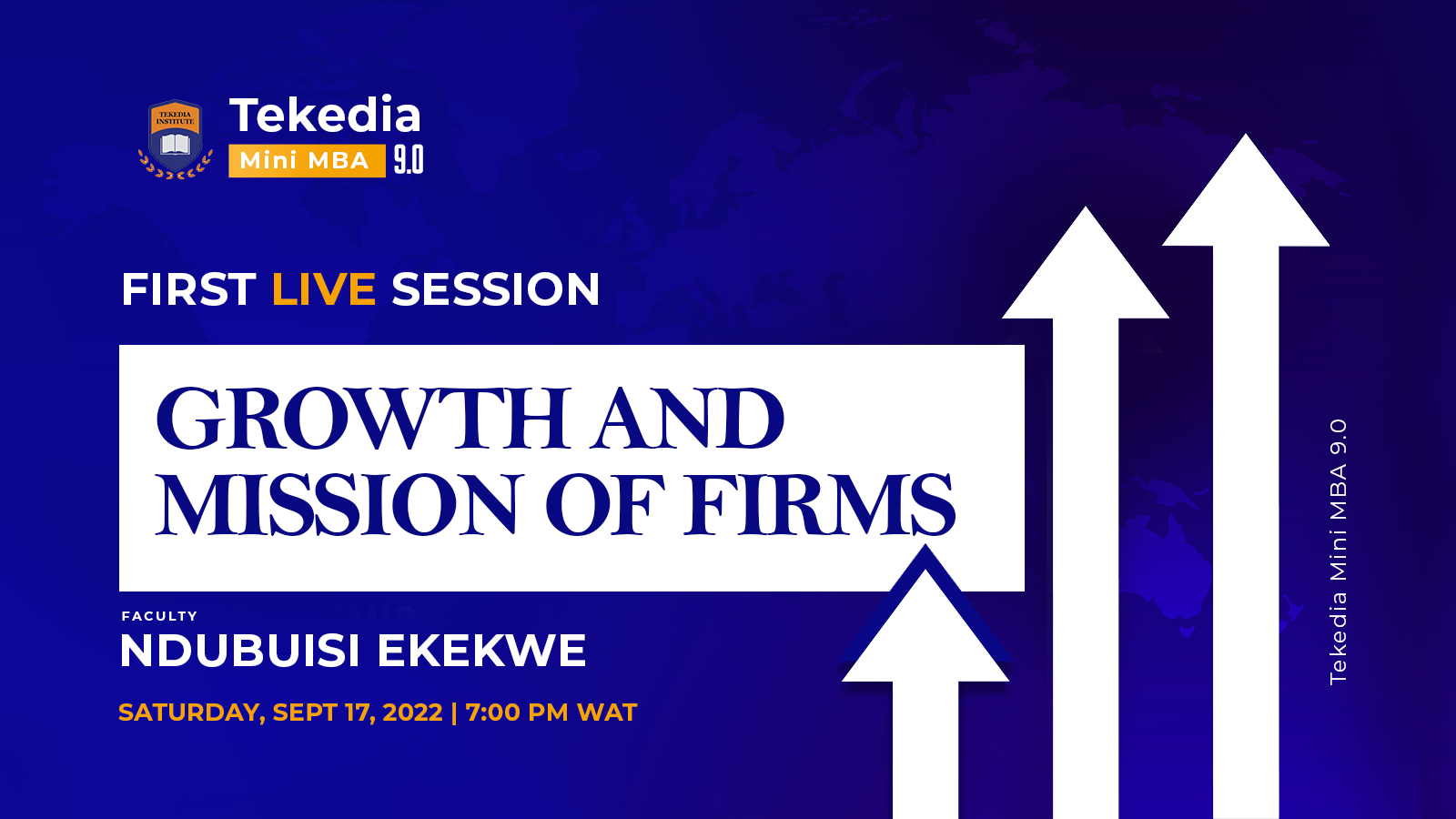
We will begin the academic excursion tomorrow as we start the live session of Tekedia Mini-MBA. Over the next 12 weeks, we will examine the fundamental constructs of market systems and how we can unlock opportunities. We will co-learn and advance our professional and entrepreneurial missions. My business experience began at Oriendu Market in Ovim (Abia State) where after school, if not going to the farm, I had to resume in the market to help to sell garri and yam. 

For the yam, there were many varieties – mbala, nkaa, obiaturuuge, etc – and my grandmother modeled the pricing accordingly, Her instruction was clear: this yam cannot make it back home, offer a discount once you notice that the middle-men and -women from cities have started packing to go back home. So, timing was critical in that business.

Then in the farm, she explained that this yam must be preserved to last very long. For those yams, you never take them to the barn because water must never touch them. That way, they last long.

Then on garri, if you want to have a higher margin, demonstrate that your garri can last really long to those buying them to sell in big cities like Enugu and Aba. How do you do that? After the frying process, spread it on a  mat and make sure it is well “cooled” before you start bagging. What you do in the first 3 hours can determine how long that garri will stay “fresh”. 

Great innovation, from the farms to the market and the spirit remains the same: innovation wins the market, either in Ovim Market or Goldman Sachs. Join us tomorrow as we begin the live session of Tekedia Mini-MBA. Next week, we will host executives from Microsoft, SAP and more. This is the temple to master the mechanics of business, register here.