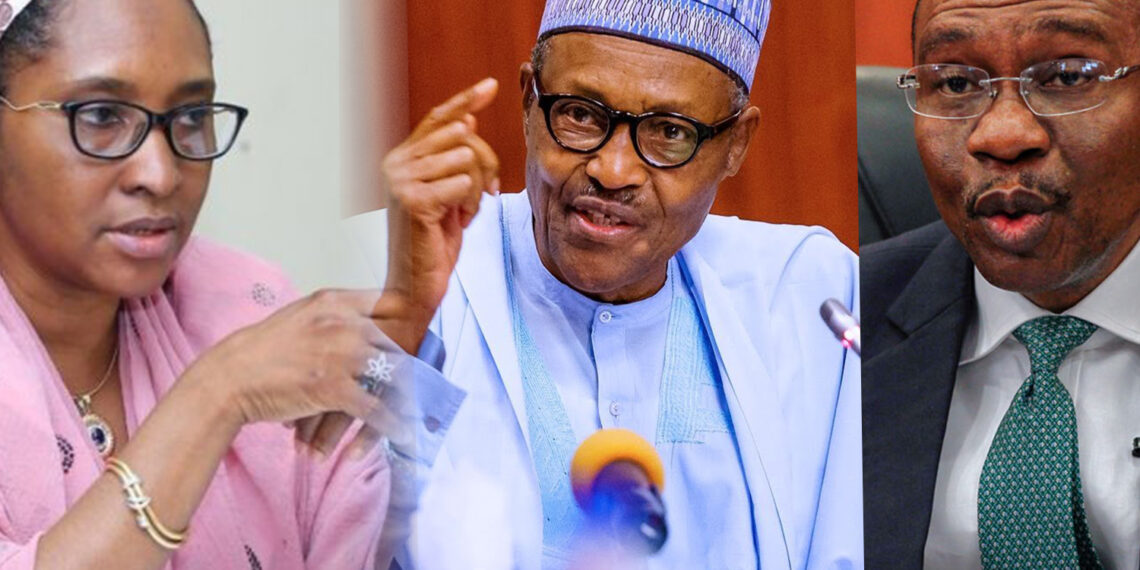
Nigeria’s 2023 budget is expected to have a N12.43 trillion deficit due to import duty waivers and fuel subsidy payments, according to the Minister of Finance, Budget and National Planning, Zainab Ahmed.
The finance minister had informed the Senate Committee on Finance on Tuesday during an interactive session that the proposed N19.76 trillion budget for 2023 will be greatly undermined by the aforementioned factors, particularly, if fuel subsidy is retained throughout 2023.
The concern, which was equally expressed by revenue generating agencies, prompted the Committee Chairman, Olamilekan Adeola, to ask the minister to critically review both the projected N12.43 trillion budget deficit and N6tn tax and import duty waivers downwards before sending the proposals to the National Assembly for consideration and approval.
Adeola demanded that the minister examine the list of beneficiaries of the N6 trillion waivers for a possible downward review to N3tn, which will minimize the volume of the whole budget deficit.
“The proposed N12.43 trillion deficit for the 2023 budget and N6 Trillion waivers are very disturbing and must be critically reviewed. Many of the beneficiaries of the waivers are not plowing accrued gains made into expected projects as far as infrastructural developments are concerned.
“The same goes for the tax credit window offered by FIRS to some companies. Billions and trillions of naira can be generated by the government as revenue if such windows are closed against beneficiaries abusing them and invariably provide required money for budget funding with fewer deficits cum borrowings.
“The Nigeria Customs Service should help in this direction by critically reviewing waivers being granted on import duties for some importers just as the FIRS should also review the tax credit window offered to some companies without corresponding corporate social services to Nigerians in terms of expected project executions like road construction,” he said.
Nigeria’s revenue shortfalls have lingered for so long due to the deficiencies in the country’s oil sector. Last month, Nigeria’s oil output dropped to 972,000 barrels per day (bpd), pushing the once largest oil producing country in Africa behind Angola and Libya, according to a report by the Organization Of Petroleum Exporting Countries (OPEC).
The latest oil production drop has pushed Nigeria’s oil output far below its OPEC-stipulated 1.4 million barrels per day quota. This means that the hope of oil revenue recovery is not attainable in the short-term.
Nigeria is the only oil-producing country that has failed to cash in on the oil windfall orchestrated by the Russia-Ukraine conflict. As an oil-based economy, this has compounded the country’s economic growth as other means of revenue generation have fallen short of what is required to fund the budgets.
A key reason for Nigeria’s revenue crisis is the fuel subsidy. In 2022 alone, the subsidy is expected to gulp more than 74.07% of its capital expenditure. The federal government recently put the current daily spending on the petrol subsidy at N18.4 billion.
With the 2023 budget story sounding sadder, the N6.72 trillion mapped out for potential subsidy payment in 2023 signals that Nigeria’s capital expenditure may suffer from further revenue shortfall. Recently, revenue generating agencies have been making excuses for failed revenue remittances, indicating that the projected N12.43 trillion 2023 budget deficit may be exceeded.