DD
MM
YYYY

PAGES

DD
MM
YYYY

spot_img

PAGES

Home Blog Page 492

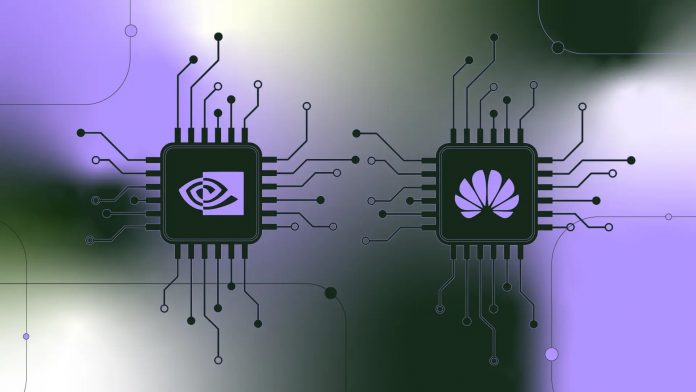
Huawei Unveils SuperPoD AI Interconnect as Beijing Blocks Nvidia Chips

0

Huawei is moving assertively to position itself as China’s answer to Nvidia in the escalating global race for artificial intelligence hardware.

At its annual Huawei Connect conference on Thursday, the Shenzhen-based tech giant unveiled new AI infrastructure that it says will dramatically boost computing power for Chinese firms — a development that lands just as Beijing shuts the door on Nvidia’s products in the domestic market.

The centerpiece of Huawei’s announcement is its SuperPoD Interconnect technology, an advanced system capable of linking up to 15,000 graphics cards, including Huawei’s in-house Ascend AI processors, into a single cluster. The approach mirrors Nvidia’s NVLink interconnect, which has become essential to the U.S. chipmaker’s market dominance by enabling high-speed communication across massive GPU arrays.

Huawei acknowledged that its Ascend chips remain less powerful on a per-unit basis than Nvidia’s GPUs, but emphasized that clustering them together could provide the raw computing muscle needed to train and scale AI systems at levels required by Chinese cloud providers, research institutions, and corporations. “Technology like this is critical for Huawei to compete,” one executive stressed during the keynote.

The timing stirs interest. On Wednesday, Beijing banned domestic tech firms from purchasing Nvidia’s hardware, including the specially designed RTX Pro 600D servers Nvidia had created for the Chinese market. The move effectively cuts off access to the most advanced U.S. GPUs and underscores how deeply the AI arms race has become entangled in the broader U.S.-China technology rivalry.

The rollout of Huawei’s SuperPoD signals not only a commercial play but also a political one. Analysts say it reflects China’s push for self-sufficiency in advanced technology, particularly in semiconductors, as Washington continues to tighten restrictions on high-end chip exports. With U.S. sanctions preventing Huawei from acquiring cutting-edge lithography tools, the company has been forced to innovate around constraints — clustering more chips together to achieve computing gains that single processors cannot yet match.

The stakes are high. According to the FTC and other observers, compute power is now the bottleneck for AI development, with Western cloud giants such as Microsoft, Google, and Amazon investing tens of billions into Nvidia GPU-powered data centers. In this context, Huawei’s SuperPoD is more than a technical advance; it is a strategic attempt to ensure China’s AI ecosystem can scale despite being locked out of U.S. hardware.

Huawei’s effort also raises questions about how far Washington might go in response. If Huawei succeeds in providing a credible domestic alternative to Nvidia, U.S. policymakers may seek to expand sanctions further to block the flow of enabling technologies — from advanced networking chips to software tools — that could support large-scale Chinese AI training.

For now, Huawei is betting that its clustering approach will give China’s AI industry a lifeline. The SuperPoD is expected to gain rapid adoption across China’s cloud and research sectors, helping the country build its own AI foundation models at scale. This is expected to be driven by strong domestic demand, which will allow Huawei to close the performance gap with Nvidia through volume, clustering, and continued refinements. Under this outlook, Beijing’s backing ensures funding, infrastructure, and market protection, positioning Huawei as a viable global alternative within the next decade.

However, there is concern that while Huawei achieves moderate success within China, carving out a protected domestic market, it will struggle to expand globally due to both technical hurdles and U.S. sanctions. This means, while SuperPoD becomes a symbol of China’s determination for self-sufficiency, Nvidia and other Western chipmakers continue to dominate the high end of the global AI market.
Jack Butcher’s Gas Wars Is A Provocative Exploration of Art Commercialization Using Blockchain

0

Jack Butcher’s “Gas Wars,” a generative art collection of 500 pieces released on Art Blocks, sold out rapidly despite intense competition for blockchain transaction priority, known as a “gas war” in the crypto space.

The term “gas war” here refers to the bidding frenzy where buyers pay higher Ethereum gas fees to secure their transactions for limited NFTs, often driving up costs significantly. The project’s mechanics, inspired by survivorship bias and priced from $0 to $499 based on simulation number, fueled this frenzy, with each piece available for only 500 seconds.

Simulation Zero was auctioned without reserve, while the remaining 499 simulations saw fierce competition, reminiscent of early Art Blocks Curated drops. The phrase “amidst an actual gas war” seems to align with the crypto context rather than a literal gasoline conflict, as no concurrent real-world gas price wars or shortages.

Gas Wars is a collection of 500 unique generative artworks inspired by the concept of survivorship bias, a statistical principle highlighted during World War II by Abraham Wald. The sale mechanism, limited to a 500-second window with a one-per-wallet restriction, introduces scarcity and urgency, mimicking the “gas wars” of early NFT drops.

Unpurchased simulations are permanently destroyed, amplifying the stakes. Gas Wars transforms art purchasing into a gamified, high-pressure event. The time-limited sale and variable pricing based on simulation number create a competitive environment where collectors must strategize under constraints.

This mirrors speculative financial markets, where scarcity and timing drive value. By tying art acquisition to Ethereum’s gas fees and network dynamics, Butcher critiques and leverages the speculative frenzy of NFT markets, blurring the line between art collection and economic game theory.

This approach challenges traditional art commercialization, which often relies on curated galleries or auctions, by introducing decentralized, algorithm-driven dynamics. Butcher’s work, rooted in his Visualize Value brand, examines how value emerges in networked culture.

Gas Wars uses survivorship bias to metaphorically comment on NFT markets: just as Wald noted that surviving planes showed where damage could be sustained, the surviving artworks in Gas Wars reflect what collectors prioritize under pressure.

The destruction of unsold pieces underscores scarcity, a core driver of NFT value, and critiques the disposability of digital art in a market obsessed with exclusivity. This raises questions about whether art’s value lies in its aesthetic, conceptual weight, or market mechanics.

Democratization vs. Elitism

The project’s structure—starting at $0 for Simulation Zero—appears to democratize access, but the escalating price and one-per-wallet limit favor strategic, well-funded collectors who can navigate gas wars. This mirrors broader NFT market trends, where low entry points attract wide participation, but high gas fees and technical barriers exclude many.

Butcher’s design thus highlights the paradox of blockchain art: while decentralized platforms promise inclusivity, market dynamics often reinforce elitism, aligning with historical art market patterns where access is stratified by wealth and expertise.

As a generative art project, Gas Wars leverages algorithms to create unique outputs, aligning with Butcher’s broader exploration of technology’s role in art. His collaboration with Art Blocks, a leading platform for generative art, and his prior work like Checks and Opepen show a shift from traditional commercial design to blockchain-native art.

This fusion challenges the art world’s gatekeeping by galleries and institutions, allowing artists to directly engage collectors via smart contracts. However, it also ties art’s value to volatile crypto markets, raising questions about sustainability and commodification.

Butcher’s background in advertising informs Gas Wars’s critique of commercialization. His Visualize Value brand distills complex ideas into minimalist visuals, and Gas Wars extends this by visualizing market dynamics as art. The project’s reference to wartime analysis juxtaposes life-or-death decisions with the speculative absurdity of NFT gas wars.

This aligns with historical debates about art’s commodification, such as those surrounding Pop Art’s embrace of consumer culture or the CIA’s use of modern art as Cold War propaganda. Butcher’s work asks whether art can retain its critical edge when it’s a speculative asset.

While Gas Wars is digital, Butcher’s other projects, like Checks Elements and Latent, pair NFTs with physical prints, signaling a trend in art commercialization where digital assets gain tangible counterparts to enhance perceived value.

This hybrid approach bridges crypto and traditional art markets, appealing to collectors who value physicality while maintaining blockchain’s authenticity and provenance. It also reflects Butcher’s strategy of “building once, selling twice,” maximizing revenue by leveraging both digital and physical formats.

Gas Wars reflects a shift toward artist-led commercialization. By bypassing traditional galleries, Butcher controls his narrative and revenue, a model enabled by blockchain’s disintermediation. Yet, this freedom comes with risks: dependence on crypto markets, environmental concerns tied to Ethereum’s energy use pre-Merge, and the potential for art to be reduced to a speculative asset.

While Gas Wars is innovative, its reliance on Ethereum’s gas fee dynamics and speculative pricing may alienate audiences who see NFTs as inaccessible or environmentally harmful. The project’s critique of commercialization risks being undermined by its own success within that system, echoing Andy Warhol’s paradoxical embrace of consumer culture.

Additionally, the art world’s growing acceptance of NFTs, as seen in Butcher’s Christie’s auctions, suggests a mainstreaming of crypto art, but it’s unclear if this will democratize art or reinforce existing hierarchies.

By gamifying acquisition, emphasizing scarcity, and blending digital-physical formats, it challenges traditional art market models while raising questions about accessibility, value, and artistic intent in the NFT era. As Butcher continues to shape the digital art landscape, Gas Wars underscores both the creative potential and the contradictions of art as a networked, commercial enterprise.

Nvidia Bets $5bn on Intel, Aligning with Trump’s Domestic Chip Push

0

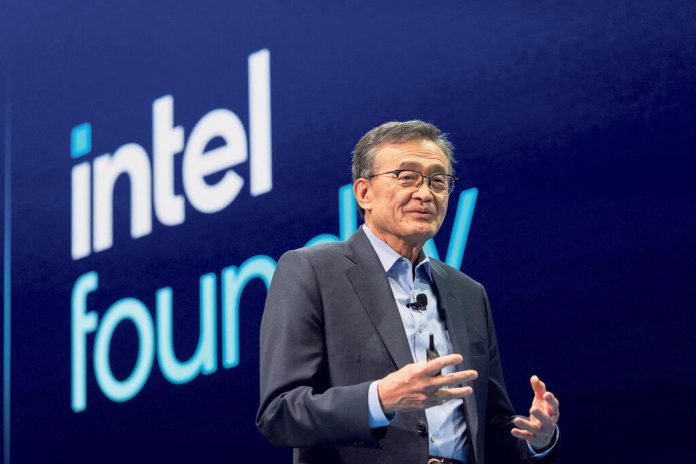
What began as a government-engineered lifeline for Intel has now drawn in the world’s most valuable chipmaker. Nvidia on Thursday announced a $5 billion investment in Intel, instantly becoming one of the embattled manufacturer’s largest shareholders and sending Intel’s stock soaring 25% in a single day.

The move is being widely read not just as a corporate gamble, but also as a quiet endorsement of U.S. President Donald Trump’s campaign to repatriate more semiconductor production.

The stake gives Nvidia roughly 4% of Intel after new shares are issued, coming just weeks after Washington took an unprecedented 10% government stake to stabilize Intel’s finances and leadership. Once seen as the company that gave Silicon Valley its name, Intel has struggled for years to recover lost ground to rivals in the data center, PC, and AI markets.

A Strategic Bet, With Political Undertones

The Nvidia deal is as much about strategy as symbolism. Intel’s new chief executive, Lip-Bu Tan, took the helm in March but quickly drew criticism over his ties to China. Trump publicly called for his resignation, leading to an emergency meeting in Washington and a White House-brokered deal that left the federal government with a significant ownership stake.

Now, Nvidia’s involvement bolsters Intel’s credibility and aligns with the Trump administration’s broader push to build up domestic chipmaking. Nvidia CEO Jensen Huang told reporters that the White House was not involved in shaping the pact but said the administration would almost certainly welcome it. Huang was seen alongside Trump and other business leaders earlier the same day during the president’s state visit to the U.K.

What the Partnership Covers

At the heart of the deal is a plan to jointly develop PC and data center chips. Nvidia will not outsource its graphics processors to Intel’s contract manufacturing business — known as its “foundry” — but Intel will supply central processors and advanced packaging to combine with Nvidia’s AI-focused GPUs. Huang confirmed that Nvidia has been testing Intel’s foundry technology for nearly a year, though no long-term shift away from Taiwan’s TSMC has been made.

For Intel, which has long lagged in AI, the pact is a breakthrough. “This is a massive game-changer for Intel and effectively resets its position of AI-laggard into a cog in future AI infrastructure,” said Gadjo Sevilla, senior AI and tech analyst at eMarketer.

Financial details of the collaboration were not disclosed, but the companies confirmed they will produce “multiple generations” of joint products. Nvidia said it would pay $23.28 per share for Intel stock, just below Intel’s $24.90 Wednesday close but comfortably higher than the $20.47 that Washington paid. Nvidia’s stock rose 3.8% after the announcement.

Intel’s Cash Reserve Grows

The fresh $5 billion injection adds to Intel’s war chest, which has been swelled by $2 billion from SoftBank and $5.7 billion from the U.S. government. CEO Tan has promised a leaner Intel, vowing to build factory capacity only in response to firm customer demand.

“This may be the first step of an acquisition or breakup of the company (Intel) among U.S. chip makers, though it is entirely possible the company will remain a shadow of its former self but will survive,” said Nancy Tengler, CEO of Laffer Tengler Investments.

Risks for Competitors

The partnership carries big implications for the industry’s competitive balance, according to an analyst who spoke to Reuters.

TSMC, which currently produces Nvidia’s flagship processors, faces the looming risk of losing a critical customer. AMD, Intel’s traditional rival in PCs and data centers, may also see its recent market share gains eroded.

“AMD has been seizing market share in desktops and laptops for quite some time and this will help Nvidia out against its closest domestic peers, but I think TSMC may have the bigger risk to its operation over the long term,” said David Wagner, portfolio manager at Aptus Capital Advisors.

Intel will design custom data center CPUs for Nvidia’s GPUs, linked by a proprietary Nvidia interconnect that dramatically speeds communication between chips. That feature has made Nvidia’s AI servers the gold standard in the industry. The new arrangement allows Intel to capture part of that lucrative business for the first time.

The combined chips could also pose challenges for AMD, which is developing rival AI servers, and Broadcom, which supplies chip-to-chip links for companies like Google. AMD’s shares fell 2.3% after the announcement, while Broadcom gained 0.4%.

In consumer markets, Nvidia will provide Intel with custom graphics processors for PCs. Coupled with Intel CPUs and Nvidia’s high-speed links, that could give Intel new leverage against AMD in the desktop and laptop segment.

Revival or Realignment?

While the companies offered no timeline for their first joint products, the alliance underscores how Intel’s future now rests on outside partners. For some analysts, Nvidia’s investment is a prelude to something bigger.

It is believed that this deal could set up three very different futures for Intel. In the first, Intel becomes a core U.S. player in AI hardware, stabilized by government and corporate backers. In the second, it is slowly absorbed into Nvidia or another chipmaker, effectively broken up. And in the third, Intel never fully regains its old dominance but survives as a junior partner in the new AI ecosystem.

Best Real Money Slots for Low Stakes Players

0

Slot machines have long been one of the most popular casino games, offering excitement, variety, and the chance to win big with even small bets. For many players, the appeal of slots lies in their accessibility. You don’t need to wager large amounts to enjoy the experience, and in fact, low stakes players often find more entertainment value by stretching their bankroll across many spins.

If you are someone who prefers to play conservatively while still having fun, low stakes slots can provide the perfect balance. In this article, we will look at why low stakes slots are appealing, which games are best suited to these players, and how to find platforms that maximize your chances of success. We will also highlight where to find the best paying real money casinos in the USA and explore the rise of new mobile slot apps.

Why Low Stakes Slots Appeal to Players

Low stakes slots are ideal for those who enjoy playing at a relaxed pace or want to limit their risk. With coin values often starting at just a few cents per spin, you can enjoy extended gaming sessions without spending much. This makes them perfect for beginners, casual players, or anyone who wants to stretch their budget while still having the chance to win.

Another advantage of low stakes slots is that they often feature the same bonuses and jackpots as higher-stake versions. This means that even small bets can sometimes trigger free spins, multipliers, or progressive jackpot wins.

Top Features to Look for in Low Stakes Slots

When choosing slots as a low stakes player, certain features can make your experience more rewarding:

  • High Return to Player (RTP) percentages: Slots with an RTP of 96% or higher give you better long-term odds.
  • Low volatility: These games pay smaller amounts more frequently, ideal for players with modest budgets.
  • Bonus rounds and free spins: Extra features add excitement and can stretch your bankroll further.
  • Flexible bet sizes: Games that allow you to adjust paylines and coin values are perfect for tailoring bets to your comfort level.

Casinos that consistently offer such games are often among the best paying real money casinos in the USA, since they combine high-quality slot selections with favorable payout rates and reliable customer service.

Recommended Low Stakes Slot Games

Several slot titles stand out for their low minimum bets and engaging features:

  • Starburst by NetEnt: Known for its simplicity, vibrant visuals, and frequent small wins, this game is a classic choice for low stakes players.
  • Book of Dead by Play’n GO: Offers a chance to play at low bets while still enjoying exciting free spin features.
  • Thunderstruck II by Microgaming: A versatile slot with multiple bonus rounds and flexible betting options.
  • Cleopatra by IGT: A fan favorite, offering nostalgic appeal and a free spins feature that can be triggered with low bets.

These games combine entertainment with accessibility, making them ideal for anyone looking to enjoy slots without spending heavily.

The Role of Mobile Gaming

Mobile technology has transformed how players enjoy slots. With smartphones and tablets, you can now spin the reels anytime, anywhere. The development of new mobile slot apps has made this experience even smoother, offering fast loading times, intuitive touch controls, and exclusive promotions.

These apps often come with special bonuses for mobile users, such as free spins or deposit matches, which give low stakes players even more opportunities to play without committing large sums. For those who value convenience and flexibility, mobile slots are now the preferred way to enjoy the game.

How to Maximize Your Low Stakes Strategy

To make the most of low stakes slots, consider a few strategies:

  1. Set a budget: Even when betting small, it’s important to manage your bankroll responsibly.
  2. Play high RTP slots: This increases your chances of getting more consistent returns.
  3. Use bonuses wisely: Take advantage of promotions like free spins or deposit matches, which add extra value.
  4. Stick to low volatility games: These provide frequent wins, helping to keep your bankroll steady.

By combining these strategies with careful game selection, you can enjoy long gaming sessions with less financial risk.

Final Thoughts

Low stakes slots are perfect for players who value fun and entertainment over high-risk betting. They offer plenty of excitement, the chance to win bonuses, and the ability to enjoy extended play without breaking the bank.

By choosing games with favorable features and sticking to platforms that are recognized as the best paying real money casinos in the USA, you ensure both fairness and a rewarding experience. Add in the convenience of new mobile slot apps, and you have everything needed to enjoy slots in a safe, fun, and budget-friendly way.

Best Crypto Presale 2025: Is Nexchain the Next Big Coin?

3

Cryptocurrency presales are drawing fresh attention in 2025 as investors look for the best crypto to buy now. With Bitcoin nearing fresh highs and Binance Coin climbing past $1,000, upcoming crypto projects are moving into focus. Nexchain, HexyDog, and Little Pepe are among the presale coins gaining traction this year.

Nexchain Presale Builds Market Momentum

Nexchain has emerged as one of the best crypto presales of 2025. The network combines Proof-of-Stake with Directed Acyclic Graph technology to process up to 400,000 transactions per second. Transaction fees remain fixed at $0.001, keeping usage affordable.

Nexchain’s tokens are not static. They evolve by default, enabling programmable behavior, adaptive staking mechanics, self-adjusting economics, and built-in fraud defense. The system also supports cross-chain interoperability, making it suitable for Web3 developers and enterprise adoption.

Developers can use SDKs, APIs, and modular AI logic to create their own applications or deploy with Nexchain’s tools. This flexibility makes the platform attractive to builders seeking upcoming crypto for long term growth.

Notably, stage 27 sets the price at $0.108 per NEX, with a listing target of $0.30. That gap suggests a 278% ROI for early buyers. To date, more than $10.35 million has been raised out of $11.02 million for this stage.

The roadmap outlines the launch of the Nexpolia testnet, a $5 million airdrop, and new governance models in 2025. Exchange listings and DeFi integrations are expected in early 2026. With its evolving infrastructure and clear milestones, Nexchain is frequently cited as the best new crypto to buy now.

HexyDog Connects Blockchain and Pet Care

HexyDog (HEXY) blends blockchain with real-world services. The token supports payments at pet stores, transparent donations to shelters, and a growing network of community-driven incentives.

Its fixed supply of 20 billion tokens is structured for long-term use. Staking rewards make up 25%, liquidity pools 15%, while 5% is set aside for animal welfare. Holders can join the Hexy Ambassador Program, access branded merchandise, and help guide future development through DAO governance.

By linking token ownership to practical adoption, HexyDog is positioning itself as one of the upcoming new crypto coins for sustainable growth. It appeals to buyers seeking the best crypto for long term exposure, combining everyday utility with community engagement.

Little Pepe Expands Meme Tokens Into Layer-2

Little Pepe (LILPEPE) goes beyond meme culture with its plan to build a Layer-2 chain on Ethereum. The network offers fast finality, low fees, and zero transaction taxes.

The supply totals 100 billion tokens, with allocations for staking rewards, liquidity, and core development. Presale buyers gain incentives such as staking yields and liquidity pools designed for smooth exchange entry.

The project’s marketing strategy relies on viral campaigns, influencer support, and community-driven promotion. With a roadmap that includes exchange listings and adoption milestones, Little Pepe is seen as one of the best crypto for 10x gains. For traders watching upcoming crypto to buy now, it combines meme energy with a scalable blockchain design.

Presales to Watch in 2025

For those seeking the best crypto presales, Nexchain, HexyDog, and Little Pepe each bring something different. Nexchain offers adaptive infrastructure with evolving tokens. HexyDog ties blockchain to real-world services and charity. Little Pepe mixes cultural relevance with Layer-2 performance.

These projects highlight the diversity of upcoming crypto in 2025. From infrastructure to lifestyle use cases, they show why presales remain a key entry point for both short-term and long-term investors. For anyone looking at the best crypto to buy now or the best crypto for 10x gains, these three stand out as strong contenders.


Learn more about the Nexchain presale here:

Website: nexchain.ai/

X: x.com/nexchain_ai

Telegram: t.me/nexchain_ai

LinkedIn: www.linkedin.com/company/nexchainai/