DD
MM
YYYY

PAGES

DD
MM
YYYY

spot_img

PAGES

Home Blog Page 495

Microsoft Supercharges Teams with AI Agents Across Its Productivity Suite

0

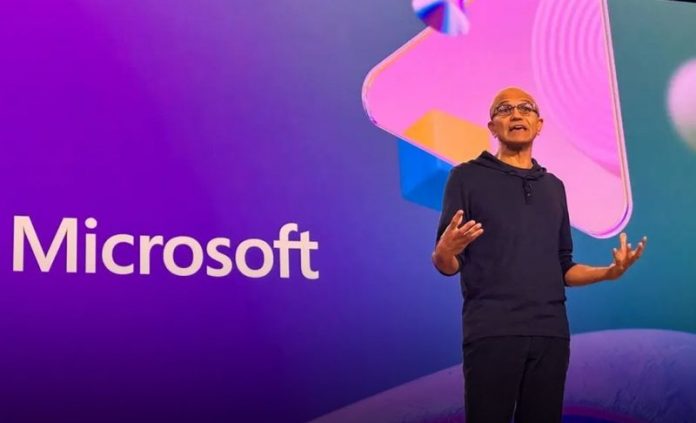
Microsoft is deepening its artificial intelligence push inside its workplace tools, unveiling a sweeping rollout of Copilot-powered agents across Teams, SharePoint, and Viva Engage.

The move, announced on Thursday, marks one of the company’s biggest expansions of AI into Microsoft 365, underscoring its bid to dominate enterprise productivity with intelligent assistants.

At the center of the rollout are new Facilitator agents that will sit in on Teams meetings. These Copilot assistants can generate agendas, take notes, and answer participant questions in real time. They go a step further by managing time allotments for agenda items, alerting teams if they are running behind, and even producing documents and follow-up tasks.

A mobile version of the Facilitator agent is designed for spontaneous moments — what Microsoft calls “hallway chats” or impromptu syncs — ensuring that informal conversations are captured with the same level of context as scheduled meetings.

Beyond meetings, Microsoft is adding Channel agents that will comb through past conversations and meetings in a channel to provide answers, generate project status reports, and summarize key updates.

Inside Viva Engage, the company’s enterprise social platform, Community agents will assist administrators by answering routine questions and organizing user engagement. And in SharePoint, Knowledge agents will quietly tag, organize, and summarize files behind the scenes, streamlining knowledge management.

Facilitator agents are available starting Thursday, though the ability to automatically create documents and tasks remains in public preview. The other new agents — Channel, Community, and Knowledge — are also launching in preview alongside a redesigned Workflows tool for AI-driven task automation and a new feature that generates audio recaps from meeting notes.

Microsoft’s AI Productivity Play

The expansion signals Microsoft’s intent to keep Teams as the central hub of workplace collaboration, integrating AI agents that not only streamline repetitive tasks but also actively participate in work. Analysts say the strategy could prove sticky for enterprise customers, locking them deeper into the Microsoft 365 ecosystem.

By embedding AI into the core of daily workflows, Microsoft is believed to be trying to make Copilot indispensable. The idea is: If your meetings, your project tracking, and your knowledge base are all being managed by AI inside Teams, you’re less likely to switch to a competitor.

The move comes as rivals are also racing to redefine the future of work with AI. Google is pushing its Duet AI across Workspace, while startups like Notion and Slack are embedding generative AI for summaries and task creation. But Microsoft’s scale, combined with its enterprise reach, gives it a significant head start.

For businesses, the biggest questions will revolve around cost and trust. Microsoft 365 Copilot already comes at a premium, and companies will want reassurance that sensitive meeting data or internal communications are handled securely as AI agents become more autonomous.

This rollout is also a test of whether employees will embrace AI as an ever-present coworker. While automation of note-taking and file organization is widely seen as a productivity boost, the idea of AI “sitting in” on meetings and hallway chats may take cultural adjustment.

If successful, Microsoft’s bet could usher in a new workplace norm: meetings that are always documented, projects that are continuously summarized, and knowledge bases that self-organize — with AI agents acting as invisible colleagues.


Google Turns Chrome Into an AI Powerhouse With New Features, Agents, and Gemini Integration

0

For years, Google leveraged its Chrome browser as a powerful vehicle to grow and cement its dominance in search. Now, the company is preparing to do the same in artificial intelligence.

On Thursday, Google announced it is supercharging Chrome with a suite of AI features designed to make browsing more interactive, automated, and personal. The overhaul marks the beginning of a new era for one of Google’s most important products, as the company shifts its business around AI-driven search and productivity.

AI Mode in the Omnibox

Among the most immediate updates, Google is embedding AI Mode — its conversational alternative to traditional search — directly into Chrome’s “omnibox,” the address bar where users type web queries. This change allows users to launch AI-powered searches without leaving the webpage they are on.

The move is part of a broader transformation of Google Search into an AI-first product. Parisa Tabriz, Google Chrome’s vice president, described the changes as “fundamentally changing the nature of browsing,” in a blog post announcing the upgrades.

Gemini Comes to Chrome

Google will also integrate its Gemini AI assistant directly into the browser. The tool, previously available only to paying subscribers, will now be free for all Chrome users. Gemini can “see” everything on the current webpage, access content across multiple open tabs, and answer questions in real time.

Crucially, Gemini will also remember past pages visited and connect with other Google services such as YouTube and Google Calendar — a sign of Google’s strategy to create a seamless AI ecosystem across its products.

The Antitrust Backdrop

Chrome’s role in Google’s empire cannot be overstated. Since its launch in 2008, the browser has grown to capture roughly 70% of global market share, according to Statcounter. It remains Google’s largest entry point for Search, feeding the company valuable user data that powers its algorithms.

Chrome was a focal point in the Justice Department’s recent antitrust case against Google, which argued the company should be forced to divest its browser business to weaken its search dominance. The judge ultimately rejected that proposal, leaving Chrome in Google’s hands. Now, with AI features woven into the browser, Chrome could become the launchpad for a new era of dominance — this time in artificial intelligence.

AI Agents Arrive

Perhaps the most striking update is the introduction of AI agents inside Chrome — autonomous systems designed to perform complex tasks on behalf of users. Google’s agent, previewed last year under the codename “Project Mariner,” has been upgraded significantly.

The agent can complete tasks such as filling an Amazon shopping basket, drafting an email, or copying and pasting information from one webpage into a document. It runs in the background, letting users multitask while it works, but it will prompt for clarifications when necessary.

For example, if tasked with ordering apples, the agent may pause to ask whether you prefer Braeburn or Pink Lady. It also stops short of taking irreversible steps, such as finalizing a checkout or sending an email, without explicit user approval.

“The nice part about it happening locally is that we are able to ask clarifying questions and hand it over seamlessly to the user, too,” said Charmaine D’Silva, Google Chrome’s product director, at a press roundtable.

Competition With OpenAI

Google’s rollout comes just months after OpenAI launched its own “ChatGPT Agent,” an autonomous assistant capable of carrying out tasks. But OpenAI’s agent is still in its early stages, hampered by reliability issues and frequent glitches.

Mike Torres, Google Chrome’s VP of Product, said the company is determined to learn from those shortcomings.

“Our hope, by the time this gets to users, is that we’ve done away with many of those potential snafus,” he said.

The Future of Chrome as an AI Hub

Analysts see Chrome’s transformation as a turning point for both the browser market and AI adoption, with the optimism that Chrome could become the go-to hub for AI interactions worldwide, with users relying on Gemini and Chrome’s AI agent for everyday tasks. If widely adopted, this is expected to create a new “flywheel effect,” where Chrome collects user interaction data that feeds back into Google’s AI models, strengthening their accuracy and appeal. In this future, Chrome could solidify Google’s edge over rivals like OpenAI, Anthropic, and Microsoft.

However, there are concerns over privacy, data collection, and AI reliability, which could lead to regulatory crackdowns and consumer hesitancy. If agents make costly mistakes — such as placing incorrect orders or mishandling sensitive emails — user trust could erode. Chrome risks being seen as bloated or intrusive, potentially driving users to leaner alternatives like Safari or Firefox.

Against these backdrops, Chrome’s challenge now seems largely to prove that these tools will work seamlessly at scale, and that users, already wary of AI mishaps, are ready to hand off more of their digital lives to Google’s machines.

UBA Reports N388.4bn Pre-Tax Profit in H1 2025 Amid Rising Costs and Softer Trading Income

0

United Bank for Africa (UBA) Plc has released its financial results for the half year ended 30 June 2025, posting a pre-tax profit of N388.4 billion.

The figure marks a slight decline of 3.28% compared with the N401.5 billion recorded in the same period last year, but analysts note it remains a strong showing given the challenging operating environment.

The bank’s resilience was underpinned by robust top-line growth. Interest income surged 32.89% year-on-year to N1.3 trillion, compared with N1 trillion in H1 2024. Treasury bills contributed the lion’s share at N366.4 billion, followed by term loans to corporates at N319 billion. Bonds under investment securities generated N279.2 billion, while cash and bank balances added N113.2 billion. Interest on loans and advances to banks provided a further N105.6 billion.

On the cost side, however, interest expenses climbed sharply to N560.6 billion from N328.9 billion a year earlier. Even with that spike, net interest income still rose 14.59% to N773 billion, up from N674.6 billion. After accounting for an impairment charge of N35.1 billion, net interest income stood at N741 billion, a 20.61% improvement from the prior year’s N614.4 billion.

Fee-based income remained largely flat. Net fees and commission income inched up 1.34% to N147 billion, compared with N145 billion in H1 2024.

Rising Costs Pressure Bottom Line

The results showed operating costs eroded profitability. Net trading and foreign exchange activities swung to a loss of N10 billion, compared with a gain of N98.1 billion in the same period last year. Employee benefit expenses surged 28.65% to N172.2 billion, while other operating expenses rose slightly by 0.19% to N312.9 billion.

These cost pressures pulled pre-tax profit down to N388.4 billion. However, post-tax profit improved 6.06% to N335.5 billion, supported by a reduction in income taxes to N52.8 billion from N85.2 billion a year earlier.

Balance Sheet Growth

UBA maintained balance sheet expansion, with total assets rising to N33.2 trillion from N30.3 trillion in December 2024. Retained earnings increased 12.85% to N1.6 trillion, underscoring continued capital strength.

Dividend Proposal and Market Response

The board of directors proposed an interim dividend of 25 kobo per share for the period ended 30 June 2025, compared with N2.00 per share in the prior year. The payout ratio edged up to 7.83% from 7.3%, but dividend yield fell sharply to 1.4% from 8.9%, reflecting both lower payout and strong appreciation in the stock price.

UBA shares closed at N47.00 on 18 September 2025, up 38.33% year-to-date on the Nigerian Exchange, signaling investor confidence despite softer profit growth.

Balancing Growth and Cost Pressures

Analysts say the coming quarters will test UBA’s ability to balance rapid growth in interest income with mounting funding costs. If Nigeria’s interest rate environment remains elevated, banks could continue to benefit from higher yields on securities and loans, but the corresponding jump in deposit and borrowing costs may squeeze margins further.

In the best potential result, UBA’s scale and balance sheet depth—total assets of N33.2 trillion—provide room to absorb higher costs, while the growth in retained earnings strengthens its capacity for future capital expansion. Continued momentum in fee-based services and digital channels could also help diversify revenue streams and reduce dependence on interest income.

A downside outcome, however, points to risks from foreign exchange volatility and operating expenses. The swing from a N98.1 billion gain in trading and FX to a N10 billion loss highlights UBA’s vulnerability to market instability. Employee costs, which jumped nearly 29%, also raise concerns about expense discipline. If cost escalation outpaces income growth, profitability could remain under pressure even as revenues rise.

Dividend sustainability is another focus for investors. The sharp reduction from N2.00 per share to 25 kobo underscores a more cautious payout strategy. Analysts say future dividends will depend on how effectively UBA manages its capital buffers while navigating regulatory and macroeconomic headwinds.

Still, with shares up nearly 40% year-to-date, the market appears to be betting on UBA’s long-term ability to leverage its pan-African network and large asset base to sustain growth, even in a high-cost environment.

  • Key Highlights (H1 2025 vs H1 2024)
  • Interest income: N1.3 trillion, +32.89% YoY
  • Net interest income: N773 billion, +14.59% YoY
  • Net interest income after impairment: N741 billion, +20.61% YoY
  • Net fee and commission income: N147 billion, +1.34% YoY
  • Other operating expenses: N312.9 billion, +0.19% YoY
  • Pre-tax profit: N388.4 billion, -3.28% YoY
  • Retained earnings: N1.6 trillion, +12.85% YoY

The Evolution of AI Crypto Trading Bots: Transforming Digital Asset Management

0

The cryptocurrency market never sleeps, operating 24/7 across global exchanges with constant price fluctuations and trading opportunities. For individual investors, monitoring multiple digital assets and executing optimal trades around the clock presents significant challenges. Modern technology has introduced powerful solutions to address these limitations through artificial intelligence and automated trading systems. An ai crypto trading bot represents the convergence of machine learning algorithms and sophisticated trading strategies, enabling investors to participate in cryptocurrency markets without constant manual oversight while potentially optimizing returns through data-driven decision making.

These intelligent trading systems have evolved far beyond simple rule-based automation. Today’s AI-powered platforms analyze vast amounts of market data, identify patterns invisible to human traders, and execute complex strategies across multiple exchanges simultaneously. The integration of machine learning allows these systems to adapt to changing market conditions, refine their approaches based on performance data, and manage risk through sophisticated algorithms that can respond to volatility faster than any human trader could achieve.

Understanding Modern AI-Powered Trading Automation

AI crypto trading bots leverage advanced computational methods to analyze market trends, execute trades, and manage portfolios with minimal human intervention. Unlike traditional trading approaches that rely on emotional decision-making and limited time availability, these systems operate on pure data analysis and predetermined strategies designed to maximize returns while controlling risk exposure.

The core advantages of AI-driven trading automation include:

  1. Continuous Market Monitoring – Systems operate 24/7 across all major cryptocurrency exchanges, never missing potential opportunities due to time zone differences or sleep cycles
  2. Emotion-Free Decision Making – Algorithms execute trades based on data and predefined parameters, eliminating fear, greed, and other psychological factors that often lead to poor investment decisions
  3. Advanced Pattern Recognition – Machine learning models can identify complex market patterns and correlations that human traders might overlook or fail to process quickly enough
  4. Multi-Asset Portfolio Management – Simultaneous monitoring and trading across hundreds of cryptocurrency pairs, providing diversification benefits impossible to achieve manually
  5. Risk Management Integration – Automated stop-loss orders, position sizing, and portfolio rebalancing based on volatility metrics and risk tolerance settings

Core Features That Define Advanced Trading Systems

Modern AI trading platforms distinguish themselves through sophisticated features that address the unique challenges of cryptocurrency markets. Advanced algorithms analyze market data across multiple timeframes, incorporating technical indicators, sentiment analysis, and on-chain metrics to make informed trading decisions. These systems typically offer seamless integration with major exchanges through secure API connections, allowing users to maintain full control of their funds while enabling automated trade execution.

The most effective platforms combine multiple trading strategies within a single framework, allowing users to diversify their approaches based on market conditions. This includes grid trading for range-bound markets, momentum strategies for trending conditions, and market-neutral approaches designed to generate returns regardless of overall market direction. According to Statista, the global cryptocurrency market is projected to reach $45.3 billion in 2025, highlighting the growing importance of efficient trading tools for this expanding asset class.

Essential Strategies in Automated Cryptocurrency Management

Successful AI crypto trading bots employ various strategic approaches tailored to different market conditions and investor risk profiles. These strategies have been refined through extensive backtesting and real-world performance data, providing users with proven methodologies for different market scenarios.

Key trading strategies implemented by advanced AI systems include:

  1. Market-Neutral Approaches – Strategies designed to generate consistent returns regardless of overall market direction through hedging techniques and statistical arbitrage
  2. Momentum-Based Trading – Algorithms that identify and capitalize on price trends, entering positions when assets show strong directional movement and exiting before reversals
  3. Grid Trading Systems – Automated placement of buy and sell orders at predetermined intervals, profiting from market volatility and price oscillations
  4. Dollar-Cost Averaging (DCA) – Systematic investment approaches that reduce timing risk by spreading purchases over extended periods, particularly effective during market downturns
  5. Arbitrage Opportunities – Cross-exchange price difference exploitation, where bots simultaneously buy and sell identical assets on different platforms to capture guaranteed profits

Risk Management and Performance Optimization

Professional-grade AI trading systems incorporate sophisticated risk management protocols that protect investor capital while seeking to optimize returns. These include dynamic position sizing based on volatility measurements, correlation analysis to prevent over-concentration in similar assets, and automated portfolio rebalancing to maintain desired allocation percentages.

Advanced platforms also implement trailing stop-loss mechanisms, which automatically adjust exit points as positions move favorably, allowing profits to run while protecting against adverse moves. Machine learning components continuously analyze performance data to refine strategies, identifying which approaches work best under specific market conditions and adjusting algorithms accordingly.

Selecting the Right AI Trading Solution for Your Investment Goals

Choosing an appropriate AI crypto trading bot requires careful consideration of multiple factors that align with individual investment objectives, risk tolerance, and technical requirements. The cryptocurrency trading automation landscape offers solutions ranging from beginner-friendly platforms with pre-configured strategies to highly customizable systems for experienced traders.

Critical evaluation criteria for AI trading platforms include:

  1. Exchange Compatibility – Support for major cryptocurrency exchanges where you maintain accounts, ensuring seamless integration with existing trading infrastructure
  2. Strategy Diversity – Availability of multiple trading approaches suitable for different market conditions and risk preferences, with ability to combine strategies for enhanced diversification
  3. Security Protocols – Implementation of API-only access without withdrawal permissions, ensuring funds remain secure in your exchange accounts while enabling automated trading
  4. Performance Transparency – Access to detailed analytics, backtesting results, and real-time performance metrics that allow informed evaluation of strategy effectiveness
  5. User Experience Design – Intuitive interfaces that make complex trading strategies accessible without requiring extensive technical knowledge or programming skills

The regulatory landscape surrounding AI in financial services continues to evolve, with recent Treasury Department reports highlighting both opportunities and risks associated with AI adoption in financial sectors. These developments emphasize the importance of choosing established platforms that prioritize compliance and security while delivering innovative trading capabilities.

Modern AI crypto trading bots have transformed how individual investors can participate in cryptocurrency markets, offering institutional-level capabilities through accessible platforms designed for various experience levels and investment goals. As the digital asset ecosystem continues to mature, these intelligent automation tools represent an increasingly essential component of sophisticated investment strategies.

Nigeria Immigration Service Unveils Centralized-5,000-Daily Passport Hub — but Costs Double for Citizens

0

The Nigeria Immigration Service (NIS) has launched a centralized passport personalization system with the capacity to produce up to 5,000 passports daily, a dramatic leap from the 250–300 documents that multiple centers could previously deliver.

The new system was unveiled on Thursday at the NIS headquarters in Abuja during an inspection of the Centralized Passport Personalization Centre by the Minister of Interior, Dr Olubunmi Tunji-Ojo, who described it as “a game-changing reform for passport processing in Nigeria.”

“For the first time in 62 years, NIS is operating a single central passport production hub,” the Minister said. “This project is 100 per cent ready, and it will allow Nigeria to be more productive and efficient in delivering passport services.”

The centralization replaces the decentralized model under which several centers handled production — often leading to inefficiencies, duplication, and backlogs. By consolidating output in one hub, officials say Nigeria can now align with international best practices in passport production, where standardization and uniformity are essential for global trust in travel documents.

Faster Processing and Delivery

Tunji-Ojo said the facility, built in partnership with IRISMAT Technologies Limited, deploys advanced machines capable of producing 1,000 passports per hour. This would enable the NIS to meet daily passport demands within four to five hours of operation.

“We promised two-week delivery, but with automation and optimization, we are now pushing for one week,” the Minister said, adding that the reform would “put an end to the era of backlogs and delays.”

According to him, when the Tinubu administration assumed office, the NIS had inherited over 204,000 pending passport applications. That backlog, he said, “is now closed,” with the centralized system ensuring that Nigerians receive value for their money through “automation and efficiency.”

The Minister positioned the move as part of President Bola Tinubu’s reform agenda to modernize public institutions and restore trust in government.

“This is more than just about documents; it’s about restoring trust and showing Nigerians that their government can deliver effectively,” he said.

The Cost Burden on Citizens

But while the centralization is expected to eliminate delays, it comes with a steep cost for Nigerians. The NIS recently doubled passport fees, effective September 1, 2025.

A 32-page passport with 5-year validity now costs N100,000, up from N50,000. A 64-page passport with 10-year validity has climbed to N200,000 — a 100% increase from N100,000.

The Service says the higher cost reflects the push for efficiency, modernization, and the investment required to sustain advanced facilities like the centralized hub. Still, for ordinary Nigerians already battling inflation and rising living costs, the fee hike has raised concerns that faster services are being delivered at a punishing price.

Implications for Nigerians at Home and Abroad

The new system is expected to ease the frustrations of applicants who, for years, have complained of bottlenecks, unofficial charges, and endless delays in passport processing. Diaspora Nigerians, who often face unique hurdles at consular offices, may also benefit from the improved uniformity in production and quicker turnaround time.

Analysts, however, warn that the doubled cost risks placing passports out of reach for low-income Nigerians, potentially widening inequality in access to international travel and migration opportunities. At N100,000 for a 32-page passport, a Nigerian worker earning N70,000 per month, minimum wage, will need about a month and a half’s work wage to secure one.

However, the centralized hub is believed by many to be a representation of an administrative milestone, given Nigeria’s unpleasant passport history. For citizens, the test will be whether the promised one-week delivery and end to backlogs will be enough to justify the financial strain.