DD
MM
YYYY

PAGES

DD
MM
YYYY

spot_img

PAGES

Home Blog Page 4967

How Youniverze Can Become The Next Gen Swapping Protocol As Dogecoin and Ethereum Continue To Perform

0

A Dive Into Yuniverze

Yuniverze (YUNI) aims to become the next-generation swapping protocol that prioritises the user rather than the exchange. The platform has identified key issues within DeFi swapping that currently need addressing, especially for newer users who often find it problematic to navigate hot wallets and DEXs.

For this reason, Yuniverze is creating a swapping protocol that is easy to use through a simple UI and taking away much of the jargon and complexities with the swapping service. The barrier for new users to DeFi is currently quite high, especially as there is a distinct lack of education available for new users to find. Whilst education around crypto is growing, often this education can still be too complex for the average new user.

However, whilst prioritising user experience, Yuniverze will also offer the best prices for trading in the ecosystem by scanning the market for the best liquidity and lowest slippages. This will not only make the overall exchange and swapping market more competitive, as Yuniverze will show the cheapest price, but it will also promote the usage for even experienced traders who now will have a consolidated service.

To use the platform simply connect your wallet to Yuniverze and you have access to its swapping mechanism. For those who are interested in the project, Yuniverze is currently in its presale stages for its native coin YUNI, and will reward early investors through schemes and reward programs at a later date.

Dogecoin Remains Green

After many coins hit a 10% gain on the day yesterday it was expected that a slight downturn would persist the following day as many tokens were oversold and the RSI over-burned. However, Dogecoin (DOGE) has maintained an upward trend, debunking the wider market.

The community behind Dogecoin must be accredited for this, as they are some of the most reliable HODLers across crypto markets and arguably even stock markets. The belief that they are looking out for each other and holding for each other to present the opportunity for financial freedom down the line is stoic and empowering.

For this reason, Dogecoin has been able to see a slightly closer trading pattern than even some utility coins amidst the volatility in the markets since the fall of LUNA and high levels of inflation. With this in mind confidence for many has never been stronger within the DOGE community and many retail investors are adding to their position continuously.

It will be interesting to see how Dogecoin plays out as the market rebounds and if whales, institutions, or even celebrities decide to enter the protocol.

Ethereum Continues To Impress

Ethereum (ETH) has continued to perform well in the market since the start of July. The Layer-1 behemoth has entered its final stages of testing before the Merge occurs and while it is controversial for some ETH lovers, it has been well received across the wider community due to the benefits Proof-Of-Stake (POS) brings.

Notable, the environmental benefits are most apparent as POS is historically greener and more efficient from energy usage, helping lower the overall carbon footprint of the project. Nevertheless, ETH miners have lamented the Merge and have actively campaigned against it as they will lose a significant revenue stream when the switch occurs.

Still, Ethereum is the most influential project for the development of Web3 in the blockchain ecosystem to date and the Merge can propel ETH forward, particularly if regulation comes in to ensure certain environmental standards are met.

With the Merge approaching, expect to see much speculation around the price of ETH as a smooth merger may see strong gains for the protocol, while one that has speed bumps could cause volatility in the short run.
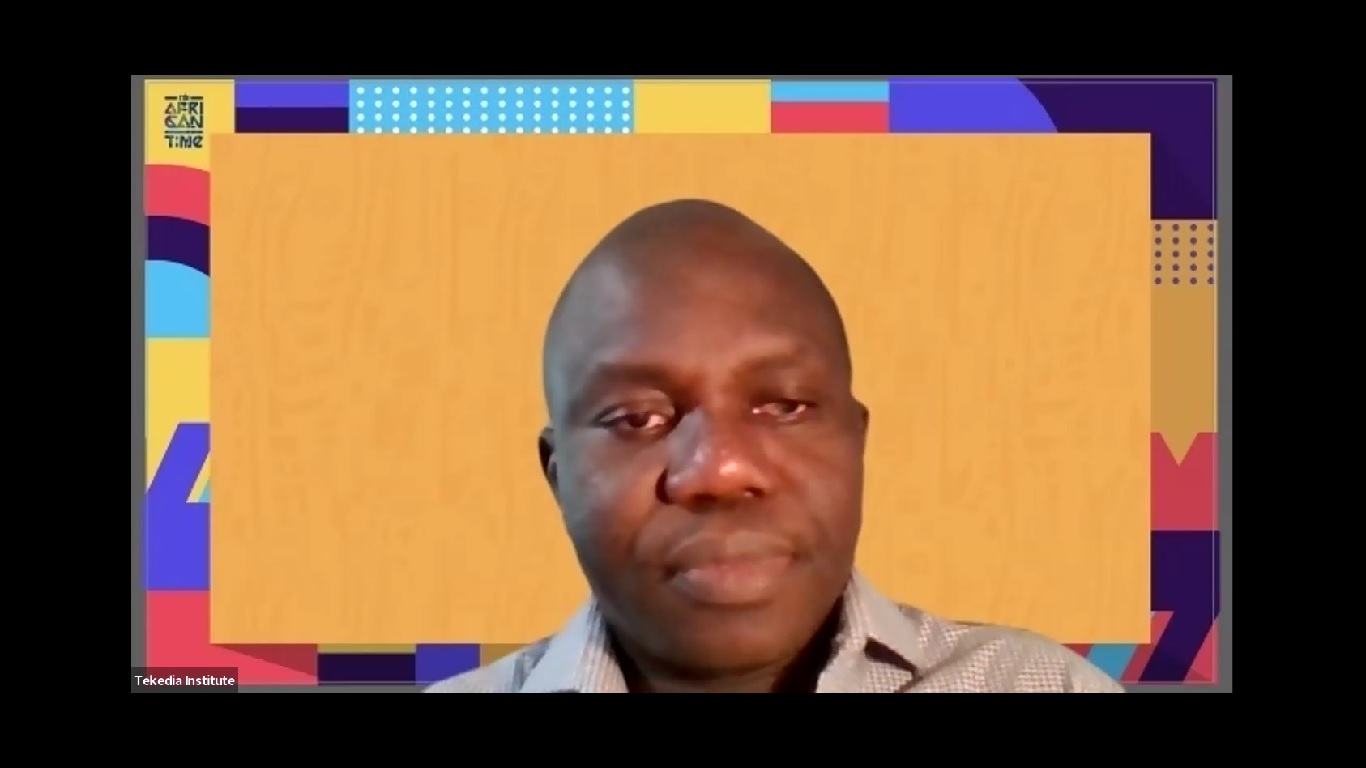
Royal Bank of Canada’s Evolve Summit 2022 in Toronto, Canada – Ndubuisi Ekekwe Presentation [Video]

2

My submitted presentation for Royal Bank of Canada’s Evolve Summit 2022 in Toronto, Canada today.  Due to scheduling conflicts, I spoke remotely. My topic was “Technology and Fixing the Frictions of Nations.” Watch the 30-minute presentation.

Comments on FB Feeds

Comment 1: Thank you so much my Prof. Very insightful and interesting. Let’s begin the journey of making Africa a continent of Numbers. Let’s take advantage of cloud computing technology to enhance our computational capabilities. Let us rise to fix the market frictions, ramp up our GDP and make Africa the continent of Abundance. Thank you once again Prof.

Comment 2: Great insight….well done Prof. “When you are in Canada you don’t pray for food because they are in abundant, but in Nigeria they prayed for food because they don’t even know where the next meal will come from” this got me thinking. Most of the things we tagged miracle in African, are failure of infrastructures and innovations.

NBC Suspends the Shutdown of 52 Erring Broadcast Stations, Says Stations Have 3 Days to Pay Their Debts

0

The National Broadcasting Commission (NBC) has suspended the shutdown of the broadcast stations whose licenses were revoked on Friday over unpaid dues.

The commission made it known in a statement released on Saturday that the stations now have up to Tuesday August 23 to pay their debts.

According to Balarabe Shehu Ilehah, the director-general of the commission, the decision was motivated by the intervention of concerned groups and visible efforts by some of the defaulting stations to clear their debts.

The statement went as follows:

“Following the intervention of concerned groups and visible efforts by some of the defaulting licensees to offset their debts, the National Broadcasting Commission hereby serves this notice of an extension of deadline to shutdown to 6:00pm on Tuesday August 23, 2022”

“All affected broadcast stations who fail to defray their debts on or before August 23, 2022 are directed to shutdown by 12 am on August 24, 2022”.

NBC Revokes Licenses of 52 Nigerian TV and Radio Stations and Demands their Immediate Shutdown

Overcoming Deathtraps in Investment Financing: Insights from Andrew Stotz, A Financial Expert

0

Financial intelligence is a scarcely developed skill in most individuals which is often responsible for their likelihood of success or failure in their personal, social and professional lives. A fundamental aspect of this skill is the ability to recognise and utilize opportunities even amidst scarcity. Remember the three motive of wanting money according to Maynard Keynes which include; transactionary, precautionary and speculative? The speculative motive embodies the idea of investment financing, and it is mostly accepted as the basis of wealth building.

Invariably, investment financing is often thought or learned from the perspective of what desirable skills to possess. However, it has been observed that an equally rewarding or even more rewarding approach looks at the subject in terms of the undesirable things we often take for granted in our day to day lives.

Financial investment expert and writer, Andrew Stotz, in his personal account of his financial investment failures titled My Worst Investment Ever identifies the key markers of a prone-to-fail investment and how a potential investor can circumvent these errors. The short book started out from the sampled opinions of the author’s friends and acquaintances, detailing their worst investment experience. It occurred that each respondent had such a vivid story to tell. The author describes the inspiration of the book as follows:

“In the world of finance, we are always talking about our winnings, about the story of our returns. But we so rarely talk about failures. Thus, the book is about investment failures.”

Stotz dissects the key drivers of a successful investment in four broad levels. In each level are decision errors that often cause the investor to lose out in the investment.

The first thing to consider is to deal with the basics. This involves thoroughly understanding the business venture; both its outlook and internal realities including its operating models, management team, and culture. According to Stotz, to avoid failure at the early stages of business, one must endeavor to put the basics in place.

The following decision errors emanates from not being able to deal with the basics:

  1. Buying into an illiquid investment that is hard to sell
    According to Stotz, investing in unlisted private companies poses a unique challenge because it is very difficult to exit when you are no longer satisfied with the management.
  2. Buying into an illiquid investment where you lack influence over management
    Here, it is stated that owning a minority stake is highly risky because as a minority you have little or no influence over the way the business is running. For example when you are an employee, there are times when management offers you your own shares in the company. In this case, you are better off when you avoid it since you will have no control over the management of the company. Moreover, you will have deferred your compensation, and if things go wrong, there may not be a buyer for your shares. Hence, the investor suffers due to lack of control.
  3. Putting faith in an unproven management team
    Here, Stotz contextualizes a common belief that the familiar devil is much better than the unfamiliar angel. According to Stotz, the changeover of the management is crucial to the survival of the venture. This was a case of new management taking over a family-run business. In such cases, investors expose themselves to the risk that the new management is unable to make the business successful. Hence, the lesson here is to stick to proven management if possible.
  4. Investing in people you don’t know and not revising their past and references
    Though this is similar to the previous case, it is however different because it goes beyond simply trusting on management to other things that informs our biases and irrational decisions. For example, some individuals make investment decisions based on how gracefully a pitch appeals to them or based on the culture, class or race of the people they are investing with. One must endeavor to carry out a thorough research or do what is called due diligence about the person’s past decisions and relationships.

The second driver is keeping an open mind such that you can easily overcome hureustics. Businesses evolve along with major and minor changes in the mode and social relations of production. A combination of macroeconomic and microeconomic forces could disrupt the market and set in a new ordinance. Therefore, the rational investor must keep an open mind and be ready to forego their favourite endeavour when necessary. This is simply “knowing when you must kill your darling” according to Stotz.

The following decision errors develop from failing to get past one’s residual knowledge:

  1. Being oblivious or deliberately disregarding major shift in an industry      One major risk of investing in an individual stock is the risk that something major changes in the industry in which the company is operating. These changes can start small at first and can seem to have little impact. But they can gather steam. For example, during the Covid19 lockdown, investment in real estate, particularly office space financing, and transportation went down due to remote working.
  2. Relying too much on professionals Author noted that one of the lessons of his career is that financial professionals are driven by many different factors than the the investor’s concern which is simply the performance of their investment. Also, it is often the case that brokers are cheerleaders for stocks rather than thoughtful analysts. Therefore, one must never eliminate the conflict of interest in the financial world. You must seek financial advice from people who disclose their conflicts of interest.
  3. Buying the dip without a second thought
    You definitely will be facing a high risk when deciding which course of action to take when the price of stock is falling. Referencing the prospect theory by economist and Nobel price winner, Daniel Kahneman and Amos Tversky, Stotz proposes that when for example you, as an investor,  buy a stock at 100 and it goes to 110, you feel great, but when it goes to 90 you feel about two times worse than you felt great when it went up by 10. This will cause you to make mistakes when prices are falling.
    Also due to overconfidence, when the share prices start to fall we think if we liked it at 100 we should like it even at 90. However, a better way to think of this is that while the analysis may be correct, the timing may be wrong. The author argues that if a stock falls by 20 percent to 25 percent in most market, you’d be better off selling it and hold cash.
  4. Ignoring the reality that things change for companies. Sometimes we are blinded by love– we like companies and their management so much and we know them so well that we think they will always be successful and be a good investment. But things change for companies. One must understand that previous glories do not guarantee success in the future.

The Africa’s Missing Presence – And Why It Defines The Economic Destinies of Many

1

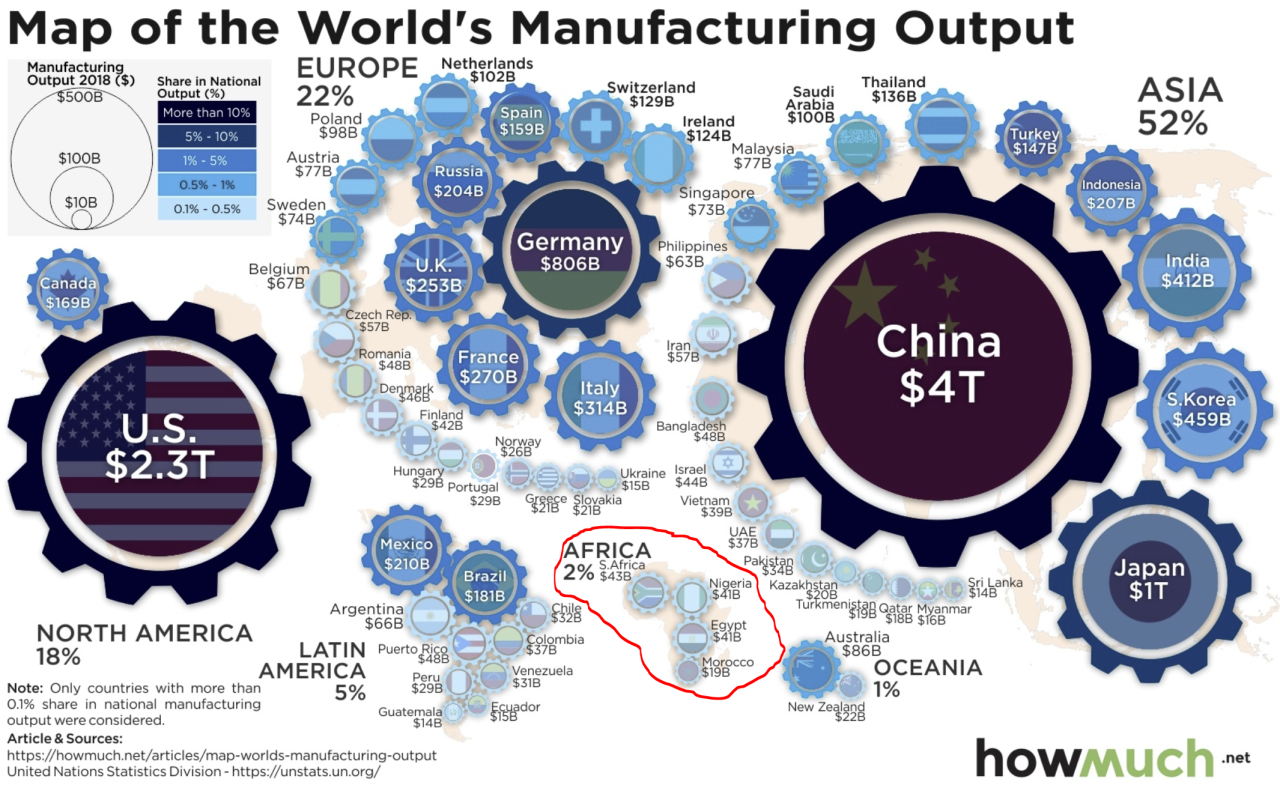
For centuries, the world was in a state of economic stasis. In other words, if you check the gross world product (aggregate of all national GDPs) over the last 2000 years, nothing was happening at scale. But things started changing. The data (the map above) shows the actual wealth of nations since that Adam Smith classic of the invisible hand and productivity. Until Africa begins to show up on this map, it cannot advance the welfare of its citizens.

More money in the national purse does not improve the lives of citizens. That is why crude oil money deceives. You receive $10 billion in your bank account with limited economic activity since the oil is picked raw and moved to another country to be refined. Sure, you can employ 20,000 people. With limited economic activity, your GDP is $20 billion. That GDP is a measure of your economic activity which gives us jobs and opportunities.

But someone who does not have oil, but gets $5 billion in the bank through its farming processes, outperforms. Yes, that farming involves many economic activities: cultivation, transportation, processing, etc. Because GDP measures economic activities, not money in the bank, that person can end up having a GDP of $40 billion since that agriculture enables many activities, providing ways to support lives.

In our modern history, nothing does that economic translation better than manufacturing. Unfortunately, Africa has no impact therein. That must change for Nigeria and Africa.

Comment on LinkedIn Feed

Comment: In all seriousness, our narrative ought to have transcended “How Europe Underdeveloped Africa” to how Africans are developing Africa. Rather regrettably, the narrative has remained constant in our mouths.

Until we graduate from economic over-dependency to self-reliance —not that the needed human and natural resources for such economic growth and development are lacking but the obvious inability, for too long, of the African leaders to activate the inertia —through transformational leadership, across-the-board. In that direction, the sleeping giant will be awakened to her position among the comity of nations.

My Response: We actually regressed from where Europe left us in the manufacturing space. So, instead of making progress, we are moving backwards.