DD
MM
YYYY

PAGES

DD
MM
YYYY

spot_img

PAGES

Home Blog Page 4980

Nigeria’s Headline Inflation Rate Hits 19.64% in July

0

The latest update by the National Bureau of Statistics (NBS), shows a 19.64% increase in Nigeria’s headline inflation rate in July.

The alarming new rate, which came on a year-on-year basis, was announced by Prince Semiu Adeniran, the Statistician-General of the Federation and Chief Executive Officer, NBS, through the Consumer Price Index (CPI) for July 2022 released in Abuja on Monday.

Speaking on the report, Adeniran said that the CPI measures the average change over time in the prices of goods and services consumed by people for day-to-day living, and it confirmed an uptick in inflation rate.

“This is 2.27% points higher compared to the rate recorded in July 2021, which was 17.38%.

“This shows that the headline inflation rate increased in July 2022 when compared to the same month in the previous year of July 2022. This means that in July 2022, the general price level was 2.26 per cent higher than in July 2021,’’ he said.

He said there were increments in all Classification of Individual Consumption by Purpose (COICOP) divisions that yielded the Headline index. He attributed the inflation to an increase in the food index which was created by the disruption in the food products supply chain.

Adeniran also attributed the increase in inflation to the rise in the cost of transportation which is as a result of the high cost of energy.

He said the increase in the inflation rate was also due to an increase in import costs as a result of currency depreciation, as well as a general increase in the cost of production.

“On a month-on-month basis, the headline inflation rate in July 2022 was 1.817%, which was higher than the rate recorded in June 2022 at 1.816%.

“The percentage change in the average CPI for the twelve months ending July 2022 over the average of the CPI for the previous twelve months period was 16.75%.

“This is showing a 0.46% increase compared to 16.30% recorded in July 2021,’’ he said.

The Statistician General also noted that the composite food index rose year-on-year from 21.03% to 22.02% in July 2022. This reflected in the prices of food commodities such as bread and cereals, potatoes, yam, and other tubers, meat, fish, oil, and fat. But he said month-on-month, the food sub-index in July 2022 was 2.04% lower than the 2.05% recorded in the previous month.

“The index for all items less farm produce (Core inflation), which excludes the prices of volatile agricultural produce stood at 16.26% in July 2022 on a year-on-year basis.

“This was higher when compared to 13.72% recorded in July 2021. On a month-on-month basis, the core sub-index was 1.75% in July 2022 higher when compared to 1.56% recorded in June 2022,” he said.

Other areas where inflation was highly recorded are in prices of gas, liquid fuel, solid fuel, passenger transport by road, passenger transport by air, garments, cleaning, repair and hire of clothing.

Consequently, the new inflation rate means more suffering for Nigerians who are already overwhelmed by the weight of rising cost of living.

With N30,000 monthly minimum wage, a large number of Nigerians cannot afford basic human necessities, especially food. This means more Nigerians are going to fall into abject poverty by the end of the year.

The World Bank had warned earlier in the year that the number of poor Nigerians is expected to hit 95.1 million in 2022. The projection is unfortunately becoming a reality.

Join Us At Tekedia Capital As We Invest in Finest African Startups

0

Join us as we continue to breed Africa’s empires of the future. The next cycle begins next month. Category-king startups in real estate, downstream oil & gas, manufacturing, biomed, and more are coming.  Global citizens, companies, investment clubs, corporations, associations, etc, register here.

We have developed a way to pick winners and our startups have gone to YC, Seedstars, Techstars, etc, raising $millions and advancing communities and nations. Join Tekedia Capital Syndicate.

The Sandbox, Aave, and Celphish Finance: Three Crypto Tokens Below the Cryptocurrency News Radar

0

The cryptocurrency bear market has dominated news cycles and made it near impossible for other news items to make the rounds as many promising crypto projects and their tokens fall between the cracks. Investors are encouraged to take steps to protect their portfolios during this period. One of these methods is converting their crypto assets to stablecoins to protect them from volatility. Another method is purchasing promising crypto tokens while their prices are currently low. Ensure that you thoroughly research crypto tokens before making purchases. Whatever you decide to do, you should remember that capital preservation is the most important strategy during a bear market.

Investors have no idea how long the bear market will last, so they are a bit uncertain in their approach to the crypto market. It has become harder to follow the narrative of the current crypto cycle, which means investors would need extra help discovering promising tokens. The Sandbox (SAND), Aave (AAVE), and Celphish Finance (CELP) are three crypto tokens that are currently below the cryptocurrency news radar. To learn more about these tokens, read our summary of each project.

The Sandbox (SAND)

The Sandbox (SAND) is a crypto gaming metaverse project built on the Ethereum (ETH) blockchain. SAND, the utility token of the project, uses the ERC-20 token standard and is compatible with other tokens on the same network. The Sandbox platform is a gaming metaverse where users can play various games, buy items, build, create, and trade with other users. Additionally, users have full ownership over the items they purchase as they are NFTs they can take off the platform if they wish. Sandbox will change the gaming landscape by using technology to change how players view gaming. The project will introduce players to blockchain gaming and its concepts.

The Sandbox project runs a DAO, which uses the SAND token for governance rights. These rights allow users to vote on proposals and suggest changes to the Sandbox platform. On the other hand, SAND is used for transactions on the platform. Users can buy, sell, trade, and swap items using the SAND token. Finally, the Sandbox project incorporates a play-to-earn model, which rewards users for using the platform.

Aave (AAVE)

Aave (AAVE) is a decentralized exchange (DEX) where users can borrow or lend crypto tokens. The Aave protocol is compatible with different blockchains, so many different tokens are available on the protocol. These tokens are in liquidity pools that are funded by users known as liquidity providers. These providers deposit tokens in exchange for a share of the pool’s fees. On the other hand, users who want to borrow must pay a fee to access the pool and deposit collateral before taking out the loan.

AAVE is the protocol’s governance token, giving its users the right to vote on decisions regarding the protocol. In addition, borrowers can use the AAVE token to reduce the fees they have to pay when they borrow from liquidity pools. Aave operates a DAO model which controls all the actions on the platform. Additionally, its decentralized nature means any crypto user can access it at any time.

Celphish Finance (CELP)

Celphish Finance (CELP) is an NFT and DeFi platform that aims to bring stability to the sector. It would help users protect their NFT assets from hacks and give them the tools to properly manage their crypto assets from their smartphones. Celphish Finance will leverage the current smartphone market to bring more people into the crypto ecosystem. Furthermore, it would create easily accessible DeFi solutions for users to easily access the financial services they need at the touch of a button. The CELP token is the utility token of the project, and it would be front and center of the project’s DeFi efforts.

Get in on this groundbreaking project by purchasing tokens in its ongoing pre-sale. You will receive a 10% bonus when you purchase CELP with ETH and a 15% bonus when you purchase CELP using BNB. Additionally, refer a friend and get $25 worth of CELP tokens when they spend $75. Remember that bonuses can stack!

For more information on Celphish Finance (CELP) visit the links below: 

Presale: https://cel.celphish.io

Website: http://celphish.io/

Telegram: https://t.me/CelphishFinanceOfficial

The Power of “Rings” And WeWork Founder’s $350M Raise

1

Silicon Valley venture capital firm Andreessen Horowitz is investing $350 million in billionaire Adam Neumann’s Flow, a residential real estate startup. Adam founded office-sharing company WeWork, pushing it to $47 billion before it came down to earth at $4 billion.

But that is not the story; the story is that the VC is writing this cheque at a valuation of $1 billion! Yes – take $350 million before you have a bank account!

Why is that possible? Adam has a ring. Yes, he has bred a unicorn and VCs never forget. They believe that he can win again. And that is how the world is – those who have rings are recycled in politics, sports and in markets.

Work hard to get some rings!

WeWork founder Adam Neumann has managed to snag a surprising backer for his new venture: VC firm Andreessen Horowitz. The Silicon Valley giant that has backed companies including Facebook and Airbnb is investing about $350 million in Flow — the largest funding round check it has ever written to a company. Flow aims to transform the residential real estate market. Tech watchers are divided over whether Andreessen Horowitz is making a wise investment: WeWork imploded under Neumann’s watch, seeing its market value plummet from $47 billion at its peak to $4 billion today. (LinkedIn)

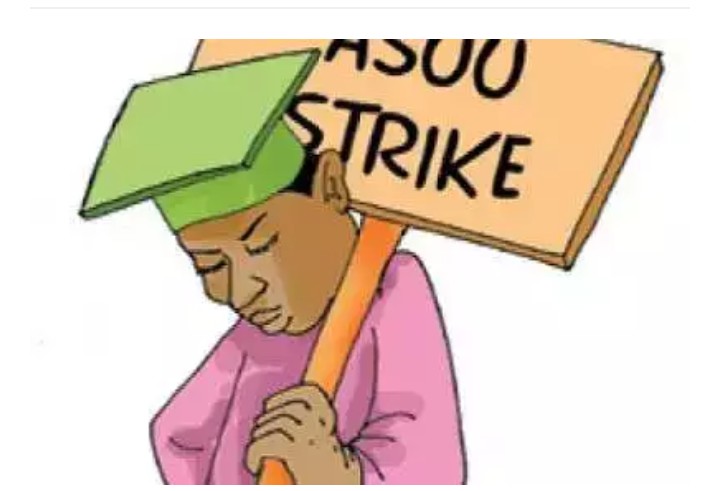
Will Allowing the Price Mechanism to Drive Public University System in Nigeria Resolve the Incessant ASUU Strike?

0

“Higher education and the huge numbers are contradictory to begin with…What is causing the decline of German culture? The fact that higher education is not prerogative anymore — democratism of a cultivation that has become commonplace.” — Friedrich Nietzsche, Twilight of the Idols.

Bowen University, a private university in Nigeria, recently became a victim of social media attacks on Twitter after the private university published on the social media platform a controversial post which was alleged to make mockery of students in the public universities who have been forced to stay at home since February due to the Academic Staff Union of Universities’ (ASUU) strike whereas these students should be in the classrooms or have finished a semester like some of their counterparts in the private universities.

The post which consist of a picture of a group of graduating students of Bowen University with the caption, “this is what finishing four years in a four-calendar-year in Nigerian University looks like…you should be here” was bitterly criticized by Nigerian youths who believed the University was being unnecessarily insensitive to the plight and emotional state of public university students.

However, some other persons believe there is nothing politically incorrect or morally wrong about the post; they argue that the post which is characteristic of competitive marketing communication only showcases the unique selling point of the university and offer alternatives to those who care to listen or can afford the university’s proposed value.

It’s been over six months since the Nigerian public universities have been shutdown due to the ongoing industrial action by the Academic Staff Union of Universities (ASUU) and millions of Nigerian students in the public universities have shown their disappointment in the system for depriving them of their rights to learn and be meaningfully engaged when they are expected to be in the classrooms.

The current wave of ASUU strike started on 14 February 2022 barely into the completion of the first academic session that ensued the previous wave of strike in the year 2020 which also lasted more than 6 months. Since 2007, the Nigerian public universities have been shutdown intermittently for more than 146 weeks due to ASUU strike which has become a perennial problem in country.

The issue of ASUU strike is now synonymous to a culture in the Nigerian public universities, and an effect to this is a popular joke that if, for instance, you are doing a-4-year course in a Nigerian public university, you should prepare to graduate in 5 or 6 years or, worse still, if you are studying medicine which is a 7 years program, you should plan to graduate in about 10 years after factoring in ASUU strike and some other internal disruptions that cause deferment of academic calendar.

The recurrence of ASUU strike and its disruptive effect on the academic calendar does not only frustrate the dreams and aspirations of many students who are expected to be in the labour market at a certain age limit in order to stand a good chance to secure quality jobs that befits their qualifications; it also contributes to the pressure and backlog of unemployed graduates in the labour market every year.

The average age of getting an entry level or graduate trainee job in Nigeria is 24 years. And while it is not unusual to hear employers of labour make remarks such as “Nigerian graduates are unemployable”, perhaps it is also relevant to consider the possibility that a quarter or half of these so called unemployable graduates are those who are readily cut out on age due to delayed academic calendar and protracted years of study in the university.

In a highly digital economy which requires fast-paced thinkers and actors that can quickly innovate or improvise to keep up with the current market ordinance, the Nigerian public universities, which are supposed to be places where industry leaders are nurtured and shaped, are characterized by slow academic calendar and highly mechanical models.

Thus, overtime, employers of labour across industries have preferred to base graduates’ employability on the strength of their extra-curricular experiences including community service, internships and volunteering rather than the strength of their academic grades. The problem of town-gown disconnect or industry-academia gap has raised more politically driven quick fixes than long-term management-based solutions which has exacerbated the problem rather than nip it in the bud.

Since the establishment of ASUU in 1978, the Union has been conditioned to see industrial action as the best language or mechanism to pressure the Federal Government to yearn to its demands which often include but are not limited to issues such as wages and welfare conditions of university staff members,  infrastructural facilities in public universities, and university-education centered policies etc.

However, recently, the ASUU has been more agitated than ever, accusing the Government of being dishonest and lacking the political will to position the Nigerian University education to be able to compete globally, especially considering the fact that the Government has yet to make good the memorandum of understanding it reached with the Union since 2009.

The Federal Government on the other hand has accused ASUU of being unrealistic with its demands and insensitive to the current economic realities of the country. Thus, the loggerhead between the Union and the Government has been on a merry-go-round, and efforts to resolve it have resulted in deadlocks after deadlock.

As Nigerians continue to hope for a permanent solution to this incessant strike which not only disrupt academic activities but also indirectly affect the economy of the country, sadly, the best solution available seems to be the worst and most unlikely conceivable option. In a mixed economy such as Nigeria, when the Government’s mechanism fail to achieve its intended objective, the reasonable alternative is to allow the price mechanism to aid or correct the imperfection of the former.

Currently, in Nigeria, the supply of labour far exceeds the demand for labour which implies that the cost of producing graduates increases while there is no corresponding increase in tax payers’ money which is being used to subsidize education in the public universities. Therefore, the most logical thing to do is to cut down on the cost of production which in this case suggests that the federal government needs to reduce the amount of subsidy that goes into funding university education or tertiary education generally.

According to the Secretary General of the Committee of the Vice Chancellors of Nigerian Universities, Professor Yakub Aboki Ochefu, during an interview with TVC Break fast show on Friday, 12 August,  the cost of training an average student per year in Science, Social sciences and Arts and Humanities from 100 level to 400 level is between N2million and N3million while a medical student will require between 3million and N5million. In Federal Government owned public universities, the federal government provides 95 percent of the cost while the remaining 5 percent comes from users/maintenance charges which are often incurred by the parents or guardians of the students.

Analysing the numbers, one needs no divine revelation to understand that the current situation is not statically feasible especially in an economy with as much as 33percent unemployment rate and 53.40percent youth unemployment rate. Thus, the Government and ASUU can work together to reexamine and restructure the education subsidy scheme to suit the current realities of the country.

While university education subsidy can be removed or better still tentatively reduced, the social cost of reducing the subsidy must be offset by increasing scholarships, bursaries, assistantships and loan facilities to qualified or deserving students. The federal government in partnership with relevant agencies should work out a sustainable structure towards achieving this. This will not only preempt waste in the public universities, it will promote inclusiveness and enhance merit and efficiency.

Another way the Government can reduce cost while achieving efficiency in the public universities is to encourage investment in these institutions from interested individuals, corporate organisations, non-governmental or non-profits organizations and especially the Universities’ Alumni. This will enhance internal ingenuity and promote the Town-Gown relationship which has long been endangered and now almost extinct in the country.