DD
MM
YYYY

PAGES

DD
MM
YYYY

spot_img

PAGES

Home Blog Page 4980

Convicted Former Samsung’s Vice Chairman Jae Y. Lee Granted Presidential Pardon

0

Convicted Samsung Vice Chairman Jae Y. Lee, will on Monday, receive a presidential pardon that will enable him to once again, take part in decision-making of the electronic company.

Lee was convicted in 2017 for gross graft practices which included an attempt to bribe former South Korean president Park Geun-hye to win government support for his succession. He was paroled a year ago after serving 18 months in jail.

The pardon by South Korean President Yoon Suk Yeol will erase the 54-year-old executive’s criminal record, allowing him to join Samsung board, travel overseas for deals, and help to accelerate decision-making for the company, which has been impacted by global demand and supply shocks.

“In a bid to overcome the economic crisis by vitalizing the economy, Samsung Electronics Vice Chairman Lee Jae-yong, whose suspended prison term was ended recently, will be reinstated,” the Korean government said in a joint statement from its ministries.

Samsung businesses, both chip-making and smartphones, took a hit following Lee’s exit. The company has suffered major revenue setbacks following global economic headwinds that were orchestrated by Russia-Ukraine war and logistics challenge triggered by China’s covid lockdowns.

Chip shortage was also a factor and unfortunately, Samsung couldn’t increase its chip production partly due to the effect of the US-China semiconductor dispute. Lee is expected to help Samsung to create strategies and investment plans that will especially boost the company’s chip production.

After apologizing to the Korean people on Friday, Lee promised to “start anew.” He said in a statement that he “will try harder to give back to society and grow together.”

The pardon which shows how much Korea relies on Samsung for its economic growth, is seen as an opportunity for the tech giant, a $280 billion company, to reclaim its market leadership position, particularly in the semiconductor industry.

“Samsung’s in a crisis as it has lost its two strengths: technology leadership and strict management,” said Park Ju-gun, head of corporate research at Leaders Index. “There’s an absence of a control tower making the right decisions at the right time to keep its leadership in the semiconductor industry.”

However, Lee’s comeback will not yield automatic rebound for Samsung as a lot of obstacles, with some having to do with him personally, will need to be cleared.

As noted by Fortune, the South Korean giant warned during its earnings call last month that the war, inflation and waning consumer demand made it immensely challenging to forecast the year ahead.

There is also concern that Lee won’t be clear of legal woes for years as he’s being separately prosecuted in relation to a merger of Samsung subsidiaries, and will be attending weekly hearings related to that case.

Considering how much Lee is needed by Samsung now, it is also not clear whether he’ll seek to take the position of chairman of the company, which has remained vacant since his father Lee Kun-hee died about two years ago.

Many Nigerian Startups Must Come Together To Thrive

0

Nigerian Startup Founders: this is for you. Possibly, you might have noticed that the industry has changed dramatically in the last three months, across many dimensions. This redesign will continue over the next few quarters.

There are many CEOs and Founders in the industry, offering largely non-differentiated products. A solution is clear: some CEOs must be open to become Vice Presidents or Heads of Units in other companies. And what that means is that we need to combine some companies.

That combination does not diminish anyone; it is a sign of strength. Those fintech ideas are off by more than two years. Why not talk to other founders/startups and come together under one firm? If you do that, you have a better chance since we already have clear dominant players in the industry. The same goes for ecommerce, logistics and other sectors.

Not everyone must be a CEO – come together! If you do that, investors will pay attention.

#Push more into your breakthrough

0

The door is closed and everyone can see it. But I have seen many closed doors which are not locked. Largely, a simple push will get you in, even when a knock would not have worked.

Many things in life seem closed, and we keep knocking, when what we need is a PUSH. Doors of life are frictions we encounter. To overcome them, a little force is needed. Push the barriers and get into the breakthrough.

“Chairman, can I write how this new government policy will affect the business?” – that is a knock. Possibly, he responds “do not bother”.

“Sir, this is how the new policy will affect the business” – that is a push. You’re in.

PUSH, do not just knock all the time. 


Africa’s E-commerce Sector Projected To Grow By 56% By 2025

0

With the significant growth of online businesses in Africa, the continent is progressively shaping up to be the next hotbed for internet-based businesses. This growth has been attributed to the high penetration of smartphones and the Internet in the region, which has become prevalent in most African countries. The continent has no doubt become a lucrative market for the e-commerce industry.

Recall that during the covid-19 pandemic, which led to the shut down of so many businesses, most people had to resort to shopping online, which saw a boom in online sales during this period, where industry analysts disclosed that online trade is expected to grow by over half in the next three years.

In Africa, the E-commerce industry is projected to grow by 50% by 2025. In 2020, the market revenue in Africa increased by 52.7 percent, which was estimated to be around 27.97 billion U.S dollars, an increase of over 6 billion since 2019.

In 2021, the E-commerce industry in Africa generated $28 billion in revenue, while in 2022, the industry is predicted to produce $33.3 billion in revenue following an increase of 19%. With the significant increase in E-commerce revenue in Africa, experts disclose that it will continue to increase and will likely reach a value of over 46.1 billion U.S dollars.

In the African continent, there has been a significant increase in the introduction of digital trends in the retail sector, which has effectively enhanced sales, coupled with an increase in customer base. However, before this significant growth of the e-commerce sector in Africa, there were negative reactions that trailed the entry of the e-commerce industry into the African market.

There was so much negativity strong enough to put off timid investors, stating that the continent with over a billion people lacked the necessary exposure for digital-based businesses, with a majority of the people based in the rural settlement, coupled with low internet connectivity. They also cited the lack of quality infrastructure needed to enable a digital-based venture to thrive.

However, it is interesting to note that ten years down the line, the African continent has become a hotbed for E-commerce businesses, as the continent has defied all odds and negative predictions, by proving its viability for digital-based ventures on the continent. These recent achievements in the E-commerce industry have continued to attract investors who are coming in droves to invest in Africa’s E-commerce sector.

The continent was reported to have secured more than $256 million in disclosed funding in 2021. Countries like Nigeria, South Africa, and Kenya continue to dominate the industry in sub-Saharan Africa. With the introduction of E-payment technology, the African continent has continued to witness significant growth in the number of online shoppers.

One amazing thing about the growing e-commerce industry in the region is that they are providing a platform for SMEs to thrive. With partnerships and collaboration with these small businesses, it has continued to improve their business activities and productivity.

The E-commerce industry in Africa has been poised to be a game changer for SMEs. Given the crucial roles that SMEs play in the development of a nation’s economy, the growth of these small and medium-scale businesses will no doubt, greatly impact the economy of nations on the African continent.

Persistent unremarkable steps that lead to greatness… and what Musk might do next.

2

I don’t normally write about global business leaders who have risen to gain universal notoriety and acquire celebrity status. I’m not against those that do, but I have my own reasons.

The first is that there is a view among some, that writing or talking about high profile business super-achievers creates the impression of being informed on current affairs. I’m not in that lane. I prefer to leave that lane to those that feel comfortable inhabiting it.

Another reason is the applicable quality of lessons. When writing for Tekedia, my content looks to have a West African, and particularly a Nigerian slant if its feasible.

Macro lessons from other environments that have a completely different set of economic dynamics and challenges just don’t fit. This is particularly true of individuals whose success has relied on the American market.

I also see posts that reel out different life challenges people have had and they rose above them.

From smaller challenges such as not gone to university, to bigger challenges like starting a business path and becoming mega successful late in life, and humungous challenges such as being a multiple amputee…

Greatness comes from being an extra-ordinary human being. However, make no mistake, things in life that are debilitating and/or limiting are very real. They also vastly reduce the potential for success.

It doesn’t mean because there is a show case example of a man who built an empire, starting at aged seventy, or someone who never completed high school… that it is then reasonable to waste an opportunity to attend University if it is given; nor is it a good idea to become a passenger in your own life all the way to seventy, and then start getting serious about life ambitions.

It’s fine to be inspired, but we all need to avoid the temptation to compare. We cannot allow our capacity to achieve to be limited or benchmarked against the achievements of someone else. We must have our own path.

Being inspired can lead to dreaming. Nothing really wrong with dreaming either… The ability to dream gives hope. Hope is a phenomenon which human beings do not share with any other form of life. Hope creates the ability to perceive the achievement of things in the future beyond what is here and now. The capacity to hope creates the conditions for things like inventiveness and entrepreneurship to happen, and for civil society to exist.

Nevertheless, a measured approach is needed to realize dreams. In sport, there is this ideology called ‘playing the percentage game’. This means in any situation, the statistical likelihood of the players’ touch to achieve an outcome dominates the players decision on how to handle the play.

The player (or team) needs to work to move the play closer to a scenario where the likelihood of success from a ‘killer’ touch is vastly improved.

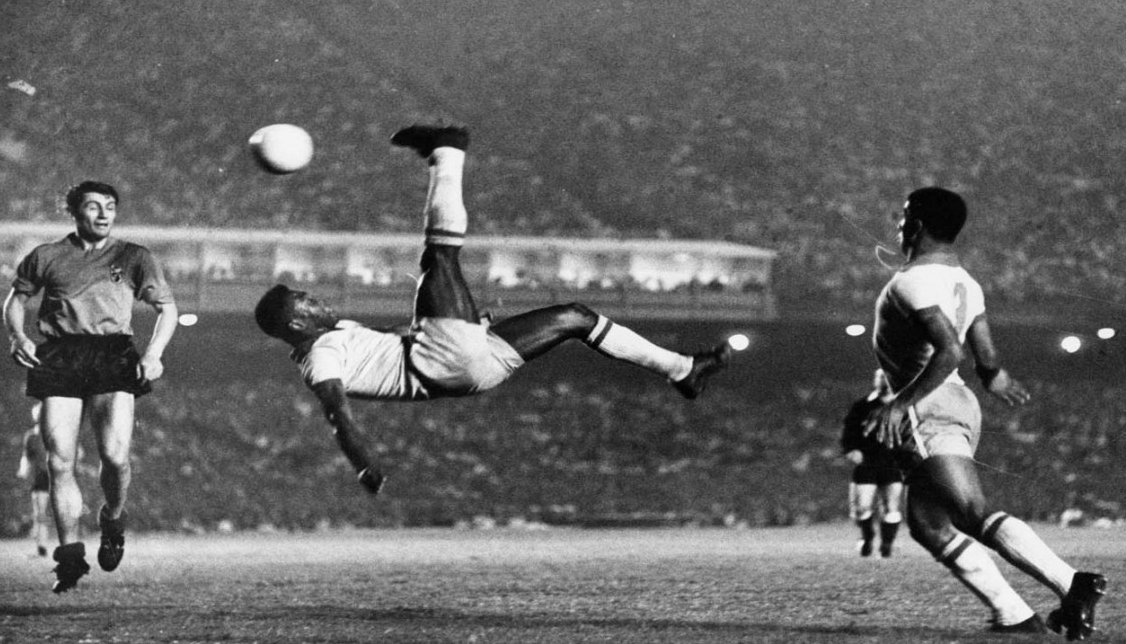
This means in tennis, a player doesn’t go for a winner if the level of difficulty of the shot is such that an unforced error is likely; a golfer doesn’t try to put a deliberate slice (fade) or hook on a tee shot to attempt to get a few extra metres round a dogleg, and a footballer doesn’t attempt a bicycle kick unless so close to enemy goal, it’s a very big target, or, there is no other play in the moment.

In big business team sport in particular, analysts have so many video dissecting AI tools now, they can easily build the KPI and metric value of the players consistently adding value through what seems to be unremarkable actions like ‘assists’. A few amazing bicycle kicks alone may get a player into some fans ‘shots of the year’ video on YouTube, but not on a premiership clubs shopping list.

Incremental movements are boring, tedious and the gallery doesn’t notice them, but when it comes to achieving business or career goals, the only gallery anybody really needs to play to, is themselves. It is important to play the ‘long game’ arriving timely at the destination of the dream, rather than snatch at it, while it is still out of sight, and lose all momentum.

And now, I’m going to come full circle and, contrary to normal behaviour, mention a global business leader who has risen to gain universal notoriety and acquire celebrity status.

This is Elon Musk. Now the thing about Elon Musk is, he never tried to take a short cut to a dream. In the early days at least, Musk took a lot of measured decisions and played ‘the long game’.

While he invested in Cryptocurrency, it isn’t what made him. When we look at the successful trajectory in hindsight, he never looked for an already worn bandwagon, like the Cryptocurrency or Digital Artwork NFT market trying to take a short cut.

He wasn’t a particularly remarkable seventeen-year-old when he moved from his native South Africa to the US to study. Most people today only know him for his current high-profile businesses, such as Tesla and SpaceX, but they don’t know that arriving at these destinations was a long journey through the formation of companies such as Zip2, a start-up that helped provide online publishing options for printed media (a new concept in 1995) or one of his other companies- x.com, and of course there was PayPal.  There were many steps to where he is now, and each step required a huge amount of discipline.
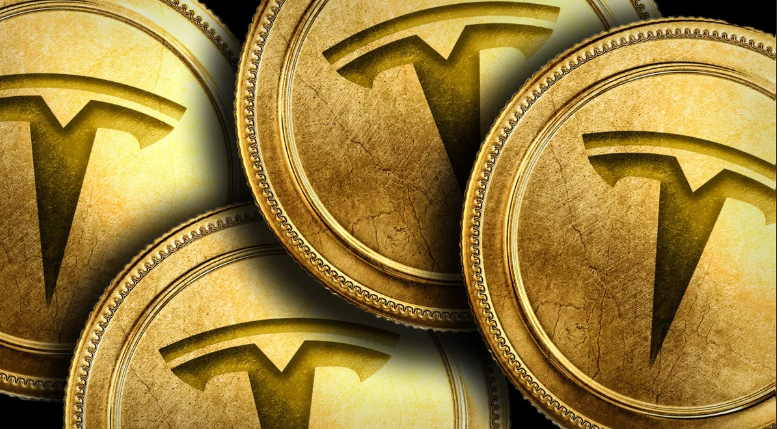
Now he has amassed sufficient wealth that the risk downside for his investment behaviour is minimized because of his unusual quality to have become a self-fulfilling prophesy. He can now afford to be involved in speculative investments because his brand value as an investor will see them soar when he jumps in, and it may sometimes add a crash resistant quality, so it only collapses when he has jumped out.

He has now risen to the point where his individual investment decisions, or sometimes even his remarks, or social media comment, can sway whole markets. This means when he does make a decision, it is probably a good idea to try to understand it.

Three weeks ago, Elon Musk sold 75% of Tesla’s Bitcoin, saying at the time that the decision was not a “verdict” on the digital currency.

Musk has now sold nearly $7 billion of Tesla Inc. stock between 5 and 9 August approximately…

Since the exposure to Bitcoin was already removed before he has done a limited ‘bail’ from Tesla, we have to think it is about raising liquidity and not about outflanking (potential) losses from investments with performance challenges.

With all the legal uncertainty around his $44 billion bid for Twitter Inc., it really looks like he has tried to ‘kick that one into the long grass’.

So what is he doing here? What is he raising liquidity for? Since selling the Bitcoin, Musk has said he is still open to buying more, but he didn’t say when, adding ‘cryptocurrency is a side show’

If we watch, we may get a lesson in patience, the long game, and the percentage game. Mr. Musk doesn’t do bicycle kicks

.
All references and external content sourced 11-13 /08/22

zdnet.com/article/elon-musks-tesla-has-sold-75-of-its-bitcoin-heres-why

thestreet.com/investing/how-to-trade-bitcoin-after-tesla-purchase-february-2020

marketwatch.com/story/after-tesla-sold-most-of-its-bitcoin-elon-musk-says-he-is-open-to-buying-more-though-cryptocurrency-is-a-side-show-11658355686

Bicycle kick performed by Pele; photo taken from remezcla.com