DD
MM
YYYY

PAGES

DD
MM
YYYY

spot_img

PAGES

Home Blog Page 5

Apple Turns to Alibaba’s Qwen to Bolster Its AI Push in China as Mac Market Share Slips

0

Apple has published a guide showing eligible Mac users in mainland China how to connect Alibaba’s Qwen artificial intelligence service to Siri and Apple’s Writing Tools, giving the U.S. technology giant a locally supported way to expand its AI capabilities in a market where its personal-computer business is losing ground to Chinese rivals.

The integration allows users to opt in to Qwen through Siri for more detailed responses to certain requests, including analysis of photographs and documents. Apple’s Writing Tools can also use the service to generate text or images from user prompts.

The arrangement applies to Macs running macOS 26.6 or later and is subject to China-specific requirements. Users must activate the Qwen extension and sign in to a Qwen account.

Apple’s guide also states that Alibaba cannot use the materials processed through the service to train or improve its AI models, a condition that could be important in addressing data-handling and privacy requirements surrounding generative AI services in China.

The move gives Apple a way to add more advanced generative AI capabilities to its Mac lineup without relying entirely on its own models. More importantly, it provides a route for the company to offer AI functions through a Chinese service that can operate within the country’s regulatory environment.

That matters as Apple’s position in China’s PC market comes under increasing pressure.

Mac shipments in mainland China declined 9% year over year in the first quarter to about 800,000 units, leaving Apple with roughly 9% of the market, according to Omdia. Lenovo held about 31%, while Huawei had 16% as the Chinese technology company continued expanding its presence in the PC market.

Chinese manufacturers have been increasingly differentiating their computers through locally developed AI features. Lenovo, for example, has made its Tianxi personal AI agent a central part of its AI-PC strategy, while Huawei is incorporating AI functions across its HarmonyOS ecosystem.

Apple’s Qwen integration therefore serves a broader strategic purpose than simply adding another chatbot to the Mac. By connecting the Chinese AI model directly to Siri and Writing Tools, Apple can preserve the Mac’s existing user interface while outsourcing some of the underlying generative AI capabilities to a domestic model provider.

The approach could help Apple close part of the AI feature gap with Chinese PC manufacturers, which are using locally developed assistants and AI tools as selling points in a market where consumers and businesses are increasingly evaluating computers based on their AI capabilities.

For Alibaba, the partnership offers a significant distribution opportunity.

Qwen is Alibaba’s family of generative AI models and can generate text and images while analyzing documents, photographs and other material. Embedding the service into Apple’s operating system would put Qwen in front of Mac users through features they already use, rather than requiring consumers to access Alibaba’s applications or cloud services separately.

Alibaba has previously said Qwen would be incorporated into Apple Intelligence across the iPhone, iPad, Mac and Vision Pro in China. Apple’s newly published instructions, however, specifically detail the Mac implementation.

The partnership comes as Alibaba continues to expand its AI portfolio. The company this week released Qwen3.8-Max, which it describes as its most capable model to date, with 2.4 trillion parameters. Apple has not disclosed which Qwen model will power the Mac extension, so it is unclear whether the newest model will be used.

The partnership also underpins the different paths Apple is taking to deploy AI in China compared with other markets. Rather than simply extending the same AI infrastructure globally, Apple must work within China’s regulatory framework and accommodate local requirements around data, content and AI services.

That makes partnerships with Chinese technology companies strategically important.

The challenge is to make Apple’s products competitive on AI capabilities while maintaining a consistent user experience and meeting China’s regulatory requirements. For Alibaba, integration with Apple’s software gives Qwen exposure to an established global hardware ecosystem and could strengthen its position against other Chinese AI developers.

The impact could extend beyond the Mac if Apple follows through on its broader plan to integrate Qwen across its devices in China.

The immediate test, however, will be whether the new functionality can help Apple address the widening competitive gap in China’s PC market.

The Qwen integration does not solve Apple’s broader market-share problem on its own, but it gives the company a locally tailored AI capability that could make its Mac lineup more competitive at a time when AI is becoming a differentiator in China’s PC market.

GAO Finds DOGE Took Credit for $1.7 Billion Contract Savings It Didn’t Create

0

The US government’s cost-cutting initiative known as the Department of Government Efficiency (DOGE) is facing growing scrutiny after federal auditors challenged the accuracy of its widely publicized savings figures.

The latest criticism comes from the Government Accountability Office (GAO), which found significant discrepancies in DOGE’s claims, raising fresh questions about transparency, accountability, and the credibility of government spending reforms.

DOGE has frequently highlighted its efforts to eliminate wasteful spending across federal agencies, claiming that it has generated approximately $110 billion in savings for taxpayers.

Those figures have been repeatedly cited as evidence that the initiative is delivering on its promise to streamline government operations and reduce unnecessary expenditures. A recent review by the GAO suggests that some of the most prominent savings claims may be substantially overstated.

One of the most striking examples identified by the auditors involves a government contract that DOGE said produced more than $1.7 billion in savings. According to the GAO, DOGE had no role in modifying, canceling, or renegotiating that contract.

The auditors concluded that the savings were incorrectly attributed to the department, casting doubt on the methodology used to calculate its overall financial impact. The findings have intensified debate over how government agencies measure and report cost savings.

While identifying opportunities to reduce waste remains a widely supported objective, experts argue that public confidence depends on accurate and independently verifiable reporting. Inflated or improperly attributed figures can undermine legitimate reform efforts and make it more difficult for policymakers to evaluate which initiatives are truly delivering value.

The controversy highlights the critical role of oversight institutions such as the GAO. As Congress’s independent auditing agency, the GAO is responsible for reviewing federal programs, assessing government performance, and ensuring that taxpayer funds are managed responsibly.

Its reports often serve as an important check on executive agencies, helping lawmakers distinguish between projected savings, estimated efficiencies, and actual budget reductions.

Supporters of DOGE may argue that the department has encouraged agencies to review spending more aggressively and pursue operational efficiencies. Even if some individual claims prove inaccurate, they contend that the broader objective of reducing waste remains worthwhile.

Critics, maintain that overstating results damages the initiative’s credibility and risks misleading both lawmakers and the public about the true scale of government savings. The dispute arrives at a time when concerns over the US fiscal outlook continue to grow.

Rising national debt, persistent budget deficits, and increasing interest costs have placed greater pressure on Washington to improve fiscal discipline. In such an environment, accurate accounting of government savings is more important than ever.

Policymakers rely on trustworthy financial data when making budget decisions, allocating resources, and designing long-term economic strategies.

Transparency is especially important because government efficiency programs often influence public trust. Citizens expect agencies not only to pursue savings but also to clearly explain how those savings are achieved.

Independent verification helps ensure that reported successes reflect measurable outcomes rather than optimistic estimates or accounting assumptions. The GAO’s findings serve as a reminder that accountability is as important as efficiency.

As scrutiny of DOGE’s reported $110 billion in savings continues, the debate is likely to shape future discussions about government reform, fiscal responsibility, and the standards used to measure success in the public sector.

Why Free NFT Mints Could Help Drive Mainstream Web3 Gaming Adoption

0

The convergence of blockchain gaming, NFTs, and artificial intelligence is continuing to reshape digital entertainment, with new projects increasingly focusing on experiences rather than speculation.

Two recent developments highlight this shift: Immutable’s launch of a Seven Deadly Sins NFT adventure built around free minting and quest-based gameplay, and Krea’s upcoming webinar focused on training custom AI models to reproduce a brand’s visual identity.

Immutable’s Seven Deadly Sins initiative reflects the growing effort to make NFTs more accessible through gameplay. Instead of presenting digital collectibles simply as assets to buy and hold, the project introduces NFTs as part of an interactive adventure.

Players can participate in quests, explore the game’s ecosystem and engage with digital items through a structure designed to make ownership part of the entertainment experience. The free mint component is particularly significant.

One of the biggest barriers to mainstream NFT adoption has historically been the requirement to purchase an asset before users can understand its utility. By removing that initial financial hurdle, Immutable can potentially bring a broader audience into the experience.

Players who might not normally interact with blockchain technology can participate first and discover the underlying technology through gameplay. The use of The Seven Deadly Sins intellectual property also gives the initiative an established entertainment identity.

Recognizable characters and storytelling can help bridge the gap between traditional fans and blockchain-based gaming. Rather than asking users to learn about NFTs for their own sake, the experience puts the narrative and gameplay first.

This model represents an important evolution for Web3 gaming. The industry has spent years experimenting with play-to-earn mechanics, token incentives and speculative NFT markets.

However, long-term adoption is likely to depend on whether blockchain games can provide compelling entertainment independently of financial rewards. Quest-based gameplay is one route toward that goal because it gives digital assets a functional role inside a broader experience.

Meanwhile, Krea is approaching the intersection of artificial intelligence and creativity from a different direction. The company plans to host an Aug. 12 webinar focused on training custom AI models to match a brand’s visual style.

The session builds on Krea’s work with Doodles, highlighting how generative AI can increasingly be adapted to specific creative identities rather than producing generic imagery.

For brands, this capability could become increasingly valuable. Maintaining a recognizable visual language across campaigns, products and social media traditionally requires significant creative resources.

Custom AI models can potentially help organizations reproduce established aesthetics while allowing creative teams to generate new material more quickly. The Doodles case study is especially relevant because the project has built a distinctive visual identity around digital art and collectibles.

Training AI systems around a specific brand style demonstrates how generative technology could become part of a broader intellectual-property and content strategy. Immutable and Krea illustrate two different but connected directions for digital culture.

Immutable is using blockchain to make interactive ownership and gaming more accessible, while Krea is using AI to make customized creative production more scalable. The larger trend is clear: technology is increasingly disappearing behind the experience.

Users may not care whether an NFT is minted on a blockchain or whether an image was produced by a custom AI model. What matters is whether the resulting product is engaging, useful and distinctive.

If projects like Immutable’s Seven Deadly Sins adventure can deliver meaningful gameplay, while tools such as Krea’s custom models help brands preserve authentic creative identities, blockchain and AI could move beyond their experimental phase.

Their strongest future may lie not in selling technology itself, but in quietly powering better entertainment, storytelling, ownership and creativity.

Bank of America Warns Bull Market Faces Major Test After November Midterms

0

Strategists urge investors to turn defensive as election uncertainty, rising Treasury yields and an uneven U.S. economy threaten to expose vulnerabilities in equities

The U.S. stock market’s powerful rally could face a major test after November’s midterm elections, with Bank of America strategists warning that a Democratic sweep of Congress could trigger a sharp reversal in risk assets.

The bank’s strategists, led by Michael Hartnett, said investors should reduce exposure to riskier assets and adopt a more defensive positioning in the months ahead. They described the election as a potential “referendum on populist capitalism vs populist socialism” and flagged the possibility of a “big” reversal in stocks after voters go to the polls.

The warning comes after a prolonged equity rally that has lifted U.S. stock valuations and generated roughly $9 trillion in market gains over the past two years. BofA said the increase in household wealth from higher stock prices has become an important source of economic support, creating a potential vulnerability if markets reverse sharply.

“Investors should eschew risky assets and head into defensive investment in the near-term,” Hartnett’s team wrote in a note on Friday.

The strategists said they favor gold as a hedge against risks associated with what they described as a K-shaped economy and an electorate that could deliver an “it’s the economy, stupid” midterm result.

The K-shaped economy refers to the widening divergence between higher-income households, which have benefited from rising financial and property values, and lower- and middle-income households facing greater pressure from inflation and a difficult labor market.

That divide could become politically significant if economic conditions deteriorate or financial markets weaken. Higher-income households tend to have greater exposure to equities and other financial assets, meaning a prolonged market decline could weaken the wealth effect that has supported consumer spending.

BofA said the U.S. economy’s recent resilience has been supported in part by the increase in household wealth created by rising asset prices. That creates a feedback risk: if stocks fall significantly, consumers could respond by cutting spending, potentially weakening economic growth and corporate earnings.

Treasury Yields Emerge As A Bigger Threat

BofA also warned that the bond market could become the more immediate threat to the equity rally.

Strategists said yields could move substantially higher if investors become more concerned about inflation and the U.S. government’s fiscal position. A sharp rise in borrowing costs would increase financing expenses for businesses, put pressure on equity valuations and make bonds more attractive relative to stocks.

In a more severe scenario, higher yields could become the catalyst for a broader risk-off move and potentially puncture the market’s enthusiasm for artificial intelligence stocks.

“Bonds end booms and bubbles, and this one ends once ‘higher yields-lower dollar’ vigilante event forcing fiscal policy U-turn, and asset allocation from stocks to bonds rise,” the strategists said.

They described rising yields as a “canary in the coalmine” for investors.

The 10-year U.S. Treasury yield has already climbed to around 4.67%, above the 4.5% level closely watched by investors. So far, the increase has not been enough to derail equities, but a further rise could put greater pressure on stocks whose valuations depend heavily on expectations of strong future earnings.

The concern is particularly relevant for large technology and AI companies. Their share prices have risen sharply as investors anticipate years of rapid growth in AI infrastructure, software and computing demand. Higher discount rates can reduce the present value investors assign to those future cash flows, making high-growth stocks especially sensitive to movements in Treasury yields.

Election Risk Adds Another Layer Of Uncertainty

The November midterms could introduce another source of volatility.

BofA’s warning centers on the possibility that Democrats could win control of both chambers of Congress. Such an outcome could alter expectations for taxation, spending, regulation and fiscal policy, potentially prompting investors to reassess sectors and companies that have benefited from the current policy environment.

The election could also become a referendum on the distribution of economic gains. While financial markets have performed strongly, the benefits of higher asset prices have been unevenly distributed, leaving households with little exposure to stocks or property more vulnerable to inflation and employment pressures.

That dynamic could increase the importance of economic conditions in determining voter behavior and, in turn, market expectations.

Other Wall Street strategists have also warned of elevated volatility as the election approaches.

Oppenheimer analysts said in an earlier note that in midterm years when the president is serving a second term, the S&P 500 tends to experience a correction during the third quarter.

Goldman Sachs strategists have also pointed to a seasonal pattern. In all midterm years since 1974, the S&P 500 has produced a median return of 0% from August 1 through election day in November.

Those historical patterns do not establish that stocks will fall this year, but they highlight a period when political uncertainty and changes in expectations about economic policy have historically increased market sensitivity.

The Bull Market Faces A Three-Way Test

The risks identified by BofA ultimately converge around three forces: asset valuations, Treasury yields and the distribution of economic growth.

The equity rally can continue if corporate earnings remain strong enough to justify elevated valuations, inflation stays contained, and Treasury yields remain manageable. Strong earnings would also help offset concerns about expensive technology stocks and the sustainability of AI-related investment.

The risk is that higher inflation or worsening fiscal concerns push bond yields significantly higher at the same time that economic dissatisfaction becomes more politically important. Such a combination could weaken both the economic backdrop and investors’ willingness to pay high prices for future earnings.

For now, the market has tolerated higher yields and continued to reward companies delivering strong earnings growth. BofA’s warning is that this tolerance may not last if the bond market begins demanding a substantially higher return to hold U.S. government debt. That makes the months between now and the November elections particularly important for investors.

Want a Job at OpenAI? Product Manager Says These Are What You Need

0

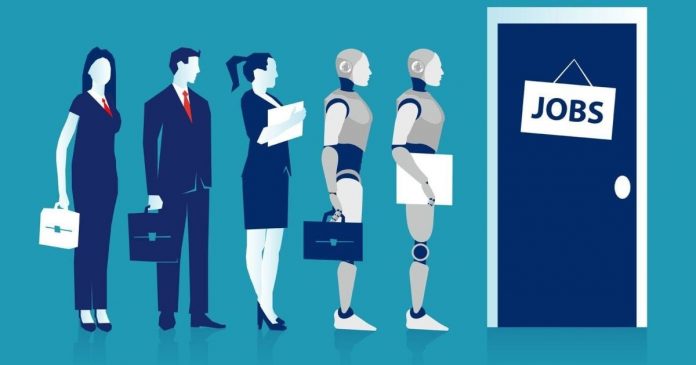
People seeking jobs at OpenAI should demonstrate genuine enthusiasm for artificial intelligence, actively use the company’s products, and show evidence of what they can build, according to a product manager at the AI company.

Ty Geri, who joined OpenAI in 2025 as a product manager, told Business Insider that the advice applies across roles, including engineering, research, product management and data science.

“I think OpenAI tries to hire people who are really passionate, and care, and want to be a part of this mission,” Geri said.

For prospective applicants, that means demonstrating more than technical qualifications or a strong résumé. Geri said candidates should incorporate AI products into their own work and daily workflows so they understand their capabilities and limitations firsthand.

“Try to bring these products into your life, into your workflows,” he said.

Geri acknowledged that OpenAI’s products can sometimes be imperfect or unfinished, but said that is part of the company’s approach to development. Candidates should be comfortable experimenting with technology that is still evolving and be willing to help push its capabilities.

“Try to bring these products into your life, into your workflows,” he said, adding that some products may be “a little rough today” because the company wants employees who are prepared to “push on the frontiers.”

Building Matters As Much As Credentials

Geri’s comments point to a hiring philosophy that places considerable value on evidence of experimentation and execution. He said OpenAI expects employees to engage in “a lot of building in public,” allowing colleagues to see what they are creating and test their work themselves.

He contrasted that approach with a more traditional development model in which someone can spend years working privately before revealing a finished product.

“You sit in a dark room, you come out three years later, and you’re like: ‘Voila, magic,’” Geri said, describing what he sees as a flawed approach to product development.

“That doesn’t fly at OpenAI.”

For applicants, the implication is that a portfolio of projects, experiments or publicly available work can provide a stronger demonstration of ability than simply describing skills on a résumé.

Geri said OpenAI employees are generally willing to experiment with new ideas. If an initial product or idea is not successful, colleagues may build on it and try again.

“If the product you put out is ‘not quite it yet,’” he said, others at the company will try again.

That willingness to iterate is central to what Geri described as OpenAI’s culture of experimentation and “big swings.”

Competition for AI Talent Is Intense

Geri’s advice comes as leading AI companies compete aggressively for engineers, researchers, product managers and other specialists capable of developing increasingly sophisticated models and applications.

A former OpenAI intern told Business Insider in July that prospective candidates should “go broad, specialize, and build,” while another OpenAI employee said a cold message on LinkedIn had helped him secure a position.

Career coach Sundeep Teki, who helps place talent at AI companies, said in June that OpenAI has one of the industry’s most difficult technical interview processes. That makes preparation particularly important for technical candidates, while maintaining a visible body of work can also help applicants get noticed.

AI companies have increasingly recruited talent through public technical work, meaning contributions to GitHub and other public projects can serve as an informal demonstration of expertise.

For candidates targeting OpenAI, the combination of technical preparation, hands-on use of AI tools and publicly demonstrated projects could therefore be particularly valuable.

Geri also said the willingness to experiment is one of the main differences between OpenAI and his previous employer, Google. The distinction is not necessarily about technical capability, but about the speed and willingness to test unconventional ideas.

“Larger companies in the space can sometimes be a little bit slower,” Geri said.

At OpenAI, he said, employees are encouraged to take risks and test ideas even when the outcome is uncertain.

That environment can be demanding. Geri admitted that the pace and uncertainty of experimentation can be stressful, but said it is also part of what makes working at the company appealing.

“It definitely stresses me out,” he said, “but I think it’s part of the fun.”

For job seekers, Geri’s message is that knowing AI theory is not enough. Candidates need to show curiosity, use the technology themselves, build things, share their work, and demonstrate that they are comfortable operating in an environment where products and ideas can change rapidly.