DD
MM
YYYY

PAGES

DD
MM
YYYY

spot_img

PAGES

Home Blog Page 50

Trump Eyes Stablecoins as Treasury Yields Climb to 2006 Highs

0

The United States is confronting an increasingly difficult fiscal equation: a federal debt burden approaching $40 trillion, rising borrowing costs and investors demanding greater compensation to hold government securities.

Against that backdrop, stablecoins are attracting attention not merely as a crypto innovation, but as a potential new channel for absorbing demand for U.S. Treasuries.

The logic is straightforward. Stablecoins such as US dollar-pegged tokens typically maintain their value through reserves that can include short-term U.S. government securities.

As the stablecoin market expands, issuers can become significant buyers of Treasury bills and other highly liquid government debt. For policymakers looking at ways to deepen demand for U.S. government securities, that creates an unusual bridge between digital assets and traditional public finance.

The interest comes as Treasury markets are sending a more uncomfortable signal. A weak Treasury auction can reveal that investors are becoming less willing to accept government debt at previously prevailing yields.

When demand disappoints, the Treasury may need to offer higher yields to attract buyers, pushing borrowing costs across the financial system. That matters because the government must continually refinance maturing debt while financing new deficits.

Higher yields therefore increase the cost of servicing existing obligations. Over time, even a modest increase in average borrowing costs can translate into hundreds of billions of dollars in additional interest expenses.

The recent rise in Treasury yields toward levels not seen since 2006 illustrates how dramatically the market environment has changed. For years, exceptionally low interest rates allowed Washington to borrow at historically cheap costs.

That era encouraged investors to treat Treasuries as both a safe asset and a highly liquid source of collateral. The post-pandemic environment is different.

Inflation, elevated interest rates, expanding government deficits and uncertainty about the future supply of Treasury securities have altered the balance between Washington and its lenders.

Investors increasingly have alternatives, meaning the government cannot assume that every auction will receive overwhelming demand. This is where stablecoins become strategically interesting.

A rapidly growing stablecoin economy could create a structural source of demand for short-duration Treasuries. Every additional dollar entering a properly reserve-backed stablecoin system could potentially correspond to another dollar invested in liquid dollar assets.

If stablecoins continue expanding globally, their reserve portfolios could become an increasingly important component of Treasury demand. For the Trump administration, that possibility intersects with a broader effort to strengthen the dollar’s position in digital finance.

Dollar stablecoins already extend the reach of U.S. currency across cryptocurrency markets and international payments. Encouraging their development could therefore serve two objectives simultaneously: expanding dollar-based financial infrastructure while potentially creating additional buyers for U.S. government debt.

But stablecoins cannot solve America’s fiscal problem by themselves. Their Treasury purchases would represent a financing channel rather than a reduction in the government’s underlying deficit. If Washington continues running large fiscal shortfalls, the amount of debt requiring buyers will keep increasing.

Stablecoins can potentially broaden the investor base, but they do not eliminate the need for sustainable fiscal policy. There is a deeper question about concentration. If stablecoin issuers become major holders of Treasury securities, their importance to government financing would increase.

That could strengthen the connection between crypto markets and sovereign debt markets, making regulatory decisions in either sector increasingly consequential for the other.

The Treasury market is therefore becoming a revealing test of America’s financial architecture.

The combination of weak auctions, elevated yields and enormous borrowing requirements is forcing policymakers to search for new sources of demand. Stablecoins may provide part of that answer.

But the larger story is that the world’s largest borrower is entering an era in which capital is no longer cheap, unlimited or guaranteed. As Treasury yields climb, Washington’s ability to finance $40 trillion of debt will depend increasingly on whether investors—traditional and digital—remain willing to keep buying.

CBN Cuts Interest Rate to 23% in Nigeria’s Biggest-Ever MPR Reduction

0

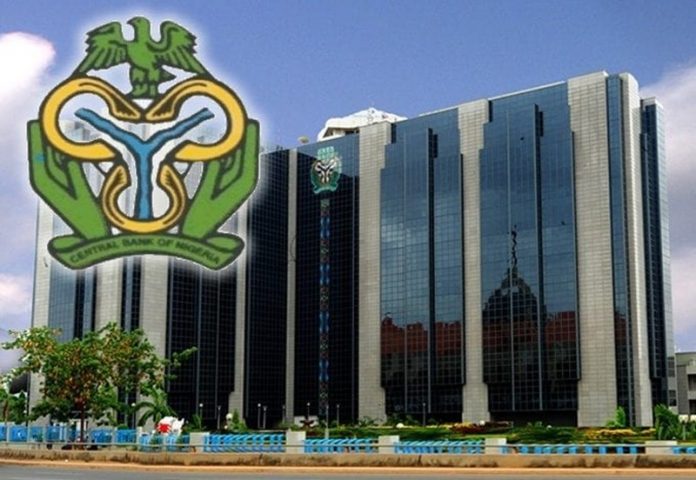
Nigeria’s monetary policy entered a new phase this week when the Central Bank of Nigeria delivered an unusually large interest-rate cut.

At its September 21–22, 2026 meeting, the Monetary Policy Committee reduced the Monetary Policy Rate (MPR) from 26.5% to 23%, a 350-basis-point reduction. The CBN also recalibrated its standing facilities corridor while leaving the cash-reserve requirements for banks unchanged.

The scale of the decision matters as much as the direction. A 350-basis-point reduction is not the kind of adjustment that markets normally treat as a minor technical change.

It represents a substantial shift in the cost of money and potentially changes the calculations of banks, businesses, investors and households. Borrowing conditions could gradually become less restrictive, while asset prices and credit demand may respond to expectations of a more accommodative monetary environment.

Yet the bigger issue is not simply whether rates have fallen. It is whether Nigeria’s monetary policy framework has become sufficiently predictable for economic actors to understand why rates move and what conditions would cause the next move.

In mature inflation-targeting systems, central banks typically communicate around a clearly defined objective. Investors watch inflation, inflation expectations, employment and economic activity.

Then assess those indicators against the central bank’s published target. Policy decisions can still surprise markets, but the reaction is usually anchored by a framework that explains the direction of travel.

Nigeria’s experience has been less straightforward. The CBN itself acknowledges that it has been transitioning from a monetary-targeting framework toward inflation targeting.

It describes inflation targeting as a forward-looking system in which the central bank publicly announces an inflation objective and uses forecasts and policy instruments to achieve it.

The CBN also identifies transparency, accountability and the anchoring of inflation expectations as major benefits of the transition.

That distinction is important because monetary policy works partly through expectations.

When businesses know how the central bank is likely to respond to inflation, they can make longer-term decisions about investment, wages, inventories and financing. Investors can price bonds and equities with greater confidence.

Banks can make lending decisions with a clearer view of the future. When communication is less predictable, every MPC meeting can become an event in itself.

The September decision therefore raises an important question about the next stage of Nigeria’s monetary-policy evolution. With the MPR now at 23% and the CBN reporting an inflation rate of 15.39%.

The gap between inflation and the policy rate remains significant. The rate cut may signal confidence that inflationary pressures have sufficiently moderated to permit monetary easing without abandoning price stability.

But lower rates alone cannot solve Nigeria’s inflation problem. Food supply, energy costs, exchange-rate conditions, fiscal policy, infrastructure constraints and productivity all influence prices. Monetary policy can affect demand and financial conditions, but it cannot manufacture food, electricity or foreign exchange.

This is why the CBN’s inflation-targeting transition could become more consequential than any single rate decision. A credible framework would give Nigerians a clearer answer to a basic economic question: what exactly must happen to inflation for interest rates to rise, fall or remain unchanged?

The September cut may eventually be remembered not only for its size, but for what it says about the CBN’s evolving approach to monetary policy. The challenge now is turning an unexpectedly large decision into a more predictable policy framework.

One where markets respond not merely to what the MPC does, but also understand the economic conditions guiding why it does it.

Tekedia Capital Becomes A Baseten Shareholder Today

0

In this business, you write tons of cheques to founders and startups. We make about 40 investments yearly. Deals happen. Exits happen. Failures exist. But I found the Blaxel team to be superbly amazing. I want to commend the team for caring for their investors.

While I cannot disclose terms of its acquisition by Baseten here, the whole thing was designed to make investors and shareholders have a great win. Guys, we appreciate that!

And Baseten, we received the share certificate today. We will be praying for an opening ringing of a bell at NASDAQ very soon! Go and win the market and do it. Tekedia Capital is excited to be part of one of the most amazing startups in the world right now.

Baseten reached a valuation of $13 billion in June 2026, driven by massive enterprise demand for AI inference infrastructure.

Valuation Milestones (from Google public search)

-June 2026 ($13 Billion): Raised a split-tranche $1.5 billion

-Series F round (valued between $11B and $13B) led by Altimeter Capital, Conviction, and Spark Capital, with Sands Capital and Wellington Management co-leading.

-January 2026 ($5 Billion): Secured a $300 million Series E round led by IVP and CapitalG, which included a $150 million investment from Nvidia.

-September 2025 ($2.15 Billion): Closed a $150 million Series D round led by BOND.

-February 2025 ($825 Million): Reached an $825 million valuation during a $75 million Series C round.

-March 2024 (~$200 Million): Valued around $200 million following its Series B round

Yes, the valuation moved from $2.15 billion in September 2025 to $13 billion in June 2026! Do not ask me where it is now!

Tekedia Capital >> we befriend the world’s finest builders on the pursuit of entrepreneurial capitalism.

5 Top Presale Cryptos in 2026: BlockDAG, AlphaPepe, MemeToro, Pepeto & Remittix

0

The presale market is becoming active again. With the total crypto market cap briefly reaching $3 trillion this month, some capital is moving from major coins toward earlier projects. The market also offers more proof than before, including public smart contracts, working beta products, active exchanges, security checks, and other signs beyond simple whitepapers.

Among the top presale cryptos in 2026, BlockDAG stands out because its buyback mechanism can be checked through a live dashboard instead of relying only on a future listing plan.

1. BlockDAG (BDAG) – A Buyback Mechanism Already in Motion

BlockDAG (BDAG) currently offers a live USDT buyback system with a recently changed rate. The rate increased 150%, moving from $0.02 to $0.05, with only a few days left in the current window. Since launch, the buyback has processed $12 million, while the project reports $271.86 million raised overall.

Both Legacy and New BDAG qualify, with eligible balances calculated using a compression rate rather than a fixed multiplier. Cashouts begin in November and will be handled in batches. The current presale price is $0.000000005. Beyond the mechanism, BlockDAG uses DAG-based architecture for payments and smart contracts, with a recent upgrade raising throughput to 7,000 transactions per second.

A live casino and sportsbook already create on-chain activity, while the X1 mining app has millions of users mining through their phones. BlockDAGX and the Super App remain in development. For readers tracking top presale cryptos in 2026, these active products provide more to examine than a roadmap alone.

2. AlphaPepe (ALPE) – AI Trading Adds a Working Use Case

AlphaPepe has raised more than $2.76 million and has nearly 12,000 holders, with Stage 20 priced at $0.0508. Its AlphaSwap Auto-Trade feature gives the project a practical use case, with holder registration already open before beta access.

Four CEX partnerships have been announced. A Bonus Drop offering 10-200% extra tokens is scheduled to close September 25, creating another date to watch alongside the next stage price increase. For those reviewing top presale cryptos in 2026, AlphaPepe offers a mix of meme branding and an AI-focused product.

3. MemeToro (MT) – Public Code Gives Buyers More to Check

MemeToro remains in Stage 7 at $0.00430 after raising more than $145,000. Its published Solidity code contains 1,373 lines covering a fair-launch escrow system, including launch settings, contributor allocations, and refund rules.

Public code does not confirm a finished product, but it gives users more material to inspect. At the current price, a $750 purchase would secure about 174,419 MT, which would have a paper value near $9,045 at the displayed $0.05186 launch target. This remains a hypothetical result, not a guarantee. MemeToro is another project appearing among top presale cryptos in 2026 with details buyers can review directly.

4. Pepeto (PEPETO) – A Live Exchange and Cross-Chain Tools

Pepeto’s team includes the creator of the original Pepe coin and a developer with Binance exchange experience. Its security scanner checks 42 areas before swaps execute, while PepetoSwap is live with zero trading fees.

The project also has a cross-chain bridge that moves assets across five networks in under 60 seconds. Its raise has passed $11 million, staking offers 162% APY, and the current price is $0.0000001896. A functioning exchange gives Pepeto a working product to assess, placing it among the top presale cryptos in 2026 with active features rather than only planned tools.

5. Remittix (RTX) – PayFi Expansion Nears Its Fundraising Cap

Remittix is approaching its $36 million hard cap through a PayFi platform supporting more than 50 cryptocurrencies and 30 fiat currencies. Its Markets product reports over $50 million in cumulative volume, while its wallet is available through Apple’s App Store.

RTX is priced at $0.21 before a planned move to $0.23, and a CertiK review provides another point for users to examine. With the raise approaching its cap, the early-price window is becoming narrower. Remittix therefore remains one of the top presale cryptos in 2026 worth following for its payments focus.

Key Takeaways

AlphaPepe, MemeToro, Pepeto, and Remittix each provide something concrete to examine, from AI trading and public code to a live exchange and reported payments volume. BlockDAG adds a live buyback system, active products, and reported funding figures that can be checked through its dashboard.

For anyone comparing top presale cryptos in 2026, the main difference is how much of each project’s claims can already be checked today. BlockDAG’s buyback rate has moved from $0.02 to $0.05, with a few days left in the current window, while $12 million has reportedly passed through the mechanism and $271.86 million has been raised overall.


Presale: https://purchase.blockdag.network

Website: https://blockdag.network

Telegram: https://t.me/blockDAGnetworkOfficial

Discord: https://discord.gg/Q7BxghMVyu

BlockDAG Activates Live USDT Buybacks, While Cardano Crypto & Zcash Rally

0

Crypto market participants increasingly look beyond short-term price fluctuations when identifying strategic allocations. The Cardano crypto ecosystem is gathering momentum, with ADA appreciating 2.90% against the backdrop of the TOKEN2049 conference. Concurrently, the Zcash price continues to hold above $1,600 following the rollout of a European ETP by 21Shares.

However, BlockDAG (BDAG) has formally launched its live USDT Buyback mechanism covering both New BDAG and Legacy BDAG holdings. Market entrants also have a final opportunity to acquire BDAG directly at $0.000000005 and subsequently execute a repurchase at the stated $0.05 buyback price. For investors analyzing what crypto to buy now, BlockDAG’s structured buyback framework creates a compelling case relative to established market alternatives. 

Cardano Crypto Price Surges 2.9%

The Cardano crypto valuation recently registered a 2.90% upward movement, advancing to approximately $0.2522. Underpinning this price action is expanding network usage, marked by derivatives trading volume approaching $1 billion and open interest nearing $600 million. From a technical standpoint, ADA is holding above both its 50-day moving average of $0.2142 and its 200-day moving average of $0.2050. On-balance volume stands at 45.95 billion, signaling consistent accumulation from market participants.

Despite these positive technical indicators, ADA faces substantial overhead resistance near the $0.2545 level. Furthermore, elevated leverage in derivatives markets introduces heightened volatility risks, where a breakdown below key support zones could trigger rapid price corrections.

Zcash Price Rallies as Institutional Adoption Soars

The Zcash price has demonstrated notable momentum, rising over 70% across a 30-day period to trade above $1,600. Expanding institutional integration, evidenced by new European ETP listings and dedicated ETF capital inflows, has provided structural support for this upward trend. Momentum indicators reflect sustained buying strength, with technical targets pointing toward the $1,800 threshold.

Notwithstanding this rapid advance, ZEC encounters a tight resistance range between $1,560 and $1,615. High open interest in futures markets increases systemic leverage, leaving the asset vulnerable to swift pullbacks if broader market momentum decelerates.

BlockDAG: Live USDT Buybacks Offer Guaranteed $0.05 Value

Investors frequently evaluate long-term mechanics beyond immediate token pricing when determining capital placement. BlockDAG’s USDT Buyback program introduces a structured model to address this consideration. Both New BDAG and Legacy BDAG qualify for participation when eligible direct-coin acquisitions take place at the $0.000000005 price.

Rather than maintaining separate accounting for the two token versions, BlockDAG aggregates eligible holdings into a single, unified USDT Buyback Balance accessible via the central user dashboard.

This framework provides participants with a clear operational metric. Following the completion of the eligibility phase with a few days left, BlockDAG calculates the net post-compression balance. Participants can then liquidate that final balance under the specified $0.05 USDT Buyback Price.

The user dashboard displays real-time personal USDT tracking, offering clear visibility into overall buyback positioning. With distributions scheduled to start in November through batched releases, the model provides a defined mechanism that operates independently of open-market price fluctuations.

For the BDAG community, the integration of both token variants into one system, combined with a $0.000000005 entry baseline and a $0.05 USDT repurchase valuation, establishes a transparent ROI framework. For market participants assessing what crypto to buy now, BlockDAG’s buyback program presents a distinct structural approach.

Key Takeaways!

While the recent price appreciation in Cardano crypto and sustained strength in the Zcash price indicate positive market activity, BlockDAG introduces a different value proposition through its operational USDT Buyback program. By allowing both New BDAG and Legacy BDAG to qualify, the protocol establishes a single unified structure for all participants.

New buyers retain a narrow window with a few days left to secure BDAG at $0.000000005 before redeeming at the fixed $0.05 buyback rate. When evaluating what crypto to buy now, BlockDAG offers a distinct model driven by its active buyback program, growing network infrastructure, and time-sensitive entry pricing.

Presale: https://purchase.blockdag.network

Website: https://blockdag.network

Telegram: https://t.me/blockDAGnetworkOfficial

Discord: https://discord.gg/Q7BxghMVyu