DD
MM
YYYY

PAGES

DD
MM
YYYY

spot_img

PAGES

Home Blog Page 5004

The Blitzscaling Pursuit of Growth – How to grow a business and keep groWING

0

Chris Yeh, the man who co-wrote with LinkedIn founder (Reid Hoffman) the award winning book -”Blitzscaling: The Lightning-Fast Path to Building Massively Valuable Companies” – dropped a line last week: “Professor, thanks for your efforts spreading Blitzscaling in Africa.” Indeed, Tekedia Institute has become a temple where entrepreneurs and professionals are mastering how to grow and keep groWING companies.

Today, at Tekedia Mini-MBA, I will lead a session on Growth. It is always a moment when we run this session because for most of our learners, at the end of everything, the question which must be answered remains “how do I grow this company”? Interestingly, it is becoming physics because we know what works.

Register for the next edition here . It is the most affordable business school right now. We have people from 41 countries and will graduate more learners this year than any university in Nigeria!

Uber Records $8.1 Billion Revenue Despite High Gas Prices And Inflation

0

The soaring inflation ravaging the global economy, with no sign of slowing down, has no doubt put a strain on so many businesses, leading to massive layoffs of workers, loss of revenue, and a freeze in the hiring process.

With so many businesses struggling to keep their businesses afloat, few businesses have been able to weather the storm showing strong resilience against the inflation crisis.

Despite the high gas prices and soaring inflation, American mobility service provider, Uber on Tuesday, disclosed that its revenue hit $8.1 billion during the three months ending in June, more than doubling from the previous year as more customers turn to the ride-hailing service.

The number of consumers of drivers using its platform is at an all-time high, as shown in the company’s quarterly earning report. Uber recorded 122 million people using its platform each month, up to 21% from the previous year.

The company is said to have outperformed analysts expectations, shaking off concerns over high inflation to post $8 billion in revenue, a 105% surge from last year. Its shares also jumped to about 11% in early trading.

Uber disclosed that it had become cash flow positive, making more money from its operations than it spent excluding capital expenditures, as the company disclosed its generation of $382 million in free cash flow during the first quarter.

Uber continues to offer a unique window into consumer trends more than two years into the pandemic, which initially decimated the demand for travel. Recall that the company launched its UberEats food delivery business in 2015, the update included new options to incentivize use, such as advanced scheduling of deliveries, live order tracking, and other product replacement recommendations.

Speaking on the revenue growth despite surging inflation, Uber’s CEO Dara Khoshrowshahi disclosed that the company delivered a balanced growth on a very large platform which saw the number of consumers and earners using Uber now both at-all time highs.

In his words, “Uber delivered balanced growth and did so on a platform that’s larger than ever, with the number of consumers and earners using Uber now both at all-time highs. No one wishes for a tough economic environment or elevated inflation that is affecting so many of us, including Uber drivers, but the economic environment has allowed Uber to show its strengths”.

He further disclosed that Uber not only benefits from its size, but also from its range of business offerings. Mr. Dara reveals that Uber has been able to apply discipline as it makes an improvement on the platform to serve drivers better, which includes better onboarding to make it easier for workers to sign up and an easier way to toggle between driving and delivering.

Looking at all these reasons aforementioned by Uber’s CEO, that helped the company stay afloat despite inflation, there was something fascinating about what he said that Uber benefits not only from its size but also from the range of business offerings.

One thing I discovered that really helped Uber in this uncertain period, is that the company used its large platform to include other ranges of businesses which boosted its revenue. Apart from its ride-hailing services, it adopted UberEats, an online food delivery business and the company has also announced a new grocery ordering service.

On June 30, Uber reported gross bookings, which encompass ride-hailing, food delivery, and freight, increased 33% to an all-time high of $29.1 billion. Its global driver and courier base grew 31% from last year to almost 5 million.

Customers kept hailing rides and ordering takeout food as the business hit on all cylinders, in a dual mission of carrying people and making deliveries that benefited the company, and would no doubt set it apart from its peers in the event of an economic downturn.

Nigeria Energy Tech Startup, Beacon Power Services, Closes A $2.7M Seed Round

0
Concept of house in paper on blue color background for real estate property industry

According to the World Health Organization in its 2022 Energy progress report, 568 million Africans are living without access to electricity and clean energy. The African continent has for a long time remained the least electrified continent in the world.

Due to the poor access to electricity ravaging the African continent, Nigeria energy tech startup, Beacon Power Services (BPS), has stepped in to address the issue, by creating a technology that will help give millions of Africans access to electricity.

Beacon Power services (BPS) is a company that provides energy management software and analytics for utilities and mini-grid operators. The company just recently closed a $2.7 million seed round, stating that the new funding would enable it to improve its current products (product upgrades to add new features and incorporate automation) and expand into new markets beyond Nigeria and Ghana, where it is currently operating.

The company cited challenges in Africa where a majority of power companies on the continent are unable to supply customers with reliable and affordable electricity. As a result of this epileptic power supply, it has no doubt impeded the growth of businesses in the region which has also affected the economy.

In a bid to address this problem, Beacon power services (BPS) has developed an AI-enabled smart grid platform, Adora, that provides real-time visibility on network performance for electric utilities. Adora connects to every utility asset and customer node on the grid, allowing energy providers to preempt outages, identify network losses, and distribute electricity more efficiently.

Speaking on how this technology will provide a solution to Africa’s poor electricity access, founder and CEO of Beacon Power Services, Bimbola Adisa disclosed that the BPS technology was well tailored after careful observation to improve the daily grid supply of electricity.

In his words, “Africa is home to the fastest growing cities in the world, but when most people think of energy access in Africa, they think of the rural areas with little or no access to electricity at all. However, it is impossible for Africa to develop without significantly improving electricity access and reliability across its major cities. 

“When we realized that solutions designed for mature markets fail to address the unique infrastructure challenges Africa faces, we developed a tailored solution for power companies on the continent to improve daily grid supply of electricity”. 

It is interesting to note that Beacon Power Services (BPS) is not just offering theoretical solutions, but rather they are walking the talk as the BPS team has demonstrated success by helping their utility clients reduce network losses significantly, recovering unrealized revenue and improving electricity reliability for over 30 million consumers and businesses.

Asides from offering electricity access to businesses, BPS technology is also having a real impact on sustainable economic development and climate change in Africa by reducing the continents’ reliance on diesel generators.

This is a highly commendable initiative from Beacon Power Services as they are on the mission to connect millions of businesses on the African continent to electricity access. One major challenge that has continued to hinder the growth of economies in the African region is attributed to poor access to power supply.

It has affected the ease and cost of doing business in the region, where businesses most especially small businesses have their growth stifled. With small businesses being described as the cornerstone of a nation’s economy, once they are faced with a myriad of problems, majorly poor electricity access, it becomes hard for them to grow economies.

The African region has so much potential, but it might unfortunately not be attained until a large percentage of the people in the region have access to energy. Kudos to Beacon Power Services for taking up this challenge,  to provide millions of people in the region with access to electricity.

MTN Launches Home Broadband Services, Targets 43 Million Households

0

As Nigeria continues to grapple with low broadband, which has undermined the growth potential of the telecom sector along with businesses depending on the internet, telcos have been working to address the challenge by upgrading broadband penetration across the country.

Nigeria has the lowest broadband penetration in the world compared to its population, creating a need for the facilitation of larger telecom infrastructure to bridge the gap.

In 2019, the Minister of Communication and Digital Economy, Dr. Isa Ali Pantami, unveiled the Nigerian National Broadband Plan Committee. The committee was expected to support the national digital economy and ensure that Nigeria attains 70% broadband target by 2025.

It is in line with the National Broadband Plan that MTN Nigeria Communications Plc has announced the launch of Home Broadband services, to accelerate broadband penetration, making it available to millions of Nigerians.

Chief Operating Officer, MTN Nigeria Communications Plc, Hassan Jaber, said during the launch in Lagos that the company’s investment in broadband is buoyed by the belief that the internet is a right.

“At MTN, we believe that everyone deserves the benefits of a modern, connected life; hence our investment in industry-leading connectivity operations,” he said.

With MTN’s Fibre-to-the-Home (FTTH) and the latest Fixed Wireless Access (FWA) Home Broadband services, millions of Nigerian households, with approximately 50% located in rural areas, will have access to reliable and ultra-fast broadband services to enjoy unlimited data plans, ability to connect multiple devices and share data across remote locations for online learning, working from home, streaming, gaming, smart home solutions among others.

General Manager, Fixed Broadband, MTN Nigeria Communications Plc, Onyinye Ikenna-Emeke, said the Home Broadband will yield a lot of benefits to customers.

“Customers now have enhanced access to dedicated 24/7 support and online channels to place orders for MTN Home Broadband with options for home delivery.”

“They can also enjoy truly Unlimited Data bundles, longer tenure data plans with flexibility to share data with multiple users remotely as well as enhanced data subscription channels including myMTN App,” she said.

The backdrop of low broadband penetration in Nigeria has put its number of internet users below par with other African countries.

With over 200 million people, Nigeria currently boasts of approximately 44.3% internet connectivity, whereas other African countries, such as South Africa, Egypt, and Kenya, are at 68, 74, and 48% internet penetration, respectively.

This is a disadvantage to Nigeria’s economic growth as it dampens business opportunities in the country.

Global technology statistics closely link internet connectivity to sustainable economic growth rates. On average, the internet accounts for almost four percent of GDP across the large economies that make up 70% of global GDP. UNICEF also projects that nations with low broadband connectivity have the potential to realize up to 20% GDP growth by connecting schools to the internet.

MTN said it currently connects over 70 million Nigerians (over 7% 4G population and 89.8% coverage nationwide). The launch of the Home Broadband is expected to boost the number of subscribers under MTN platforms.

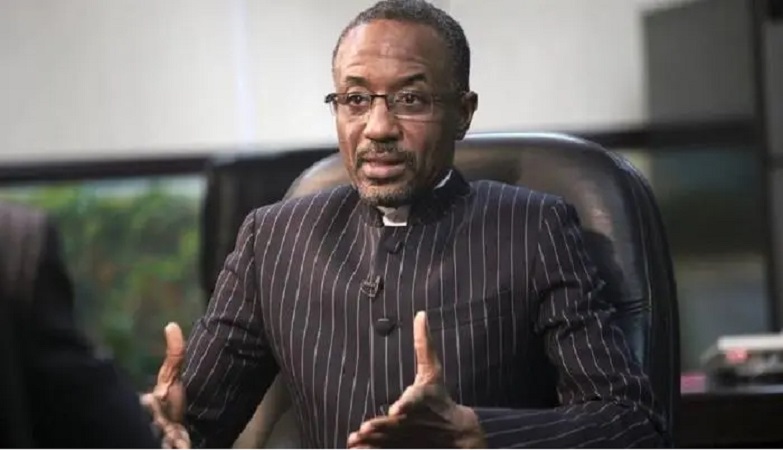
“We Are in A Mess” – Former CBN Governor Sanusi Decries Nigeria’s Worsening Condition

1

Former Central Bank of Nigeria’s governor Sanusi Lamido Sanusi has become the latest voice to express concern over the country’s worsening economic and security situation.

Sanusi, who spoke at the Akinjide Adeosun Foundation (AAF) leadership colloquium, held in Lagos on Thursday, said the APC-led government has allowed Nigeria’s economic and security situation to deteriorate, becoming far worse than what it was in 2015.

The former Emir of Kano, who was critical of the past administration led by Goodluck Jonathan, decried Nigeria’s rising debt. He said the country has already become bankrupt, describing the situation as being in a “deeper hole.”

“We were in a deep hole in 2015. And between 2015 and now, we have been digging ourselves into a deeper hole. We thought we had a big problem in 2015. 2015 is nothing compared to what will happen in 2023,” Sanusi said.

“We have terrorism, we have banditry, we have inflation, we have an unstable exchange rate, and the worst thing is that those in leadership actually think we are going to thank them when they leave office, that we are going to appreciate them. There is no change,” he added.

His criticism follows the throng of other voices condemning the lukewarm attitude of President Muhammadu Buhari’s government in the face of the “mess.”

Sanusi said Nigeria’s bankruptcy is masterminded by its inability to cash in on the oil windfall orchestrated by the Russia-Ukraine conflict.

“Nigeria is the only oil-producing country that is grieving at the moment when oil prices have gone up as a result of the Russia/Ukraine war,” he said, adding that the nation’s inability to service its debt is evidence that “we are in a mess,” he said.

Nigeria’s public debt portfolio has significantly risen above N41 trillion due to massive revenue drop from oil export, creating a huge debt to revenue ratio disparity.

“Our total revenue is not able to service our debt. And if anybody does not understand that we are in a complete mess, we are. There is no sense of urgency. If you are running a company and your sales revenue cannot pay interest, you know you’re bankrupt. When the total revenue of the federal government cannot service debt, we are smiling,” Sanusi added.

Last month, the Minister of Finance, Zainab Ahmed announced that the cost of servicing debt surpassed the federal government’s retained revenue by N310 billion in the first four months of 2022, confirming the fear that Nigeria’s debt is no longer sustainable.

Buhari pledged to diversify Nigeria’s economy with focus on agriculture. However, the president has failed to redeem that pledge due to terrorism and banditry raging in the north, which have greatly jeopardized farming activities in the region.

Besides this, the government has been criticized for enacting policies that have been detrimental to the country’s economic well being. For instance, in 2019, Buhari announced the closure of Nigerian land borders, and subsequently the import ban of food items including the staple rice. The decision has been fingered as the major reason why Nigeria’s inflation rate has risen above 18%, compounding the nation’s poverty situation.