DD
MM
YYYY

PAGES

DD
MM
YYYY

spot_img

PAGES

Home Blog Page 5011

Oil Contribution to Nigeria’s GDP to Drop 5% further by 2025 – FG

0

There seems to be little hope for economic recovery for Nigeria in the near future as the oil production shortfalls that have largely contributed to slow Gross Domestic Product (GDP) growth is expected to extend to the next three years.

The situation was confirmed on Wednesday by the Minister of Finance, Budget and National Planning, Mrs. Zainab Ahmed, after the Federal Executive Council meeting held in Abuja. According to the draft copy of the Medium Term Expenditure Framework 2023-2025, which was approved by the minister, the federal government has projected that the oil sector’s contribution to GDP will decline between 2023 and 2025 to 5%.

The oil sector has increasingly faltered quarter-on-quarter, trailing other sectors of the economy in contribution to Nigeria’s GDP growth.

According to data published by the Nigeria Bureau of Statistics (NBS) in February 2022, the oil sector contribution to the Nigerian economy declined to 5.19% at N1.055 trillion in the fourth quarter of 2021, down by 3.68 basis points, from the 5.87% contribution in the corresponding period in 2020.

This is notably as a result of the decline in the nation’s oil output that has fallen short of its 1.753 million barrels per day (mbpd) OPEC’s quota. Nigeria’s oil production has dropped Year-on-Year, by 23.8% to 1.024 (mbpd) in May 2022, from 1.344 mbpd recorded in the corresponding period of 2021, according to the Organization of Petroleum Exporting Countries.

The Finance Minister said that in the draft document of the framework, crude oil price assumption for 2023 is $70 per barrel, 2024 is $66 per barrel and $62 per barrel for 2025, with an estimated production rate of 1.69 million barrels per day for 2023 and 1.813 million barrels per day for 2024 and 2025.

“The assumptions that we made for the next medium term framework from 2023 to 2025 is that crude oil price will be at $70 per barrel for 2023, $66 per barrel for 2024 and $62 per barrel for 2025.

“Crude oil production is projected to be 1.69million bpd for 2023 and 1.813million bpd for both 2024 as well as 2025.

“We have also projected on the nominal GDP, that the size of Nigeria’s economy will rise up to N225.5 trillion with 95 percent of this contribution by the non-oil sector while the oil sector will contribute only five per cent.

And some steady increase from 2024 to reach up to N280.7 trillion in 2025. This means that Nigeria continues to retain its position as the largest economy in Africa,” she said.

The oil windfall orchestrated by Russia-Ukraine conflict presented a golden opportunity for OPEC members to increase their GDP – but Nigeria is missing in the party.

The Minister of State for Petroleum, Chief Timipre Sylva, has attributed the shortfalls to vandalism of oil installations and crude oil theft that has cost Nigeria’s economy N3.038 trillion in the past one year.

With a solution not in sight, the federal government appears to be shifting attention to non-oil sectors.

President Muhammadu Buhari has touted agriculture to be Nigeria’s new main source of revenue generation. But insecurity in the country, particularly in the northern region, has greatly stymied the aim.

Other sectors are also striving under an unfriendly business environment dominated by epileptic power supply, making it difficult for the non-oil sector to fill the gap created in the nation’s GDP by the oil production shortfalls.

Internet Code Of practice Was Implemented To Prevent Tech Companies From Becoming Dictators – Isa Pantami

0

The federal government of Nigeria through the National Information Technology Development Agency (NITDA), last month issued an Internet code of practice for interactive computer service platforms/internet the conditions for operation in the country.

The code of practice was introduced to protect the fundamental human rights of Nigerians and non-Nigerians living in the country, as well as define guidelines for interacting in the digital ecosystem.

It was developed in collaboration with the NCC and NBC, as well as input from other interactive platforms such as Facebook, Instagram, Twitter, and Instagram, among others.

As the new global reality shows that activities carried out on those platforms wield so much influence over society which ought to be so, hence the code of practice is an intervention to recalibrate the relationship with Nigerians in order to maximize mutual benefits for the country while promoting a sustainable digital economy.

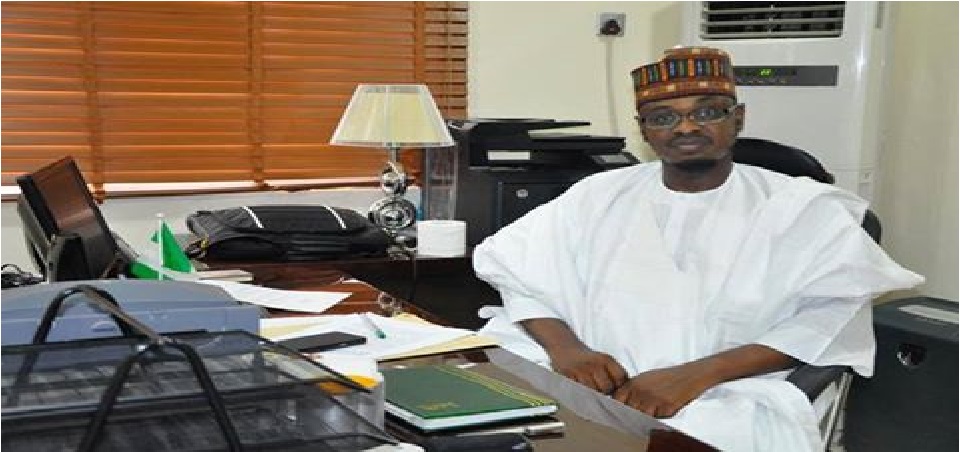
Just recently, Nigeria Minister of Communications and Digital Economy Prof. Isa Pantami who was represented at an event by the Director-General of the National Information Technology Development Agency (NITDA), Kashifu Inuwa disclosed that the federal government had to come up with the internet code of practice to prevent big tech companies from becoming dictators and bigger than the government.

Pantami further stated that given the fact that Nigeria is a democratic republic, there is a need for the government to be vigilant at all times. The minister likened the current big tech executives to Kings, Emperors, and military dictators, adding that there is a strange power that dominates humans.

He cited the U.S election where big tech companies had a major influence on the outcome of the election surpassing that of the government.

In his words, “In the federal republic of Nigeria, we shouldn’t allow anyone have an unaccountable power over others. Today looking at the social media incident before the U.S election, it indicated that Big tech companies have more power than the government. Users are compelled to obey the big tech rules because of the restrictions and sanctions in its usage. For example, if you use Twitter, there is a limit of the number of words you can tweet”. 

The minister concluded by saying that those who are in control of the online space must be held accountable. He believes that such scrutiny of the online space is necessary because today’s technology has become central to our social, economic, and political lives, therefore these big tech companies should be controlled.

What You Should Know About The Internet Code Of  Practice

Part of the code of Practice dictates that social media platforms must do the following below;

  • Act expeditiously upon receiving a notice from a user, or an authorised government agency of the presence of an unlawful content on its Platform. A Platform must acknowledge the receipt of the complaint and take down the content within 24 hours.
  • Act expeditiously to remove, disable, or block access to non-consensual content that exposes a person’s private areas, full or partial nudity, sexual act, deepfake, or revenge porn, where such content is targeted to harass, disrepute, or intimidate an individual. A Platform must acknowledge the receipt of the complaint and take down the content within 24 hours.
  • Disclose the identity of the creator of information on its Platform when directed to do so by a Court order. Provided that an order of this nature shall apply for the purpose of preventing, detecting, investigating, or prosecuting an offence concerning the sovereignty and integrity of Nigeria, public order, security, diplomatic relationships, felony, incitement of an offence relating to any of the above or in relation to rape, child abuse, or sexually explicit material.
  • Where the first creator of the message in question is located outside Nigeria, the first creator of that information in Nigeria shall be deemed to be the first creator.  Exercise due diligence to ensure that no unlawful content is uploaded to their Platform. Where a Platform receives a notice from a user or any authorised government agency that an unlawful content has been uploaded, such Platform is required to take it down and ensure it stays down.

The implementation of the Internet code of Practice was followed with huge criticism from Nigerians. They disclosed that such a code is simply a tool for the abuse of the Constitutional rights of the citizens.

A coalition of civil society organizations in the country sent a memo to the NITDA agency urging them to amend certain provisions of the code of practice.

They further disclosed that while the code of practice seeks to protect the digital rights of Nigerians online, it should not be used in the same vein to harass, stifle and unlawfully infringe the rights of the citizens.

The Egoras Team Is Coming to Tekedia Mini-MBA; Innovators, Find Your Program Here

0

It is one of the most important new business models in Nigeria. It has grown from three people to hundreds in less than 18 months. And the firm just unveiled a massive refurbishment factory so that technicians and engineers can  refurbish electronics, a/cs, generators, furniture, etc, at scale.

Today at 7pm WAT, CEO of Egoras, Ugoji Harry will be at Tekedia Mini-MBA to discuss Egoras business model. Tekedia Institute served as the innovation and technical partner, providing leadership, as the company emerged.

Come and learn how innovators are thriving despite all the challenges in Nigeria. Respect the supremacy of business models in markets. Egoras is leading and we will be learning. Zoom link in the Board.

Innovators, builders, makers and project champions, discover the right Tekedia programs for you.

Staging a protest is not an impeachment process

0

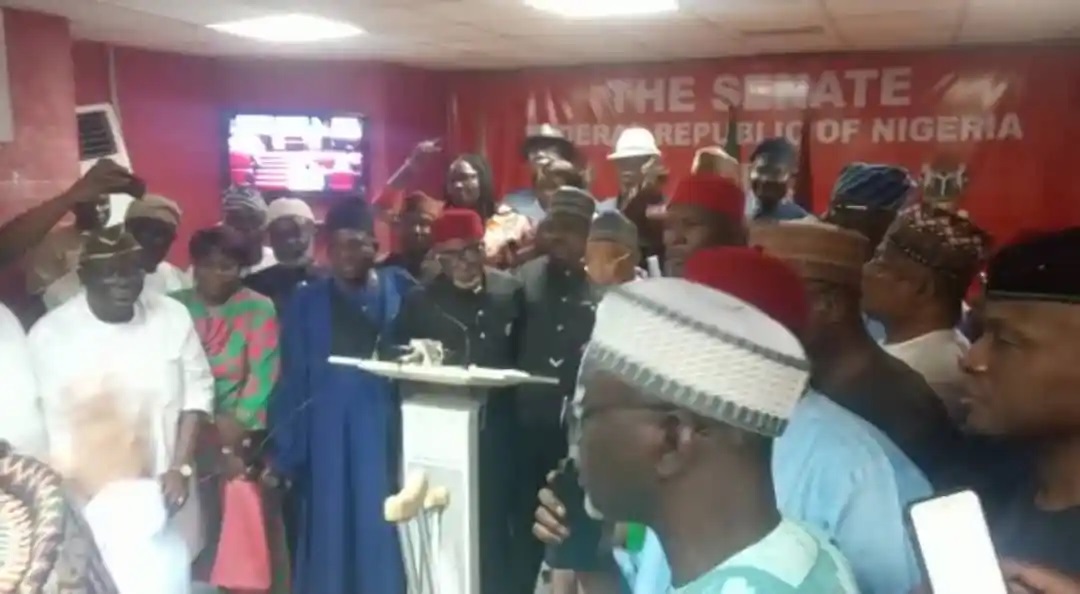
I watched with so much shame and disgust yesterday how some of the members of the Senate proudly staged a protest and walked out of the plenary session in lieu of impeaching the president over the insecurity challenge amongst other struggles the nation has been facing.

It is quite shameful and I say this with so many tears in my eyes that the lawmakers have been reduced to mere protesters and resorted to protest instead of manning up and carrying out their statutory duty of impeaching the president as constitutionally provided as at when the need arises. It is far long overdue. I boldly say that in a sane political clime, the president ought to have been impeached long ago, by whatever standard anyone wants to measure or argue it.

All the lawmakers ended up doing yesterday was media gimmicks, tomfoolery, a display of ignorance, and an outstanding show of shame with so much pride. It was rightly described in a response by the Presidential spokesperson that their act of yesterday was “childish” and I totally agree.

There’s no constitutional provision for impeachment procedure known as a protest or walk out. So some of the lawmakers walking out and staging a protest only reduced them to toothless bulldogs that can only bark but can never bite.

The procedure for impeachment is duly provided for in S.143 of the constitution of the federal republic of Nigeria. For benefit of the doubt, I will represent the step-by-step process of impeaching the president as provided by the constitution Incase the honorable lawmakers have forgotten.

According to the constitutional provision; the first step in the impeachment process of the president is a written notice of an allegation of gross misconduct against the person of the president which is duly signed by at least 1/3 members of the National Assembly (Senate and House of Representatives inclusive).

The senate president must within 7 days serve the president with the notice of the allegation and every other member of the National Assembly must be served a copy of the notice.

When the President and each member of the National Assembly have been served, the National Assembly must within 14 days resolve if the allegation against the president is to be investigated or not.

If the National Assembly resolves that the allegation against the president is to be investigated, the Senate president must within seven days request the Chief Justice of Nigeria to set up a seven-man panel to investigate this allegation(s).

The panel is given three months to investigate this allegation and their findings are to be reported back to the National Assembly. During the process, the president has every right to appear before the panel and defend himself in person or through his legal representative(s).

When the panel reports that allegations against the president have been proven or substantiated, the National Assembly will consider the report and adopt the report.

Once the report of the panel is adopted the president stands to be removed from office and ceases to hold or occupy the office of the president from the moment the report is adopted.

From the processes highlighted, it is crystal clear that the impeachment process of the president in Nigeria is quite stringent and cumbersome, hence the reason why the lawmakers should stop playing around and initiate the process if they really want to impeach the Mr. President (which is long overdue) because they have a really long way to go.

In nowhere in the constitution is staging a protest or walking out of the plenary session by lawmakers or giving the president six weeks ultimatum is referred to as an impeachment process in the constitution or any other Nigerian law. The lawmakers should cease the gimmicks and stop making fools of themselves and follow the procedures laid down by the constitution if they mean the business of impeaching the president.


The Lessons from Carlos Slim and Templeton For Nigerian Youth

1

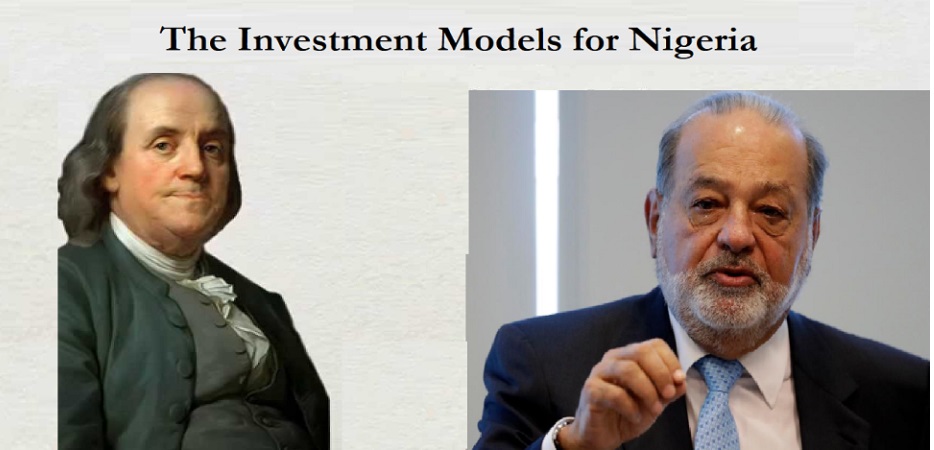
As Nigeria goes through a challenging season of leadership quagmire, I want you to remember that nations rarely kaput. In this video, I introduce two men I study – Carlos Slim (Mexican billionaire) and Franklin Templeton (stock picker of the 20th century). As Abuja demoralizes you, remember that the sun will always rise. Do not kill that idea, because Nigeria will always be.

Franklin Templeton began a firm in 1947, against all odds, at the ruins of World War II. Mr Slim bought anything in his sight at one of the lowest points in Mexican history – the peso was down and markets in ruins. Templeton trusted the human race and bought “useless” stocks. Slim’s father told him that countries do not fail; they always come back.

Becoming successful in life is not about being busy – it is understanding things and making sense of them, more meaningfully. There are acres of diamond in Nigeria today, across many areas. Look for them. If you do not believe in humans, it is unlikely you can see opportunities in life. 

This moment will go and like the cryolite, the beautiful gems out of periwinkle, new moments will emerge. Plan to vote but do not lose confidence because abundance remains in the future.

I invested in the local pharmaceutical distribution space last week because very soon, importing foreign drugs will go. The challenges in Nigeria must redesign your investment thesis because even in the miry clay, special greener pastures remain. Think and thrive.