Earnings season is here – and Tekedia Capital portfolio startups are sending their quarterly reports. I am going to read dozens of these documents despite whatever my team is doing. When I read these reports, I “see” the states of the economies(Nigeria, Africa). We have better data than some local government chairmen in Nigeria.
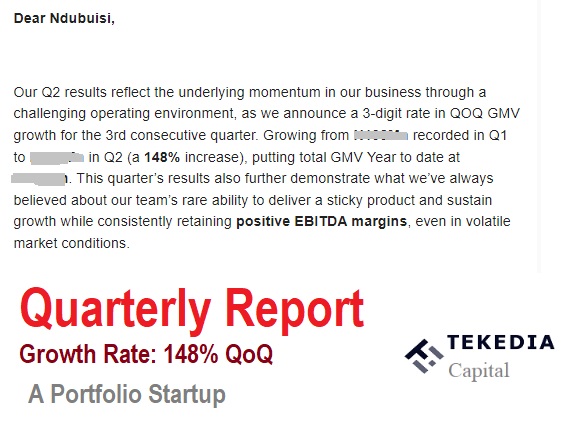
I am also happy that many changes we asked our startups to make have helped them. So, we continue to witness double digit growth despite slow-downs in many sectors.
This particular startup has been put into OUTPERFORM. In 2023, I hope to reveal that it has raised at least $50 million; the investors are already gathering because the startup is executing well. To learn what we do at Tekedia Capital, click here
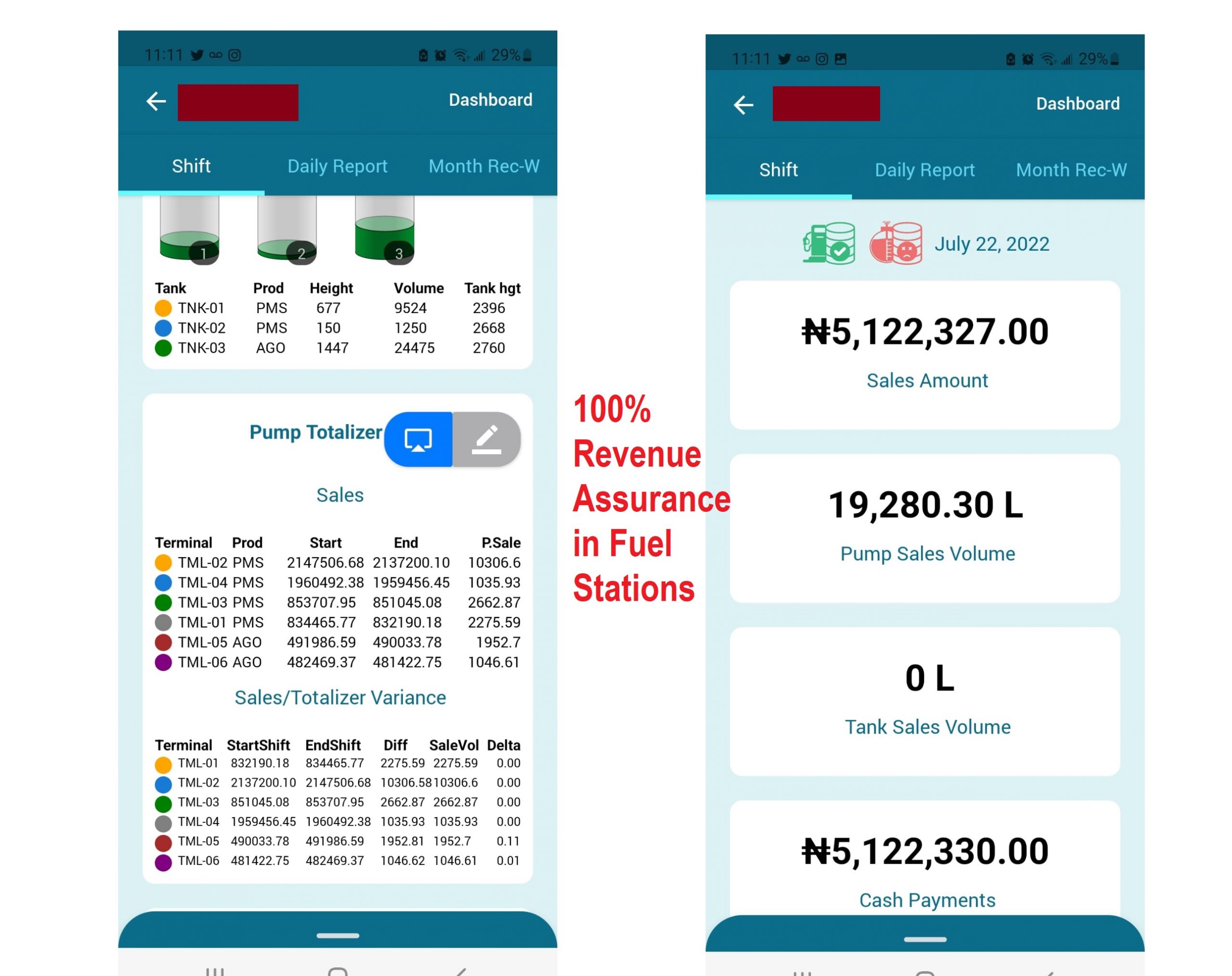
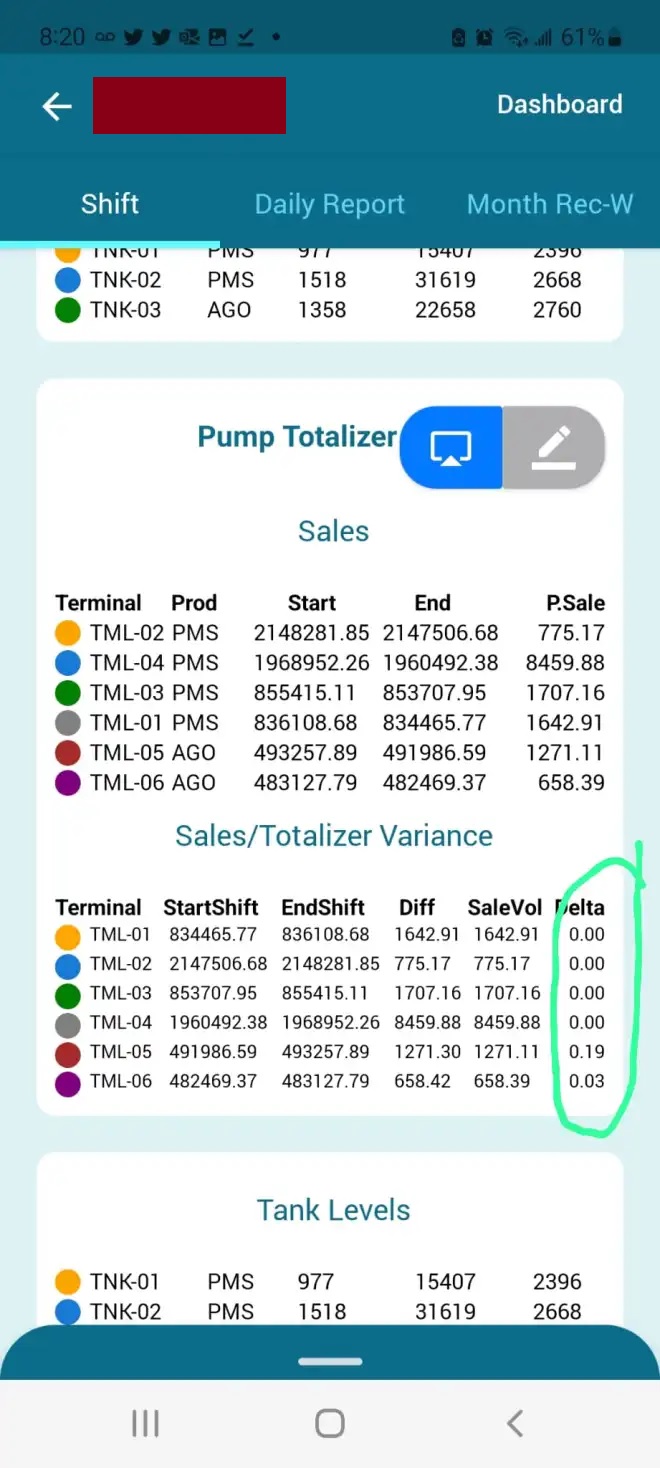
It is super-amazing. Filling (gas or fuel) stations in Nigeria and Africa, a new future has come. Our technology makes it possible to have 100% revenue assurance. No more leaks on Naira or fuel. Yes, at the end of every shift, we reconcile all payments and fuel dispensed in seconds. Technology is bringing transparency in the downstream oil & gas, and we invite owners of stations to trial our product. We’re running pilots across Nigerian cities; contact us on email on this site.
Our product was engineered from scratch and costs just 30% of competing foreign ones. We coded the firmware and that means we can add any feature that you want.
Station owner: you can see the amount of fuel in tanks, money received, etc, in real time on your phone. It is super-amazing.
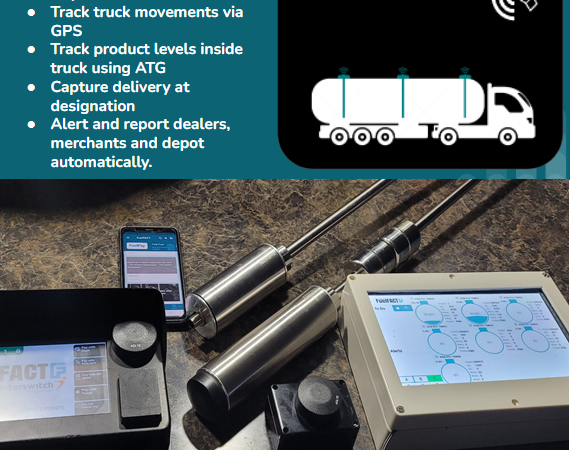
Our technology now makes it possible for petroleum marketers to track inventory from depots to storage tanks and all the way to dispensing points. You know the locations of all the trucks, the storage capacities, etc in real time. We use a combination of satellite and GSM systems to build this integrated and synchronized system, supported by intelligent sensors.
We have also launched a payment system and are now recruiting fintech companies across Africa. If your fintech is integrated with our engine, in a fuel station that uses our technology, your user can buy fuel from a mobile app. Once the user pays, we will receive your payment packets, and immediately, we will send a token for you to render to your users (this happens instantly). Once that is done, when the user gets to the fuel station termina (if not already there), he/she shows a rendered QR and our technology will authorize dispensing.
With this, you can be in Ibadan and pay for your driver in Lagos to go to a fuel station in Ikoyi to refuel the car; he will not need to touch any cash. Our technology is in production. But a formal launch date is coming. Check what I have written and get in touch; we are striking partnerships across Africa. This tech is baked by your fellow citizens in the lab of the people.
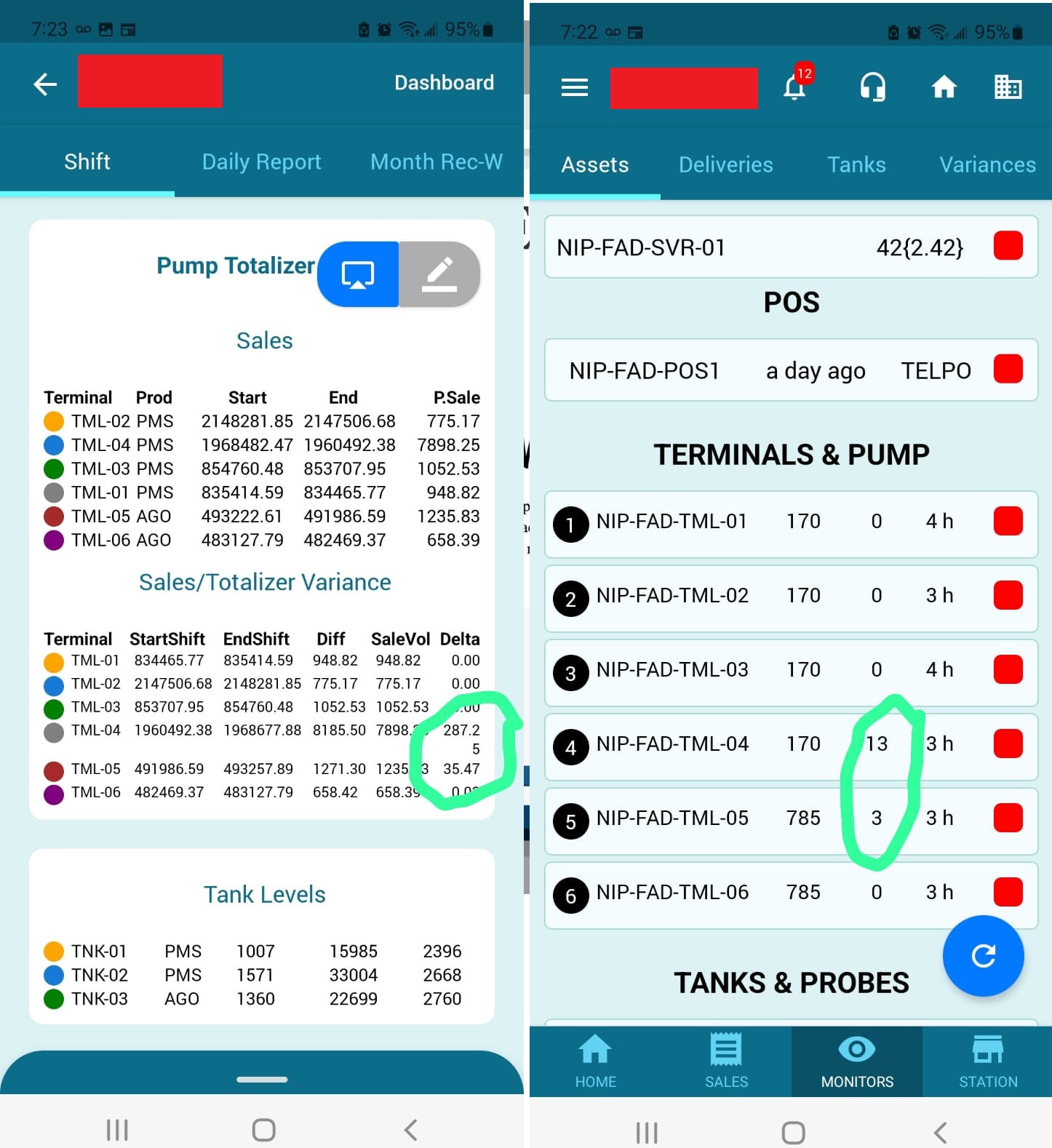
Our terminal monitoring AI indicated that there are transactions that were captured but they have not been sent to the cloud. This means that if the dealer checks the record, there will be variance. Now, our algorithm is indicating the variance and also telling the dealer that he should wait for the transaction to arrive in minutes, and recheck the transaction reports again. This is important in case there is a network issue that prevents that data hitting the cloud.
Post the update, here is the final: new calculation is showing zero variances.
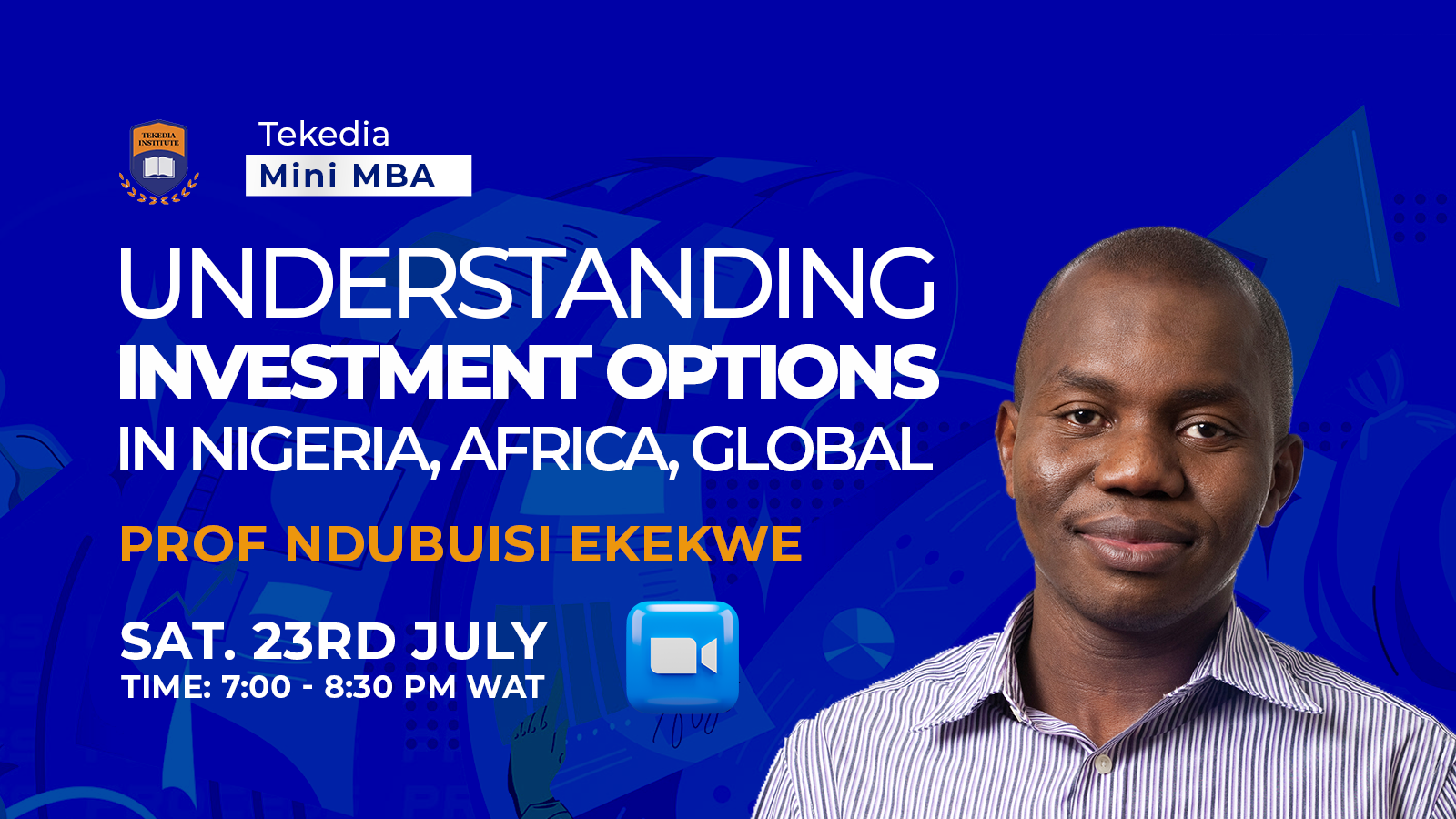
Inflation everywhere? Where can we find safety in markets? Within the bounds of academic learning, Tekedia Institute Mini-MBA Live will discuss how to build investment portfolios in Nigeria and Africa. In Diamond Bank as a young graduate, I developed a 45-20-20-15 Strategy, tracked my unit head, George Akpovbovbo, a fellow of ICAN, and bought all equities he marked in his daily newspaper stock table. Later on, I realized there was a reason he chose those companies: 100% of them pay dividends.
My strategy has since evolved with startup investing and US equities. But the core principle remains. Join us at Tekedia Mini-MBA today as we discuss, co-learn and advance our knowledge within an academic tradition on the best ways to make that future predictable by creating it. Yes, invest and invest, not just for money but for your career.
Those professional certifications are GREAT investments. And of course, a PhD (in technical area) is the godzilla: I have called it the best career insurance in Africa because there is always a school to teach! I will share my 5 pillars and those have worked really well for me. Come to the class; we want to understand your strategy.
Tekedia Institute is a modern school. I invite you to register for the next edition which begins Sept 12. Cost is N60k or $140 if you beat the early registration deadline
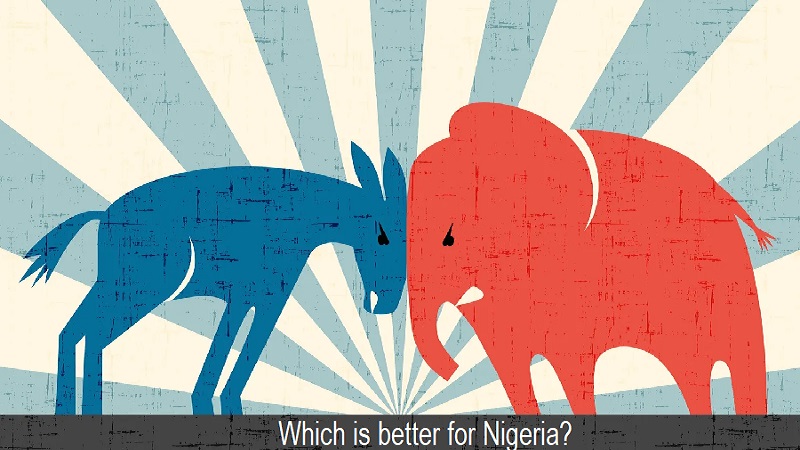
Community Member: In America, they have two major political parties and using these parties, they have done well over the decades. Which one do you think favors Nigeria, ideologically and policy-wise?
My Response: First, a disclosure, I am a registered Democrat which means I am in the same party as Joe Biden and Obama but I do not vote on party lines; I vote based on the candidates. There is no comparison between politics in US and what we have in Nigeria. In US, you can know a republican or a democrat from his or her policies or ideologies.
For example, while most Republicans are pro-life, their counterparts, Democrats, are pro-choice. In Nigeria, our politics is nothing but a group of humans since there are no core differences between say APC, LP and PDP members. In short, more than 50% of leading members of APC used to be in PDP. So, at the foundational level, there is no core difference! And that also means that party-level voting makes no sense as there is nothing special one party can offer the other party cannot provide, unlike in America where a pro-life candidate will surely struggle in Boston, a democratic city.
With that noted, Nigeria will be in a better position if we do what democratic cities do. In America, more than 70% of the top-50 ranked universities are in democratic cities. Also, more than 80% of the largest cities are in democratic cities. In the last 50 years, more than 80% of new Fortune 500 companies have been created by democratic cities. Even when you have great universities in Republican-run states, the likelihood that the highest ranked university is in an island of a democratic city in that state is high (Austin hosts the highest ranked university in Texas, and Austin is a democratic city; the same applies in Georgia where Georgia Tech based in Atlanta, a democratic city, hosts the highest ranked university in that state). Democratic cities file most patents per capita.
What makes democratic cities outperform on many fronts? They actually believe in investing in the future and building community infrastructures. They build infrastructures, invest in the citizens and provide paths for those citizens who need help. Over the years, they have outperformed, contributing more in making America greater.
Yet, what happens there means nothing in Nigeria as there is no basis for comparison. Nigeria does not have political parties when it comes to ideas and policies, we have the assemblies of people and nothing but that. That is the reason why someone can win in PDP in Anambra State for Senate, and next four years win via APC, and another four years, return back to PDP. That cannot happen in America because that person’s ideologies would have made it impossible!
But note this: what makes America great is not by chance.
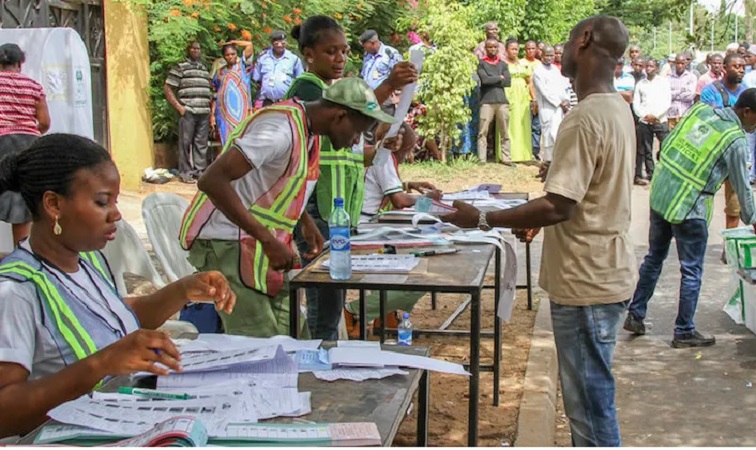
State and non-state actors advocated for meaningful political and electoral changes after the 2015 general elections, taking into account the many concerns and difficulties that defined local and national elections in Nigeria between 1999 and 2015. The interested stakeholders engineered and carried out a number of initiatives between 2015 and 2021. Nigerians have a number of laws, from the national parliament to the executive branch of government, that were intended to strengthen political and electoral processes in advance of different state governorship elections scheduled before the general elections in 2023 as well as the year’s elections.
However, our analyst notes that the Electoral Act’s sections and guidelines, as well as the electoral body’s template for managing political campaign activities, remain paper tigers given the actions taken by political parties, candidates, and their supporters prior to and during the governorship elections that were held ahead of the general elections. This stance is supported by the evidence that political figures and the people who support them have engaged in flagrantly illegal conduct.
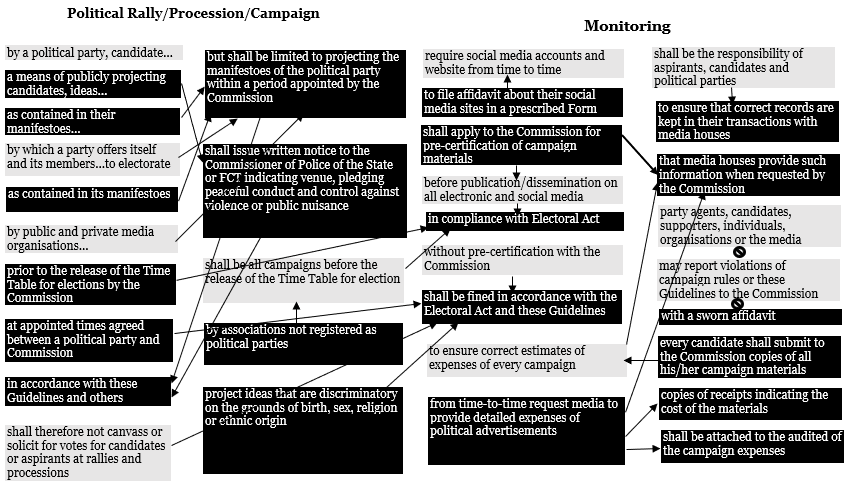
Both the Act and the Guidelines, as expected, provide goals and means for addressing flaws and issues identified with the past elections. For example, analysis shows a close link between the goals and means developed for campaign activities/types and the electoral commission’s monitoring of such activities/types (see Exhibit 1, where Goals are in grey boxes and Means are in black boxes).
Analysis reveals that the value of goals and means in campaign activities/types in the INEC’s Campaign Guidelines exceeded 70%. This implies that the goals and means in the two primary components of campaign rules for political parties, candidates, and their followers are mutually exhaustive and interrelated. Further analysis reveals that 54.8% of campaign monitoring concepts or guides in the electoral body’s guidelines were expressly pulled from campaign offences indicated in the 2022 Electoral Act, while 8.1% were drawn from campaign rules in the same Act.
Exhibit 1: Interconnectivity of Appropriateness and Sufficiency of Goals and Means of Ensuring Better Election Campaign in INEC’s Campaign Guideline
Source: Independent National Electoral Commission, 2019; Positive Agenda Nigeria, 2022
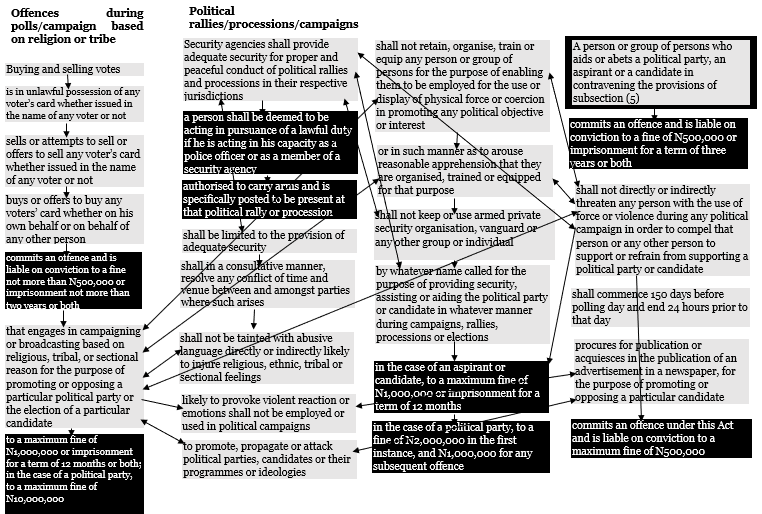
Exhibit 2: Interconnectivity of Appropriateness and Sufficiency of Goals and Means of Ensuring Better Election Campaign in Electoral Act 2022
Source: National Assembly, 2022; Positive Agenda Nigeria, 2022
From the Electoral Act to the INEC’s Campaign Guideline, it has been established that political parties, candidates, and supporters should not begin campaign activities before to the specified time (see Exhibit 1 and 2). Sections and procedures for developing messages about candidates and political parties and communicating them across communication channels without causing division in the country are also included in the legal and policy documents.
However, our observational analysis of political parties, candidates, and supporters of the main parties for the 2023 presidential election shows that actors are breaching Section 97 subsection 1, which criminalizes religious or tribal campaigning. According to the section, “A candidate, person or association that engages in campaigning or broadcasting based on religious, tribal, or sectional reason for the purpose of promoting or opposing a particular political party or the election of a particular candidate, commits an offence under this Act and is liable on conviction.” Paragraph a-b further specifies punishment for the violators. It states that: “(a) to a maximum fine of N1,000,000 or imprisonment for a term of 12 months or both; and (b) in the case of a political party, to a maximum fine of N10,000,000.”
In order to forward their agendas ahead of the general elections, parties, candidates, and supporters have largely turned to religion. Actors have attacked the personalities and beliefs of presidential candidates in both social and conventional media. Although it wasn’t the main factor in the Osun 2022 election, the governorship candidates’ personalities were disparaged. However, criticizing the leading opposition candidate (Senator Ademola Adeleke) due to his alleged lack of education was against the law and the campaign standards set forth by the electoral commission.
Our analyst notes that the campaign atmosphere would be hostile for the general elections in 2023 because this appeared during the most recent governorship election without any sanctions or prosecutions being brought against those responsible. Parties, candidates, and their followers would widely disseminate false and deceptive information that might incite physical violence throughout the nation. The ways to achieve the precise objectives indicated for controlling and sustaining the campaign environment on virtual platforms and in physical locations must therefore be reviewed by the concerned parties. Where the means are obviously inadequate, they should be reformulated in order to achieve mutual benefit.