DD
MM
YYYY

PAGES

DD
MM
YYYY

spot_img

PAGES

Home Blog Page 5021

Mr. President, Let’s Help: Zero leakage, Zero Diversion Guaranteed on Fuel Subsidy and Fuel Distribution

2

Dear President Buhari, we write to offer to fix the leakages in Nigeria’s fuel subsidy program especially now that our national currency is struggling; any help will go a long way. Our technology has been tested by filing stations and other players in the downstream oil & gas sector. We have accomplished the capability of reconciling fuel volume/Naira from depots via trucks to pumps and shifts.

Mr. President, if contracted and within 3 months, we will make it possible for you to know the fuel volume in Nigeria, and the exact location, across trucks (parked or on the go), depots, and stations, on your smartphone, and LCD monitor in the Presidency.  Zero leakage, zero diversion guaranteed. No wuruwu in subsidy payment. Naira will dance atilogwu, koroso, bata, etc.

We will answer the call. Please share this with President Buhari; I just feel that we can help the nation, considering that many of us went on largely free education in Nigeria. We’re 100% Nigerians-owned and the founders are grads of the Nigerian university system (FUT, Owerri) – give us a challenge!

We will create total (direct/indirect) jobs of 50,000 and save at least $2 billion for Nigeria.

Update: Intermittent network availability is not a problem when the trucks are moving across cities. Our sensors have in-memory microprocessors which have capacities to retain information and then push them via different gateways once a network is established. The data transmitted is “text” [not video, not image]  and the cost is negligible.

Response to questions on possible cloud latency on my post yesterday.

Some questions on our technology which ensures 100% revenue assurance with zero financial leakage in the downstream oil & gas sector. A key one is network issues where say an attendant completes a shift at 1pm and his supervisor is closing it, reconciling money at hand and total fuel dispensed in the pump. We have intelligent software agents which ensure that you are reconciling well. 

The payment part is always up to date but you can have small delays from the tank sensors. If that happens, you will see a notification on the dashboard, telling you the last volume records and informing you that sensors in the pump have that data in the memory and will update them once the network connection is re-established. And once that happens, you will see data before the 1pm as in-memory chips keep data and ensure you have solid system integrity.

This process will not affect the next shift as the technology is bi-directional which has intelligence in both directions. From productive sites

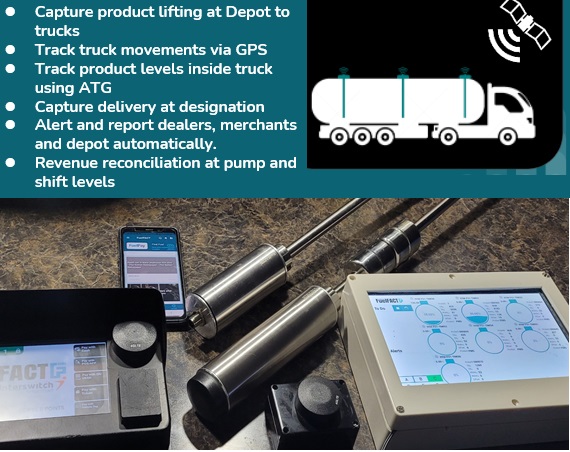
Our technology has the ability to reconcile in seconds all subsidy volume delivery, payments with where the diesel, petrol, kerosene, etc are located across Nigeria within 5 minutes on Mr. President’s desk. 


Building the Operating System for Payment in Nigeria’s Downstream Sector

Tracking on Smartphone

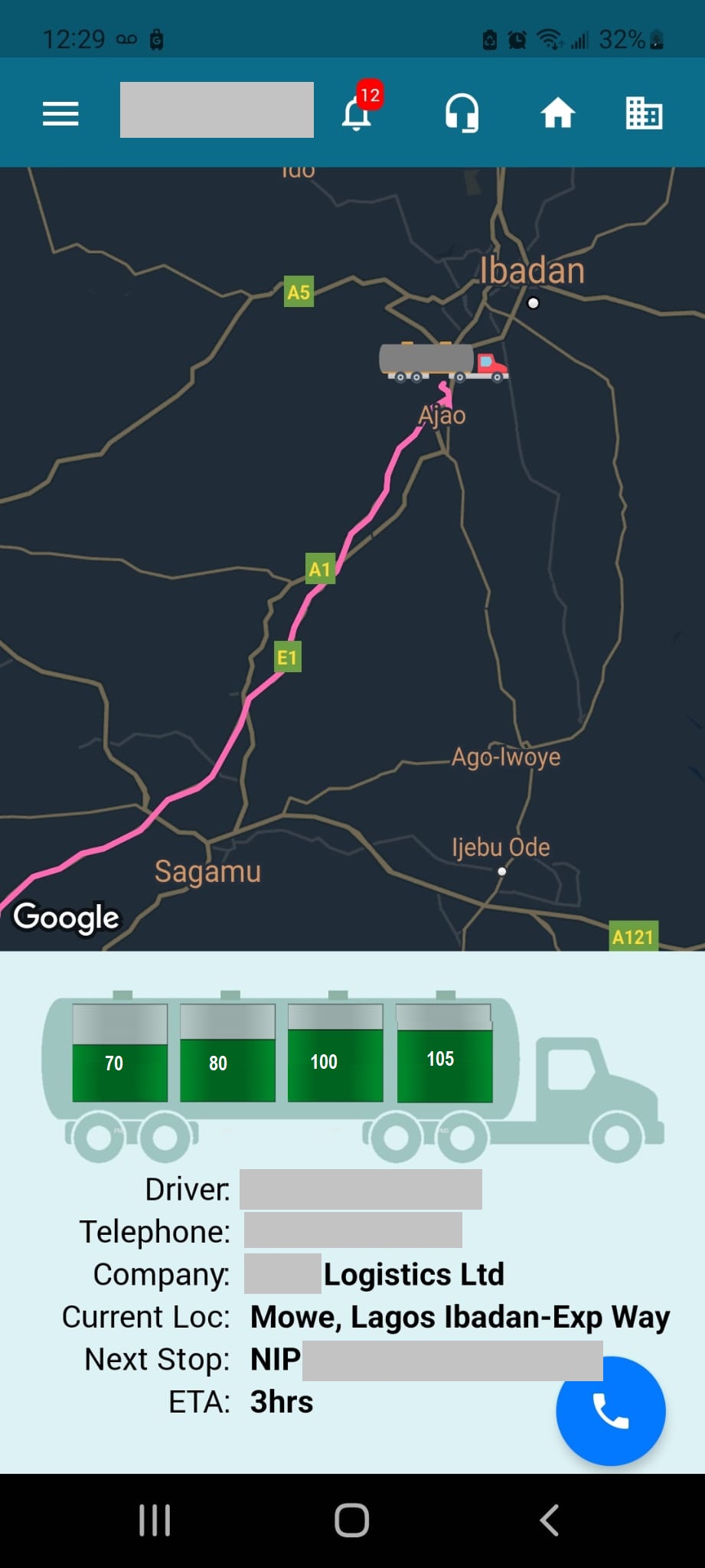
With our technology, when that truck loads in the depot, and moves across your locations, to drop petrol, via your smartphone, you can see the path, the volume, where the next stop is programmed to be, and more. We’re bringing uncommon transparency in Nigeria’s downstream oil and gas sector. We do not just track trucks, we also track the liquid content. As everything is happening, we are reconciling payment transactions!
Certifications Vs Competence (Skills, Knowledge and Attitude)

0

Towards the close of 2021, a mentor reached out to me to join him in developing a training curriculum housing about 12 courses.

Most of the courses were on topics that were far removed from my experience or education. My major pass mark in that conversation was that I understood what a curriculum is. Yes, I am a trained Education graduate. I have a double major in Education and English Language.

In two weeks I was done. It could have been earlier but because other things were also calling for my attention. His expert guidance as a management consultant and human resource guru was instrumental. This is how I learn from the brightest and the finest in various industries. Though he knew I didn’t have an HR certification, he knew I could do it and he engaged me. Now I know better.

If that conversation were between a recruitment manager and me, what would my fate have been on that project knowing that I had not developed a curriculum before plus the fact that I had no certification yet from any HR professional body? 

Certifications should be seen as a tool for advancement into industry leadership and must not take the place of education. I don’t think it should be favoured over competence or potential. Certifications can be acquired.

This brings me to the idea that potential talents with requisite skills should be allowed to grow in practice as long as hiring managers have spotted the capacity for the job. The Hi-Po can become certified on the journey.

Agreed, some Hi-Pos (High Potentials) have the capacity to do some jobs and excel at certain careers but may initially lack some specific know-how about the particular task or project. That is one of the best training need indicators.

Our human resources management gurus are doing a great job. In addition to their checklists, I ask that they favour skills or capacity even when there’s no paper proofs to that effect so that they will not cause their organisations some pains from talent-triggered costs.

Many organisations have lost many promising Hi-Pos while looking for the best qualified. Remember, the best qualified, too, have aspirations.

It should be noted that this post is not to discount the critical place of certifications. It is to call attention to competence too.

A good number of recruiters still think professional certifications are a place where you can formulate theories. Where one can load the head with knowledge. No! It should be a place where a professional can master solutions. It should be a crucible where industry (potential) leaders are molded and queried with practical case studies to ascertain their capacities and capabilities for the tasks ahead. It is also a place where one can learn more on how a task is done in a certain profession or industry.

Certifications issued by professional bodies are not primarily designed to teach candidates the theoretical ‘how to’ but to certify that they know what they claim they know or to certify them that they have truly mastered their crafts which they claim they have been doing and certify them for trust building and professional networking.

The education system is doing its own bit already by delivering many from the stronghold of primordial thinking and refining diamonds in the rough to make them fit for social relevance. This is why a PhD holder still needs to learn on the job. The PhD is in the head. There’s a need to translate the head knowledge into results and solutions to real problems in the workplace.

Professional certifications shouldn’t take after our university or polytechnic systems. They should take a better turn to make it a real workplace simulation. So that, upon certification, there won’t be any doubt about the capabilities of and expectations from the certified.

Because of the trend of attention to paper claims, many professionals now have extended their tertiary education behaviour to the corporate environment with the thinking that brandishing a professional certificate is a sure ticket to advancement. Many bookworms among them can reel out palpable knowledge without the ability to translate the knowledge into real results or solutions.

No professional is immune to this tempting reality. A decision to be different is the antidote. A deliberate attention to building capacity and capability for problem solving is part of the price. And when capacity is built and being built, we hope that our recruiters won’t discount our efforts.

A Delivery Startup Launches Kwikstore App To Help Merchants In Africa Sell Online

0

Kwik delivery is a start-up company that provides digital services to merchants in the fields of deliveries, e-commerce, and financial services. Recently, the company has expanded its services with the launch of its Kwikstore.

Kwikstore is an easy-to-use free e-commerce storefront solution that allows any African business owner, trader, social vendor entrepreneur, and SME to create their store in just 5 minutes, without any technical knowledge, giving customers the opportunity to run their business directly from their smartphone.

Social vendors can be able to link their Kwikstore to their social media accounts, automating sales, fulfilment, inventory management, and shipping, freeing them to focus on sales and marketing.

Kwikstore is a free-to-use feature of the Kwik delivery app that does not require any upfront payment or service fees other than the standard payment gateway fee. Through the Kwikstore app, merchants can use it to match their brand in a customized way.

Once an order is approved by the merchant, payment is automatically processed through the payment partners and the Kwik rider is automatically dispatched to the pickup location or the order can be picked up directly by the customer.

When merchants use the Kwikstore app, it is required for them to open a Kwik account, although the Kwikstore can be used independently on the Kwik delivery platform, which allows merchants to use the delivery solution of their choice to sell anywhere in Africa, also in areas not yet covered by the Kwik delivery platform.

Recall that the startup company closed a $2 million seed fund earlier in March, with plans to expand its services outside Nigeria. It is indeed great to see that the company has significantly made massive progress with its recently launched e-commerce platform.

Kwik is also working relentlessly to gain dominance in the e-commerce industry, as the company seeks to compete with African e-commerce giant Jumia and possibly displace them from the No1 position. Kwik has joined one of the few e-commerce digital players that are able to propose access to end-to-end fulfillment and delivery services to its customers.

Through its Kwikstore, African merchants are given the opportunity to grow their businesses with all the benefits that technology has to offer. Technological advancements have no doubt enhanced the standard and ease of business operation across the globe.

The e-commerce sector has so far been one of the major drivers of the Nigerian digital economy. It has been predicted that with the significant progress in the e-commerce sector in Nigeria, it is expected to hit about $75 billion in revenue per annum by 2025.

E-commerce has also been commended for attracting the services of investors who pump millions into the industry to set up essential technological advancements needed to drive the sector forward.

What is your journey? Tekedia Institute Has Programs To Take You There

0
cover design car

What is your journey? Tekedia Institute is a top-grade school – and we can drive you to that journey. We have many programs on business management across all industries and domains. I invite you to pick one and join us. Details and costs here

  • Tekedia Mini-MBA (next edition begins on Sept 12, 2022)

  • Startup Masterclass: from start-up to unicorn

  • Tekedia Practice (agro, digital tech, renewable energy)

  • Tekedia Industries (agro, digital tech, new energy)

  • Tekedia Town Hall & Consultancy

  • DesignLab for Companies by Tekedia Learners


Amazon to Acquire Healthcare Company, One Medical, in A $3.9bn All-cash Deal

0

Amazon announced on Thursday it has reached an agreement to acquire primary healthcare company One Medical in an all-cash deal valued at approximately $3.9 billion, deepening its delve into healthcare.

The US-based ecommerce giant has been working to expand its operation beyond its core businesses, with a growing interest in healthcare services.

Senior vice president of Amazon Health Services, Neil Lindsay, said the company thinks “health care is high on the list of experiences that need reinvention.” adding that it hopes to be one of the companies “that helps dramatically improve the healthcare experience over the next several years.”

One Medical operates based on membership to provide primary care service that promises customers “24/7 access to virtual care.”

The company operates in 25 major US markets and works with over 8,000 companies to offer medical services to its 767,000 members, according to its latest quarterly results.

Lindsay said Amazon believes “health care is high on the list of experiences that need reinvention.”

“We love inventing to make what should be easier and we want to be one of the companies that helps dramatically improve the healthcare experience over the next several years,” he said.

Amazon has been notably expanding its healthcare portfolio investment. The company acquired an online pharmacy PillPack for $750 million in 2018, before launching its own digital pharmacy in the United States.

In addition, Amazon has partnered with JP Morgan Chase and Berkshire Hathaway to develop Haven, an idea geared towards providing better health care services and insurance at a lower cost to workers and families at the three companies. But the effort failed last year.

Under the deal, Rubin will continue to be run by One Medical under CEO Amir Dan Rubin. The shares of one Medical’s parent, 1Life, moved up 69% to $17.13 on Thursday, just below the purchase price of $18 per share.

While the deal is still subject to regulatory approval, there is concern about private data management.

The American Economic Liberties Project in Washington said it’s unclear if Amazon will protect patients and their sensitive medical records.

“Allowing Amazon to control the health care data for another 700,000 plus individuals is terrifying,” Krista Brown, the group’s senior policy analyst, said in a statement Thursday. “Amazon has no business being a major player in the healthcare space, and regulators should block this $4 billion deal to ensure it does not become one.

The Federal Trade Commission (FTC) is working with lawmakers to enact a law that will limit big tech companies from using their financial power to acquire companies outside their core businesses. Meanwhile, Amazon and the rest are still having a field day.