DD
MM
YYYY

PAGES

DD
MM
YYYY

spot_img

PAGES

Home Blog Page 5065

Project Engineer/Manager as Orchestra Conductor – Engr Dr Chisom Ezeocha

0

We have a new course in Tekedia Institute. The faculty is my undergraduate classmate in Federal University of Technology Owerri (FUTO), Engr Dr Chisom Ezeocha; a Project Delivery Manager at Shell.

Dr Ezeocha has managed global technical teams around the world. He served as the Head of Offshore Field Engineering for 6 years in Brunei Shell Petroleum. That is the zenith of technical engineering management since you are managing assets worth $$billions. In other words, no excuses because every hour counts for the bottomline!

Dr. Ezeocha developed a novel team management methodology which he refined during his doctoral program. He has taught that model already in our Institute. Recently, we reached again to him – to educate us on how he manages complex big dollar projects.

In his usual amazing brilliance, on simplifying complex things (we were roommates), he dropped a few words: great project managers are like orchestra conductors. And that was it – the course is titled “Project Engineer/Manager as Orchestra Conductor”. Plan to attend it!

Tekedia Capital Portfolio Startup Raises $$millions

0
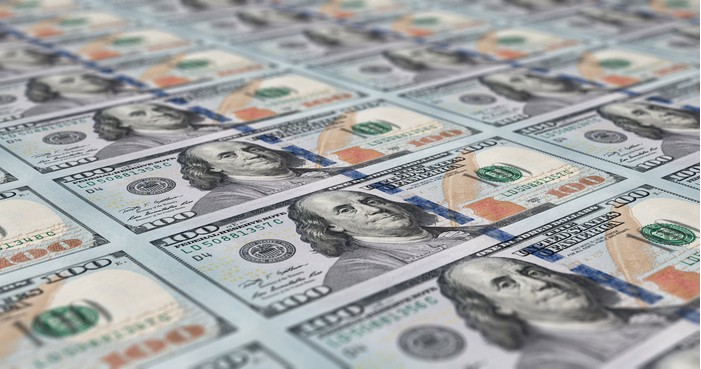
Fund, money cash dollar

This week is coming out super-amazing. One of Tekedia Capital portfolio startups has raised $$millions. Official press release is coming. This company has moved to OurPerform V2 in our tracking. The team has been excellent on operational execution.

This firm promises to become a significant part of Africa’s digital economy. So proud of all Tekedia Capital Syndicate members for joining us in taking risks in these amazing young men and women, as they create companies of the future to fix frictions in African markets.

Learn how we discover them and explore if you can join us – the next investment cycle is coming. Join here.

FirstCheck, Female-Focused Venture Capital Firm, Secures $2m Commitment from TLcom Capital

0

FirstCheck Africa, a Nigeria-based female-focused venture capital firm, has secured a $2 million commitment from TLcom Capital, an Africa-focused Venture capital firm, the company has announced.

In addition, FirstCheck also announced that Eloho Omame, one of its founders, has joined TLcom Capital as a Partner, adding to her existing day-to-day role as Co-Managing Partner at FirstCheck Africa.

FirstCheck said the commitment, which adds to its $10 million debut, takes its single pool of capital to $12 million – and it will be invested in backing high-growth, technology-driven startups led by females.

With the available capital, FirstCheck Africa said it will invest up to $250k as high conviction first checks into early-stage rounds for female-led startups.

“We remain sector-agnostic and focused on technology-enabled companies that are solving important problems in large markets. Our strategy is to invest in female-led companies with category-leadership potential while throwing the weight of FirstCheck Africa’s networks and platform behind the founders that will be the next generation of entrepreneurial role models for Africa,” the firm said.

Female-led startups struggle to get financial backing in the African tech ecosystem, a gap that motivated Eloho Omame, founding Managing Director of Endeavor Nigeria and Odunayo Eweniyi, COO and co-founder of PiggyVest, to launch FirstCheck in 2021. In the last 18 months, FirstCheck Africa has invested in 10 female-led startups in four countries, boosting its portfolio that started with personal commitments of $25,000 investment each in six female-led companies.

The venture capital firm said its portfolio companies have been accepted into three global accelerators (including Y Combinator), and a number have raised sizeable follow-on rounds, with FirstCheck Africa as the first or second institutional investor on their cap tables.

It said its Africa’s mission is to advance equity, capital and leadership for a generation of women in Africa through technology and entrepreneurship.

“We will continue to focus on making it easier for ambitious African women to raise early-stage venture capital by writing checks, being female-led companies’ earliest believers and building our platform to attract resources to accelerate their efforts,” the firm said.

Female-focused startups have seen an uptick in investment recently due to the strategy of venture capital firms like FirstCheck. The company said there’s been a significant jump from three years ago, when just 5 female-led companies in Africa raised $1mn or more in early-stage rounds.

“Last year, the number was 33, and so far this year, we count 19, including 6 companies this month, of which FirstCheck Africa is an investor in 3. We’re quickly becoming the preferred early-stage investor for female founders building venture-scale companies, and we are proud to be building an investment firm with their needs in mind,” it said.

Though the gap is gradually being bridged, there is still a lot more to do. The African tech ecosystem is still saturated with early-stage female-led companies in need of capital. This, FirstCheck said it’s working to change with its mission-oriented early-stage, female-focused fund.

“We’re a small fund with big ambitions, and we’ve designed our portfolio strategy with our founders’ needs in mind. Access to capital is a primary and complex challenge for female-led companies. As a mission-oriented early-stage, female-focused fund, it’s critical for like FirstCheck Africa to invest meaningful capital to give the young companies in our portfolio sufficient runway to focus on traction and pursue disciplined fundraises when the time comes.

“We’ve constructed our debut fund’s portfolio to make targeted investments at pre-seed, keep the capacity to make follow-on investments when the most promising of those companies are ready for seed capital, and retain the flexibility to invest in some companies at the seed stage, where a female-led company might have already raised an institutional round,” the firm said.

Airbnb Makes Permanent Ban of Parties in Apartments

0

American company that operates homestays for vacation, rental, and tourism activities, Airbnb has recently disclosed its plan to make permanent the ban of parties in their apartments, after it noticed a sharp drop in reports of unauthorized gatherings since the prohibition was put in place in August 2020.

The company disclosed how it witnessed a 44% year-after-year drop in the rate of party reports since implementing the policy. Recall that due to the covid-19 pandemic, to curb the spread of the virus, the San Francisco-based company had to introduce and extend the party ban on its apartments.

Currently, the company now intends to place a permanent ban on parties as the summer season begins. The company also disclosed its plans to remove its 16-person limit, allowing larger homes listed on the platform to be booked to full occupancy.

Airbnb has gone ahead to update its policies, by removing the event-friendly search filter, and parties and events allowed which they disclosed will remain inaccessible.

Guest who have been reported for throwing a party that violates their rules, Airbnb will not hesitate to remove them from their platform. The company has also strengthened its rules around parties, by developing sensitive detection technologies that will put to a halt disruptive parties before they commence.

All these rules aforementioned have been put out by Airbnb to avoid guests from being a nuisance in the neighborhood. The company has so far suspended the accounts of about 6,600 guests for violating its party ban.

Although the party ban does not totally ban parties from happening in the apartments, rather the company disclosed that it is only placing a ban on open parties that tend to be noisy which constitutes a lot of nuisance to the neighborhood.

However, Airbnb will allow hosts to hold limited less noisy parties like baby showers, bridal showers, family gatherings, etc. While it’s natural to unwind and have fun at the apartments, when loud music, noise, drugs, etc enter the picture, it automatically goes against the rule which the company disclosed that it won’t tolerate.

Airbnb also disclosed that the reason why it had to enforce these rules, was that some unscrupulous people chose to take bar and club behavior to these apartments, forgetting that the settings are different.

The company is no doubt going hard on these rules, as they have teamed up with Vrbo, another American vacation rental online marketplace to combat house party offenders.

Both companies will be working together to address the issue of disruptive parties in their apartments. Airbnb disclosed that they alone can’t solve the problem, as it requires an industry-related effort.

Airbnb and Vrbo have also urged other short-term rental companies to partner with them to curb the menace of noisy house parties.

This is a good step taken by Airbnb, as so-called disruptive house parties have long been a problem for short-term rental companies. They cause so much noise and nuisance to the neighborhood and even pose serious problems to the environment like violence, damage of properties, and non-compliance with safety standards.

Airbnb has known that if such disruptive parties continue, as well as the incessant complaints from neighbors, the government might be forced to step in which can lead to the sealing up of apartments, which will affect the company’s revenue.

Is Russia’s “Technical” Default the Beginning of Its Economic Turmoil?

0

Russia has defaulted on its foreign debt, signaling the beginning of a gloomy economic future for the embattled Slavic country.

It was the first time in more than a century that the oil-rich nation is missing a foreign payment deadline. The default is about $100 million in interest on two bonds, whose 30-day grace period expired on Sunday.

Russia’s invasion of Ukraine inspired a series of Western sanctions targeting its financial system, making it difficult for the country to meet its international financial obligations as access to US dollar and euro, which most of its loans must be repaid with, has been greatly limited.

This exposes Russia to a big challenge. Most of the country’s foreign assets have been frozen, including about half of $640 billion it has racked up in foreign reserves since 2014, when the sanctions started following its annexation of Crimea.

A default means that Moscow’s isolation will see a new height. With a few friends left in the global stage, accessing foreign loans will be near impossible for years. Timothy Ash, a senior sovereign strategist at BlueBay Asset Management described the default as “a disaster for Russia.”

But Russia has denied it defaulted. The Kremlin on Monday described the default label as unlawful, saying that any default may have happened not because the country doesn’t have the money or hasn’t been trying to pay, but because of the Western sanctions. It said the payments due Sunday had been made in dollars and euros on May 27, but the money was stuck with Euroclear, a Belgium-based clearing house.

“Allegations of default are incorrect because the necessary currency payment was made as early as back in May,” Kremlin spokesman Dmitry Peskov said during a regular call with reporters on Monday.

The fact that money transferred to Euroclear was not delivered to investors was “not our problem,” he said, adding that there are no grounds to call it a default.

The major challenge to fulfilling its loan obligations and avoiding default emerged last week when Russian finance minister Anton Siluanov said the country will make its payments in rubles due to the sanctions.

But Moody’s credit ratings agency said Monday that the missed deadline “constitutes a default” and it predicted that Russia would default on more payments in the future.

What does the default mean for Russia’s economy?

Russia’s economy is currently being sustained by high oil prices. Ruble, the country’s currency, has soared to a seven-year high against the US dollar. This means, in the near term, Russia’s economy will have little to lose as a result of the default. However, the question about what happens in the long term remains.

At the conclusion of the G7 Summit held in Germany, the US and its allies agreed on additional sanctions against Russia. The group believes the default is evidence that the sanctions are working.

“This morning’s news around the finding of Russia’s default, for the first time in more than a century, situates just how strong the reactions are that the US, along with allies and partners, have taken, as well as how dramatic the impact has been on Russia’s economy,” a senior administration official said on the sidelines of a G7 summit.

Russia is already unable to borrow abroad and its existing bonds have collapsed in value to pennies on the dollar. A default comes with the usual punishment of being downgraded by credit rating agencies, exit of companies doing business in the defaulting country and being isolated financially – all of these are being experienced by Russia now.

Though Russia-Ukraine’s war-orchestrated high oil price has offered Moscow a rare lifeline amid the sanctions, the G7’s decision to add a new set of sanctions targeting energy, food and security, may be the final nail in the coffin of its crumbling economy.

“As for oil, we will consider a range of approaches, including options for a possible comprehensive prohibition of all services, which enable transportation for Russian seaborne crude oil and petroleum products globally, unless the oil is purchased at or below a price to be agreed in consultation with international partners,” the group said.

Efforts to weather the storm in the oil market are underway. The United States is leading its allies to put Venezuela and Iran’s oil back in the market in a bid to weaken Russia’s weighty position in the oil market. Analysts say that if the plan succeeds, the Kremlin may witness its worst economic crisis in decades.