DD
MM
YYYY

PAGES

DD
MM
YYYY

spot_img

PAGES

Home Blog Page 5072

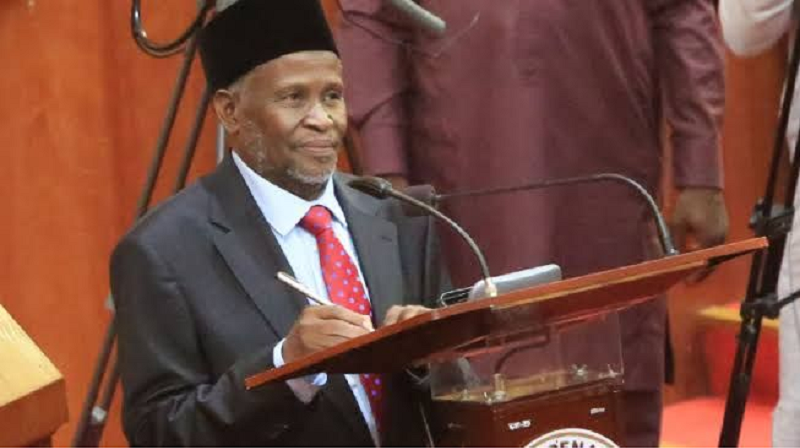
Chief Justice of Nigeria Tanko Muhammad Resigns

1

The  Chief Justice of Nigeria (CJN), Tanko Muhammad, has resigned, Premium Times reports. According to the paper, he resigned over poor health. I must commend Justice Muhammad for opening that lexicon in the Nigerian politics and governance system (you resign when you are unable to serve). I hope Justice recovers fully. We thank him for his service to the nation.

Justice Olukayode Ariwoola, the second in line, would be expected to be sworn in, in an acting capacity by the president, until a substantive CJN is confirmed by the Senate.

The next most senior Justice of the Supreme Court, Olukayode Ariwoola, who hails from Oyo State, is expected to be sworn in in acting capacity, sources at the Supreme Court who confirmed Mr Muhammad’s resignation, say.

The resignation by Mr Muhammad, 68, comes about 18 months ahead of his official retirement in December 2024, when he will clock 70.

Mr Muhammad’s abrupt exit comes at a time when his colleagues on the Supreme Court bench accused him of hampering the operations of the Supreme Court by failing to fund judges’ welfare as well as fueling of generators among others.

Recently, other justices in the Supreme Court accused Justice Muhammad of sub-par leadership.

Do We Crowdfund for Justices of the Supreme Court of Nigeria?

PiggyVest Bought Abeg, the BBNaija Sponsor, and Just Renamed it Pocket; BIG Lessons

14

We missed it; it turns out that Abeg which sponsored BBNaija had been acquired by PiggyVest parent company, PiggyTech, according to dnbstories: “Abeg was acquired (very secretly) by its older and richer industry peer – Piggytech, the parent company of PiggyVest. Unlike Abeg, PiggyVest is doing well and is actually one of Nigeria’s most popular savings app. In fact, PiggVest easily makes the list of Nigeria’s most valued fintech startups.” They just renamed Abeg to Pocket. I think that is a more respectable name.

Pocket (formerly Abeg) is a social commerce and payments app from Piggyvest. The company was launched officially in 2021 as a payments platform for sending and receiving money and has now evolved into a full social commerce app with payments embedded. Micro-entrepreneurs can upload items directly from their Instagram with one click, add delivery options and rates, set price, and quantity, add pictures, and videos, escrow funds and can even allow for negotiation within one secure app.

Big lesson: until you have a great product-market fit, spending $$millions on advertising will not help you.  Great companies attain that product market fit first before they begin to blitzscale. That is the only way you can retain customers and get the best investors (the customers) to support your mission. Otherwise, you can spend $$millions on BBNaija and still struggle.

Abeg spent heavily on promotion but it struggled to have a great product market fit at a point it could make money. Of course, great companies could be sold, and that does mean that even extremely amazing companies can decide to exit the market. It could be that Abeg has generated great value and wants to cash out! But I will not vote on that, at this phase of its growth.

We wish Pocket open markets.

E-commerce Growth In Africa Remains Relatively Low; Lagos Tops Africa on E-commerce Order

0

No doubt the e-commerce sector is significantly evolving to become a major driver of global economic transformation, although its growth in Africa has remained relatively low when compared to other regions.

According to a survey, consumers in Kenya, South Africa, Nigeria, and Egypt were 40 percent more likely to either maintain the same shopping levels they had before the pandemic or increase them.

The growth has been low, which has seen the percentage of online shopping traffic in Africa, still represented at less than two percent of the total number of e-commerce users globally.

The number of internet users globally has drastically increased over the last five years, showing that one-third of the world’s population is now online. Although the African continent lagged from the rest of the world in its internet usage due to poor infrastructures.

However, today the African continent has gradually increased in the number of users of the Internet. In the African region, internet use increased from 120 million in 2014 to 270 million in 2019.

Despite the huge benefits e-commerce has to offer, it has not really dominated the African economy like the western world. A lot of businesses in Africa, most especially small and medium-scale enterprises in Africa are yet to take their business online, while many consumers in the region seem to be wary about online purchases.

One major barrier that is hindering e-commerce in Africa is related to the lack of infrastructure. This problem is particularly associated with internet-related technologies. Unfortunately, the African continent has been playing catch-up with the adoption of latest technological trends.

Internet services in most countries in Africa are abysmally poor, which often affects connection. Africa has the lowest number of internet users compared to the number of internet users in Europe.

Another factor that has been proven to hinder e-commerce growth in Africa is the lack of ICT knowledge. In Africa, there is a low rate of ICT knowledge, especially in rural areas where people would rather opt for face-to-face transactions than use electronic medium.

It is argued that a lot of transactions in Africa have remained paper-based as businesses and consumers appear to be content with the traditional methods of transacting and lack knowledge of the benefits of e-commerce.

Therefore, it is not far-fetched to say that ICT illiteracy which is high in the African region has contributed majorly to the low number of internet users in Africa, which explains why small and medium-scale businesses remain unaware of e-commerce and also do not see the need to take their businesses online.

Lagos Top Among Cities In Africa

Lagos state emerges top among cities in Africa with the highest volume of electronic commerce orders in Africa. The commercial city ranked first, with Cairo, Egypt in the second position, followed by Nairobi Kenya in the third position.

A whitepaper titled “Towards a flourishing digital economy for all- a spotlight on Africa” revealed that the e-commerce status in Lagos already has lots of businesses that are already creating a vibrant e-commerce market.

It further reveals that the city has developed innovative ideas/solutions to Africa’s plethora of challenges around payment, identity, and delivery addresses. Fashion products are said to record the highest sales with 21 percent order volume, making them the highest purchase on the continent.

In the second position is beauty products at 15 percent, home and living at 12 percent, food delivery at 12 percent, digital services at 12 percent, fast-moving consumer goods at 10 percent, phones at 8 percent, electronics at 7 percent, and others 3 percent.

With the world rapidly evolving, technological advancements have no doubt enhanced the standard and process of business operations across the globe. It comes as no surprise at all that the city of Lagos ranks top in Africa in e-commerce order volumes.

All thanks to the massively high population in the city with a population of 15,388,000 million people. It has been predicted that by 2030, the city would have a population of 20 million people.

There is also a phenomenal increase in the number of internet users in the region. In a report published by the National Bureau of Statistics, Lagos recorded the highest number of internet users with an estimated number of 16.4 million subscribers.

In the state, MTN had 5.38 million subscribers, Airtel had 4.8 million, 9 mobile had 2.7 million and others accounted for 184,117 internet subscribers. A large percentage of the growing adult in the city, are more inclined to shop online as they prefer to use their smartphones at the comfort of their homes/offices.

Cash on delivery used to be the most preferred payment method among shoppers in the region, but it has drastically reduced, as there is an increase in the number of stores enabling digital e-commerce services.

Lagos state has a GDP of an estimated $91bn which is currently Africa’s 5th largest economy. It is Nigeria’s financial nerve which is currently home to 65 percent of businesses in Nigeria with one of the largest collections of small and medium-sized enterprises in Africa.

It is well known that ICT and e-commerce are inseparable because e-commerce businesses require the application of ICT. One of the reasons why Lagos continues to rank top in Africa in the e-commerce sector is that the city is the major ICT hub of West Africa and potentially the biggest ICT market in the continent.

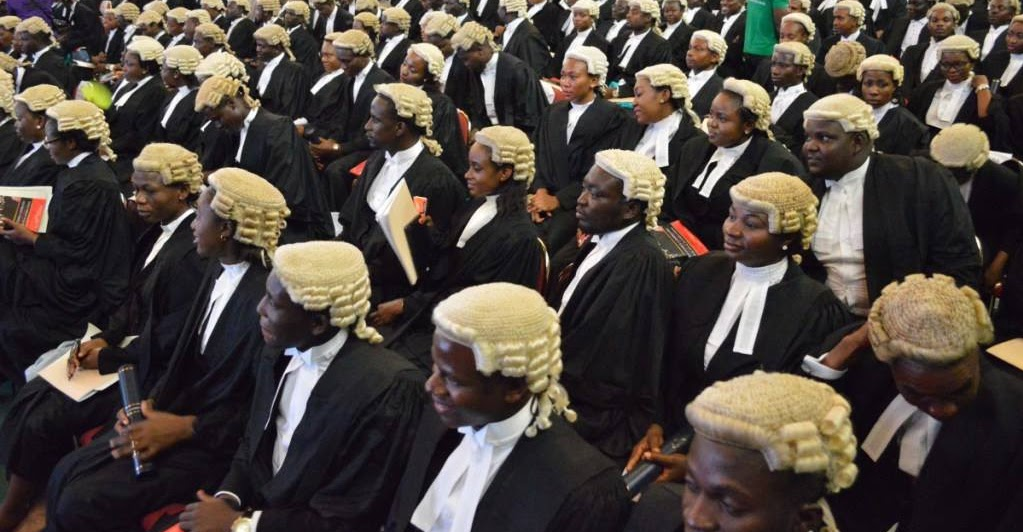
Lawyers are prohibited to solicit or beg for briefs in Nigeria

0

The news that has been trending on lawyers’ WhatsApp forums and other social media forums is the letter written by a senior lawyer from a highly reputable law firm in Nigeria soliciting a brief from a prospective client. (It is more serious than this but I just don’t want to get into the details).

This act is highly prohibited by the rules of professional conduct of the Nigerian Bar Association. Lawyers are serially prohibited from soliciting briefs or begging for cases at all times. Lawyers in Nigeria are also prohibited from engaging in advertisements or advertising their practice. It brings the noble legal profession to disrepute. 

This rule was provided for in rule 39 of the Rules of Professional Conduct and it states; a lawyer shall not engage or be involved in any advertising or promotion of his practice of the law which …..makes comparison with or criticizes other lawyers …..or includes any statement about the quality of the lawyer’s work, the size or success of his practice or his success rate.

Briefs should come to lawyers; a good lawyer who knows his onions shouldn’t find it difficult getting briefs and don’t have to hassle for briefs. Any act of a lawyer done in order to secure a brief or a case amounts to professional misconduct which is punishable by suspension and in some cases even disbarment.

For a lawyer who is a senior counsel and a partner in a top-tier law firm in Nigeria to have engaged in this level of unprofessional conduct of writing and sending an email to the CEO of a company begging for a brief is totally ridiculous. Acts like these subject the profession to disrepute, ignominy and opprobrium.

In the email sent by the lawyer to the prospective client, part of the letter was boasting of how the Founding partner of the law firm is influential amongst politicians and judges and how the founding partner can use his affluence and influence to secure a favorable judgment for the prospective client. This paragraph is quite distasteful and ought not to be swept under the carpet. No law firm or lawyer should publicly or even privately make this boast.

The general public should know that any lawyer who engages in the practice of begging or soliciting for briefs is a rule-breaker, breaking rule 39 of the rule of professional conduct of lawyers in Nigeria which prohibit the lawyer from doing that, and such lawyer should never be taken seriously, instead, he or she should be reported to the authorities of the Nigerian Bar Association.

Give the Youth a Chance – Demystifying the Nigerian Leadership Myth

0

”Leadership is a choice you make, not a place you sit…You may be able to grant someone a position, but you cannot grant him real leadership. Influence must be earned. “–John Maxwell

Most likely you have had a conversation about political leadership in Nigeria and either you or someone asked, “When would these old men give the youths a chance?” My answer will be, “Never!” I have observed that the majority of Nigeria’s youths have a fundamental misconception of leadership. They view political leadership as the only form of leadership and to become one, a position or title must be bestowed. They believe that once they are made a senator, governor and/or president, they will magically transform the country from a Third World Country to a First World Country.

Can our youths be wiser than our political leaders? Can the quality of inputs be better than the product? Did the current political class appear at the helms of affairs as old men from another planet? I don’t think so. They are a product of society. They were once youths that criticized the leadership of their time and without preparation in the trenches forced their way up there and created a mess for everyone; garbage in garbage out. It is a self-perpetuating vicious cycle that must be stopped by answering the following salient questions. What is the trouble with Nigeria? Do the youths understand the meaning of leadership? Can the leadership problem be solved by youthful political leaders?

My goal is to establish that our leadership conundrum cannot be solved by replacing the old political leaders with youthful leaders. The youths believe that it is only in Nigeria the old lead while the rest of the world has their youths leading them. How true is this? If the average age of the world’s political leaders is 62 years old and those of Nigerian governors and senators are 60 and 61 respectively, this simply means that our political leaders are younger than the rest of the world. Average age means we have most leaders around that age with a few exceptions. 

For example, the youngest world leader is 26 years old Giocomo Simoncini, one of the Captains Regent of San Marino, the tiny independent state of northern Italy. The oldest serving world leader is President Paul Biya of Cameroon. You may want to point out that he is African and it is a thing that is peculiar to us. What will you say about the ages of the current US President, Joe Biden who is 78 today and the immediate past president, Donald Trump, who was 71 when he became president?

Historically and contemporarily, it is established that the quality of leadership increases with age and experience. The Nigeria Population Commission, NPC, defines a youth as the proportion of the population that falls within the age bracket of 15-35 years with an average age of 25 years. Can a 25-year-old leader be more effective than a 60-year-old leader? The average age of famous Nigerian religious leaders is 67, which is higher than that of the political leaders but somehow the youths are not clamoring to replace them. Why? What is the attraction with political leadership? Society is multi-faceted and each component needs good leadership for the whole to thrive. 

Political leadership receives the greatest criticism because it is the custodian of the rights of the citizens and defender of the sovereignty of the nation. However, the failure of the political class is symptomatic of a greater malaise of poor quality citizens. We have one of the lowest levels of civic responsibility in the world. We keep asking what Nigeria can do for us without playing our part. Our political leaders mirror the quality of our youths.

Waiting to become a political leader to fix the country is evident the youths do not grasp the meaning of leadership. Who is a leader? He is one who does not need a title, position or incentive to get things done. He is full of initiative with the ability to organize men and material to achieve altruistic goals. John Maxwell, in his book, Developing the Leader Within You and The 360 ?Leader, talked about the five steps of leadership. The least level of leadership is leadership by position or title, an example is political leadership. The next level is leadership by permission. 

A leader at this level is allowed to lead beyond his defined limits by virtue of the relationships he has built with people. The third level is leadership by results. Here the leader never fails to produce results with his team. The people and organization depend on him to deliver. The fourth level is leadership by production. Here the leader becomes a leader of leaders as he produces more leaders. And the final level is the personhood leader. This is a larger than life level and cannot be attained by personal effort, only by a lifetime of effective leadership. The people enthrone the leader to this level. Examples are Martin Luther King Jr., Mahatma Gandhi, Nelson Mandela, Wole Soyinka, etc.

Finally, Nigeria youths must understand that leadership is more of disposition than position and political leadership is the lowest form of leadership because it is about titles and positions. When many of our political leaders leave office they usually fade into oblivion because they were never leaders in the first place. If you cannot inspire your community to improve your immediate environment and living conditions you will not achieve anything when given a political title. 

In 1983, Chinua Achebe in his book, The Trouble with Nigeria, concluded that, “The trouble with Nigeria is simply and squarely a failure of leadership.” He was right. John Maxwell concurred, “Everything rises and falls squarely on Leadership.” Today, if we take the political process as a manufacturing line we will understand that a bad product/leader is a function of bad raw material/youths. So, the trouble with Nigeria today is squarely a failure of the youths.