DD
MM
YYYY

PAGES

DD
MM
YYYY

spot_img

PAGES

Home Blog Page 5074

Tekedia Capital Invests in Touch and Pay Technologies, the Microtransaction Fintech Leader

0

It is one of the finest technology companies in Africa. It is the leader in microtransactions. I joined the advisory board about 3 years ago when it was processing just N5 million per month. Today, it is hitting N6 billion per month. I am very excited to announce that Tekedia Capital this month invested in Touch and Pay Technologies Ltd (YC W22), the undisputed fintech leader for assured-revenue , informal and formal microtransactions, in Africa.

We see a great category-king company, and a business with the right business tools and models to unlock the cash and microtransaction component of the $320 billion transactions which move from consumers to companies yearly in Nigeria. Scale that across Africa, you will see a new type of animal called “unicorn” coming home! I like unicorns, hello.

To join members of Tekedia Capital and own a piece of leading technology-anchored startups in Africa, connect with Nnamdi Odumody or read here. The best companies come to Tekedia Capital and we make friends with the finest innovators. We won the best angel/VC fund award in Nigeria in 2021.

When A Cookie Destroys An Empire As China Unveils New Regulations for Live-streaming

0

Li Jiaqi, the king of selling lipstick in China, made a big mistake: he replicated the military tanks (with cookies and ice cream) used in Tiananmen Square (China) massacre which happened decades ago. As he was in his liveshow, the platform took him off. He had committed an unforgivable sin by reminding the Chinese of that past when he live-streamed the “tanks” on the eve of the massacre’s anniversary.

Then, he has been largely banned.  Li is the world’s most successful seller of lipstick and makeup; he has the record of generating $1.7 billion in sales within 12 hours. In other words, he does more in hours than what some companies do in a year!

There are still three more weeks to go China’s annual mega shopping event on November 11, but one of China’s top livestreamers has already sold some $1.7 billion worth of goods in a promotion to usher in the event.

In a 12-hour-livestream on Wednesday kicking off Alibaba’s Singles Day Shopping Festival on its Taobao app, Austin Li Jiaqi — widely known as “Lipstick King” — moved 10.7 billion Chinese yuan ($1.7 billion) worth of products reported China’s Economic Daily newspaper. Alibaba does not typically release sales numbers, but CED cited data from third-party data analysis company Hongren Dianji.

But his creation of a tank with cookies and ice cream is causing problems. Now, China has unveiled new regulations to deal with livestreaming: “The 31 banned behaviors during live-streaming sessions include publishing content that weakens or distorts the leadership of the Chinese Communist Party, the socialist system or the country’s reforms and opening-up.”

Simply, that livestream is going to eclipse and distort the world’s largest livestream-commerce market. Ice cream and biscuit (if you prefer that) could be that powerful!!!

Just when it feels the dust has settled on China’s regulatory crackdown on its tech sector, the authorities are shifting focus to another part of the country’s digital industry – live-streaming.

SCMP reports that China has issued new regulation on the live-streaming industry that lists 31 banned behaviors, limiting topics that influencers can talk about.

The latest move complements the government’s efforts since 2021 to regulate the booming digital economy. Other sectors of the tech industry, including payment, ride-hailing and edtech, have been severely dealt with as the government intensified efforts to clip wings and keep everything under the control of the Communist Party.

China Unveils 31 New Regulations to Control Live-streaming Behaviors

Lagos Ranked the Second Worst City to Live in the World

0

Lagos Nigeria has been ranked the second worst city to live in the world by the Economist Intelligence Unit (EIU), a global business intelligence that studies and ranks liveable urban areas.

The ranking, which was contained in the first quarter of 2022 Global Liveability Index, ranked Lagos 171 out of 172 countries, putting Nigeria’s commercial capital just ahead of war-torn Syria capital, Damascus.

Lagos has been rocking the bottom 10 in recent years, and has remained in the second worst position since the last ranking.

“The least liveable cities were Damascus in Syria, Lagos in Nigeria, Tripoli in Libya, Algiers in Algeria and Karachi in Pakistan,” the EIU said.

The ranking which sees Vienna, Austria and Copenhagen, Denmark take the first and second positions respectively, makes Lagos the worst city to live in Africa, as it comes behind war-ravaged Libyan city, Tripoli. But other cities improved from the last ranking.

“However, most of the cities in the bottom ten have improved their scores compared with last year, as COVID-19 pandemic induced pressures,” EIU stated.

The EIU, which is a sister organization to The Economist, ranked 173 cities around the world on a variety of factors, including health care, crime rates, political stability, infrastructure and access to green space.

The EIU examines the quality of health care, education, infrastructure, stability, and culture when assessing living conditions of each city.

More than 30 factors are taken into account when calculating each rank, which are then compiled into a weighted score between one and 100.

From the indicators used for the ranking index which was stability, healthcare, culture & environment, education and infrastructure, Lagos scored 20.0, 20.8, 44.9, 25.0 and 46.4 respectively which dragged its score to 32.2 from a total of 100.

Experts believe that Lagos has remained in the bottom of Liveable cities due to failure to improve both human capital and economic developments.

“The poverty level in the country is high and government policies or reforms are not happening as fast as they should to improve the standard of people living in the country, Ibrahim Tajudeem, head of research, Chapel Hill Denham said. “If all these things do not change, then Lagos and Nigeria as a whole will still lag when compared with other cities in the world where developmental activities are happening.”

Lagos is experiencing a population explosion that the government is doing little to contain. With housing, healthcare, and road infrastructures so deficient to commiserate with the rising population, Nigeria’s commercial hub will need far more than usual effort if it will get out of the bottom 10 of the Global Liveability Index in the next ranking.

The EIU latest ranking poses a threat to Lagos’ rising reputation as Africa’s largest tech hub, holding billions of dollars in investment as it is the birthplace to fintech unicorns such as Flutterwave and interswitch. The above-mentioned environmental concerns are capable of spooking investors, which will be detrimental to the city’s economic growth.

CEO Of Binance, Changpeng Zhao, Says Bitcoin Could Stay Below $69,000 For Two Years

0
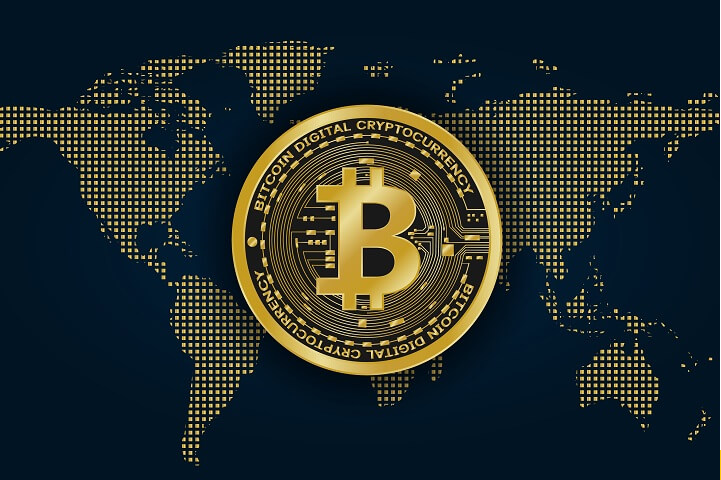
Bitcoin is soaring

Binance CEO Changpeng Zhao recently stated that Bitcoin could stay below its historical high of $69,000 for the next two years after the digital currency slumped below $20,000. Inflation is said to be one of the major factors that have hit the crypto market which prompted interest rate rise by central banks.

Chanpeng disclosed that crypto traders would have been happy four years ago, had they been told that Bitcoin would be trading at $20,000 in 2022.

In his words, “I think given this price drop from the all-time high of 68k to 20k now, it will probably take a while to get back. It likely will take a few months or a couple of years. 20k we think is very low today, but you know, in 2018, 2019, if you told people Bitcoin will be 20k in 2022, they would be very happy. In 2018/19, Bitcoin was $3,000, $6,000”. 

Analysts have disclosed that the crypto market has been increasingly tracking the stock market lately, which makes it even more intertwined with macroeconomic factors.

Cryptocurrency and stock prices are somewhat correlated after they account for the cryptocurrency’s volatility. In the previous decade, Bitcoin never had any correlation with the broader economy which many investors saw as an alternative advantage to store currencies against inflation.

It used to be a haven for a lot of investors who wanted to avoid the turmoil that affected the stock market. Bitcoin back then was often seen as a good hedge against inflation as it has on countless occasions been unperturbed by inflation.

Despite claims from different investors referring to cryptocurrency as an inflation-resistant asset, unfortunately, the crypto market has become complicated that amid the inflation, the crypto market has not been favorable lately.

The carnage happening in the crypto market lately has been predicted to be partly caused by pressure from macroeconomic forces, which include the high inflation rate and federal hikes.

The bearish market saw a lot of crypto trading platforms laying off their staff, which saw coin base, the largest crypto exchange in the U.S lay off nearly a fifth of its workforce. These companies have been looking for ways to cut costs, also a large number of investors have pulled down large trading volumes.

Cryptocurrencies lately have not been immune to the inflation rate, since Bitcoin reached an all-time high in November 2021, its value has fallen by about 70%. Bitcoin has shown that it is not immune to certain macroeconomic forces, because changes in interest rates lately have affected the crypto market.

With the Fed continuing to aggressively increase the interest rates, there is likely to be more crashes not only across all markets, but also the crypto market. Will Bitcoin continue to stay below its historical high of $69,000 for the next two years as predicted by Binance CEO, or will the market experience a possible bull run? Only time will tell.

Looking for the Electricity Miracle as Buhari Promises to Decentralize the National Grid

3

“We are also decentralising the national grid through renewable-driven mini-grids. The 550 million dollar Nigeria Electrification Project has deployed more than 20,000 Standalone Solar Systems (SHS), as well as Solar Hybrid mini-grids in over 250 locations.” – President Buhari

Yes, President Buhari is still working to fix electricity in Nigeria. His government is decentralizing the national grid and will inject $550 million needed funds to boost power supply. Sure, he has about 10 more months in the calendar and miracles which did not happen for seven years can still happen.

But let me tell Nigerians: do not allow APC to use this new “decentralization” playbook to distort your mind as you go to the polls next year. APC visited diasporas in America and sold the independent power plants, arguing against evidential technical challenges which posited that Nigeria would be unable to run gas-powered IPPs without gas pipeline infrastructure in the nation. Also, the liquefied version option would struggle with our bad roads and railtracks. But they were adamant and after 7 years, they have learned hard lessons.

Many policies will start flying in the next six months. Do not be distracted. PDP did the same thing in 2015 but still lost. APC must not get away from its failures.

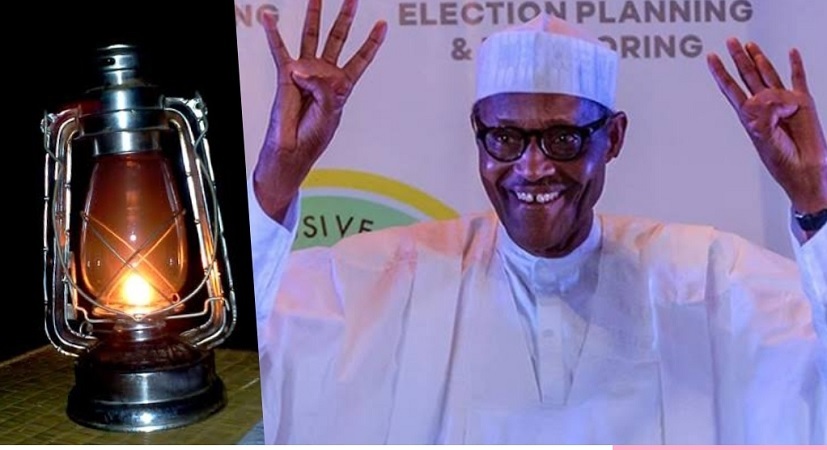
I do not believe that APC has a solution to Nigeria’s electricity paralysis. We tried an umbrella; it could not light Nigeria by providing electricity. We tried broom, the small light even burnt it. Can we try a human this time?

President Buhari just re-promised to decentralize Nigeria’s national grid. I do not believe that APC has a solution to Nigeria’s electricity paralysis. We tried an umbrella*; it could not light Nigeria by providing electricity. We tried broom, the small light even burnt it. Can we try a human this time? The human fed by basket of food can even do better!

*PDP (umbrella), APC (broom), Labour (humans), NNPP (food basket)