DD
MM
YYYY

PAGES

DD
MM
YYYY

spot_img

PAGES

Home Blog Page 5081

REFLECTIVE ANALYSIS: How Media Capacity Building Should Get Voters Here and There During Nigeria’s Elections

0

Africa and other developing continents have frequently been recipients of aid from developed continents in the north. Over the years, people, governments, and organizations in the global south have received massive amounts of money, material, and non-material support from a variety of sources, ranging from private to government donors or funders. With recent events, particularly in the socioeconomic and political advancements of countries in the global south, it is unclear whether donors and funders in the global north will quit donating and transferring expertise.

Foreign aid flows have remained unprecedented in recent years, especially in the areas of developing media capability and institutionalizing genuine accountability and governance processes, from Nigeria to Egypt and Kenya to South Africa. A recent information from the Nigeria’s Ministry of Budget and National Planning indicates that the country received significant amount of money from foreign governmental and non-governmental organisations  such as “the European Development Fund (EDF), the United Nations Development Systems (UNDS), China through the Bilateral Agreement between the government of Nigeria and the People’s Republic of China signed in 1972 and Japan activities in Nigeria via the Japan International Cooperation Agency (JICA). The other donors included Korean International Cooperation Agency (KOICA), Department for International Development (DFID), the United States Agency for International Development (USAID) and the German International Cooperation (GIZ) between 2015 and 2020.” The information further indicates that a total of N26 billion foreign aid was received.

Though no specific sum for the media sector was indicated between 2015 and 2020, our analyst’s assessment of the donors or funders revealed that several of them had a history of aiding independent media across the country. For example, in 2018, the Nigerian Press Council held a workshop to strengthen the capacity of journalists to cover and report election affairs responsibly for national development during and after the electoral cycle, thanks to support from a foreign donor. In the same year, the European Union began training journalists for the 2019 general elections through its EU Support to Media Organizations programme. The International Press Centre and the Institute of Media and Society collaborated on the project, which was set to finish in 2019. The EU hopes that by intervening, the media, civil society organizations, government officials, and citizens would work together to co-learn and co-build a robust electoral process that leads to credible elections.

Our analyst discovered that another foreign organization funded $6.3 million in journalism and media to improve accountability and anti-corruption measures in Nigeria, which looks to be a complement to the EU’s efforts. The Nigerian Guide of Editors received $226,889 in capacity building funds from the United States of America Embassy in Lagos in 2021. The donor specifically wants the editors to be trained in the proper techniques for comprehending, appreciating, and carrying out their constitutionally mandated duty of holding government accountable to the people.

Ahead of the general elections in 2023, our checks reveal that foreign donors or funders have equally offered help to a number of organizations and media professionals, similar to the current pattern of financing and supporting media institutions and their staff. The European Centre for Electoral Support, for example, taught 30 journalists in Enugu State on election coverage before of the state council election. The International Fund for Public Interest Media has also stated its willingness to provide specific funds to encourage independent public interest media.

Is it more important to provide material support or to build capacity?

As previously stated, the donors or funders have provided particular financial, material, and non-material support (training and knowledge transfer) with varying impacts across the media kinds and establishments chosen. According to our analyst’s observations, media outlets who were given the option to participate in the intervention that offered reporting materials increased their production and dissemination of relevant political and electoral information to the general public. Various interventions have also benefited practitioners in terms of material and financial gain. Personal reporting and production tools have been provided to journalists. They have also had the option to receive financial assistance for modest expenses during trainings, conferences, and workshops.

Pushing Voters Here and There

In all of its consequences, our analyst observes that the media environment has not been the same as it was before to 1999. With fewer than nine months until the 2023 general elections, this piece urges concerned media stakeholders to redouble their efforts in covering the electoral cycle, focusing on being thorough in reporting issues and demands of citizens rather than simply monitoring political actors. Reporters, editors, and managers, according to our analyst, need to reintroduce the word “journal” into their reporting process. This is critical because a journalist is someone who has in-depth knowledge of a subject and wants someone who does not have that information to learn about it in a specific way.

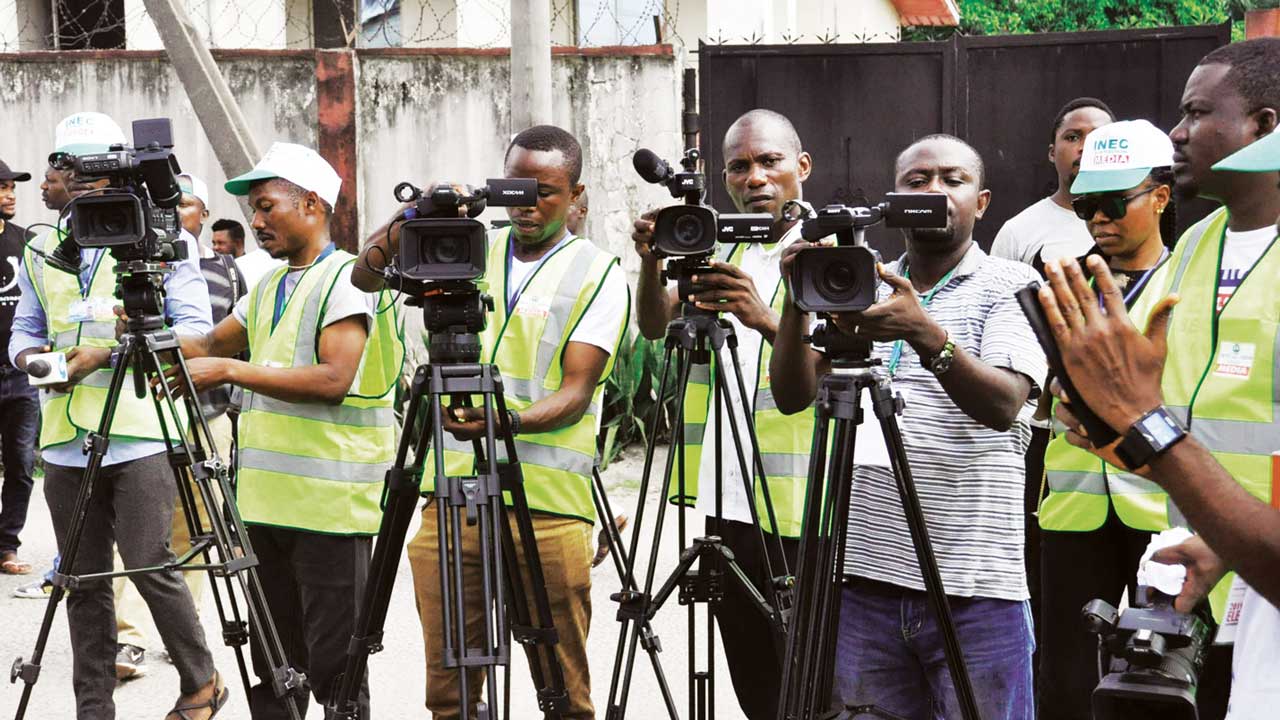
The Independent National Electoral Commission’s media code of election coverage specifies that media should allow voters to make informed choices by giving information that enhances their knowledge of electoral processes, as part of its efforts to have credible media for elections. Our analyst expects news and program contents that allow citizens to examine previous states of socioeconomic and political issues and/or needs and connect with what will happen in the future, since media establishments and practitioners have been equipped with the right processes for reporting inclusive governance and electoral content. This will enable individuals make informed decisions during polls. Both news and programme contents should now be viewed as products rather than information or events without a thorough examination of the positive and negative effects of the information or events.


Innovators, what are you building? Let’s know at Tekedia Capital

0

Innovators, what are you building? Let’s know at Tekedia Capital. We invest in mainly technology-anchored companies, and are sector-agnostic, which means those companies could be operating in any industry, including finance, real estate, education, health, logistics, etc. Click here to learn about Tekedia Capital and how we can support your mission.

Last year, innovators like you voted us the best Venture Capital/ Angel Fund in Nigeria. We give more than money, we provide uncommon support. For example, in the next few hours, I will speak with the National Basketball Association (NBA), in America, to explore partnership opportunities with one of our startups.

It is better at Tekedia Capital – come along and let’s breed the unicorn together.

US Dollar Shortage Forcing Nigeria to Withhold Repatriation of $450m Foreign Airlines Revenue

0

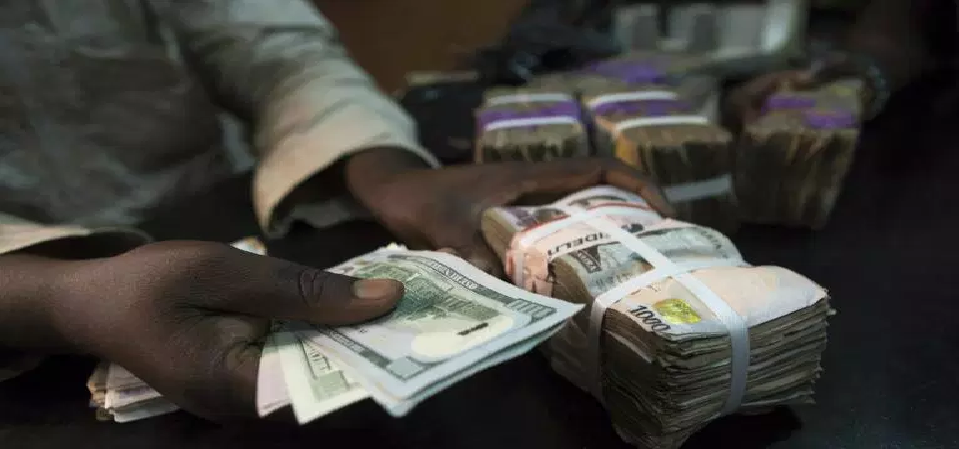
Nigeria’s forex crisis keeps accelerating, creating huge economic challenges along the way. The resulting weakling of the naira, the country’s currency, has forced the Central Bank of Nigeria to tighten monetary policies – which eventually now means that Nigeria can no longer meet some of its international financial obligations.

Reuters reports, citing a statement from an executive at the world’s largest airlines association, IATA, that Nigeria is withholding $450 million in revenue international carriers operating in the country have earned.

Per the report, the International Air Transport Association’s Vice President for Africa and the Middle East, Kamal Al Awadhi, on Sunday, described talks with Nigerian officials to release the funds as a “hectic ride”.

“We keep chipping away and hoping that it clicks that this is going to damage the country down the road,” he told reporters in Doha on the eve of IATA’s annual meeting of airline chiefs there this week.

Al Awadhi, a former chief executive of Kuwait Airways, said Nigerian officials had blamed the foreign currency shortage for not repatriating the airline revenue, Reuters reported.

This comes on the heels of the CBN’s struggle to curtail the wildling gap between the naira and dollar, which currently trades above N600/$1 in the parallel market and more than the official N419/$1 in the Investor & Export window.

As part of its efforts, Nigeria had repeatedly devalued the naira in the past few years, and also restricted forex access to a host of imported goods and services. In addition, Africa’s largest economy has restricted access to foreign currency for imports and for investors seeking to repatriate their profits as the nation tackles a severe dollar shortage.

The CBN has also introduced schemes such as Naira4Dollar designed to attract diaspora remittances. And as noted by Reuters, Nigeria has previously blocked revenue from foreign airlines before later repatriating the funds.

Reuters reports that IATA has so far held two rounds of talks with Nigerian officials, including from the Central Bank, who Al Awadhi said were “not responsive” to releasing cash.

Another round of talks between IATA and Nigerian officials is expected to start soon, the airline lobby group said, without specifying when.

“Hopefully, we can get some sort of solution where it starts going down (but) it won’t, I doubt, be paid in a single shot,” Al Awadhi said.

IATA says $1 billion of revenue belonging to foreign airlines is being withheld across Africa, although Nigeria is the only country where the value of blocked funds has risen.

The $450 million, the largest amount withheld by any African nation, in May was 12.5% higher than the previous month.

Algeria, Ethiopia and Zimbabwe, who combined are withholding $271 million from foreign airlines, in May marginally paid down what they owed. Eritrea was unchanged at $75 million, IATA said.

The aviation body didn’t say if there will be consequences for failure to repatriate the fund. However, this development supports the assertion that whatever Nigeria’s central bank is doing to boost dollar liquidity and save the naira from its current ordeal, is not working.

Nigeria spends more than 40% of its foreign exchange on fuel import, making it hard for the country to maintain enough dollar liquidity that will take pressure off the naira, especially now that oil prices are on the rise.

Pay Attention to Nigerian Naira As US Interest Rate Rises; Further Depreciation Possible

3
Naira USD

Central banks work mainly to stabilize or strengthen their currencies (to reduce inflation) and create employment by managing interest rates. Your Social Studies junior  secondary school teacher explained that in the section on the differences between commercial and central banks; he likely ended the class with “the central bank is the bank’s bank!”

When you reduce interest rates, companies and citizens can borrow cheaply. That triggers more economic activities, enabling the creation of more jobs. But excessive lowering of interest rates can “heat” up the economy and cause inflationary problems in the economy (money does not worth much as it is readily available, cheaply). 

The US central bank (Federal Reserve, as they call it) has increased the interest rate. The goal is to dampen and “slow” the economy by making it a little more expensive for companies and people to borrow money. So, right now in America, mortgage, credit cards, car loans, etc will see higher interest rates. As a result of those high rates, many people will think twice, and some will forgo acquiring some avoidable assets. If that happens at scale, you have slowed economic activity.

By doing just that, you can help the currency: it strengthens by reducing inflation. That strengthening of the currency is where I am interested in this note: Nigeria’s sovereign external loans are mainly in US dollars. If the dollars “appreciate”, it will cost Nigeria more to finance or obtain new loans.

The implication is that the pressure of this stronger US currency in a rising interest rate regime in the US can further cause the Naira to deteriorate; most Nigerian loans are denominated  in US dollars and some are not hedged or fixed which means there is a risk for them to float with US prime lending rates. Or even if the rates are fixed, Nigeria needs new loans to fund its budget, implying that next loans will be more expensive.

IMF projects that by 2026, more than 100% of Nigeria’s revenue will go into servicing debts. The debt service-to-revenue ratio has increased from 81.1% in 2020 to 96% in 2021, and continues to rise. A stronger US dollar will worsen the outlook.

Also, with higher interest rates, many US investors will see more avenues to deploy capital. During higher rates, safe assets like treasury bills will become more attractive. That change can affect how capital is allocated for emerging economies like Nigeria.

Watch out for stress on the Naira (more depreciation possible, black market is at N610/$ now). The cost of borrowing, for corporate and sovereign, will also rise. In other words, corporate bonds will be at higher rates; most of these bonds are Euro- or USD-denominated. 

For sovereign debts,  the government will borrow, even just to service old loans, and that can activate a vicious circle, triggering massive depreciation of Naira. Pay attention to the currency!

Comment on LinkedIn Feed

Comment: I think a stronger dollar may not cause much damage to the naira as Nigeria main revenue is also in dollar. Nigeria has no naira revenue to convert to dollar and pay debt, they either utilize the crude oil proceed or refinance through Eurobond. However, a higher rate in the US will reduce FPI. And I do not think the economy depends so much on FPI as Nigeria is not attractive to foreign investors. We also should not forget that OPEC has increased Nigeria’ quota and oil price is strong.

My Response: “I think a stronger dollar may not cause much damage to the naira as Nigeria main revenue is also in dollar.” Interestingly, Nigeria does not earn enough USD when compared to what Nigeria needs dollar for. If that is the case, it needs to find via other means. Your assumption is that Nigeria’s balance of trade and payment is optimal; not so. That is why we now use local tax revenue to service some of those debts.

“We also should not forget that OPEC has increased Nigeria’ quota and oil price is strong.” – Nigeria has not met its old quota due to theft. The issue of OPEC increasing Nigeria’s quota (to 1.772mbpd from 1.753mpbd) is a political statement EU needs to make Russia jealous. Nigeria is doing around 1.1mbpd now.

IMF Warns That Debt Servicing Might Gulp 100% Of Nigeria’s Revenue By 2026

ANALYSIS: How Digital Personality and Popularity Shaped Ekiti 2022 Election Results

0

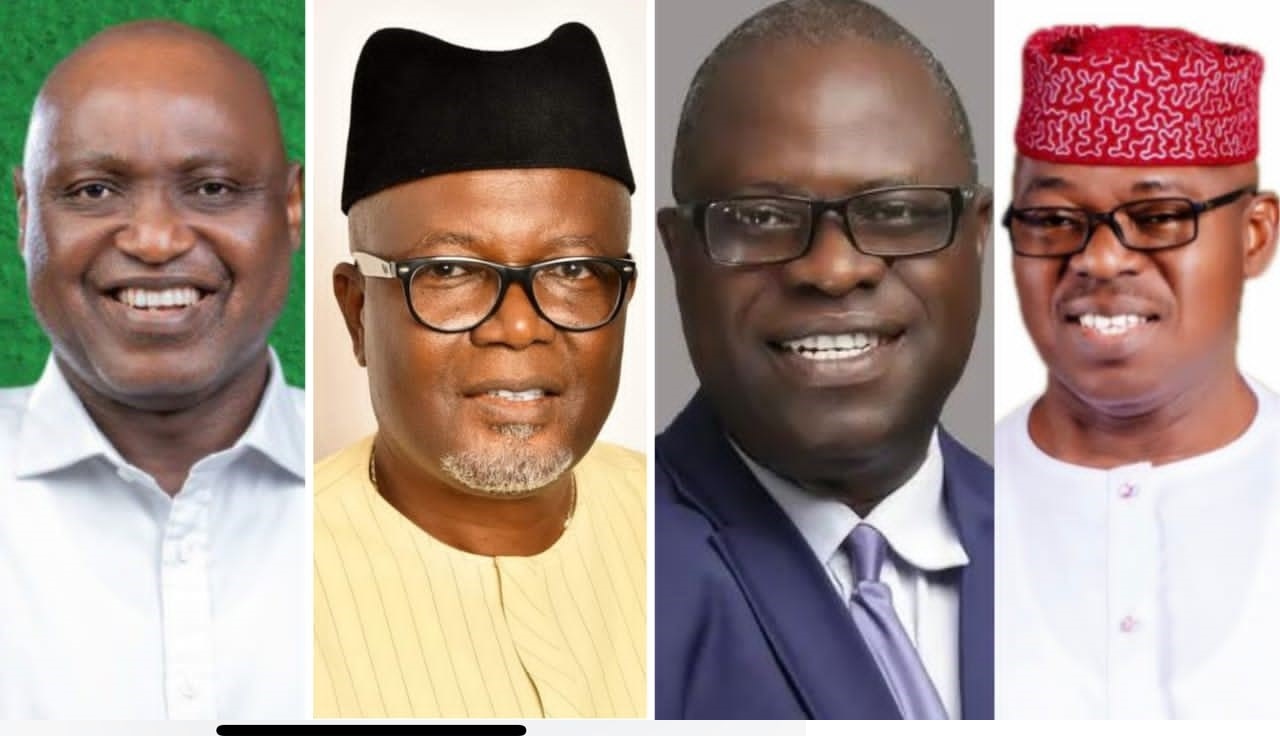
On June 18, 2022, the journey of several months of preparing by political and electoral players for the 2022 Ekiti State Governorship election came to an end as eligible voters cast their votes at various polling units around the state. It also came to an end on June 19, 2022, when the State Returning Officer revealed the election results. Three major political parties fought tooth and nail in the election. Party primary elections were held prior to the election, with various difficulties surrounding the results, leading to defection of certain members, particularly from the main opposition party (PDP), to other parties. Former governor of the state, Engineer Segun Oni, was one of the politicians that switched to other parties. He switched to the Social Democratic Party and ran for office. Internal strife erupted among the main opposition party as well, allegedly as a result of the imposition of a particular candidate.

Our analyst says that, as with prior elections in the state, the expectation is that crises will affect election outcomes, particularly when reconciliation discussions fail to produce the intended results. The ruling party received 187,057 votes, while the Social Democratic Party received 82,211 votes, according to the electoral commission. The largest opposition party received 67,457 votes in total. The results show that the ruling party won in 15 of the 16 local governments, while the Social Democratic Party candidate won in only one. Prior to the election, popular opinion was divided on which of the two parties, the PDP and the SDP, would keep the ruling party on its toes. Our analyst notes that the former governor retains a strong personality and popularity in the state, which would have aided the PDP if he had been chosen as the flagbearer instead of Mr. Olabisi Kolawole. Mr. Oyebanji Biodun, the ruling party’s candidate, was previously the state government’s secretary.

Nigerians, particularly indigenes and residents of the state, have been experiencing mixed feelings about the results since they were announced a few hours ago. According to our analysis, the PDP’s defeat was caused by candidate imposition and internal issues, while the ruling party won the poll based on party popularity and the performance of the incumbent governor, Dr Kayode Fayemi. According to another set of public and political affairs observers, the ruling party won the election due to Senator Bola Ahmed Tinubu, the APC presidential election candidate’s popularity. While our analyst acknowledges that these submissions may play a role in deciding the winner, it’s equally important to note that low voter attendance should be considered. Before the election, 989,224 persons were registered to vote, according to the Independent National Electoral Commission. A total of 36.94% of this group took part in the election. This means that the decision was determined by less than half of registered voters. Again, the validation of 97.35% of all votes cast (360,753) implies that voters who contributed to voided votes were also important decision-makers.

Emerged Lessons from Stakeholders’ Participation

There are lessons for political parties, politicians, and voters to be learned from these insights. While political actors are adept at regrouping after elections and continuing to reap mutual benefits, it is critical that qualified voters carry out their civic responsibilities diligently. It is remarkable that netizens, particularly those in the state, who used social media to express their opinions about the election were unable to mobilize themselves for physical voting. In fact, the outcome suggests that elections cannot be won through social media platforms. Aside from the important takeaways, our analyst examines how the election outcomes were influenced by the candidates’ and political parties’ digital popularity six days before the election and on election day.

Political actors, as in past elections in the state, used a variety of digital media to promote candidates and parties’ positions on topics and demands. In this regard, our analyst observes that the actors and their supporters believe that, because Nigeria is one of the countries with the highest number of internet and social networking site users in the world, reaching out to the netizens via social media and the internet will help them gain the minds of eligible voters (netizens). The actors and supporters established and maintained a digital personality while marketing the politicians and parties. It becomes digital popularity, according to our analyst, when netizens engage in constant searching of the candidates and parties using search engines (especially Google) with the intention of applying prior knowledge gained from news media and/or opinion leaders.

Candidate Versus Party Personality, Popularity

Using the volume of searches each party and candidate received based on Ekiti public searches between June 12 and June 18, 2022, our analyst calculated digital personality and popularity. There were a total of 2, 965 volume searches for all three candidates and 3,250 volume searches for political parties. According to the analysis, the public was more interested in the SDP and APC candidates than the PDP candidate six days before the election and on election day (see Exhibit 1). When it came to political parties, analysis revealed that the public was more interested in the ruling party than the PDP and SDP. The comparison of public interest in the candidate and the party reveals a notable discrepancy between public interest in the SDP’s candidate and the party itself, while the PDP’s candidate’s unpopularity, as reported by some groups in the physical setting, pierced into the digital setting.

Exhibit 1: Candidates’ Share of Search Between June 12 and June 18, 2022

Source: Google Trends, 2022; Infoprations Analysis, 2022

Exhibit 2: Main Political Parties’ Share of Search Between June 12 and June 18, 2022

Source: Google Trends, 2022; Infoprations Analysis, 2022

Digital Personality, Popularity and Election Outcomes

Between June 12 to June 18, 2022, the public conducted an irregular search of both candidates and parties. From June 16 to June 18, 2022, the Ekiti public had a strong interest in the ruling party and wanted to know what was going on with it. This was done for the opposition parties as well (see Exhibit 3). Despite his party’s popularity, Mr. Kolawole Olabisi was the sole candidate who did not pique the public’s curiosity. Engineer Segun Oni also piqued the public’s curiosity more than the ruling party’s candidate. On the day of the election, Mr. Oyebanji had over 31% of the total volume of searches (n=944), which was also the day Engineer Segun Oni had his greatest percentage of searches (33.89%).

Exhibit 3: Trends of Search of Interest Per Candidate and Party

Source: Google Trends, 2022; Infoprations Analysis, 2022

Our analyst used these shares as a representation of eligible netizen voters in order to better understand how digital personality and popularity influenced election outcomes. In the parties’ results, there is a positive and negative proportion of share of search. While the ruling party’s personality and popularity resulted in a favourable conclusion, the candidate’s own performance was bad. For the largest opposition party, the PDP, candidate personality and popularity had little effect, however party personality and popularity had a beneficial impact (see Exhibit 4).

Exhibit 4: Percentage of Share of Search Prediction in Party’s Results

Source: Google Trends, 2022; Independent National Electoral Commission, 2022; Infoprations Analysis, 2022

According to our findings, the ruling party’s positive personality and popularity contributed to the party receiving over 60,000 votes out of the total votes released by the electoral authority. Based on its digital personality and appeal, SDP received over 33, 000 votes. The PDP received over 18,000 votes. According to our findings, winning significant votes from eligible netizen-voters is more a function of the party’s valuable personality and popularity than of the candidates’ personality and popularity.

Exhibit 5: Determined Votes from Candidates and Parties’ Share of Search

Source: Google Trends, 2022; Independent National Electoral Commission, 2022; Infoprations Analysis, 2022