
DD
MM
YYYY

PAGES

DD
MM
YYYY

spot_img

PAGES

Home Blog Page 5083

The Coming of Amazon America to Nigeria

2
Amazon has been investing in India

In June 2017, I wrote and asked Amazon to come to Nigeria. I also made a video (below).  The main postulation is this: Amazon has the capacity to become the postal service system in Nigeria that will connect rural and urban Nigeria at scale. Yes, Nigeria needs Amazon to help support its infrastructural development especially in the areas of logistics and transportation.

The rumour is that Amazon is coming to Nigeria. If that is true, that is a big deal. Amazon is more important to Nigeria than Google or Facebook. Why? Amazon has the capacity to unify rural and urban Nigeria through catalytic infrastructure. Nigeria began fading at scale when the postal system collapsed.

Today, there are two generations of Nigeria: those who witnessed a working postal system (and train system) and those who came when everything was gone. If Amazon comes and invests $billions – more than Nigeria’s national budget on logistics and transportation, and opens it to all farmers, shippers, etc via its fulfillment business model, it would be magical. (Sure, the neocolonialism vibes will rise; I get it.)

Read what I wrote in June 2017 when I was dreaming of the impact of Amazon coming to Nigeria, not just to sell cloud services, but run ecommerce operations.

Amazon today is a bank, lending to small companies that sell on its platform. It is also a transformation company with expertise in logistics in the air, sea, and road. With its networks of empires, anyone can live in the Amazon America, eating food from Whole Foods, watching moves from Amazon, reading on the Kindle, buying most things from Amazon. The list goes on. Its impact permeates industrial sectors and anyone it touches, it secures it as Napoleon Bonaparte did when it conquered nations in the 18th century.

From Business Insider leak, Amazon will launch in April 2023. With that, Jumia and Konga will see more competition. This remour differs from another one here which focuses on Amazon Web Services.

  • “Belgium’s marketplace, called Project Red Devil, is slated for late September 2022. The one in Colombia, dubbed Project Salsa, is scheduled for February 2023.
  • “South Africa, codenamed Project Fela, is also expected in February 2023. The marketplace in Nigeria is due to launch in April 2023. That project shares the codename Project Fela with South Africa,” it said.
  • “Chile is planned for April 2023, too. It shares the Project Salsa name with Colombia,” the report added.

All countries are planning to launch with their own marketplace and access to Amazon’s fulfillment service called Fulfillment by Amazon, one of the documents said.

For Amazon, expanding into more countries now makes sense. The company needs to generate more demand, as growth is slowing across the board following a two-year, pandemic-driven sales explosion. Amazon has been scaling back hiring, subleasing warehouse space, and limiting delivery network expansion this year in anticipation of a prolonged slowdown. Onboarding more sellers in new countries may help Amazon fill more of its warehouses, which are dealing with excess capacity after overbuilding facilities during COVID-19 lockdowns.

If this materializes, Amazon’s infrastructure can fix the marginal cost problems for many sellers. I expect Amazon to have an immediate impact as many people can begin selling online, connecting into the logistics apparatus Amazon would be expected to build. It is dropping $5 billion in the Indian market, a fraction of that will help on foundational logistics infrastructure that will help Nigeria.  You can call that Nigeria ecommerce 2.0.

Opportunity for B2C Sector

The reason why ecommerce companies, especially those in B2C, struggle in Nigeria, is  the huge marginal cost on distribution. If Amazon arrives and builds the foundational operating system for logistics, and allows everyone into it, Nigeria will begin the ecommerce 2.0 era. Sure, Amazon will “tax” Nigerian companies and people, but when you aggregate the impact, good things will happen.

Of course, how does it feel for a nation to put its hope on another conglomerate? Nigeria is waiting for Dangote Refinery to fix its currency by substituting the import of fuel. Now, Ndubuisi is hoping for Amazon to fix its ecommerce B2C market by providing logistics.

Do not blame me: this is being pragmatic. Nigeria’s ecommerce B2C market will not scale profitably until we have a postal system; Amazon has a chance to build a quasi-version.  Yet, it is all rumour since Amazon did not confirm the leak! Nonetheless, I hope it comes; Nigeria needs those $billions.

Comment from Feed

Comment: making a case that Google is better for Africa. Google inc has been a great resource to us Africans in both resources and support. For internet savvies it is almost impossible to do anything online without Google and /or it’s product, Amazon inc confirms this superiority. Google has breached the gap of unemployment and providing substantial resource and support to Africans , of which many Nigerians have benefited and can attest to. Virtually everything we do currently on the internet space is directly or indirectly linked to Google. Business may not be recognized if not listed on Google, this include Sme’s and large scale Businesses. As the world has gone hybrid in execution of task and providing meaning service , Google remains the most vital resource to lean on. In comparison, Google is more like Microsoft which will always be a base for all computers in data synchronization, manipulation and analysis. As a beneficiary of Google bootcamp program, I was wowed with numerous Opportunities with Google inc. I am aswell familiar with Amazon inc and its service, but I cannot compare theirs as a better fit to GOOGLE.

My Response:  Fair. Amazon will affect our agriculture in many ways if it can build logistical infrastructure. Agro commands 30% of our GDP. Agro employs 67% of workers in Nigeria. ICT is fine, we are here chatting, but its impact is marginal when compared to agro. If we improve our logistics, we can double food production. 

That will help millions of people, not just a few with smartphones. Google is great but Amazon funds millions of vendors by giving them working capital loans provided they sell. What that means is that if you run a business on Amazon, it can use your sales projections to give you loans; no need to visit any bank. Check AWS which is #1 in Africa – more than 70% of leading startups in Nigeria are in AWS. Most of the things you noted are offered by AWS.

Comment: Prof, is this not an eye opener for Nigerian e-commerce & tech entrepreneurs like you to dare to take the plunge? With your clear-cut explanation of the market dynamics at play, one can see that a “business model” is already looming large in your head. Can’t we, Nigerian e-commerce/tech entrepreneurs, financiers and stakeholders like yourself aggregate your skills and network to deploy this business model/infrastructure and revolutionize our e-commerce logistics value chain? I know this sounds really fantastic compared to actual implementation, and I have nothing against FDIs, but do we keep waiting for foreigners to come discover and reap the hidden riches in our country?

My Response: ecommerce is not making fanciful websites. Ecommerce is buying aircrafts, vehicles, ports, etc to move goods and services. You need to build logistics, warehouses for fulfilment, etc and for that, you may need to spend the budget of Lagos state. I am not sure there is anyone with the heart of that in Nigeria. Amazon Logistics is bigger than FEDEX. You may see a website but behind are planes, vehicles, etc https://www.axios.com/2021/10/21/amazon-shipping-bigger-than-fedex. You need $billions  for such; Amazon spends half of Nigeria’s annual budget (~ $16 billion) on those planes, vehicles… yearly.

Comment: I agree with Joachim Duru Google is more important than Amazon. We resource for ideas….. selling item without the concept of the operation is trash

My Response: More than 70% of startups and digital companies in Nigeria that are worthwhile are powered by Amazon AWS. From Paystack to Flutterwave to Tekedia.com, etc all live on Amazon. If you shut down Amazon, those shiny things will go. Amazon is not just selling things.

Coding Has Been Introduced Into The Syllabus Of Primary And Secondary Schools In Kenya

0

The government of Kenya, in partnership with Kodia Africa, has approved the introduction of a new syllabus for teaching coding in primary, and secondary schools. Children in Kenya will now have an opportunity to learn coding and computer programming in public schools after the government officially unveiled coding teaching content.

The new content will be implemented across primary and secondary schools in the country, under the Kenyan national digital master plan 2022-2032. It will be applied in conjunction with the ministry of education and ICT authority, through the Digital Literacy Program (DLP).

Speaking at the launch of Kodris Africa, the Minister of ICT, Innovation and youth affairs, Mr. Joe Mucheru lauded the initiative which he described as a game-changer that would enable schools to produce future coding experts.

In his words, “This is a great day for the country, especially for our children who will now have the opportunity to learn coding and computer programming at an early age. The world is changing and everyone is going digital, and Kenya will not want to be left behind as the globe goes digital”.

The ministry of ICT also unveiled a new government-driven digital skills training which is aimed at equipping 20 million Kenyans with relevant digital skills to enable citizens to operate effectively under the digital economy.

This is a very laudable move from the government of Kenya, for introducing coding into the syllabus of primary and secondary schools in their country. From smart and connected devices, to AI-powered apps, a lot has happened and is still happening in the world of technology.

As a result of these disruptions, several new careers are being generated, as well as many existing job profiles are being redefined. Coding is no doubt one of the top skills in the world today, which the present and future generations need to acquire, to enable young pupils and students develop problem-solving abilities, such as solving a problem rationally and imaginatively.

With the recent technological advancements in the world today, it is important for schools to include different tech skills in their syllabus to enable these young ones learn them from an early age, which will be a very big advantage unlike when it is learned at an advanced age.

Kenya has already taken the lead over other African countries to include a tech skill (coding) in its syllabus. This will no doubt propel the country forward and give them a competitive edge in today’s digital world. Kenya is doing everything possible not to be left behind as the globe goes digital, which is very commendable.

Following the rate of unemployment which is common among the youths, especially in most African countries, including any of the tech skills into their school syllabus will better their employment chance and also enable them to create jobs for themselves.

Unfortunately, Nigeria fondly called the “Giant of Africa” continues to teach its school pupils and students with an obsolete syllabus. Most of what is being taught in primary and secondary schools has no relevance in today’s world.

Even though the country has the largest number of tech start-ups, the government of Nigeria is not seizing the opportunity to develop talents from schools at all levels. The country is always comfortable with playing catch up with any technological advancement.

The world is gradually drifting to a place where to actively compete, countries must be digitally inclined. Therefore, the Nigerian government must see the need to include these high in-demand tech skills in its school syllabus, so that the country will not be left behind as the world goes digital.

Also, doing so will allow the school pupils and students  to choose from a vast career options such as programmers, coders, Data Analyst, Cybersecurity Expert, etc, unlike the old syllabus that is conventional which forces these children to choose from limited career options which will no doubt negatively affect them in the future.

Time is ticking, the future is gradually going digital. The best time for countries in Africa to create a coding curriculum in schools was yesterday, the second-best time is now.

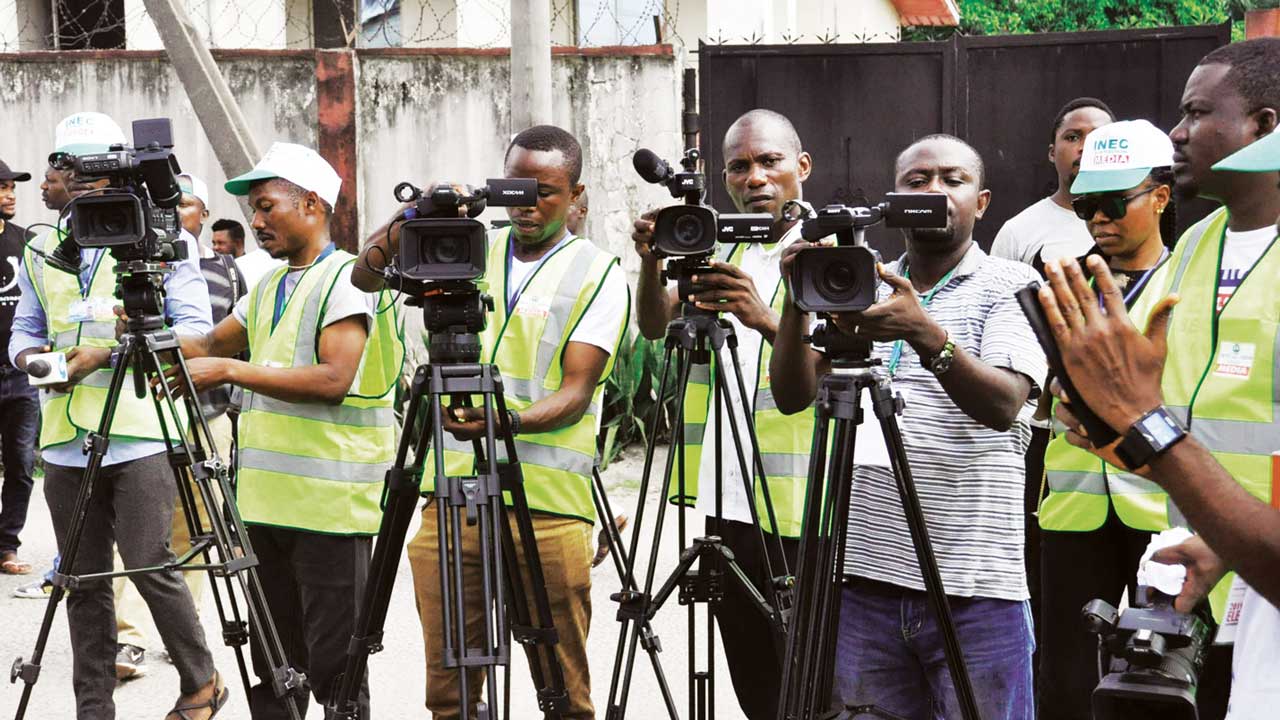
REFLECTIVE ANALYSIS: How Media Capacity Building Should Get Voters Here and There During Nigeria’s Elections

0

Africa and other developing continents have frequently been recipients of aid from developed continents in the north. Over the years, people, governments, and organizations in the global south have received massive amounts of money, material, and non-material support from a variety of sources, ranging from private to government donors or funders. With recent events, particularly in the socioeconomic and political advancements of countries in the global south, it is unclear whether donors and funders in the global north will quit donating and transferring expertise.

Foreign aid flows have remained unprecedented in recent years, especially in the areas of developing media capability and institutionalizing genuine accountability and governance processes, from Nigeria to Egypt and Kenya to South Africa. A recent information from the Nigeria’s Ministry of Budget and National Planning indicates that the country received significant amount of money from foreign governmental and non-governmental organisations  such as “the European Development Fund (EDF), the United Nations Development Systems (UNDS), China through the Bilateral Agreement between the government of Nigeria and the People’s Republic of China signed in 1972 and Japan activities in Nigeria via the Japan International Cooperation Agency (JICA). The other donors included Korean International Cooperation Agency (KOICA), Department for International Development (DFID), the United States Agency for International Development (USAID) and the German International Cooperation (GIZ) between 2015 and 2020.” The information further indicates that a total of N26 billion foreign aid was received.

Though no specific sum for the media sector was indicated between 2015 and 2020, our analyst’s assessment of the donors or funders revealed that several of them had a history of aiding independent media across the country. For example, in 2018, the Nigerian Press Council held a workshop to strengthen the capacity of journalists to cover and report election affairs responsibly for national development during and after the electoral cycle, thanks to support from a foreign donor. In the same year, the European Union began training journalists for the 2019 general elections through its EU Support to Media Organizations programme. The International Press Centre and the Institute of Media and Society collaborated on the project, which was set to finish in 2019. The EU hopes that by intervening, the media, civil society organizations, government officials, and citizens would work together to co-learn and co-build a robust electoral process that leads to credible elections.

Our analyst discovered that another foreign organization funded $6.3 million in journalism and media to improve accountability and anti-corruption measures in Nigeria, which looks to be a complement to the EU’s efforts. The Nigerian Guide of Editors received $226,889 in capacity building funds from the United States of America Embassy in Lagos in 2021. The donor specifically wants the editors to be trained in the proper techniques for comprehending, appreciating, and carrying out their constitutionally mandated duty of holding government accountable to the people.

Ahead of the general elections in 2023, our checks reveal that foreign donors or funders have equally offered help to a number of organizations and media professionals, similar to the current pattern of financing and supporting media institutions and their staff. The European Centre for Electoral Support, for example, taught 30 journalists in Enugu State on election coverage before of the state council election. The International Fund for Public Interest Media has also stated its willingness to provide specific funds to encourage independent public interest media.

Is it more important to provide material support or to build capacity?

As previously stated, the donors or funders have provided particular financial, material, and non-material support (training and knowledge transfer) with varying impacts across the media kinds and establishments chosen. According to our analyst’s observations, media outlets who were given the option to participate in the intervention that offered reporting materials increased their production and dissemination of relevant political and electoral information to the general public. Various interventions have also benefited practitioners in terms of material and financial gain. Personal reporting and production tools have been provided to journalists. They have also had the option to receive financial assistance for modest expenses during trainings, conferences, and workshops.

Pushing Voters Here and There

In all of its consequences, our analyst observes that the media environment has not been the same as it was before to 1999. With fewer than nine months until the 2023 general elections, this piece urges concerned media stakeholders to redouble their efforts in covering the electoral cycle, focusing on being thorough in reporting issues and demands of citizens rather than simply monitoring political actors. Reporters, editors, and managers, according to our analyst, need to reintroduce the word “journal” into their reporting process. This is critical because a journalist is someone who has in-depth knowledge of a subject and wants someone who does not have that information to learn about it in a specific way.

The Independent National Electoral Commission’s media code of election coverage specifies that media should allow voters to make informed choices by giving information that enhances their knowledge of electoral processes, as part of its efforts to have credible media for elections. Our analyst expects news and program contents that allow citizens to examine previous states of socioeconomic and political issues and/or needs and connect with what will happen in the future, since media establishments and practitioners have been equipped with the right processes for reporting inclusive governance and electoral content. This will enable individuals make informed decisions during polls. Both news and programme contents should now be viewed as products rather than information or events without a thorough examination of the positive and negative effects of the information or events.

Innovators, what are you building? Let’s know at Tekedia Capital

0

Innovators, what are you building? Let’s know at Tekedia Capital. We invest in mainly technology-anchored companies, and are sector-agnostic, which means those companies could be operating in any industry, including finance, real estate, education, health, logistics, etc. Click here to learn about Tekedia Capital and how we can support your mission.

Last year, innovators like you voted us the best Venture Capital/ Angel Fund in Nigeria. We give more than money, we provide uncommon support. For example, in the next few hours, I will speak with the National Basketball Association (NBA), in America, to explore partnership opportunities with one of our startups.

It is better at Tekedia Capital – come along and let’s breed the unicorn together.

US Dollar Shortage Forcing Nigeria to Withhold Repatriation of $450m Foreign Airlines Revenue

0

Nigeria’s forex crisis keeps accelerating, creating huge economic challenges along the way. The resulting weakling of the naira, the country’s currency, has forced the Central Bank of Nigeria to tighten monetary policies – which eventually now means that Nigeria can no longer meet some of its international financial obligations.

Reuters reports, citing a statement from an executive at the world’s largest airlines association, IATA, that Nigeria is withholding $450 million in revenue international carriers operating in the country have earned.

Per the report, the International Air Transport Association’s Vice President for Africa and the Middle East, Kamal Al Awadhi, on Sunday, described talks with Nigerian officials to release the funds as a “hectic ride”.

“We keep chipping away and hoping that it clicks that this is going to damage the country down the road,” he told reporters in Doha on the eve of IATA’s annual meeting of airline chiefs there this week.

Al Awadhi, a former chief executive of Kuwait Airways, said Nigerian officials had blamed the foreign currency shortage for not repatriating the airline revenue, Reuters reported.

This comes on the heels of the CBN’s struggle to curtail the wildling gap between the naira and dollar, which currently trades above N600/$1 in the parallel market and more than the official N419/$1 in the Investor & Export window.

As part of its efforts, Nigeria had repeatedly devalued the naira in the past few years, and also restricted forex access to a host of imported goods and services. In addition, Africa’s largest economy has restricted access to foreign currency for imports and for investors seeking to repatriate their profits as the nation tackles a severe dollar shortage.

The CBN has also introduced schemes such as Naira4Dollar designed to attract diaspora remittances. And as noted by Reuters, Nigeria has previously blocked revenue from foreign airlines before later repatriating the funds.

Reuters reports that IATA has so far held two rounds of talks with Nigerian officials, including from the Central Bank, who Al Awadhi said were “not responsive” to releasing cash.

Another round of talks between IATA and Nigerian officials is expected to start soon, the airline lobby group said, without specifying when.

“Hopefully, we can get some sort of solution where it starts going down (but) it won’t, I doubt, be paid in a single shot,” Al Awadhi said.

IATA says $1 billion of revenue belonging to foreign airlines is being withheld across Africa, although Nigeria is the only country where the value of blocked funds has risen.

The $450 million, the largest amount withheld by any African nation, in May was 12.5% higher than the previous month.

Algeria, Ethiopia and Zimbabwe, who combined are withholding $271 million from foreign airlines, in May marginally paid down what they owed. Eritrea was unchanged at $75 million, IATA said.

The aviation body didn’t say if there will be consequences for failure to repatriate the fund. However, this development supports the assertion that whatever Nigeria’s central bank is doing to boost dollar liquidity and save the naira from its current ordeal, is not working.

Nigeria spends more than 40% of its foreign exchange on fuel import, making it hard for the country to maintain enough dollar liquidity that will take pressure off the naira, especially now that oil prices are on the rise.