DD
MM
YYYY

PAGES

DD
MM
YYYY

spot_img

PAGES

Home Blog Page 5085

MFS Africa Secures Additional $100m to Extend its Series C Round to $200m

0

MFS Africa has announced that it has secured an additional $100 million in its series C extension to $200 million. The equity and debt funding was led by African investment manager Admaius Capital Partners while existing investors like AfricInvest FIVE and CommerzVentures participated.

New investors who participated in the new round are: Vitruvian Partners and AXA Investment Managers. Debt financing came from Stanbic IBTC Bank, a Lagos-based bank, and Symbiotic.

Dare Okoudjou, founder and CEO of MFS Africa, said the new funding will further accelerate MFS Africa’s expansion plans across Africa, and boost its integration into the global digital payment ecosystem, its expansion into Asia through its joint venture with LUN Partners to enable cross-border digital payments between Africa and China, and its ambitious growth plans for the BAXI network, a startup it acquired last year.

“With this US$100 million extension of our Series C fundraise we are thrilled to have the support of world-class investors Admaius, Vitruvian and AXA IM Alts, and for the continued support of existing investors, on our journey to making borders matter less when it comes to payments.

“The strength of our business model is grounded on building a lasting digital infrastructure that unleashes and simplifies economic activities across the continent through any-to-any interoperability. Our multiple initiatives and solutions are providing access to Africans, at home and in the diaspora. We are building MFS Africa into a safe, sound, scalable and high impact pan-African payment infrastructure that will facilitate Africa’s rapidly growing commerce, both now and in the future,” he said.

TechCrunch reported that Okoudjou had made similar plans last November when the company announced its first $100 million tranche. But then, the Baxi acquisition was still pending approval from the Central Bank of Nigeria.

But the past six months have come with a significant change – BAXI now possesses two licenses to operate in Nigeria following the regulator’s approvals.  The Payment Service Solution Provider (PSSP), which allows BAXI to build gateways that process payments for third-party merchants, and Payment Terminal Service Provider (PTSP) license, empowers BAXI to deploy its point-of-sale terminals for agency banking.

MFS Africa has been bold in its acquisition playbook for a startup. TechCrunch mentioned its purchase of U.S.-based Global Technology Partners (GTP) in a cash-and-shares deal worth $34 million. With its rapidly expanding business base that connects over 320 million mobile money wallets across 35+ African countries and 700 corridors, the Africa-focused and London-based company sees an untapped market of millions of Africans who can’t use their mobile money accounts to pay for subscription-based services run by international companies such as Netflix and Amazon. This is due to cross-border payment bottlenecks.

The acquisition of GTP, which integrates prepaid cards with a single bank account and incorporates them into its mobile payment platforms, gives MFS Africa an avenue to issue prepaid cards to its customers so they can perform these tasks — and also serve the African diaspora market in the U.S.

“The strength of our business model is grounded on building a lasting digital infrastructure that unleashes and simplifies economic activities across the continent through any-to-any interoperability,” Okoudjou said in a statement. “Our multiple initiatives and solutions are providing access to Africans, at home and in the diaspora. We are building MFS Africa into a safe, sound, scalable and high-impact pan-African payment infrastructure that will facilitate Africa’s rapidly growing commerce, both now and in the future.” 

MasterCard Partners Ecobank To Help SmallHolder Farmers Connect To Financial And Agricultural Ecosystem

0

MasterCard and Ecobank group have partnered to connect millions of smallholder farmers in Sub-Saharan Africa to Mastercard farm pass, a digital platform that will enable farmers to easily connect with agricultural sectors and also sell their farm produce at a fair price.

Both partners will deploy MasterCard farm pass to smallholder farmers to connect them to the financial and agricultural ecosystems. This farm pass will bring together various agric-sector stakeholders from the supply and demand sides, in one agricultural marketplace which will amplify the collective positive impact on farming.

With the Mastercard farm pass, smallholder farmers can get to sell their produce at better prices, access quality inputs, get updated on the latest farming information, and pay digitally as well as get paid. It will enable them to create a profile that will unlock financing opportunities, for both working and capital input.

The Mastercard farm pass will also enable smallholder farmers to integrate their businesses with payment systems, as well as enable them to build a digital transaction record that can facilitate formal credit or other financial services from banks and other financial institutions.

This is a very good initiative that has been rolled out, because it will offer these smallholder farmers a major digital boost. Looking at how most African countries are faced with severe hunger and food insecurity due to the poor agricultural sector, unfavorable climatic conditions, and also the impact of the Russian-Ukraine war.

The African region is said to be the worst hit from the war, which has seen the region faced with severe famine and hunger. Due to its heavy reliance on import-based commodities, such an approach has affected food security in the region. MasterCard farm pass comes in very handy this period, because food security in these African regions is critical and needs urgent attention to help alleviate the plight of the citizens of these regions.

Many smallholder farmers are faced with a lot of challenges that stifle their growth as well as limit their production output. Some of these challenges are; Lack of access to relevant financial tools to purchase and also get paid, limited access to the market, lack of up-to-date information, the problem of securing quality inputs, lack of working capital to finance farming activities, etc.

All these challenges aforementioned are no doubt limiting smallholder farmers, which has greatly affected their production output, led to inefficiencies, waste of resources which has prevented them from running a sustainable agricultural business.

With Mastercard farm pass, it will eliminate most challenges these farmers are faced with, which will improve the agricultural value chain in Africa to ensure that there is food security in the region. This will also help them to become less dependent on other countries for food commodities, also contributing to the economic growth of the continent.

These smallholder farmers can also upgrade from operations of small-scale farming to running commercial farming. Recall that the African Development bank AFDB through its president Mr. Akinwunmi Adesina suggested the e-wallet system to enable farmers to get direct access to farm loans and other support, which will also eliminate corrupt middlemen.

The Mastercard farm pass is very similar to the e-wallet system as they both have similar features with the same motive of ensuring that smallholder farmers get access to markets, updated news, and financial supplies.

The African region needs a transformation in its agricultural sector because food security is a critical issue in the region. Food insecurity in the region is one of the major causes of infant and adult mortality, childhood illnesses, Malnutrition, etc.

One key cause of all these has been linked to inadequate food production in the region. With Mastercard farm pass, I believe this initiative will aid in the increase of food production in the region, which will not only eliminate famine and ensure food security, but will ensure that the African region is immune to hunger.

ECOWAS Commission Set to Launch Eco By 2027, But France Still Stands in the Way

0

Two years after the botch of its earlier scheduled launch, the Economic Community of West African States (ECOWAS) Commission, said it has set a new date for the launch of the bloc’s single currency Eco.

In June 2019, the Authority of ECOWAS Heads of States and Government agreed, during its Extraordinary Session in Abuja, to have a single currency and adopted the name Eco, though the idea of a single currency was conceived back in 2003. The currency was expected to be launched in 2020.

Now NAN reports that Mr. Jean-Claude Brou, the President of ECOWAS Commission, has said that the community has resumed convergence to launch the ECOWAS single currency in 2027. It’s more of a reiteration of the bloc’s decision last year.

Brou made this known on Tuesday while delivering reports of the ECOWAS Commission before the ECOWAS Parliament during the ongoing 2022 First Ordinary Session of the Parliament in Abuja.

Brou said that the process of launching the single currency was stalled following the outbreak of the COVID-19 Pandemic from 2020, as countries needed to focus on handling the pandemic.

He explained that the convergence criteria had to be thorough so that the currency once implemented will serve the citizens effectively.

We had to suspend that in 2022, 2021. We are looking at 2022 to 2026 to be able to create conditions that will enable us to stabilise the economies.

“And so, 2027 we go back to the currency. The process of the performance criteria is always prioritized if we want to be in a very favorable condition to introduce the single currency.

Because you can introduce the currency but what is required is that it should be of quality.

“In other words, it should serve the needs of the population and also should inspire confidence and trust in in the population.

So that is the main objective, to ensure that the convergence criteria is been followed,” Brou said.

Rep. Awaji Abiante, Member of the ECOWAS Parliament and Nigerian lawmaker representing Andoni-Opobi/Nkoro Federal Constituency of Rivers, said that the delay in the launch of the currency is to avoid any form of crisis.

Speaking to journalists on the sideline of the session, Abiante said that the single currency is work in progress and there is hope that sometimes it will work.

“Every good thing comes with its challenges so getting the economies of the 15 member states to agree on that transaction and how it can be moved forward.

“If it is hurried, definitely it could run into crisis so it is good to have every aspect of it discussed, agreement reached, such that it will be implementable,” Abiante said.

On the sustainability and benefits of the currency, Abiante said that until it is implemented, one cannot say how viable it would be.

“Whatever anybody says, it is just going to be mere projections, it is only when it is implemented that you will see the benefits.

“But simply put, it will ease transactions, it will open up the economies, it will make it freer for people to engage in both commercial and industrial activities,” he said.

However, concern has remained about the sustainability of a single currency in a bloc that has failed to live up to its intra-trade and integration obligations. The 15 members of Ecowas; Benin, Burkina Faso, Cabo Verde, Cote d’Ivoire, The Gambia, Ghana, Guinea, Guinea-Bissau, Liberia, Mali, Niger, Nigeria, Senegal, Sierra Leone, and Togo, have failed to settle their differences to promote growth in the region.

For instance, in 2019, Nigeria, Africa’s largest economy, shut its land borders and banned importation of food items from neighboring countries. The border closure, which lasted for nearly a year, greatly limited import and export of goods and services from Nigeria to other ECOWAS states. It was a bold breach of the ECOWAS charter and stood against the idea of African Continental Free Trade Area Area (AfCFTA).

In another case that has lingered for years, the Ghana Traders Association, backed by the government, launched an attack on Nigerian traders doing business in Ghana, asking them to leave or pay as much as $1 million in trade permit fees.

But besides these unending issues that keep making mockery of everything that ECOWAS is supposed to stand for is another concern – France, Nigeria and by extension Eco being pegged to euro.

France’s influence on the eight Francophone members of the ECOWAS has been a concern to their Anglophone counterparts. CFA Franc, the common currency of Francophone countries is heavily tied to France, who is using it to wield colonial influence in Africa that any move to launch the Eco without dismantling the status quo, will mean putting the Anglophone countries under France’s monetary influence.

To exert the monetary independence of the single currency idea, monetary convergence, the foundation stone of Eco, requires the French-speaking members of ECOWAS to untie their monetary framework from that of France, to enable a merger of CFA Franc and Eco. This is necessary because; the Central Bank of West African States (BCEAO), the central bank that is managing the currency of the eight countries of the West African Economic and Monetary Union that use the CFA franc, and would likely serve as the central bank for the Eco, is depositing half of its exchange reserves with the Public Treasury of France.

French President Emmanuel Macron, who had promised to dismantle France’s old legacy in Africa and establish a new relationship that will respect modern (anticolonial) sentiment, changed his tone recently following the move by French-speaking West African countries to untie themselves from CFA Franc.

“In May 2020, Paris kicked and started the official process leading to the replacement of the 77-year-old CFA franc with Eco, a French version of the ECOWAS initiative, meant to serve as the West African Economic and Monetary Union (WAEMU also known as UEMOA), founded by Senegal, Côte d’Ivoire, Burkina Faso, Mali, Benin, Togo, and Niger, as an arm of ECOWAS that advances the cause of the Francophone West African countries,” a report by the Guardian Magazine noted.

The monetary convergence requires that the monetary agreement bound France to its former colonies in West Africa be dismantled not replaced. Thus, France’s recent turnaround from its promise to establish a new agreement that will end its 77-year old monetary legacy in Francophone West Africa, becomes a new challenge to the launch of Eco.

Not charting a new independent monetary path will only mean a transition of France’s imperialism through the Eco, which will be pegged to the euro, and backed by the French Treasury. The euro will guarantee the Eco’s convertibility and stability, with the treasury remaining as guarantor for all eight WAEMU countries. It is a development that the English-speaking members of the ECOWAS do not want to align with. Ghana and Nigeria had in 2020 condemned the idea, the Ghanaian government saying that it would only ditch its troubled cedi for the sub-regional currency if it was de-pegged from the euro.

On the other hand, other internal issues between ECOWAS member states remain to be resolved. For instance, Nigeria, the most populated country and the largest economy in the bloc controls over 60% of the sub-region’s economy, which has given the country’s currency the naira a sense of sovereignty over the years. Accepting the sub-region’s single currency will mean that the naira will lose its status in the region – and that’s a development that Nigeria doesn’t seem willing to accept, as it has demonstrated by its lack of leadership commitment to the Eco goal.

El Salvador’s Bitcoin Own-Goals And The Value of Nigeria’s e-Naira

2

10Naira = 10 e-Naira = 10 w-Naira

With e-Naira not increasing the material value of that N10, why must I convert that pure Naira to e-Naira? For most Nigerians, the problem is not how to “store” their naira but how to make more Naira. Provided e-Naira does not solve that problem at scale, it has limited value.

In engineering, we call it transduction, moving something from one energy state to another. When you do that, you expect to optimize usage at the new energy state. e-Naira could save transaction cost but that is exceedingly minimal and insignificant for most when you compare the troubles associated with the transduction. 

So, what is the new value that e-Naira gives me that w-Naira or pure Naira does not? That is why I am not bullish on e-Naira and certainly do not believe in the experiment El Salvador is doing. The problem in that country is not whether people pay in Bitcoin or their local currency, but the ability to earn that money, irrespective of the form. 

Yes, the new form of currency does not do anything because the new state, post-transduction, does not deliver any leverageable advantage. For me, expecting to drive economic growth that way is not a sound policy. That is a big own-goal especially now that the investment has dropped by half, impoverishing its people.

w-Naira means money in a fintech wallet, mobile banking app, etc.

Comment on LinkedIn Feed

Comment: The e-naira does not bring any significant value to the holder, rather it’s the issuer that is saving minting cost, in addition to trailing every transaction. You cannot scale digital currency in a country where every key infrastructure is subpar, the Immigration Service is comfortably having server blackouts whenever it pleases, and it doesn’t bother them a great deal. The grid that is sub 5000MW keeps collapsing. What happens if e-naira server fails to come up? Even the bus conductor won’t let you come down from the bus.

As for El Salvador, you cannot be afraid of falling down when you are already lying on the ground, it’s already a failed state, so any experiment there carries minimal risk.

It’s only productive systems that generate new wealth and increase purchasing power, moving the same value of money around doesn’t give you that. We are simply swapping and flipping, no increased productivity.

El Salvador Loses Half Of Its Crypto Investment In Value, As Bitcoin Crashes


El Salvador Loses Half Of Its Crypto Investment In Value, As Bitcoin Crashes

0

Recall that last September, El Salvador became the first country in the world to officially adopt Bitcoin as a legal tender, making the cryptocurrency an accepted means of exchange for goods and services.

The government rolled out a digital wallet called Chivo that its citizens had to download for holding Bitcoin and converting it into US dollars, which has been the country’s official currency since 2001.

Due to the volatility of the crypto market, the decision by the government of El Salvador to adopt bitcoin as a legal tender, triggered a lot of negative reactions from analysts including the World Bank and IMF. The citizens of El Salvador never liked the idea, which led to a protest, but it however fell on deaf ears, as the government was making Bitcoin its legal tender.

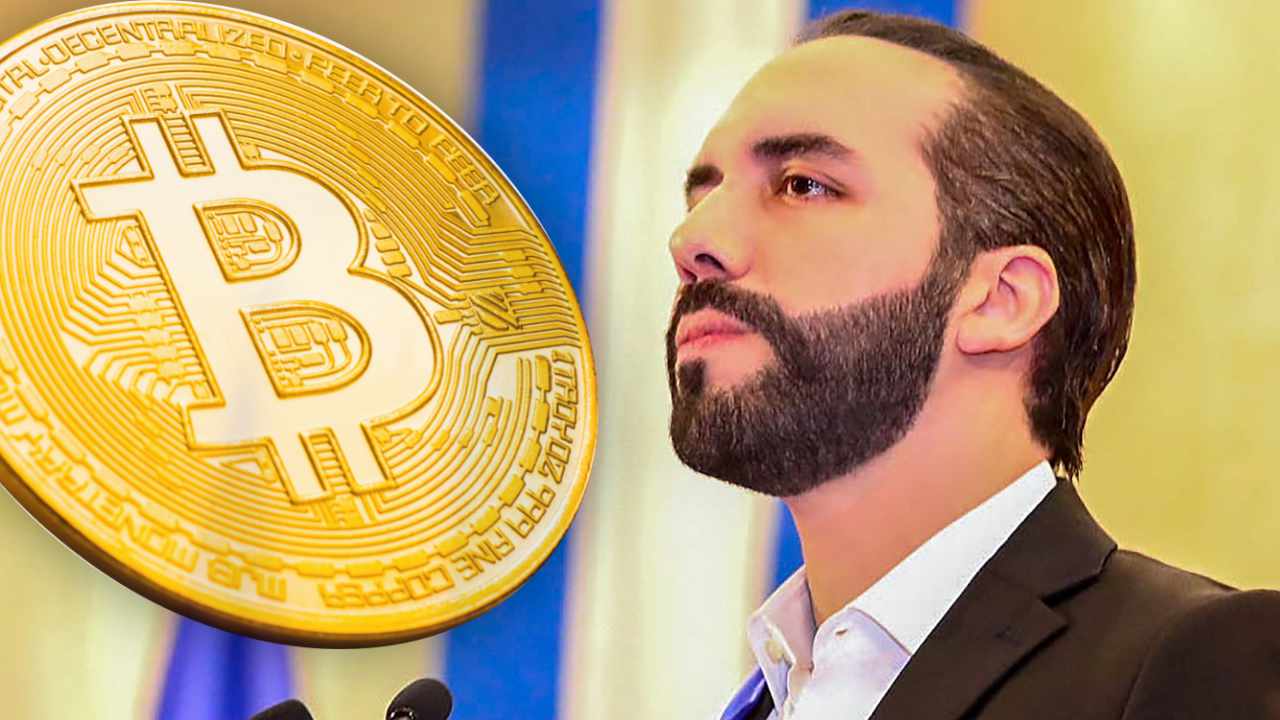
President of El Salvador Nayib Bukele disclosed his reason, stating that the commitment to adopt bitcoin will help the country’s struggling economy. However, many citizens claimed that the innate volatility of cryptocurrency has already negatively impacted the nation’s financial standing.

No doubt bitcoin has been the cryptocurrency with the best performance in the decade, however, the recent market has been disappointing to many investors across the world, as there is a massive decline.

Since El Salvador approved Bitcoin as a legal tender, according to calculations by Bloomberg, it disclosed that the nation has lost almost $56 million by gambling on digital assets. The country’s loss since the adoption of Bitcoin as a legal tender now represents more than half of what the government spent on purchasing it.

Despite cryptocurrency tumbling continuously, on a pace which is said to be its longest losing streak since 2014, President Bukele Nayib doesn’t seem perturbed by the bear market, as he recently hinted via a tweet that the decline may represent a buying opportunity.

From the look of things, El Salvador’s investment is rapidly losing value. Last September, the government of El Salvador purchased 2,301 bitcoin that were worth $103 million, now with the recent decline in the crypto market, they are currently worth around $51 million.

The government has kept buying the dip, which saw them purchase 500 Bitcoins last month, for more than $30,700 each. Now with the current price of Bitcoin around $23,000 which is still declining, this further shows that every dip bought by the country accrued more loss as they never made any profit.

El Salvador’s adoption of Bitcoin as the country’s legal tender attracted the attention of the International Monetary Fund (IMF) who demanded that El Salvador liquidate its bitcoin holdings and abandon the cryptocurrency as a legal tender.

This statement infuriated the government of El Salvador who issued a rebuttal statement, stating that no International organization is going to make them do anything against their will.

The World Bank on the other hand also rejected a request to help El Salvador implement Bitcoin as a legal tender, citing the environmental and transparency shortcomings.

Looking at how volatile the crypto market is, which is often controlled by individuals, it is an unwise move for the government of El Salvador to adopt Bitcoin as its legal tender. This is more like gambling away taxpayers’ money on highly volatile investments, which is not a good way to run a country.

Bitcoin was designed to be an alternative payment system, which is mostly unregulated and volatile, and is often used for speculation of prices. If Bitcoin continues to decline, the country runs the risk of losing its treasury reserve.