DD
MM
YYYY

PAGES

DD
MM
YYYY

spot_img

PAGES

Home Blog Page 5091

Creating Gender Inclusion In The Workplace

0

Despite the saying that goes “what a man can do, a woman can do better”, it seems it doesn’t apply to the business world, as there has been an unfair gender equity playing field in the workplace, which doesn’t favour the female gender.

Although women in most organizations make up half of the workforce, unfortunately, they are significantly less likely to hold leadership positions within their organizations. Research carried out by Mckinsey study, revealed that there is a huge disparity between men and women in executive roles.

Women held an average of 21% of all executive roles, but of that 21%, only 7% are in roles as opposed to staff roles which tend to have less direct decision-making power within the organization.

Reports reveal that women are complaining about the huge gender gap in the workplace and are feeling left out at work, due to the overall workplace culture that mostly favors men. Lately, there have been some global movements like; #MeToo, Encourage women, urging women to speak up against inequality in the workplace.

It might interest you to know that in 2018, Spotify was sued for gender discrimination and equal pay violation, also Walmart faced gender bias legal issues where a female worker who believed she was well-positioned to become the store manager, was overlooked, and instead the position was given to a lower-ranking male co-worker with less retail experience. Displeased with this unfair treatment, she didn’t hesitate to sue the company.

It is unfair that some organizations continue to undervalue women and deny them promotion and equal pay like their male colleagues. What these organizations fail to understand is that their organization will suffer a great loss when competent people are not given leadership positions, rather they give them to the male workers who are not even competent enough to take leadership positions, simply because they are men.

Organizations must not only see the need for gender inclusion in the workplace, they must also take the necessary steps to close the gender gap by creating a more gender-inclusive workplace.

Here are four (4) ways organizations can create gender inclusion in the workplace;

1.) Remove The Gender Pay Gap: It has been discovered that women earn considerably less than their male colleagues in the workplace, even though they perform the same role. Employers should therefore promote gender inclusion in the workplace by being transparent about the wages, to ensure that women are not receiving less than their male colleagues in equivalent roles.

2.) Skill-Based Assessments: When recruiting new employees in the workplace, it is ideal that employers use skill-based assessments when recruiting, to reduce the risk of unfair bias. If more females performed better during the recruitment process, they should not sabotage it by squeezing in males who underperformed simply because they are trying to create a balance. Employers also need to use structured interviews, where all candidates are asked the same questions, and also grade their performances using a standardized format to reduce the risk of an unconscious bias.

3.) Consideration Of Leadership Roles For Both Men And Women: It is commonly a mistaken belief that only men thrive in leadership roles, while women perform better at support roles. Such belief is unfair and flawed, which creates stereotypes in the workplace. A great way employers can promote gender inclusion in the workplace, is by giving leadership roles to deserving candidates irrespective of their gender. Women have on countless occasions proven to be better leaders in an organization.

4.) Creating An Open-Minded Atmosphere: Gender inclusion can be achieved in the workplace when employers operate an open-minded workplace policy, where women can also make decisions as well as proffer solutions that can improve organization, without feeling sidelined or overlooked. Employers should ensure to appreciate employees based on their talent and not by their gender.

Conclusion

In today’s dynamic business environment, gender inclusion in the workplace is considered to be an essential factor for the competitiveness and growth of an organization. Therefore, it is ideal that both male and female workers are treated equally in the workplace.

If a female employee deserves to be in a leadership position, such should not be sabotaged by giving a less deserving male colleague because it will stifle the growth of the organization. Women have also been proven to perform better in leadership positions, which is the strong reason why unfair bias against women in the workplace should be jettisoned.

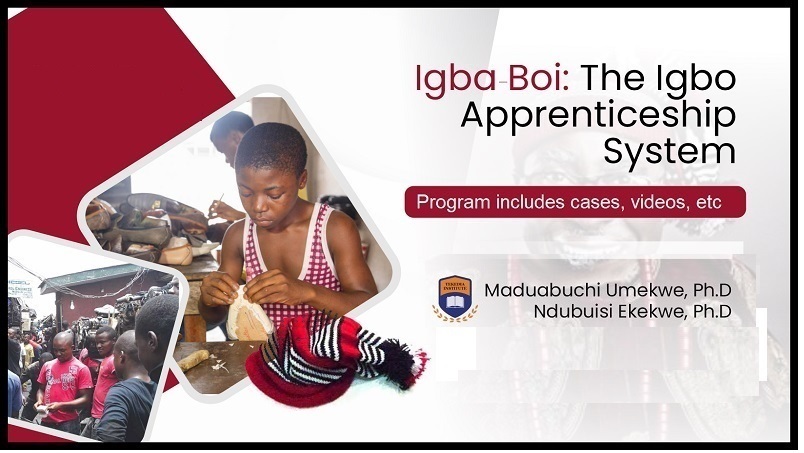
Register for “Igba-Boi: The Igbo Apprenticeship System” at Tekedia Institute

0

The Tekedia Institute Igba-Boi: The Igbo Apprenticeship System program is designed to run for 8 weeks and is structured to prepare learners on the mechanics of the Igbo business worldview philosophy of entrepreneurial stakeholder capitalism where everyone rises, and not just a few. The program includes pre-recorded videos, written materials, and business cases. Both individuals and groups can register and start anytime.

“The Igbos in Africa have been practicing for centuries what is today known as stakeholder capitalism”, Ndubuisi Ekekwe wrote in Harvard Business Review. In this course, your group will master the mechanics of one of the finest African business frameworks where the Umunneoma (good brethren) Economics is supreme to Adam Smith Economics. 

Click and register today for Igba-Boi: The Igbo Apprenticeship System at Tekedia Institute.

How to Raise Funds for your Business or Startup

4

In starting up a business, it is usually understood by all that the presence of Capital apart from land, labor and entrepreneurship usually determines the question of whether a business will survive its growing phase. Banks have also been clearly shown to be a very risky funding option for Start-ups which are not even accessible for the first 6 months of a company’s operations,  hence the need for alternative methods of funding and Investment.

Let’s assume you have developed an IT Software, a physical product or a service package that uniquely solves a problem, but you lack major financing to secure an operating Regulatory license, carry out full-scale production or to even set up a proper office structure. 

This article aims to guide you in terms of the options available to you,their pros and cons and how to access these funding options. They are as follows:-

  1. Register a company :- This will prove very useful in the immediate, mid-term and long-term run because this gives you a structure in terms of Corporate personality to leverage on. 

This will also place you in a better position to bargain for funding by being able to offer Equity or Debt Instruments. 

If you are a 1-man business,make sure your company has at least a 1Million Naira Share Capital base which usually costs up to 56,000.00 Naira to register(Legal fees inclusive), if there are two of you, the company should have at least a 2 Million Naira Share Capital base  which can take up to 97,000Naira to register (Legal fees inclusive). 

  1. Trademark your product :- A Trademark is an Intellectual Property right covering recognizable signs, slogans, designs or expressing that uniquely identify a particular product or service. This right means that your product cannot be legally used by any other entity without your permission. It also means that this right can be leased out as well, which on its own is already an income source. Most importantly, Trademarking your product or service means that they cannot be poached by a potential investor who will have no choice but to talk business with you. 

Registration of a Trademark can cost up to a minimum 97,000Naira (Legal fees inclusive) depending on the class of Trademark you are applying for and can take up to 5weeks for a Trademark search, application and approval.

  1. Hire a Promoter :- Before even starting a company, getting a promoter might be the most important step in getting funding. A promoter is a person(usually a professional) hired to take part in a company’s creation by –

a). Sourcing for Capital.

b). Finding Directors.

c). Securing Business licenses.

d). Preparing the Company’s prospectus which is a document created to provide detailed information about an Investment subscription offer to the public.

Promoters should be preferably lawyers working in collaboration with Stock brokerage firms and a Chartered Accountant who will determine your business feasibility as well as develop your business plan. In other to hire a Promoter, a Promoter’s Agreement should be signed. 

A promoter is a Fiduciary (Trustee) of the company be represents and must avoid in particular the practice of self-sealing(which is inflating the price of services rendered to the company he represents). 

  1. Secure a Business/Operating License :- As a start-up it is important to note that not every business can be ventured into without having a license or statutory registration or minimum share capital requirement. If you want to venture into certain areas of Fintech like Online Moneylending, you’ll need a state license and a minimum capital requirement of 20 million Naira. Starting up as a Crowdfunding Intermediary Portal would require licensing from the Securities and Exchange Commission (SEC). Manufacturing and selling a food or Medicinal product would require NAFDAC (National Agency For Food and Drug Control) registration. 

It is however understood that licensing and minimum capital requirements can be very expensive for many start-ups, and this is what necessitates the need for the next step outlined in the following paragraph.

  1. Seek alternative Technical Partnerships/Service Level Agreements(SLAs) for the purpose of securing cheaper licensing where possible :- Technical Partnerships are most favorable to Start-ups in the Tech industry because they can be entered into by either leasing or leveraging on licenses owned by more established companies to engage in a particular business with otherwise unaffordable licensing.

An example of this is where you have a Fintech Software product aimed at speedier payments processing that has been Trademarked but cannot afford the licensing requirement of a 100 million Naira minimum share capital. You can solve this by simply proposing a joint venture with a more established licensed payments processing company like Paystack to use their license for a renewable period of 1 year as a business partner in exchange for their being entitled to a profit sharing arrangement with your company. 

This can also work in the form of approaching a licensed Microfinance Bank to secure a joint venture agreement for the provision of Online lending services if your business has a solid lending software program as its product (the Okash lending platform being a good example of this).

In the realm of manufacturing, this can work by proposing a manufacturing partnership with a bigger company for the production of your Trademarked product in exchange for a share of your profits.

  1. Issue Debentures as a long-term funding option :- A Debenture can be defined as a long-term security issued by a company to creditors to raise capital in the form of a written acknowledgement(usually a deed) of Debt by a company yielding a fixed interest rate and usually secured against the issuing company’s assets.

Pros :- Debentures are advantageous compared to Bank loans because they usually come at a lower interest rate and with no restrictions on range of use for the funds generated through Debentures. Moreso, Debentures come in many types and can be-

a). Secured/Unsecured

b). Convertible (can be converted into Equity shares)

c). Bearer Debentures (Unregistered)

d). Preferred/Ordinary Debentures (giving priority to preferred Debentures in the event of winding up)

e). Redeemable Debentures (can be bought back by the company).

Cons:- Debentures have a major disadvantage of being payable and enforceable against a company even in periods of no income and heavy losses incurred by the company.

  1. Alternatively, Issue Bonds :- A Bond is defined by the Securities and Exchange Commission (SEC) as Tradable security issued by borrowing companies representing a formal agreement to repay the lender/bond holder the full amount plus interest over the lifetime of the bond which in Nigeria can be publicly placed/listed on an exchange for trading by the public or may be a private placement sold to qualified investors.

Pros:- Bonds can be redeemable by the issuing company before the maturity date at a specified price. The issuer can also pay off bonds and re-issue fresh bonds at lower coupon rates.

Cons :- Bonds can be volatile as they are usually determined for value by interest rate fluctuations.

  1. Alternatively, offer Private Placements :- A Private Placement is one of the best options for a start-up trying to raise Investment funding.

This involves Investment offers in the form of Debt or Equity share offers to raise funding (usually long-term) made to a limited set of investors without advertisements, usually very savvy and experienced investors that include PFAs(Pension Fund Administrators), Mutual Funds, Portfolio Management Firms, High-Net Worth Individuals (HNWIs) and Venture Capitalist firms.

Pros:- Private placements are advantageous because they are not regulated by the Securities and Exchange Commission (SEC) and come with few bottlenecks except the provision of a compulsory Placement Memorandum which is meant to give adequate information about the issuing company. Private Placements out of the other means of raising capital for companies (Direct Offers to the Public, Offers for Sale, Rights Issues) are thus best suited for Start-up private companies.

Cons :- Private placements have to be made carefully within the definition of the Investment and Securities Act otherwise they’ll be deemed to be unauthorized public offerings. Private placements also are limited by the fact that Private companies cannot have more than 50 members and that most if not all of the Venture Capitalist firms operating in Nigeria are actually offshore-based Venture Capitalists aimed at Tech Start-ups, which means that Private Placements are not easy to quickly bring to fruition and require a lot of leveraging handled by a diligent lawyer who might need to work with an equally diligent stock brokerage firm. 

Lastly, under the Companies and Allied Matters Act 2020, any fundraising drive of a company through Share offers must be first made as a Rights issue which means that they must first be offered to already existing Shareholders of the company and Venture Capitalist firms usually aim for Shareholding dilution which has led to takeovers of the company from even its original rightful owners. So as a start-up, you seriously need to weigh your options and take legal steps to ensure the protection of your rights before seeking this Funding option.

  1. Crowdfunding : – As stated in an earlier article of mine, Crowdfunding is the process of funding a project or venture by raising money from a large number of people through the internet, specifically a Crowdfunding Intermediary Portal.

Crowdfunding is regulated by the Securities and Exchange Commission (SEC) which has since declared illegal any Crowdfunding platform not licensed with it.

Pros :- Crowdfunding can prove very useful in raising capital in a hassle-free manner through a platform with a potential pool of ready funds from people you might never meet in person.

Cons :- Your company must be in operation for at least 2 years to be able to access funding through a Crowdfunding portal. 

Secondly, there’s a limit to the amount of funds you can raise through a Crowdfunding Intermediary Portal. For a Medium enterprise, you cannot access more than 100 Million Naira a year, while as a small enterprise you cannot access more than 70 Million Naira a year in funding. Micro enterprises cannot access more than 50 Million Naira a year in funding. 

The exception to this is accessing funds as an Agricultural company through a Commodities Investment Portal which can provide funding of up to 1Billion Naira a year. 

Conclusion:- It should be noted in all of this that under no circumstance should your business plan be made known without trademarking your product AND having your lawyer prepare a Non-Disclosure Agreement which must be signed by every potential investor a placement offer is being pitched to. It is also important to further consult your lawyer on the best funding option suited to your particular business circumstances as no two businesses are actually the same. It is hoped that the ability to make a better-informed Investment sourcing decision for your business going forward would have been gained from this article.

Dates for Tekedia Mini-MBA Special Zoom Sessions Announced

2

Dear Member,

Greetings! We have received many emails for the dates the special Tekedia Zoom sessions will run during the ongoing Tekedia Mini-MBA program (June 6 – Sept 3, 2022).  Find below the dates and the topics:

  • July 2: Personal Economy Scenario Mapping 
  • July 9: Planning a Career in a New Country 
  • July 16: Satellite Internet Business in Nigeria: Careers and Business Opportunities 
  • July 23: Understanding Investment Options

Tekedia runs three live sessions weekly:  Tuesdays, Thursdays and Saturdays at 7pm WAT. This week, a business executive from SAP, the German software giant, will be teaching on Tuesday (i.e. today). On Thursday, a Microsoft executive will be teaching business strategy. Saturday, the lead faculty will discuss business frameworks, playbooks and models. The Zoom links are already in the Board.

(Tekedia Mini-MBA expects to run  more than 30 live Zoom sessions, anchored by business leaders, from different industrial sectors and market territories, in addition to our prerecorded courses, developed by more than 106 business executives).

Registration for this edition of Tekedia Mini-MBA will close on June 17. Help us share with your colleagues, friends and others in your network; registration link is here.

Regards,

Tekedia Team

High Profile Individuals Behind Crude Oil Theft In Nigeria

0

Due to the alarming rate of oil theft in-country, Nigeria Security and Civil Service Defense Corps, NSCDC, Delta state command, has disclosed that heads will roll if they decide to publish the names of high-profile individuals who are behind the crude oil theft and pipeline vandalism in Nigeria.

While disclosing this, the public relations officer of the NSCDC in the state, Emeka Peters had this to say; “Heads will roll, if the corps decides to publish the names of those behind crude oil theft, pipeline vandalism, illegally dealing in petroleum products, economic Sabotage amongst others.

“Following preliminary investigation and confessional statements from suspects arrested. The suspects revealed some of the identities of their sponsors and those behind crude oil theft, pipeline vandalism, illegal refineries, economic sabotage, and a host of other socio-economic crimes under the purview of the NSCDC.

The force is poised to publish the names of those behind the dastardly act, which as indicated from the confessional statements made by suspects contained names of high profiled personalities, respected leaders in the societies, even retired and serving uniform personnel and their relatives.”

It is disappointing to discover that some high-profile individuals are behind the vandalization of pipelines and crude oil theft in Nigeria, which has no doubt crippled the Nigerian economy.

Sources disclose that Nigeria loses about $7.3 billion a year to crude oil theft. This has also resulted in the country’s inability to meet OPEC’s production quota. The incessant crude oil theft has continued to sabotage the nation’s economy, despite efforts from oil and gas experts to curb the menace.

Aside from the negative economic effect of vandalism and crude oil theft in Nigeria, these careless acts also cause serious damage to the environment. It has led to the pollution of land which makes it unfavorable for planting and has also increased the mortality of animals in the aquatic habitat due to oil spillage. It also causes environmental degradation, which poses a serious health challenge to those living around the environment.

Often, when these theft and vandalization occur, it leads to explosion and fire disaster which leads to massive loss of lives and properties. Rather than generating more revenue for the country, most oil companies spend heavily repairing vandalized pipelines. Sometimes they have to halt oil production due to the damage caused which accrues more loss for them.

Nigeria as an oil-producing country ought to be enjoying so many profits with the rise in the price of crude oil in the international market, due to the Russian-Ukraine war, yet crude oil theft in the country has sabotaged that.

It is unfair that despite efforts to improve the country’s economy, some high-profile individuals in collaboration with criminals are hindering the nation’s economic growth. It doesn’t make sense that crude oil which is Nigeria’s major export and revenue resource is constantly tampered with.

It is obvious that the previous and present administration has failed to muster the political will to adopt effective policies to stop crude oil theft and vandalization of pipelines that have ravaged the oil sector.

It is a pity that crude oil theft continues to thrive in Nigeria because of the collaboration of security officials, the communities, and high-profile individuals/political leaders with criminal elements working together to perpetuate such dastardly acts.

The NSCDC as well as other security organizations should not hesitate to publish the names of those behind it, regardless of their status, so that they can be made to face the law with strict punishment meted out at them. Concealing their names will continue to give them the liberty to carry on with such criminal acts.

The government on the other hand needs to do better as well as implement technologies that would constantly monitor oil pipelines across the country and signal to the necessary officials when such pipelines have been tampered with, so that there can be a swift response to prevent it before they carry out their dastardly act.