DD
MM
YYYY

PAGES

DD
MM
YYYY

spot_img

PAGES

Home Blog Page 5110

African Development Bank (AFDB) Proposes Industrial Hubs To Make Africa A Manufacturing PowerHouse

0

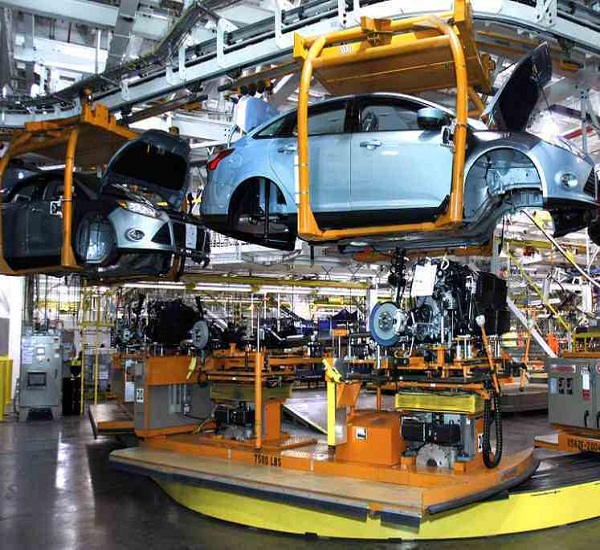
In a bid to make Africa a manufacturing powerhouse, the African Development Bank (AFDB) has proposed that the continental free trade agreement, CFTA, moves beyond trade to industrial manufacturing zones that create jobs for African citizens.

Speaking at the AFDB annual meetings held in Accra Ghana, the President of the Bank Mr. Akinwunmi Adesina suggested that the African region should not just be a trade region, but also a  region where more value-added manufacturing products are traded.

In his words, “I think African Continental free trade (AFCTA) should not just be a trade region, but an industrial manufacturing zone where we trade value-added manufacturing products from national and regional value chains that are competitive globally”.

He stated that the AFCTA should drive the creation of zones that will offer infrastructures, facilities, and incentives that drive manufacturing in the continent as it is done in Asia and South America to create jobs. He further disclosed that the AFDB is working to ensure that Africa transitions to sustainable energy that can drive factories to drive manufacturing. Mr. Akinwunmi revealed that 86 percent of AFDB investments in power generation will go into renewable energy.

This is indeed a highly commendable initiative from Mr. Akinwunmi to help countries on the African continent to tap into the $24billion liquified natural gas project, that will enable the countries in the region to power factories to drive manufacturing. Great to see that they are walking the talk in ensuring that Africa transitions into a manufacturing hub.

Using Nigeria as a case study, over the last years, there have been efforts to make the country the preferred manufacturing hub in West Africa, but such efforts have not produced any tangible results. The Nigerian economy has been badly affected due to the country’s import-dominated commodities.

Although in 2014, the Nigerian Industrial Revolution Plan (NIRP), was launched to make the country the preferred manufacturing hub in West Africa, meanwhile, the initiative was said to have struggled to meet its objectives, as the oil sector still accounted for 65% of the country’s revenue with almost half of the country’s population still living in poverty.

Nigeria for a long time has been ravaged by the high rate of unemployment which has affected the nation’s economy. According to the International Monetary Fund IMF, it suggests that Nigeria needs to create five million jobs per annum over the next 10 years in order to close its unemployment gap.

With the failure of the NIRP plan, it is ideal for the government to implement a new strategy to ensure that the nation becomes a preferred manufacturing hub in West Africa. A close look at developed or developing countries, one will observe that they are establishing industries which have been pivotal to the growth of their economy.

Lack of industrialization will no doubt leave a country underdeveloped. The creation of industries is not just beneficial to the company as it equally benefits the country as a whole. The gross domestic product of any country experiences a significant rise with the introduction of industries into the economy.

That is to say, the more goods that are produced in a country, the more the country’s economy blossoms. Nigeria has been faced with the habit of importation of goods and commodities which is not good for the economy, as it has also devalued the naira.

It’s high time the Nigerian government moves to create industries that will manufacture goods for export, to increase the country’s revenue, and also the high rate of unemployment will be drastically reduced because industrialization necessitates the need for human labor.

IMF Warns That Debt Servicing Might Gulp 100% Of Nigeria’s Revenue By 2026

3

The International Monetary Fund (IMF) has warned that debt servicing may gulp 100 percent of Nigeria’s revenue by 2026, if the government fails to implement adequate measures to improve revenue generation.

The IMF’s Resident Representative for Nigeria, Ari Aisen, disclosed this while presenting the Sub-Saharan Africa Regional Economic Outlook report on Monday, 30th May 2022 in Abuja.

According to him, based on a macro-fiscal stress test that was conducted on Nigeria, interest payments on debts may wipe up the country’s entire earnings in the next four years.

Early this year, it was disclosed that the Federal Government (FG) spent N4.2tn on debt servicing between January and November 2021, which represents 76.2 per cent of the N5.51tn revenue generated during the period in question.

The FG reportedly plans to spend N3.61tn on servicing Nigeria’s debt burden in the 2022 fiscal period, which represents about 34 per cent of the 2022 projected revenue of the country.

Nigeria’s debt stock, which is about N39.56tn as of December 2021, is likely to reach N45.95tn following plans by the Debt Management Office (DMO) to borrow an additional N6.39tn to finance the 2022 budget deficit.

Speaking in Abuja, Aisen expressed worry that many African countries, including Nigeria, risked sliding into a critical debt servicing problem unless urgent actions were explored to significantly raise revenue.

Aisen said, “The biggest critical aspect for Nigeria is that we have done a macro-fiscal stress test, and what you observe is the interest payments as a share of revenue and as you see us in terms of the baseline from the federal government of Nigeria, the revenue almost 100 per cent is projected by 2026 to be taken by debt service.

“So, the fiscal space or the amount of revenues that will be needed and this without considering any shock is that most of the revenues of the federal government are now, in fact, 89 per cent and it will continue if nothing is done, to be taken by debt service.

“It is a reflection of the low revenue of the country. The country needs to mobilize more revenue to be able to have macroeconomic stability. It has become an existential issue for Nigeria.”

He further lamented that being an oil exporter, Nigeria was unable to take advantage of the current global high oil prices to build reserves due to the subsidy on petroleum products.

According to him, Nigeria’s subsidy bill would likely hit N6tn by the end of this year at the current monthly subsidy bill of N500bn.

Aisen, however, expressed optimism that the Dangote Refinery would reduce fuel importation when completed, in order to reduce the subsidy burden.

He further warned that soaring food prices and next year’s general elections were threats to the country’s economy.

Aisen said “persisting insecurity, particularly banditry and kidnapping, and the forthcoming 2023 elections may affect the performance of the economy”.

The IMF Rep explained that Nigeria received $3.4bn in Special Drawing Rights and an equal amount in addition to a loan from the Fund, bringing the total loan since 2020 to $6.8bn.

In his remarks, the Director-General of the Budget Office, Ben Akabueze, disagreed with Aisen on his debt service-to-revenue figures, but agreed that Nigeria was spending a significantly high amount on debt servicing.

It’s only a-day old child that would be unaware that Nigeria’s debt profile is rising astronomically on a daily basis, yet no tangible revenue growth to cushion its excruciating effects. This portrays a serious danger to the country, even to a layman’s understanding.

It’s very worrisome that actualizing a surplus budget has become a far-fetched goal in Nigeria’s fiscal system. It suffices to assert that deficit budgets has abruptly and unwittingly emerged as tradition in the country.

Nigeria Customs Signs $3.2bn Digitization Deal

0

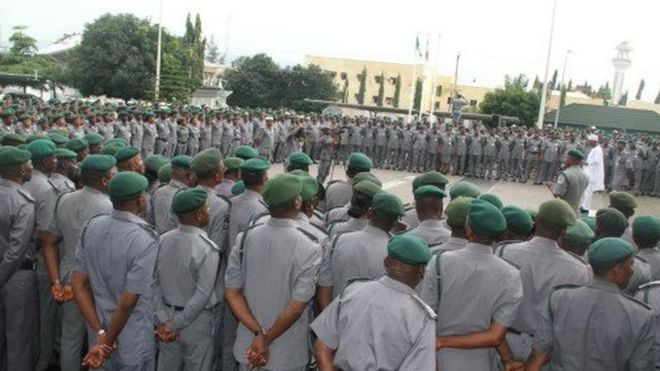
The Nigeria Customs Service (NCS) and a consortium, Trade Modernization Project Limited, on Monday 30th May 2022, signed a concession agreement worth $3.2bn to digitize operations of the border security and revenue collection outfit.

It was equally reported that the Federal Government of Nigeria expects to generate over $176bn from the deal.

At the agreement signing ceremony held at the Abuja national headquarters of the NCS were representatives of technical and financial partners in the deal, including African Finance Corporation and Huawei Technologies Company Nigeria Limited, a subsidiary of China-based Huawei Technologies Co. Ltd.

The Comptroller General (CG) of the NCS, Col. Hameed Ali (rtd.), in his remarks after the documents were signed, enthused that Nigeria was setting a pace that other African countries were looking forward to follow.

Ali said, “The journey has been long and tortuous, but we thank God that today we have signed the dotted lines. Today, we are happy to say that in Nigeria, we are going to be fully electronic, digitized and modernized. The success of this project will put Nigeria on the map.

“This project is very important in the sense that it has so many benefits that are lined up. The first benefit, which is tangible, is the fact that we are going to garner for this country, $3.5bn.

“To the Nigeria Customs, this is going to change the entire business process. It is going to put the Customs on the best part in terms of doing the business. It would remove all arbitrariness and human mistakes.

“It is a process that would ease the cost of doing business. It is a process that would also assist those of us who were given the task to manage with a simpler process of managing and monitoring.

The CG added, “Let me also underscore the fact that this project, having come this far, is a project that we must support in its entirety. There are rumours that this project is going to weed away officers. Let me allay that fear. We are even in need of officers.

“We have only 15,000 (of them) and by the mission and vision of the management, we will need nothing less than 30,000 people to be able to effectively and efficiently carry out the mandate given to us. So, there is no question of weeding (out) anybody.

The Chairman, Trade Modernization Project Limited, Saleh Ahmadu, who described the event as a ‘momentous occasion’, noted that the deal was a Public-Private Partnership (PPP) arrangement in line with the ICRC guidelines.

Ahmadu stated, “The $3.2bn investments required for the project is already being finalized through an AFC-led initiative. As the concession period begins, we wish to assure Nigerians that the revenue target of $176 billion for the Federal Government will be achieved, if not surpassed.

The Acting Director-General of the Infrastructure Concession Regulatory Commission, Michael Ohiani, noted that the Commission was mandated to regulate all PPPs entered into under the Infrastructure Concession Regulatory Commission Act, 2005.

This was indeed a commendable move as being made by the NCS, but it shouldn’t stop at that. Hence, more actions are henceforth required to follow suit towards realizing the actual goal of the digitization project.

It’s not anymore news that digitization is gradually dominating the formal sector, thus any institution or establishment yet to fully key into its numerous benefits is unequivocally still living in the past.

This therefore signifies that every other agency or body in Nigeria and beyond is expected to emulate this lofty effort for greater productivity.

Welcome Project Champions, Welcome Innovators – Logins Sent for Tekedia Mini-MBA Edition 8

0

Dear Sir/Madam,

Greetings! We have sent logins to all incoming Learners for the 8th edition of Tekedia Mini-MBA which begins June 6 to end Sept 3, 2022. If you paid and yet to receive the email, simply go here for a copy of the email. Please complete your setup on time.

The WhatsApp Group link has also been provided in the Board. The live session begins on Saturday, June 11, at 7pm WAT. Prof Ndubuisi Ekekwe, the Lead Faculty, will open the live session. But courses will drop in the Board at 12 noon WAT on Monday, June 6.

Tekedia does not send reminders; so, we encourage you to set personal reminders. Live classes will be held on Saturdays, Tuesdays and Thursdays at 7pm WAT, from June 11 to Sep 3, while pre-recorded courses will drop at 12 noon WAT Mondays, from June 6 to Sept 3.

Also, due to the massive interest, we have picked a date (July 16, more details in the Board as we get closer) for the Live portion of one of the new special sessions. Tekedia Institute announced last week that it would offer a special session on Satellite Internet in Nigeria, Africa – Business and Career Opportunities when news broke that Starlink has been approved by Nigerian regulators. A Texas-based company with Elon Musk’s Starlink license will co-teach the course with a US-based satellite industry analyst. A veteran of the Nigerian telco sector will provide a roadmap on broadband service delivery as a case study.

More so, the Central Bank of Nigeria recently released guidelines on Open Banking; Tekedia Institute is offering a course on that. The organization which played a major role for this initiative will teach the course.

We continue to receive registrations for Tekedia Mini-MBA edition 8 and other Tekedia Institute’s programs here. Help me and forward this email, lol; we want everyone in this edition with all the new courses.

Tekedia Team

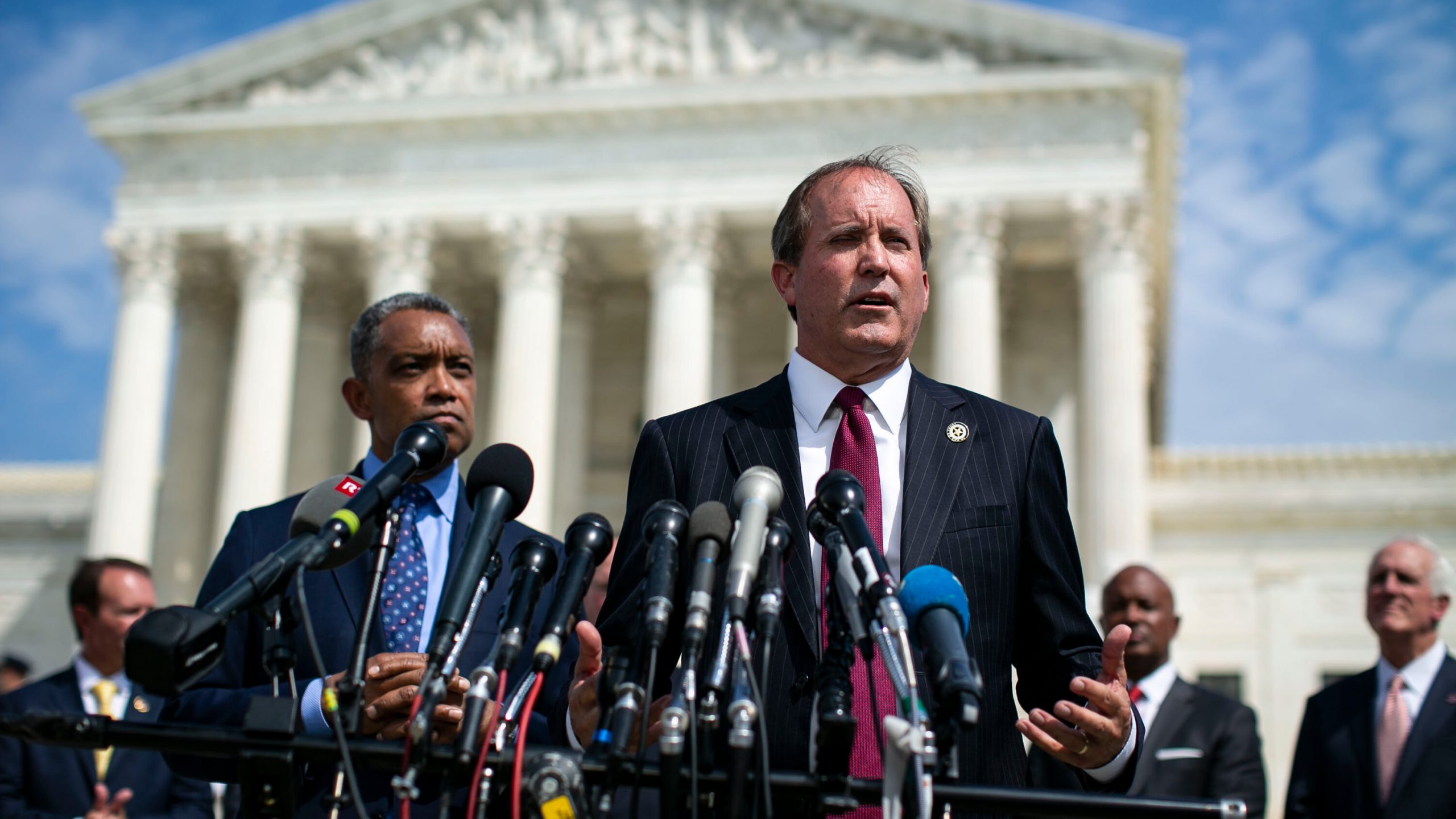
U.S. Supreme Court Halts Controversial Texas’ Social Media Law

0

A Supreme Court jury has voted to halt controversial Texas’ social media law dubbed HB20, which was introduced early last year, but has faced unrelenting legal battles amidst backlash from activists since it was enacted in September.

Two tech industry groups, the Computer and Communications Industry Association (CCIA) and NetChoice, representing major social media platforms, had challenged the law in court. The HB20 was designed to stop social media platforms from blocking users over what they post, and empowers the Attorney General and account holders to sue social media platforms when their rights to post contents are violated.

The HB20 was triggered by the ban of former president Donald Trump and other top members of the Republican Party from major social media platforms post 2020 election. But it has faced a rocky ride through the courts.

Texas, a Republican state, was at the forefront of conservative claims of tech’s liberal ideological bias. The push behind the HB20 is to prevent social media platforms from blocking conservatives over their viewpoints considered unhealthy.

But in May, in a surprise ruling, the Fifth Circuit Court of Appeals had unblocked the law, overturning the earlier judgment of the trial court which prohibited Texas and its Attorney General from enforcing the HB20. But the Supreme Court voted 5-4 in favor of the applicants.

“Applicants now ask this Court to vacate that stay while the Fifth Circuit resolves the appeal of the underlying preliminary injunction, and the Court grants that extraordinary relief,” Justice Samuel Alito said in the ruling.

“The May 11, 2022 order of the United States Court of Appeals for the Fifth Circuit staying the district court’s preliminary injunction is vacated.”

However, the Supreme Court ruling isn’t the final word on HB20. The CCIA and NetChoice are contending that “the law is facially unconstitutional under the First Amendment,” which protects freedom of speech, the press, assembly, and the right to petition the Government for a redress of grievances.

The argument which is yet to be settled is based on the First Amendment and the state’s sovereignty. Alito, who was among the justices who voted in favor of the state, said in his dissent that Texas has the right to make and enforce its own laws.

“While I can understand the Court’s apparent desire to delay enforcement of HB20 while the appeal is pending, the preliminary injunction entered by the District Court was itself a significant intrusion on state sovereignty, and Texas should not be required to seek preclearance from the federal courts before its laws go into effect.

“The Court of Appeals, after briefing and oral argument, concluded that the District Court’s order should be stayed, and a decision on the merits can be expected in the near future. I would not disturb the Court of Appeals’ informed judgment about applicants’ entitlement to a stay,” he said.