DD
MM
YYYY

PAGES

DD
MM
YYYY

spot_img

PAGES

Home Blog Page 5116

Abuja-Kaduna Flight Tickets Sold For Over N100,000 Each

0

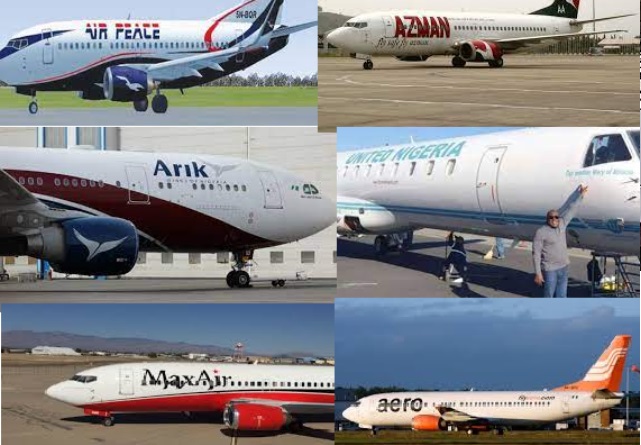
Following the attack by bandits on the Kaduna airport which happened two months ago that led to the shutdown, commercial flights have recently resumed at the airport. According to a reliable source, the reopening of the Kaduna airport was facilitated by the state government through a committee raised to assess the transportation situation.

Unfortunately, after its resumption, passengers now battle with the price of tickets sold for over N100,000 per ticket, for flights between Abuja and Kaduna. Despite complaints from different people about the outrageous flight fare, the Executive Director of Zenith travels and consult, Mr. Olumide Ohuanyo disclosed that there was nothing unusual about the cost, as airlines are at liberty to fix any fare.

In his words, “The airfare is deregulated. Airlines are at the liberty to fix any fare. They just have to file a notification to the Nigerian civil aviation authority. With that, it is easier for the airlines and the passengers to determine their fares using the forces of demand and supply. Presently, Kaduna is one of the most dangerous cities to go into by land, either by road, rail or if there is water transportation. So it is a hot cake. Tickets are programmed in such a way that they increase as demand increases”.

Asides from the fact that the price of aviation fuel increased which saw the prices of tickets skyrocket. Air passengers have been groaning over the high cost of these airfares, describing the increase as too exorbitant which has seen them call on the government for intervention.

After the Kaduna attack where some citizens lost their lives, with some still in captivity, Kaduna currently is a dreaded city. Going there by road or rail is not safe, as flight seems to be the only safest means currently.

Flight tickets to Kaduna are currently a hot cake and are currently programmed in such a way that the price increases as demand increases. I feel raising the price fare as demand increases is not ideal, because it’s more like these airlines are capitalizing on what is happening in Kaduna to make excess profit, knowing full well that flight is the only safest means and passengers will have it as their best option.

Traders on the other hand have had issues in bringing their goods to the state due to the closure of road and train services, as they are left with no option but to use air. Although some out of desperation have paid these outrageous airfares as they have no other option left.

Meanwhile, some airline operators have attributed the upsurge in fares to the current exchange rate, and they have stated that the rise in the fare was inevitable as these airlines need to stay afloat.

As these airline operators continue to increase their fares for a justifiable reason, however, the Nigerian Civil Aviation Authority should also step in to regulate these prices as some of them are way too high. They shouldn’t use the fact that the roads are not safe to profit from the insecurity in Nigeria, rather they should be considerate.

The NCAA had earlier warned to sanction airlines over price-fixing without their permission, to the detriment of the traveling public. They must step up to ensure that these airlines are monitored closely to ensure that those who raise their fare to outrageous amounts without their approval are sanctioned.
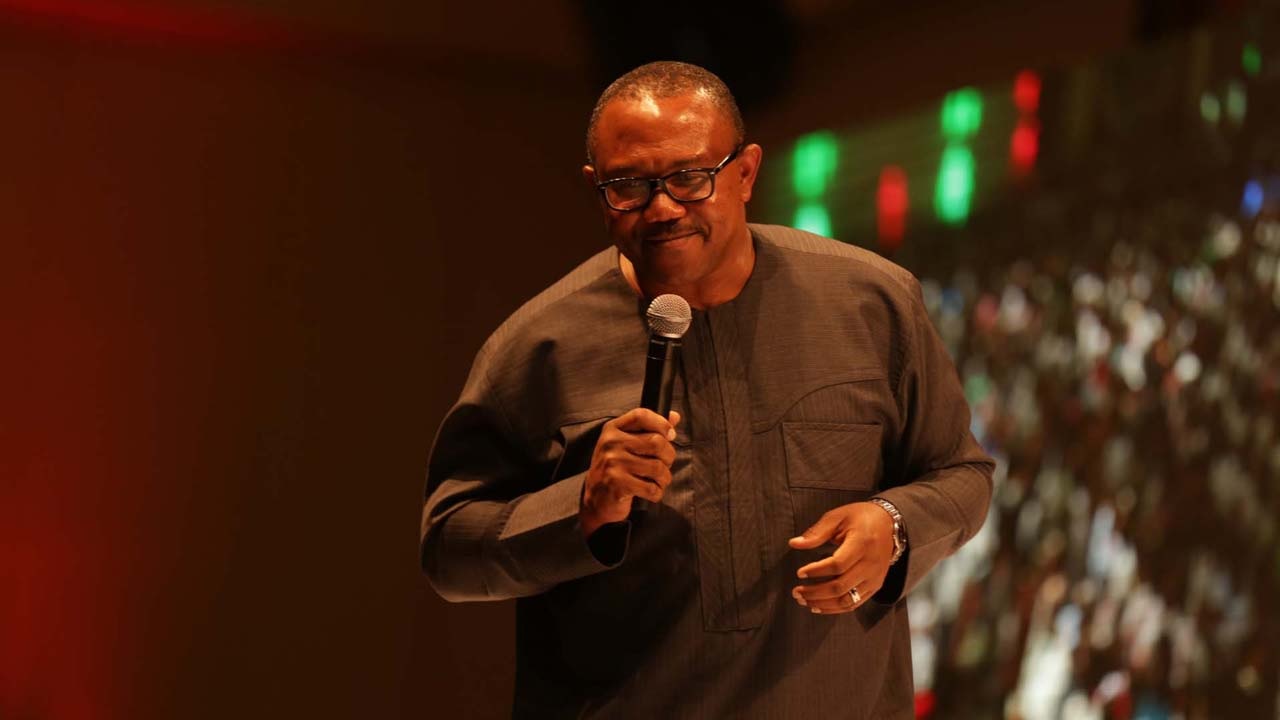
Why Peter Obi Has A Path to Nigerian Presidency – And Possibility of Issue-Based Campaign

5

Many have written that former governor of Anambra State, Peter Obi, who recently decamped to  Labour Party, may not have a great chance to the Nigerian Presidency. They posited that Labour Party does not have a solid structure to win the Presidency. To a large extent, these pundits are partly correct, but there are things they must consider:

  • Previous elections in Nigeria are not good indicators. Due to the new electoral law, party representatives have more time to campaign for the general elections. In the past, nominees were concluded around October/November. Today, we are doing the same thing in May. That gives a solid extra 5 months for candidates to tell their stories with enough room for parties to merge and push the messages to voters. Mr. Obi has time.
  • PDP has wounded South by discarding the rotational structure. I expect it to struggle in the South in the next election. If people are unhappy with PDP, Obi has an opportunity to convert them.
  • APC in a likely bid to “weaken” Atiku who is carrying PDP flag will be under stress to nominate someone from the North. If that happens, Southwest will go cold on APC and that will be an own-goal for APC. But if the party goes ahead and nominates someone from Southwest, the game moves back to the old regional blocks of the second republic.
  • Under that structure with Atiku for North, Tinubu or Osinbajo for West, and Obi for East, the emerging “hidden voting power” will surface. And Obi has a huge opportunity.

What is the Hidden Voting Power? The Southeast is the second largest ethnic group in any part of Nigeria, after the indigenous tribe. While Southeast may not have huge voters, the fact is that even the one counted by Southwest and other regions have a heavy dose of Southeast and that number is in double digit percentage in some states.

Under that redesign, anything can happen considering that voters (yes Nigerians) are looking for a way to redemption. In other words, ideas can carry the 2023 election instead of pure regional politics. If Obi works hard and makes his case, you may be surprised that Nigerians can hire him. This applies to other candidates: the delegates may be disappointed and this could become an issue-based election where ideas are supreme!

I am rooting for Tinubu or Osinbajo for APC so that we can see them work hard in the ring for votes, knowing that regional tribal sentiments have been magically out-structured and frozen, by delegates, unintentionally.

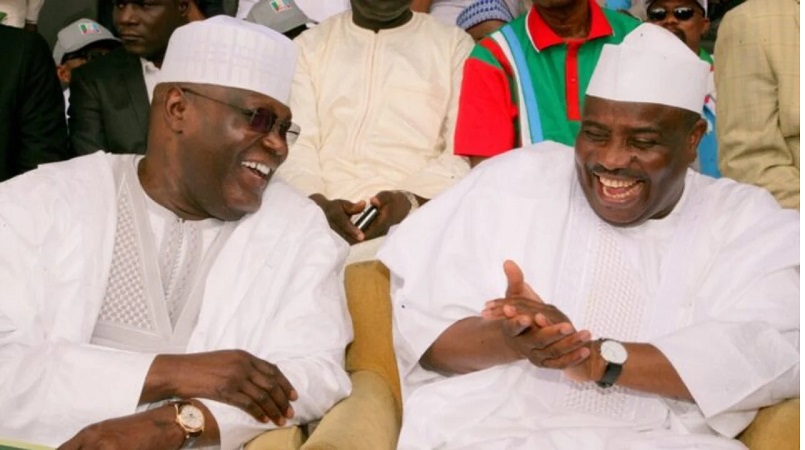
Atiku Gets PDP Flag for Presidency – And The Battle Ahead with Obi, Tinubu

Aminu Tambuwal’s Strike And Atiku Abubakar’s Goal at PDP Special Convention

1

Everyone is writing about Atiku Abubakar since his ascension as the PDP flag bearer for the 2023 presidential contest in Nigeria. But if you look at things critically, the man who redesigned every aspect of the playbook was the governor of Sokoto State,  Aminu Tambuwal. Understand that Rivers State’s Governor Wike supported his campaign for president in 2019. Largely,  they were “pals” at least politically.

Tambuwal was the worst candidate PDP could have presented. He was so weak that even UNICEF would campaign against him! Why? He cannot even get Sokoto kids to register for WAEC. I mean, a man who is so incompetent to register kids for WAEC should not even be in any leadership conversation.

But in Nigeria, anyone flies before delegates.  Had Tambuwal remained, Wike would have won. (Atiku, Wike, Saraki received respectively 371, 237 and 70 votes). But when he pulled out, the Atiku moment came. In short, at the end of the process, Wike did not even wait to congratulate Atiku. He felt there was a political coup because he did not model that Tambuwal would yield to Atiku to score during the extra time!

Understand that Atiku had a natural advantage: PDP has 774 delegates with more than 400 from the North. But Atiku’s stars aligned when Norther Elders – former president, former military heads of state, former generals, former governors, chieftains of the PDP from the north and a former intelligence chief – asked Tambuwal to drop out. And he did. (We will see if Tinubu and Osinbajo will recreate a similar scene in days during APC convention.)

It is politics. In 2019, Wike funded Tambuwal against Atiku. In 2022, Tambuwal yielded to Atiku for Wike to lose. That is the spirit of how regional politics thrives in Nigeria.

The Adamawa born politician defeated 12 other candidates in a keenly contested presidential primary held at the Moshood Abiola Stadium in Abuja.

Of the 764 accredited ballots at the election, Mr Abubakar polled 371 votes while his closest challenger, Governor of Rivers State, Nyesom Wike, came second with 237 votes.

Nigeria’s former Senate President, Bukola Saraki, scored 70 votes to come a distant third while the Governor of Akwa Ibom, Udom Emmanuel, came fourth with 38 votes.

The only female in the race, Oliver Diana, and another contestant, Sam Ohuabunwa, scored one vote each.

A former President of the Senate, Pius Anyim, scored 14 votes while Bauchi State Governor, Bala Mohammed, scored 20 votes.

The other contestants – ex-Governor Ayodele Fayose and Magazine Publisher Dele Momodu – got zero votes.

Twelve invalid votes were recorded.

Atiku Gets PDP Flag for Presidency – And The Battle Ahead with Obi, Tinubu

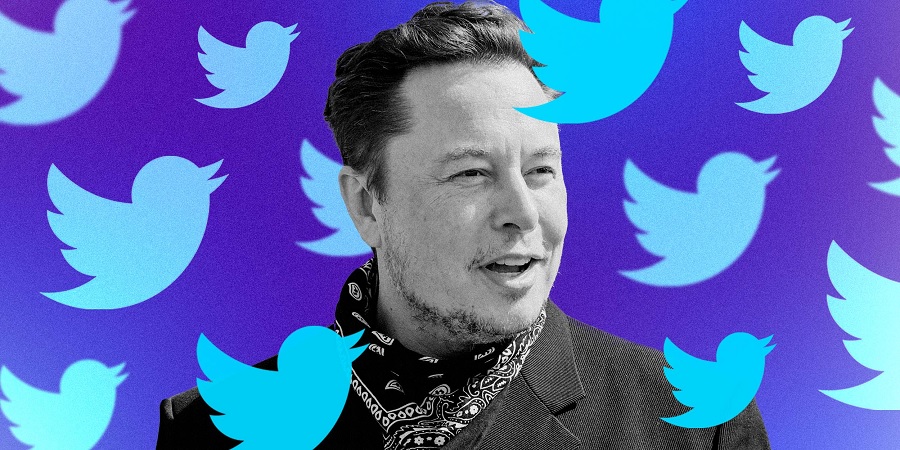
From Lawsuit to SEC Probe: Chaos Trails Musk’s Twitter Acquisition Bid

0

Elon Musk’s Twitter acquisition bid is getting longer than expected, dragging other issues along as it lingers beyond what many had hoped for. From the issue of bot to asking for lower price, and now the process of acquiring his earlier shares that has come under probe, Musk’s Twitter takeover bid is wallowing in chaos that has contributed to volatile price swings in the company’s stock price.

In April, Musk announced that he’s taken a nine percent stake in Twitter, after expressing his desire to see the app thrive on free speech. But the shares are believed to have been bought by Musk in a manipulative way, and now the U.S. Securities and Exchange Commission (SEC) is looking to unravel if the purchase is anyway dubious.

The SEC is looking into Tesla Chief Executive Officer Elon Musk’s disclosure of his stake in Twitter Inc. in early April, according to a letter the agency sent to him that month.

In the letter, now made public by the SEC, the regulator asks Musk why it appears he did not file required paperwork within 10 days of the acquisition, and also questions why, when Musk did disclose his stake, he used a form meant for passive investors while he was openly questioning Twitter’s policies around free speech.

The SEC specifically asked Musk to explain why he opted to initially file a “13G” disclosure form, which is meant for investors who plan to hold their shares passively instead of a “13D” form, which is for activist investors who intend to influence management and policies of the company. He later amended the filing. Musk was offered a board seat shortly after his initial disclosure and has since gone on to attempt to buy the company outright in a $44 billion deal to take it private.

In another case, Twitter shareholders are suing Elon Musk, and Twitter itself, over their handling of the acquisition process that has turned chaotic. Since Musk’s acquisition bid, Twitter’s share price has dived more than 12%, and Tesla’s is down about 28% as part of a broad sell-off in tech stocks.

The downturn of both Tesla and Twitter stocks are now are pitting the companies’ shareholders against Musk.

Musk is not a newbie when it comes to sparring with the SEC as he had squared off with the Commission in the past. The SpaceX founder got into trouble with the SEC in 2018, when the agency sued him for tweeting that he had “funding secured” to potentially take his electric car company, Tesla, private at $420 per share. But in reality, a buyout was not close.

But as noted by Indiatimes, which cited outside experts, the financial consequences for the world’s richest man could be limited, as fines for such a misstep would likely rise to a few hundred thousand dollars. And others were skeptical it could endanger Musk’s efforts to acquire Twitter.

“I think from that investigation standpoint, the SEC is going to have a pretty strong case that he’s violated securities laws,” said Josh White, a finance professor at Vanderbilt University who previously worked at the SEC as a financial economist. However, he added it “would be disastrous if [the SEC] said, well, this Twitter deal is on hold because Musk filed the wrong form.”

“Twitter stock price would instantly drop … I don’t think that the Commission has an interest in necessarily standing in the way of the deal.”

CNBC reports that the proposed lawsuit from Twitter shareholders also alleges that Musk broke California laws by sowing doubt about whether he would complete the deal after signing the contract to buy it.

Musk said earlier this month he was putting the Twitter acquisition “on hold” until he is certain of the number of bots on the platform. The shareholders’ complaint added that his gripes about “bots” were part of a scheme to negotiate a better price or kill the deal.

Women Farmers In Nigeria Seek Seperate Budget For Their Farming Needs

0

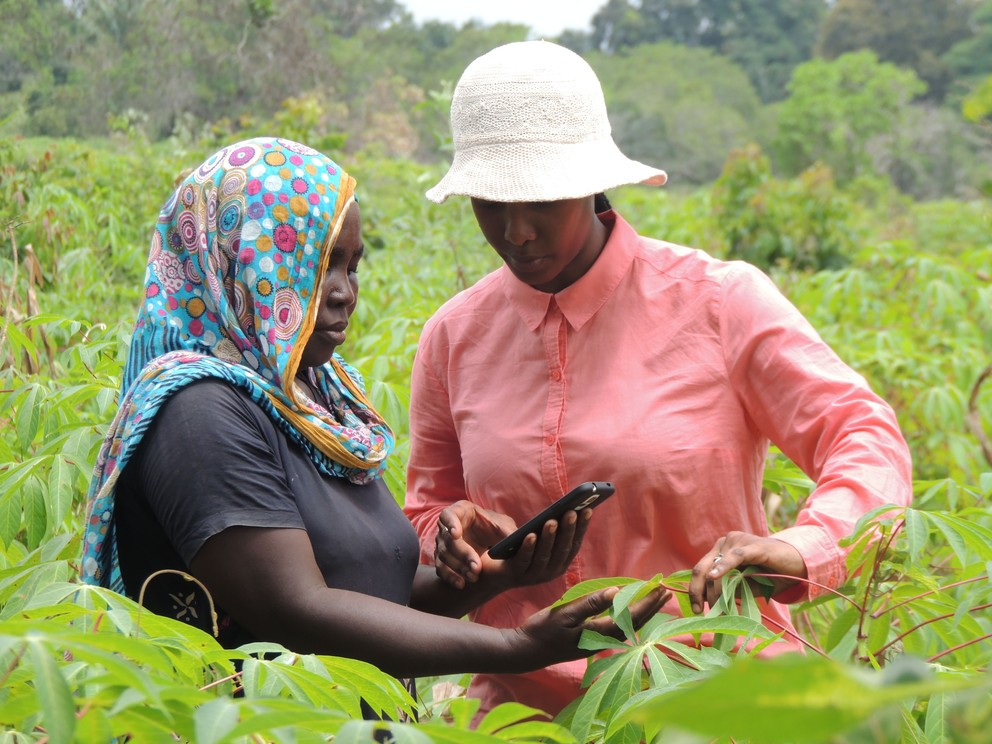
According to statistics, it indicates that in Africa, about 80 percent of the agricultural production comes from small-scale farmers who are mostly women. Even though women comprise the largest percentage of the workforce in the agricultural sector, they are still faced with challenges such as lack of proper funding, limited access to land, and other critical production factors and resources.

This financial funding gap in the Agricultural sector has prompted the Smallholder women farmers in the country, to call on the government to design a specific budget that takes care of the Agricultural needs which will enhance their productivity.

While speaking at the capacity building workshop to reposition small-scale women agro-business enterprises, the national treasurer of small-scale women farmers organization in Nigeria (SWOFON) Mrs. Hannatu Soni addressed the government on the need to include women in the agricultural budget allocation.

In her words, “We are advocating for a specific budget for women as that would make it easier to track where the funds go. Government can come to our aid by linking us to the proper markets and also by providing equipment used in processing the produce. We want to be empowered to process our products which will add value to our products, thereby having more income to take care of our families”.

Having noticed the unfair gender gap in the agricultural sector in the country, in a bid to tackle agriculture’s $15.6 billion gender financing gap, Nigerian fintech firm HerVest, founded by Solape Akinpelu has been on a mission in empowering female farmers in the country.

Apart from providing credit financing for women farmers In Nigeria, HerVest is currently in partnership with different CBN licensed platforms, such as flutterwave, VFD Microfinance Bank, and FBN QUEST which enables the start-up to operate an easy-to-use digital platform for savings and investment.

It is interesting to note that HerVest has impacted over 5,000 female farmers across the different states in Nigeria, with ongoing efforts to onboard more female farmers across the country.

Indeed through her support, a lot of female farmers who contribute over 70 percent of Nigeria’s food production, can produce more and ensure proper food security in the country. It is really disheartening that women in the country are faced with a financing gap in the agricultural sector, meanwhile, experts have said that female farmers are the backbone of the development of rural and national economies, as they comprise 43 percent of the world’s agricultural Labour force.

It’s high time such gender bias is jettisoned because women are the majority players in the agricultural sector. Research has shown that women hold more traditional knowledge of water adaptation mechanisms of traditional farming practices that can enhance crop yield and help agricultural activities to adapt to adverse conditions such as flooding and the like.

Therefore, poor funding of female farmers in the agricultural sector will no doubt affect the production of food in the nation, which might spell doom for the nation when a food crisis arises. According to the popular saying, ” What a man can do, a woman can do better”, indeed women according to statistics have proven that they are even capable of superseding the male farmers.

Such an unbalanced gender financing gap in the Agricultural sector in Nigeria will only do more harm to the nation’s economy because these women are faced with unnecessary constraints that reduce productivity output. No wonder the sector continues to underperform.

Women around the world are already making remarkable giant strides in the agricultural sector, thereby transforming agriculture to be more resilient and reliable. Proper allocation of funds to female farmers in Nigeria will not only increase food production in the country but also ensure food security which will make the country immune to food crises.