DD
MM
YYYY

PAGES

DD
MM
YYYY

spot_img

PAGES

Home Blog Page 513

Tesla Shares Surge 80% This Year, Erases 2025 Loses as Musk Buys $1Billion Shares

0

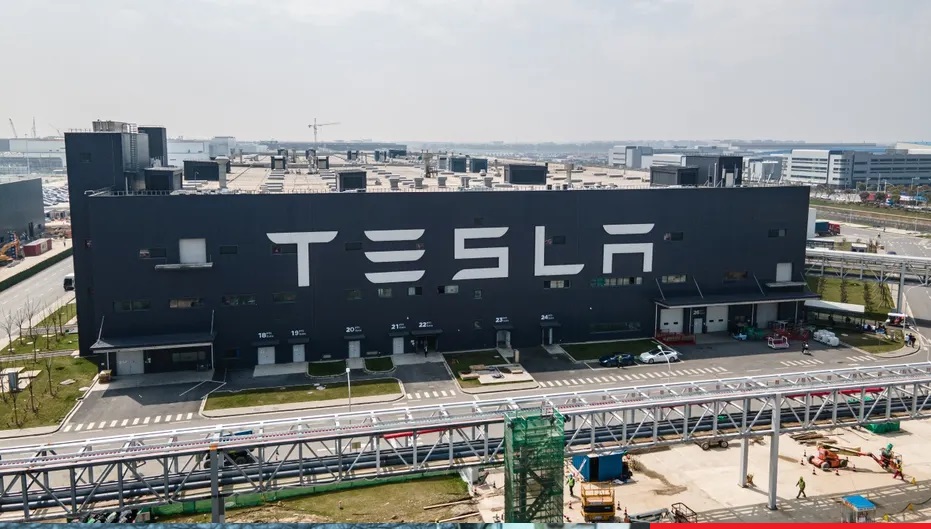
Tesla’s stock is soaring back in 2025 after a rough start to the year. Shares of the electric vehicle (EV) giant have surged 80%, completely erasing earlier losses.

The dramatic rebound comes after Tesla’s board gave Elon Musk a chance to become the world’s first trillionaire, Musk then made a bold show of confidence by purchasing $1 billion worth of Tesla stock, sending a strong signal to investors about the company’s future.

This move has reignited bullish sentiment on Wall Street and sparked renewed optimism around Tesla’s growth prospects in the EV and AI-driven energy sectors.

The news lifted shares of Tesla (TSLA) 7% at the market open Monday. While it didn’t sustain those early gains, it did finish the day up nearly 4%. That was enough to wipe out the remaining losses for Tesla shares for the year, which at one point were down 42% from the end of 2024.

Commenting on the company’s growth tracjectory,

Dan Ives, tech analyst with Wedbush Securities and one of the bigger fans of Tesla on Wall Street said, “It’s a huge vote of confidence from Musk and the bulls love seeing this. It sends a positive signal after a very tumultuous year for Musk and Tesla shareholders.”

Recall that as Musk became active in running the Trump administration’s Department of Government Efficiency, the company started facing backlash from those who opposed Trump and his agenda. His EV company Tesla posted its largest sales drops in history in the first and second quarter, and profits plunged along with it.

Beyond the political backlash that impacted sales, the company also faced faced increased competition from the EV offerings of other automakers, particularly in China.

Displeased with the company’s downward trajectory, Tesla’s board, in its proxy statement spoke of the importance of keeping Musk focused on Tesla going forward.

They pointed out his involvement as CEO of several other companies, including rocket company SpaceX and artificial intelligence company xAI, which owns the social media platform X, which demands his attention. In addition to his many business interests, Musk remains active in politics, despite his falling out with Trump. He has announced plans to form a third political party, but details remain murky.

To ensure full commitment, Musk has consistently demanded a bigger stake and increased voting power at Tesla, having said previously that he would prefer to build AI and Robotuce products outside of Tesla if he cannot get 25% voting power. The board wants Musk focused on four things: cars, Tesla’s full self-driving software, robo-taxis, and AI-trained robots.

The recent package “represents a critical next step to keep Musk as CEO at least until 2030,” wrote Wedbush analyst Dan Ives in a report Friday. “Tesla is heading into one of the most important stages of its growth cycle with the autonomous and robotics future now on the doorstep.”

Musk Monday’s stock purchase brought an additional 2.6 million Tesla shares into his portfolio. But it barely increased his stake in the company, his holdings of Tesla shares rose by less than 1%.

This turnaround comes after a turbulent first half of the year, where Tesla grappled with intensifying competition from Chinese rivals like BYD and a broader slowdown in global EV sales. Analysts had initially forecasted a challenging 2025, with earnings projections dipping nearly 30% due to margin pressures and supply-chain disruptions, as noted in reports from Yahoo Finance.

Yet, the company’s focus on innovation, particularly in full self-driving technology and the Optimus robot project, has reignited investor enthusiasm.

Tesla’s third-quarter delivery volumes are expected to exceed forecasts, potentially marking a “bottom out and rebound” as suggested in analysis from LongPort. The company’s energy storage business also hit record highs, deploying over 11 GWh in the prior quarter, bolstering revenue diversification away from pure auto sales.

Future Outlook

Tesla’s 2025 recovery underscores its ability to navigate volatility through innovation, but sustaining this momentum will require executing on ambitious projects like unsupervised autonomy and next-gen vehicles.

As shares approach break-even for the year, industry insiders are watching closely for signs of whether this rally marks a new era or a temporary surge.
Shiba Inu Enthusiasts Expect 20x, But Ozak AI’s AI Advantage Positions It for 100x Upside

0

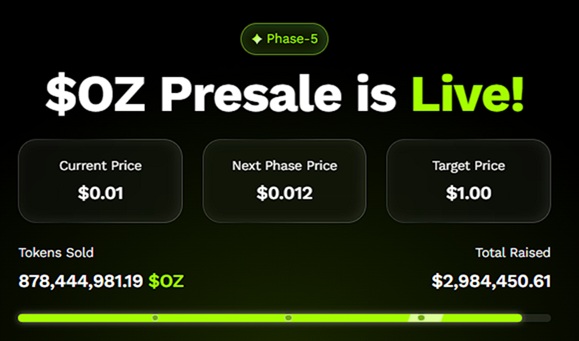
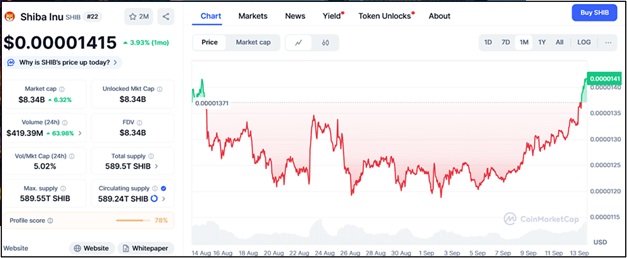
Shiba Inu (SHIB), trading at $0.00001410, continues to energize its huge community with forecasts of as much as a 20× rally, supported via a manner of resistance at $0.00001500, $0.00001650, and $0.00001800 and aid at $0.00001350, $0.00001280, and $0.00001200. Yet at the same time as SHIB prospers on meme-driven hype, traders are more and more attracted to Ozak AI (OZ)—a presale project priced at just $0.01 that has already raised over $3 million—with its AI-powered blockchain vision and formidable 100× ROI potential positioning it as one of the most thrilling boom memories of 2025.

Shiba Inu’s Meme Power in 2025

Shiba Inu (SHIB), trading at $0.00001410, remains one of the most recognized meme coins in the crypto market. Its big network, ecosystem expansion through Shibarium, and cultural presence have kept it applicable years after its initial hype cycle. Analysts advocate SHIB may want to rally up to 20× in the next bull run if meme coin enthusiasm returns in full pressure, placing it near to all-time highs and rewarding long-term holders who’ve caught on to the project.

From a price movement perspective, SHIB faces resistance first at $0.00001500, a stage that has time and again capped upward momentum. Beyond that, a more potent barrier sits round $0.00001650, with a prime test at $0.00001800; that would signal the start of a broader rally. On the downside, SHIB unearths a manual near $0.00001350, with support at $0.00001280 and $0.00001200. These are tiers that bulls will need to defend to prevent further declines. These resistance and assist stages can be important in shaping SHIB’s near-term trajectory.

The 20× Forecast for SHIB

If Shiba Inu reaches its full bullish potential, a 20× run would take it far above current levels, creating strong returns for early believers and new retail entrants. This growth potential highlights SHIB’s continued ability to spark FOMO when retail activity and meme-driven speculation surge. However, while such gains are impressive, meme coins like SHIB often face volatility and lack the innovation-driven foundation of emerging projects built around utility and technology.

Ozak AI’s 100× Presale Buzz

In contrast, Ozak AI (OZ) is attracting massive attention in its presale by combining artificial intelligence and blockchain, two of the fastest-growing industries in the world. Currently priced at just $0.01 per token in Stage 5, Ozak AI has already raised more than $3 million, signaling strong investor demand. Analysts believe OZ could surge to $1 or beyond once listed, offering early buyers 100× upside. Compared to SHIB’s 20× potential, Ozak AI’s forecast looks far more explosive, making it one of the most compelling opportunities of 2025.

Why Ozak AI Stands Out

What makes Ozak AI different is its utility-focused roadmap. Instead of relying solely on community-driven hype, OZ is designed to embed AI capabilities into decentralized systems, creating smarter, more efficient blockchain applications. This innovation-driven model not only makes Ozak AI more resilient than meme coins but also positions it as a project with long-term relevance. The fact that both retail investors and whales are accumulating during the OZ presale adds further confidence in its potential trajectory.

Shiba Inu at $0.00001410 continues to spark optimism with 20× predictions, supported by resistance at $0.00001500, $0.00001650, and $0.00001800 and support at $0.00001350, $0.00001280, and $0.00001200 shaping its short-term path. Yet while SHIB relies on meme-driven hype cycles, Ozak AI’s $0.01 presale entry and $3 million raised position it as a groundbreaking project with 100× ROI potential. For investors, Shiba Inu offers solid upside within the meme sector, but Ozak AI clearly delivers a far bigger opportunity for exponential growth in 2025.

About Ozak AI

Ozak AI is a blockchain-based crypto project that provides an innovative platform that focuses on predictive AI and advanced data analytics for financial markets. Through machine learning algorithms and decentralized community technologies, Ozak AI enables real-time, accurate, and actionable insights to help crypto lovers and corporations make the perfect choices.

For more, visit

Website: https://ozak.ai/

Telegram: https://t.me/OzakAGI

Twitter: https://x.com/ozakagi

Top Online Gambling Platforms 2025: Spartans, Stake.com, FanDuel, Roobet, & More

0

Online gambling in 2025 is being reshaped by fresh ideas, bold updates, and a focus on fairness that breaks away from the past. Among the many names driving change, Spartans CASHRAKE™ stands out for its system that gives back to players, while Stake.com pushes the crypto-first model. FanDuel, Roobet, BetMGM, LeoVegas, and DraftKings also bring their own shifts, making this list of top online gambling platforms one that shows the key changes shaping how people play today.

1. Spartans CASHRAKE™: Building Fairness into Every Bet

Spartans Games has launched something no other site has tried before: value on each bet. The CASHRAKE™ setup is not a promo or short deal. It is part of the system, giving rakeback on all wagers and cashback on every loss.

Unlike many platforms where rewards are hidden in fine print or limited to VIP players, CASHRAKE™ works for all. This changes how users view risk. For the first time, the house gives back on every turn. This new balance between platform and player makes Spartans one of the top online gambling platforms in 2025, and sets it apart from the rest.

2. Stake.com: Crypto-first gambling made simple

Stake.com set itself apart by cutting out fiat. Its crypto-only rule gave players fast deposits and instant withdrawals worldwide. Where other casinos waited, Stake built its name as a digital-first platform.

This move brought in users who already worked with BTC, ETH, and USDT, removing banks from the process. While it does not use a system like CASHRAKE™, its crypto-only path has helped Stake.com become one of the top online gambling platforms for digital-native players.

3. FanDuel and DraftKings Shift Sports Betting Culture

FanDuel and DraftKings turned US legalization into more than a rule change; they made it cultural. By joining with major leagues and weaving sports betting into everyday sports viewing, they reshaped public acceptance.

These names became part of game day, not just apps. Their edge lies in presence and legitimacy. Still, reward setups stay regional and follow old models, limiting reach outside North America. Both remain among the top online gambling platforms but have yet to expand global rewards.

4. Roobet Connects Gambling with Esports

Roobet found its path by embracing esports fully. Where others hesitated, it leaned into a generation driven more by streaming and online contests than by standard sports.

Its markets for games like League of Legends and Counter-Strike shifted what users expect from a sportsbook. Though short on classic betting choices, Roobet still reshaped who joins gambling. Its role among the top online gambling platforms shows how esports can redefine reach.

5. BetMGM Builds a Complete Mobile World

BetMGM moved beyond a single app, creating a full mobile ecosystem. It focused on slots, live casino, and sports betting in one clean setup, with push alerts, geofencing, and live odds making play easier anywhere.

Its link between real-world casinos and mobile loyalty gave users seamless moves across channels. Yet, while its structure is strong, promos stay region-bound, and payout speeds lag behind crypto sites. Still, its design earns it a place in the top online gambling platforms list.

6. LeoVegas Shapes Mobile Play Early

LeoVegas stood out early by making mobile-first design its core long before it became standard. Smooth touch, vertical design, and fast-loading play set the mark that later brands followed.

This early vision fueled the mobile gambling surge. Yet, despite its strength, LeoVegas has not matched the scale or disruptive depth of newer rivals. Still, as one of the top online gambling platforms, its role in shaping mobile UX remains clear.

7. DraftKings Expands Through Its Own Tech

DraftKings invested in building its own systems, from odds engines to user paths and data security. Owning its stack lets it release new tools faster and manage behavior with more control.

While others use white-label setups, DraftKings keeps tech in-house, giving it long-term strength. Still, its reward model does not match the instant, universal reach of CASHRAKE™. Yet its role among the top online gambling platforms stays firm as it grows its tech edge.

Wrapping Up the Change

Online gambling in 2025 is marked by fierce growth, as platforms chase new ways to blend tech, access, and experience. Spartans CASHRAKE™ stands apart, not by adding more games or sports, but by shifting value itself.

By giving back on every action, win or lose, it creates a fresh model of trust. The design is not tied to chance or tiers but instead to fairness and clarity. In doing so, Spartans defines a new path while others refine the edges. Among the top online gambling platforms, it does not just compete but rewrites the rules for the future.

Shiba Inu (SHIB) and Dogecoin (DOGE) at Risk as Fierce Competitor Gains Attention With Projected 12055% Upside

0

Little Pepe (LILPEPE) begins to pick up speed in the meme-coin industry, threatening such market leaders as Shiba Inu (SHIB) and Dogecoin (DOGE). SHIB and DOGE have been viral through the years, but the tide has changed. According to market analysts, Little Pepe may provide an estimated upside of 12,055, which will attract investors across the globe.

Presale Nears Completion at $0.0021 With 98% of Tokens Sold

Little Pepe is in Stage 12 of its presale and is almost over. The tokens are valued at $0.0021, and the next stage will be $0.0022. Little Pepe has already reached 99% of its target, having collected more than $25.14 million of its $25.475 million target. Further, 15.59 billion out of 15.75 billion tokens are sold, which is almost complete. The current situation is that the investors have a slim time to get tokens before the next price increase.

Layer-2 Power and Ecosystem Tools Drive Little Pepe’s Growth

Little Pepe is built upon its own Ethereum-compatible Layer-2 blockchain as opposed to many other meme coins that are merely tokens on bigger blockchain networks. A design has increased the speed of transactions, reduced fees, and enhanced scalability. The network is also compatible with popular Ethereum wallets and smart contract tools, making it easy to adopt by users and developers. Another characteristic is an anti-sniper bot protection that facilitates fair launches and minimizes the potential of market manipulation.

Little Pepe establishes itself as an object beyond the token of memes. Its roadmap also consists of a Meme Launchpad that will assist new token projects and decentralized apps. Plans are also characterized by staking and DAO governance, where holders are able to receive rewards and affect decision-making. In its future, it will feature the integration of NFTs, allowing the creation of a trading ecosystem. These aspects indicate the ambition of the project to integrate the meme culture with real use cases.

Community-Driven At The Core

As a way of marking its expansion, Little Pepe has introduced two big giveaways as part of its presale play. One is the $777,000 giveaway, where ten winners will claim tokens worth $77,000 each. The other one is a 15 ETH giveaway. The bigger the bid, the bigger the win. The 1st biggest buyer would get 5 ETH, the second highest would get 3 ETH, and the third biggest buyer would get 2 ETH. The entry ticket is just $100 as part of the minimum contribution. The project pledges to reward its community; hence, the campaign reflects that the project is coming with its Layer-2 blockchain.

Conclusion

The aggressiveness of Little Pepe, its high presale rate, loyal blockchain, and community-oriented approach have made it a powerful player. As the representatives of meme coins, Shiba Inu and Dogecoin have always been regarded as the leaders; the appearance of Little Pepe may disorient the situation. Its estimated upside of 12,055% underscores the rising view that this venture will transform the meme-coin market.


For More Details About Little PEPE, Visit The Below Link:

Website: https://littlepepe.com

Africa’s Cannabis Economy: Opportunities and Challenges

0

For decades, cannabis in Africa was relegated to the shadows, associated more with prohibition than economic promise. Today, however, the tide is shifting. As global demand for both medical and recreational cannabis expands, Africa is emerging as a potential powerhouse – a continent with fertile land, favorable climates, and centuries of cultivation knowledge. The question is not whether Africa can play a role in the cannabis economy, but how it will navigate the opportunities and challenges ahead.

The Global Market and Africa’s Advantage

The global cannabis industry is projected to exceed $100 billion by 2030, driven by medical research, wellness products, and shifting consumer perceptions. Countries from Canada to Uruguay have already embraced regulation, while the United States continues its patchwork state-by-state legalization. Against this backdrop, Africa offers a compelling advantage: lower production costs and climates well-suited for cultivation.

Several African nations are already experimenting with regulatory frameworks. Lesotho, in 2017, became the first African country to issue licenses for medical cannabis cultivation, attracting investment from Canadian and European firms. South Africa followed with a landmark Constitutional Court ruling in 2018 that decriminalized private use, setting the stage for a broader domestic market. The decision not only created space for personal cultivation but also sparked interest in ancillary industries, from wellness products to cultivation equipment. Local entrepreneurs have begun exploring opportunities ranging from licensed medical production to consumer-facing platforms where people can legally buy cannabis seeds and related supplies, signaling a slow but steady shift toward a more formalized cannabis economy.

In Zimbabwe and Uganda, governments have looked outward, focusing on cannabis exports to Europe and North America.

Economic Opportunities

Cannabis presents Africa with a chance to diversify economies traditionally dependent on commodities like oil, minerals, and cash crops. Analysts argue that legal cultivation could generate tens of thousands of jobs for farmers, particularly in rural regions where employment opportunities are scarce.

Medical cannabis and CBD products represent one of the most promising avenues. Global demand for cannabidiol is expected to grow at a compound annual rate of over 20% through the decade, with applications ranging from pharmaceuticals to nutraceuticals. Africa, with its low-cost agricultural base, could position itself as a supplier to international pharmaceutical companies seeking scale.

Beyond medical use, industrial hemp opens doors to new industries. Hemp-derived textiles, bioplastics, construction materials, and biofuels align closely with sustainability goals already being discussed by policymakers. For Africa, this could mean new value chains that extend well beyond cultivation.

The Challenges Holding Back Growth

Despite the promise, the path forward is far from straightforward. Regulation remains patchy and often inconsistent. While countries like Lesotho have created structured licensing regimes, others lag behind, creating a fragmented legal environment that deters investors.

Infrastructure is another hurdle. High-quality cannabis cultivation requires reliable electricity, advanced irrigation systems, and post-harvest facilities – all of which remain underdeveloped in many regions. Even countries with favorable climates often lack the processing plants necessary to transform raw cannabis into export-ready medical-grade products.

Financial systems also pose barriers. Cannabis remains internationally controlled under the Single Convention on Narcotic Drugs (1961, as amended) and related UN drug treaties; even after the UN Commission on Narcotic Drugs’ 2020 decision to remove cannabis from Schedule IV, it remains in Schedule I, which keeps strict controls in place. As a result, banks are often cautious about extending credit to growers, and without access to financing many smallholder farmers who could benefit most from the crop are locked out of the industry.

Then there is the social dimension. Cannabis carries deep stigma across much of Africa, tied to decades of prohibition and moral opposition. Shifting public perception will be as important as regulatory reform if governments hope to integrate cannabis into the formal economy.

Lessons from Early Movers

The early adopters offer lessons for the rest of the continent. Lesotho’s licensing model attracted foreign investment but also sparked criticism for favoring large-scale producers over small farmers. South Africa, by contrast, is grappling with how to balance its domestic market with international opportunities. Zimbabwe initially pursued aggressive export licensing, though limited global demand and high compliance costs have slowed progress.

These examples underscore a key point: regulation must balance inclusivity with competitiveness. Without mechanisms to involve local farmers, the risk is that cannabis becomes an industry dominated by foreign capital with little benefit to domestic communities.

What Africa Needs to Succeed

For Africa’s cannabis economy to thrive, several steps are critical. First, regulatory harmonization is essential. Clear, consistent frameworks across borders would create confidence for investors and open pathways for regional trade.

Second, infrastructure investment must keep pace with demand. Public-private partnerships could help finance greenhouses, laboratories, and processing plants. Training programs for farmers, scientists, and entrepreneurs would ensure that human capital matches the sector’s growth.

Third, financial innovation is needed. Alternative funding models, from microfinance tailored to cannabis growers to impact investing, could expand access for smallholders.

Finally, governments must prioritize social equity. Community reinvestment, licensing quotas, and farmer cooperatives could prevent the industry from becoming another extractive economy dominated by elites.

A Continent on the Cusp

Africa stands at the threshold of a new era in cannabis. With the right policies and investments, the plant could evolve from a source of stigma into a driver of inclusive growth. If the continent can balance regulation with opportunity, infrastructure with innovation, and foreign investment with local benefit, cannabis has the potential to transform economies – not as a quick fix, but as part of a broader strategy for sustainable development.

The world is watching. Whether Africa becomes a global cannabis leader will depend on how decisively it seizes the moment.