
DD
MM
YYYY

PAGES

DD
MM
YYYY

spot_img

PAGES

Home Blog Page 5135

Learn from Prince Kpokpogir’ ‘s ordeal

0

You must have heard of Prince Kpokpogir’s ordeal in the hands of the Federal Capital Territory Authority (FCTA). Well for those that are out of the loop, let me bring you up to speed. His house which was just built a year ago in the Guzape area of Abuja was demolished by the FCTA. The house was said to have been worth over N700m.

According to the officials of the FCTA, the house was demolished because it was erected on government committed land. 

A Committed land is a land that has been set aside or reserved by the government for special or specific purposes or uses. It may be reserved by the government to be used to build something like parks, airports, roads, schools, markets, government offices, cemeteries, etc in the future or later days and therefore has no development or redevelopment potential at the time being. 

In Kpokpgiri’s case, according to the authorities of the FCTA, the place he erected his building has been marked out by the government to be used in building a highway, I.e the land he erected his house has been committed for road construction. 

An official of the FCTA was quoted to have said, “His (Kpokpogiri’s) house is on a superhighway known as M-16. He doesn’t even have a building plan approval. It’s like somebody who knows that the highway is coming sold the land to him and he just went to build. We have been asking him to stop but he refused.”

This incident should raise concern for everyone; both for those who own landed properties or wish to own landed property in the future, especially those who don’t engage the service of a lawyer while purchasing their properties. In transactions like this, you need the services of a lawyer to carry out the due diligence search to ensure you are not purchasing a committed property.

If you make the mistake of buying land that has been reserved by the government or in a committal area, the repercussion is that the government has the power and every legal right to repossess the land anytime and it does not matter whether you have erected a structure or built a world-class home there. 

The government can demolish whatever structure found there in their quest for repossessing what belongs to them and you have no case in court, especially the court of common law. 

Always engage the services of a lawyer. A lawyer who is an expert in this area will conduct a survey plan search at the appropriate land registry, this is where he will confirm if the land is free or committed and also uncover other encumbrances on the property if there are any. 

If you think you can do it yourself and do not require the services of a lawyer, you may regret it later. 
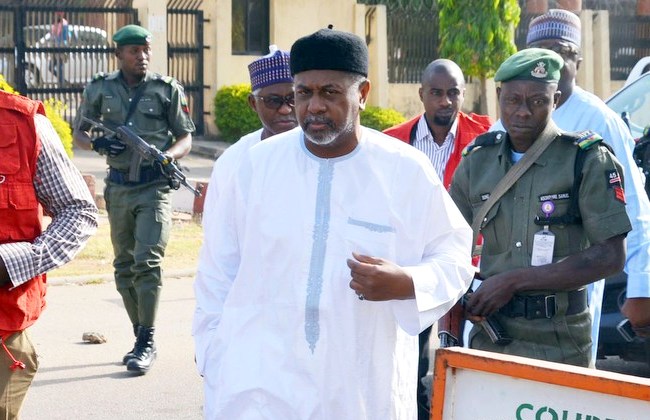
EFCC Re-Arraigns Sambo Dasuki, Others Over Alleged Money Laundering

0

The Federal Government (FG) of Nigeria, on Monday 23rd May 2022, re-arraigned former National Security Adviser (NSA), Col Sambo Dasuki (rtd), as well as a former Sokoto State Governor, Attahiru Bafarawa and former Minister of State for Finance, Bashir Yuguda, on corruption charges bordering on money laundering.

They were re-arraigned at the High Court of the Federal Capital Territory (FCT) on allegations of breach of trust and criminal misappropriation of public funds amounting to N388 billion.

In the 16-count criminal charges, Dasuki, Bafarawa and Yuguda were alleged to have diverted various sums in various currencies to different bank accounts under false pretenses of using the funds for the procurement of security equipment.

The charges, which were prepared by the Economic and Financial Crimes Commission (EFCC), claimed the funds were used to fund the Presidential campaign of the People’s Democratic Party (PDP) during the 2015 general elections.

However, when the charges were read to them, all the accused persons pleaded not guilty as requested by the Judge.

Following a passionate plea by a Senior Advocate of Nigeria (SAN), Lateef Olasunkanmi Fagbemi, Justice Halilu Yusuf adopted the earlier bail conditions granted them in 2018 when they were first arraigned. The Judge consequently fixed the trial for June 7, 2022.

It could be recalled that on December 1, 2015, Dasuki was arrested by the Nigeria’s State Security Service (SSS) for allegedly stealing $2.1 billion and accused of awarding phantom contracts to buy 12 helicopters, four fighter jets, and ammunition meant for Nigeria’s military campaign against the Boko Haram Islamist militants.

In November 2018, Dasuki was refused bail by the government despite being granted bail by four different high court judges in Nigeria.

On July 14, 2019, the Court of Appeal in Abuja declared the continued detention of the former NSA since December 29, 2015 by the SSS as illegal, unlawful, and unconstitutional.

The appellate court held that the DSS and its Director-General acted outside their constitutional powers on the long period of the detention of a Nigerian citizen and imposed a fine of N5 million on them to be paid to Dasuki as compensation for breach of his fundamental right.

However, the SSS eventually released Dasuki from detention on the 24th December 2019. A Senior Advocate of Nigeria (SAN) and lawyer to the former NSA, Ahmed Raji, confirmed the release of his client; he therefore thanked the Attorney General of the Federation (AGF) for ordering the SSS to comply with the various court orders granting bail to Dasuki.

The Minister of Justice and AGF, Abubakar Malami, had reportedly ordered the SSS to release the former NSA alongside the then convener of #RevolutionNow protests, Omoyele Sowore who was also detained.

In a statement personally signed by Malami, he explained that the decision to release the two men was in compliance with the bail granted to them by the court of law.

It’s noteworthy that, as a result of the Pandora Papers’ report, in 2013, Dasuki had set up a shell company with the help of a government contractor, Leno Adesanya. The report found that the sole shareholders were Dasuki’s sons with Adesanya not holding any shares and no other form of clear payment to him.

Adesanya’s representative claimed that no undisclosed favours were gained by the former and that he was simply helping Dasuki’s sons to set up an offshore company.

Now that the EFCC had re-arraigned Dasuki after four years of silence, what actually is the way forward? Is the agency now determined to follow the prosecution to a logical conclusion, or will it still be left haphazardly in the long run?

Besides, don’t Nigerians deserve to know what exactly prompted the long silence, after the erstwhile NSA was granted bail? Too many questions seeking apt answers.

On National Bureau of Statistics’ Report Over Rise Of Nigeria’s GDP

0

The National Bureau of Statistics (NBS), on 23rd May 2022, reported that Nigeria’s Gross Domestic Product (GDP) grew by 3.11 percent (year-on-year) in real terms in the first quarter (Q1) of 2022.

In the latest published report, the NBS revealed the figure showed sustained positive growth for the sixth consecutive quarter since the recession witnessed in 2020 when negative growth rates were recorded in quarters two and three of that year.

The report said, “The first quarter 2022 growth rate further represents an improvement in economic performance. The observed trend since Q4 2020 is an indication of gradual economic stability.

“The Q1 2022 growth rate was higher than the 0.51 per cent growth rate recorded in Q1 2021 by 2.60 per cent points and lower than 3.98 per cent recorded in Q4 2021 by 0.88 per cent points. Nevertheless, quarter-on-quarter, real GDP grew at -14.66 per cent in Q1 2022 compared to Q4 2021, reflecting a lower economic activity than the preceding quarter.”

In the quarter under review, according to the data agency, the aggregate GDP stood at N45,317,823.33 million in nominal terms – a performance that was higher when compared to the Q1 2021 which recorded an aggregate GDP of N40,014,482.74 million, indicating a year-on-year nominal growth rate of 13.25 per cent.

It added that the nominal GDP growth rate in Q1 2022 was higher relative to the 12.25 per cent growth recorded in Q1 2021, and higher compared to the 13.11 per cent growth recorded in the preceding quarter.

While broadly classifying the Nigerian economy into the oil and non-oil sectors, the NBS revealed that the nation recorded an average daily oil production of 1.49 million barrels per day (mbpd) in Q1 2022.

This value, it stated, was lower than the daily average production of 1.72mbpd recorded in the same quarter of 2021 by 0.23mbpd, and lower than the Q4 2021 production volume of 1.50mbpd by 0.01mbpd.

“Real growth of the oil sector was –26.04 per cent (year-on-year) in Q1 2022, indicating a decrease of 23.83 per cent points relative to the rate recorded in the corresponding quarter of 2021,” the report said. “Growth decreased by 17.99 per cent points when compared to Q4 2021 which was –8.06 per cent.

“Quarter-on-Quarter, the oil sector recorded a growth rate of 9.11% in Q1 2022. The oil sector contributed 6.63 per cent to the total real GDP in Q1 2022, down from the figures recorded in the corresponding period of 2021 and up compared to the preceding quarter, where it contributed 9.25 per cent and 5.19 per cent respectively.”

According to the data agency, the non-oil sector grew by 6.08 per cent in real terms during the reference quarter (Q1 2022).

It further explained that the rate was higher by 5.28 per cent points compared to the rate recorded in the same quarter of 2021 and 1.34 per cent points higher than the fourth quarter of 2021.

“This sector was driven in the first quarter of 2022 mainly by information and communication (telecommunication); trade; financial and insurance (financial institutions); agriculture (crop production); and manufacturing (food, beverage, and tobacco), accounting for positive GDP growth.

“In real terms, the non-oil sector contributed 93.37 per cent to the nation’s GDP in the first quarter of 2022, higher than the share recorded in the first quarter of 2021 which was 90.75 per cent, and lower than the fourth quarter of 2021 recorded as 94.81 per cent.”

From my view, the said report was about ‘year-on-year growth’. According to the publication, which seemed complicated and confusing, on quarter-on-quarter, real GDP grew at -14.66 per cent in Q1 2022 compared to Q4 2021, reflecting a lower economic activity than the preceding quarter.

So, if the last paragraph is anything to go by, or holds water, one might wonder the reason the NBS stated that Nigeria recorded a rise in her GDP. If the quarter in question (Q1, 2022) declined in growth compared to the preceding quarter (Q4, 2021), how could it be reported that the country recorded a significant improvement in her GDP?

In a nutshell, the NBS’s report, which was rather misleading, requires a holistic review towards making amends where need be. 

Tekedia Unveils “Tekedia Corporate Town Hall and Consultancy with Prof Ndubuisi Ekekwe”

0

Tekedia Institute unveils a new program: “Tekedia Town Hall and Consultancy with Prof Ndubuisi Ekekwe”. It is a live program which takes place on Zoom. It focuses on business strategies, mechanisms, models, frameworks, etc, which companies of all sizes can deploy to win new markets and territories.

Like the ancestral town halls, it is designed to be unit-, department- or company-wide with Prof Ekekwe as a guest. The overriding objective is to provide a platform where companies can get insights from an external thought-leader, helping them to refine, upgrade and execute their missions better.

Indeed, as the global economy is being rattled and redesigned due to many factors, this program will help your organization deepen capabilities to survive and thrive, despite any economic upheaval. We have developed playbooks and protocols which your team will find useful in your operations.

The program will run for three hours on Zoom. Prof Ekekwe will make a presentation for 60 minutes with specific focus on the client’s sector. The subsequent minutes will be for Questions/Answers and interactive engagements with the participants. We expect the conversations to focus on the frictions and wins the company is experiencing. Tekedia Institute will provide perspectives, drawing from our practical industry and academic experiences.

To learn more and register your company, go here and pay N450,000 naira (or US$1,000). Once done, our team will send you a calendar to pick a time for the session.

Sample certificate to be issued to learners

How to set up a Digital Co-operative Society in Nigeria

4

It goes without saying that at this point in time and considering the economic state of Nigeria that there’s a more pressing need to look back to one’s roots to understand the principles of traditional financial management, and tried and tested native financial institutions.

This need led to the introduction of a very simple but never before seen Fintech unicorn candidate :- the Digital Ajo/Esusu.

Ajo(Yoruba) and Esusu (Igbo) systems are simply informally created societies based on the African principles of communal economic development, with one member seen as a link in an overall chain of members, who build one another up, via monetary daily or weekly contributions, that form a pool of funds that serve as a line of credit, and an investment pool-source for members.

This grassroot-level human adaptation of ants working in unison, remains the biggest source of alternative finance in Nigeria, accounting for a cumulative funds pool in Lagos assessed at 33Billion Naira at least!

These native financial institutions are what have also been captured under Nigerian law as Co-operative societies, which are defined as voluntary associations made up of individuals joined by a common bond and interest, who converge for the purpose of economic benefits to everyone in the group.

Co-operative societies are a cheaper alternative to registering a Limited liability company in Nigeria and have as their advantages when registered:-

  • Perpetual succession (they can outlive their members like companies);

  • Cheaper to register than companies (Registration costs can be as low as 10,000.00 Naira minus other fees);

  • They are free from the burdens of Tax regimes that typically plague companies;

  • They can own, sell, acquire and lease movable and immovable properties;

  • When registered, they present the purest examples of democratic management compared to companies that sometimes depend a lot on majority shareholders and a hierarchy within the Nigerian Code of Corporate Governance;

  • Co-operative societies are allowed to have group investments such as Co-op Microfinance Banks(which require a minimum share capital of 50million Naira).

Co-operative societies are governed by the Nigerian Co-operative societies Act at the Federal level through the Office of National Civil Registration at the Federal level or at the State level in states like Lagos, the Director of Co-operatives at the Ministry of Commerce, Industry & Co-operatives.

Co-operative societies come in classes or types and under Nigerian law come with minimum membership requirements at the point of registration as seen in the following examples :-

a). An Agricultural Co-operative society – (50 members minimum).

b). A Savings and Credit society, the core focus of this article – (20 members minimum).

c). Specialized skill Co-operatives -(10 members minimum).

d). Multipurpose/General Co-operatives – (20 members minimum).

e). Other types of Co-operatives- 10 members minimum.

Regarding the topic of who can be members of a Co-operative society, the following rules apply under Nigerian Law :-

  • A member must be AT LEAST 15 years old.

  • A board member must be AT LEAST 18 years old.

  • Every member must have a need identical to that of other members of the society necessitating membership of the society.

  • A member must show proof of the ability to pay fees of the society and buy shares.

  • Every member must be in a line of business or occupation/job relevant to the society e.g. A Medical Doctor has no business joining a Co-operative made up of architects.

Digital Co-operatives :- A digital Co-operative society in this case simply refers to a Cooperative that operates virtually in terms of membership applications, cashless member contributions, and digital rendering of benefits associated with benefits such as loans.

In addition to the requirements associated with registering a Co-operative, a digital “Ajo” system would require the setting up of a digital/online platform,most likely an app, which will have to be registered as a Trademark alongside its copyrights along with the required Frontend and Back-end development contracts as an extra security measure against Intellectual Property theft.

Co-operative society applications usually get approved in about 3 months, although Certificates of Registration are only presented after about 3 years to in order to verify the functionality of the Co-operative and that the Cooperative is not being operated for an ulterior motive such as Money-laundering.

Requirements for the Registration of a Digital Co-operative Society.

The following is necessary for an application for registration of a Co-operative to succeed :-

  • An application for registration of the Co-operative society to the Director of Co-operatives signed by at least 10 individuals qualified for membership of the society of it’s a primary society(a society with only individual members) or if it’s a secondary society (a society with another Co-operative society as its member) then a duly authorized member of the member society)

  • The proposed name of the society (which will be confirmed by a Name search and approval).

  • The proposed office address/location of the Co-operative.

  • The objectives of the society.

  • The purposes or ends to which the monetary contribution pool of the society will be applied, kept, or invested.

  • Membership admission and conduct rules.

  • The society’s By-laws.

  • A feasibility report as to the operation guidelines of the Cooperative society.

  • Copies of a resolution passed at the first meeting of the Co-operative society with the Province Cooperative Officer in charge of registration(this must at least involve the appointment of a chairman, secretary and treasurer of the Co-operative)

  • Letters of intent to join the society by prospective members of the society.

  • An official Stamp duty of the Co-operative to be tendered after the Cooperative name approval.

  • Evidence of Registration fee payment.

  • A detailed IT Policy including password policy.

  • A SCUML/AML/CFT/KYC compliance framework application by virtue of Co-operatives being Designated Non-financial Institutions.

  • A Data Protection Compliance Framework set-up commenced by an application to the National Information Technology Development Agency (NITDA).

Core Rules Of Digital Cooperative Societies (Especially Savings and Credit Societies).

  • A primary society will not be registered except it is made up of a minimum of 10 members who are at least 21 years old.

  • The word “Co-operative” must be part of the name of the society to be registered.

  • A Cooperative Society CANNOT gives loans to non-members except as its by-laws provide, another Co-operative society.

  • A Cooperative Society dedicated to lending money to other registered societies is referred to as a Central Financing Society.

  • All disputes arising from Cooperative Societies must first be subjected to arbitration.

What You Need a Lawyer For When Setting Up a Digital Cooperative Society.

You need a lawyer for the following services when registering and operating a Cooperative Society:-

  • The preparation of your Co-operative society registration application.

  • The preparation of the by-laws and objectives of your Co-operative society.

  • The documentation of the Front-end and Back-end development contracts of your app.

  • The application for SCUML certificates and the continuous rendering of AML/ CFT/KYC/STR/CTR returns.

  • The registration of your Co-operative’s Intellectual Properties such as your app .

  • The documentation of loan agreements involving your loan disbursements.

  • Acting as the first point of detached contact in the event of a dispute.

  • Rendering compulsory Data Protection Compliance returns to the NITDA.

  • Rendering applicable Tax advisory services.

  • Performing liaison officer functions between your Co-operative and the Director of Co-operatives or the Office of National Civil Registration.

  • The rendering of all Legal support functions in the execution of Investment decisions of the Co-operative.

  • Engaging in Debt Recovery services on behalf of your Co-operative society.

From the above, it can be seen that the future of 21st century Traditional Financing is finally here, and with the right hands guiding you, the Digital Co-operative is the bridge between ages-old traditional financial wisdom, and Financial Technology in its most helpful form.