DD
MM
YYYY

PAGES

DD
MM
YYYY

spot_img

PAGES

Home Blog Page 5153

Time for Scenario Mapping – Huge Nigeria, Global Dislocations Coming

2

Good People, no matter what you do, I encourage you to update your personal and professional playbooks. Those playbooks must be comprehensive. The next 12 months would be extremely challenging in our world. Many negative factors are converging at the same time, and now is the time to do scenario mapping.

If you run a business, conserve cash because I expect lending and equity funding to dry up. If you are a paid worker, reduce expenses and put more money in the piggybank (have a dorm account for any money that is not needed within 3 months in Nigeria) because recession is breeding in most parts of Africa. Data from more than 60 companies I am associated with do provide a clear signal: consumer spending in Africa has weakened drastically.

Here are some issues to watch:

  • Russia Gas: Russia can withdraw from Ukraine and the next day cut-off gas supplies to the whole of Europe. If that happens, some EU countries will struggle. Countries like Germany and Hungary will be devastated and the implications may result in a global recession.
  • US Economy: As the US central bank works to tame inflation, by increasing interest rates, easy money will go. Expect global funds to pause on investments in some emerging economies. As that happens, high interest rates will mean borrowing for nations like Nigeria will be more expensive.
  • Political Risk: In all you do, have a model that Nigeria could experience turmoil. We were lucky in 2015 (Jonathan) and 2019 (both candidates are from the North); 2023 looks increasingly volatile.
  • Naira Devaluation: I do not expect any official move before the election. But fighting to protect the Naira is largely non-existent. So, the paralysis in the black market will continue. N670/$ by May 2023 is a possibility. 
  • Global Hunger: from rising supply chain costs (fuel cost, Ukraine war, etc) to inability of farmers to go to farms due to insecurity, food security will become more challenging in Nigeria.

Tekedia Mini-MBA will add a course in our June 6 edition to provide guidance to our learners. We did a similar thing during Covid-19 and many found it very helpful.

Comment on LinkedIn Feed

Comment 1: Fuel (gasoline, petrol, whatever you want to call it) is hitting $2.10/litre here in Canada – that’s almost $CDN 8/ US gallon – never before have we seen those prices, and it might go even higher, and because everything is transported by consuming fuel everything is rising in price.

Political risk is unstable everywhere it seems. From Nigeria, to Philippines, to Sri Lanka, to almost everywhere political turmoil (no pun intended) is brewing.

The potential devaluation of the Naira would be relatively good news (or at least provide a stabilizing factor) if the oil production was at its peak output, but suck is not the case.

So heed the Prof’s words and put money aside in a safe place – not in the bank. Have cash money available to yourself and family. At times of uncertainty the adage “cash is king” is very important…..it’s strange times we live, have your wits about you.
Nigerian Government Withdraws Basketball Teams From International Competition

0

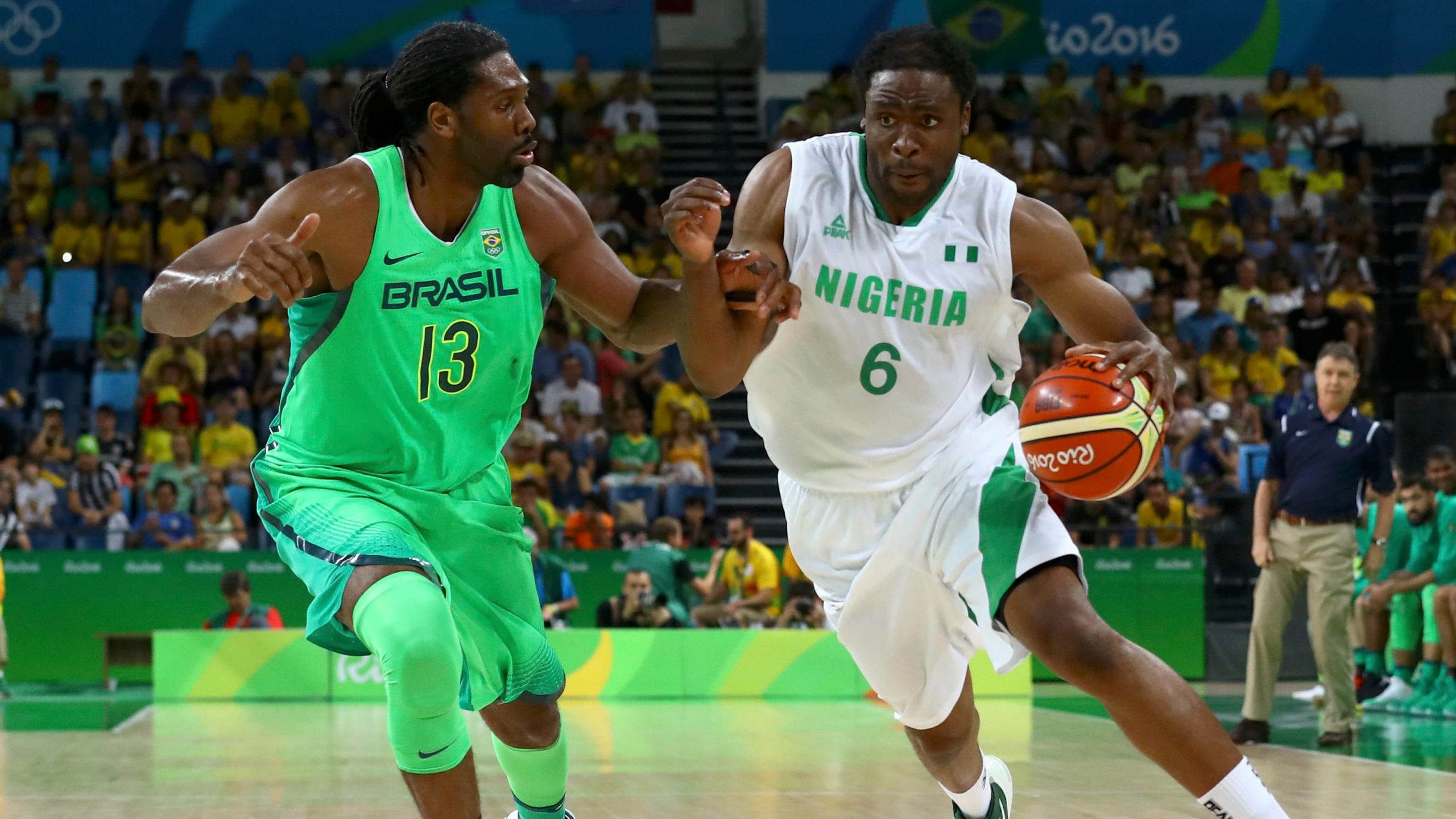
Following the crisis that has plagued the development of basketball in Nigeria, President Muhammadu Buhari has ordered the immediate withdrawal of Nigerian basketball teams from international competition for two years.

According to the minister of youths and sports development in Nigeria, Sunday Dare, he disclosed that the withdrawal will allow the government to set up an interim management committee to oversee the management and development of the domestic leagues as well as revamp the sports from the grassroots.

As regards President Muhammadu Buhari’s withdrawal of the team from international competition, the minister of sports reiterated that the government is highly committed to the development of basketball in the country.

He has called on fans, officials, players, and stakeholders to remain calm as the government embarks on far-reaching initiatives to reposition, sustain and stabilize the state game of basketball for growth and success in the long-term interest of the country.

This action taken by the federal government is coming after the protest by basketball players this week in Abuja, where they stormed the office of the sports minister to protest over their perceived unwillingness and lackluster attitude of the ministry to resolve the post-election impasse rocking the basketball federation.

They disclosed that the leadership tussle going on in the basketball federation has taken a toll on their career, which has also hindered the growth of the domestic component of Nigerian basketball. They disclosed that they have written a series of letters to the sports minister, to which they got no response, as they were left with no option but to come to his office to protest.

Displeased with the government’s decision, Nigerian female basketball player Upe Atosu, described the decision to withdraw the country from the international competition as “heart-wrenching”. With the government’s decision to withdraw basketball teams from international competition, according to information gathered, Nigeria stands a risk of being sanctioned by the world basketball ruling body.

Such a directive from the government has dashed the hope of the women’s national team, D’Tigress, from participating in the 2022 world cup in Sydney, Australia. The female basketball team has already qualified for the world cup and now the government wants them withdrawn. The men’s team on the other hand has also qualified for the 2023 World Cup in Kigali in July, which they will also miss out on.

Is the government aware that not attending the world cup after qualifying attracts a huge fine? It is disheartening that they had to take such careless steps.

How will this ban improve basketball in Nigeria? Can’t the necessary improvements be done without taking this careless route, knowing full well the implications involved, most especially on the international scene?

The government must come to the understanding that sports is a big tool for international diplomacy which boosts a country’s image. This decision by the government is not right as it retards the growth of sports in the country.

X-Raying Atiku’s Stand On The Female Student Lynched In Sokoto

0

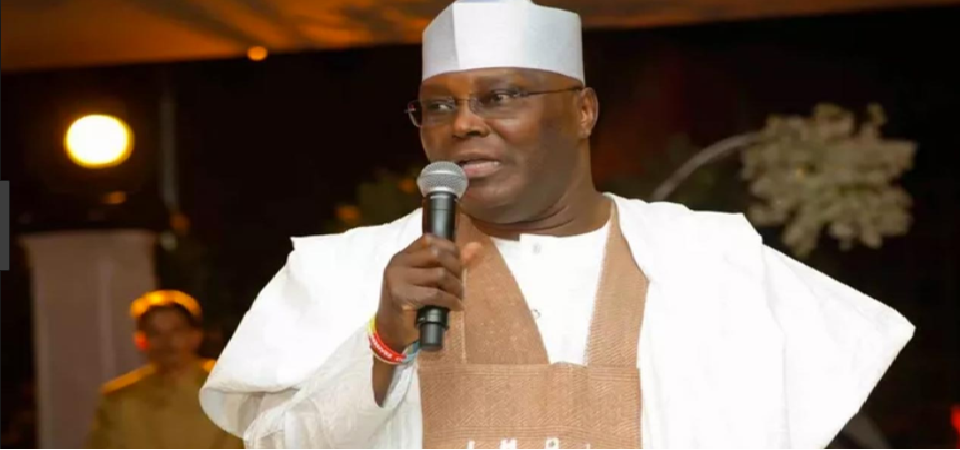
The former Vice President of Nigeria and presidential aspirant on the platform of the Peoples’ Democratic Party (PDP), Abubakar Atiku, on Friday 13th May 2022, stated that every tweet on his official social media handles must get his approval before publication.

This came in response of his reaction towards the 200-Level student, Deborah Samuel gruesomely murdered in Sokoto State on Thursday 12th May 2022, by a mob over alleged blasphemy.

It could be recalled that Atiku had earlier condemned the barbaric killing on his Twitter handle but later deleted the post, having published a disclaimer, saying he never approved the message, hence knew nothing about it. He consequently sacked his media aide who was purportedly behind the publication.

It’s noteworthy that the U-turn made by Atiku, which has been condemned by several Nigerians in various quarters, came as a result of the threats he received on the Twitter platform. Some seeming Sokoto indigenes had threatened failure over his presidential ambition, saying he had lost millions of votes in the said state for condemning Deborah’s killing.

Atiku, during his consultative visit to Governor Godwin Obaseki of Edo State on Friday at the Government House, Benin, on Friday, same day he took the actions, disclosed that every tweet on his official social media pages must be approved by him prior to publication.

According to the erstwhile Vice-President, “Every tweet has to get my expressed approval but this one didn’t, so I asked them to take it down.

“I took a stand about Sharia law and was abused, thrown stones at, but how long did it last? Despite that, I didn’t change my position on it. I am not afraid to take a stand on critical issues.” he said.

Speaking further as regards his presidential race, he stated that investment in education was key. He said, “If you can recall what the PDP government did then while in power, we created the Tertiary Education Trust Fund (TETFUND).

“We also set up the Primary School Education Fund and Education Tax Fund to enable us (PDP Federal Government) provide sufficient money to both state and local governments to enable them to have sufficient money to invest in primary and secondary education.

“We also passed the law to make education compulsory for every Nigerian child, from primary to secondary schools”. he said.

Responding to the issue of zoning for the PDP presidential ticket, Atiku said that zoning was not jettisoned by the party.

On the issue of getting a running mate, he responded that he would sit down with the party to agree on a running mate for the 2023 presidential election.

By this singular display, Atiku has shown and proven that he is a religious bigot. Even if the post wasn’t approved by his person, as claimed, did it call for deletion?

For the fact that the killing of Deborah by the mob was indeed condemnable, judging it from all angles, should have been enough reason to allow the post to fly as much as it could. Had it been the statement made in the post wasn’t justifiable or reasonable, then Atiku’s reaction would have been commendable.

He can scold the media aide, if truly the post never sought his approval, not to delete it outrightly, simply because he received a myriad of threats over his presidential ambition.

This action of Atiku has made Nigerians understand that many who are currently clamouring to emerge as the president of a heterogeneous country like Nigeria come 2023, do not actually deserve the honour being sought.

Deborah Yakubu killers are to be sentenced to death

1

“….The Islamic religion is not a primitive religion that allows its adherents to take the law into their own hands and to commit jungle justice. Instead, there is a judicial system in Islamic law that hears and determines cases including the trial of criminal offenses and anybody accused of committing an offense against the religion or against a fellow Muslim brother should be taken to the court (either a Sharia or a secular/common law court) for adjudication. It is only when a person is convicted and sentenced by a court of law that he will be liable to a punishment which will be carried out by an appropriate authority (i.e. the prison)”

~His Lordship I. T. Muhammad JSC (now CJN) in the case of SHALLA VS STATE (2007) LPELR-3034(SC).

In July 1999, in the Kardi village of Kebbi State, one Abdullah was accused of blasphemy; insulting the prophet Muhammad, he was reported to some Muslim faithful who formed a mob and decided to attack the accused, they dealt him blows with sticks, bottles and even machete, till they hacked him to death. 

The mobsters (about five of them) were later arrested and charged to court for the offense of murder and culpable homicide of Abdullah in the Kebbi State High Court. 

Their defense was that they have justification for the killing of Abdullah (religious justification), pointing to the sections of the Quran that demand that anybody who insults the prophet MUHAMMED should be killed. 

They were convicted of murder and sentenced to die by hanging in the trial court. They appealed to the Appellate court and the appeal court upheld the judgment of the trial court and they further appealed to the Supreme Court. 

The case went on from the lower courts till it got to the supreme in 2007 and the Supreme Court upheld the judgments of the lower courts. In one of the dictums of one of the justices, Justice Ibrahim Tanko Muhammad, (who is now the Chief Justice of Nigeria); he states thus; 

“In my view, it is the appellants rather than the deceased who committed an offense against Islamic or Sharia by their unjustified action which represents to the public that Sharia is an uncivilized and primitive system that allows or permits the killing of people without complying with the due process of law, the Islamic religion is not a primitive religion that allows its adherents to take the law into their own hands and to commit jungle justice. Instead, there is a judicial system in Islamic law that hears and determines cases including the trial of criminal offenses and anybody accused of committing an offense against the religion or against a fellow Muslim brother should be taken to the court (either a Sharia or a secular/common law court) for adjudication. It is only when a person is convicted and sentenced by a court of law that he will be liable to a punishment which will be carried out by an appropriate authority (i.e. the prison)”.

The Justices of the Supreme Court unanimously upheld the judgments of the lower courts stating that the accused persons committed the offense of murder and culpable homicide which carries the capital punishment of death sentence. They were all; every one of them that partook in the killing of Abdullah were sentenced to death. 

On this note, those that are justifying the killing of Deborah Yakubu on the ground that the killers are carrying out what their religion requires them to do should educate themselves that everyone that is involved in the death of Deborah Yakubu has committed the offense of murder and culpable homicide and stating categorically from the judicial precedent in the case of SHALLA V State, they will all be sentenced to death and their religion will not come to their rescue. 

Speaking Up or Staying Silent on Blasphemy and the Need for Quantum Strategy in Nigeria

0

Religion and ethnicity are without a doubt the two most important topics that have polarized and continue to divide Nigerians. They have played and continue to play important roles in ensuring that people and organizations pick sides when victims of various injustices demand socioeconomic and political justice. These concerns have remained vultures eating any serious projects and intentions from the social and political spheres over the years, especially since the country’s return to democratic administration in 1999.

As people and organizations across the country express mixed feelings about the execution of Deborah Samuel Yakubu, who was accused of making disparaging words about Prophet Muhammad (SAW), our expert observes that it is unlikely to be the last. Our analyst’s position was founded on the fact that over the years, concerned stakeholders in the governmental, familial, and religious institutions have ignored the remote causes.

Our analyst has been monitoring conversations on the virtual sphere and in physical settings since Deborah’s death became a national tragedy. According to the analysis, the platforms have well-divided viewpoints. There are various schools of thought on whether or not the killers have the right to take the lives of fellow citizens as a result of her action. Discord has emerged among friends and followers on Facebook and Twitter as a result of the conversations surrounding her death. According to our analysis, a case of a journalist who wrote rhetorically about the occurrence resulted in the unfriending of a Muslim who posted a message (on Facebook) that the journalist deemed bad.

From a political standpoint, former Vice President Alhaji Atiku Abubakar’s earlier post on Facebook and Twitter drew harsh criticism from northerners and southerners of various stripes. Northerners believed Alhaji Atiku has committed a crime by protesting the killings in his post. As a result, he should disregard their support. People in the south and northern states who are Christians believe that the former Vice President cannot manage the country fairly if given the chance. Alhaji Atiku erased the message, claiming that he did not authorise it, which appears to be in line with the northerners’ position.

Beyond the virtual platform, our observational analysis clearly shows that people in physical settings are similarly hesitant to say anything about the occurrence. Looking at the two platforms as a whole, our analyst concludes that, as with previous religious and ethnicity issues in the country’s history, people and organizations are either speaking up and ready to defend their positions constructively using strong evidence or remaining silent for fear of being labeled hypocrites, preventing true national cohesion or paving the way for a “long overdue separation” from the northern region.

As indicated in one of our previous assessments on injustice in the country, our analyst believes that religious and ethnic concerns require strategic discourse between leaders and followers. Based on previous religious violence across the country, it is apparent that existing political, family, social, security, and educational systems have failed to handle religious and ethnic extremism.

For instance, there are constitutional provisions that make any sort of wrongful killing illegal. However, existing criminal and judicial institutions have made it nearly hard for victims to receive the justice they deserve. Where it matters most, educational and religious institutions have failed to improve critical thinking among learners and followers. Due to personal interests, political leaders are also making fair justice impossible. Followers are taking advantage of existing legal provisions to engage in behaviors that are at odds with the existence of a group or people, without obtaining a proper interpretation of where protection begins and stops.

Overall, our analyst advocates for a holistic approach to resolving the increasing concerns of religious and ethnic crises. For the preparation of a Quantum National Strategic Plan, national participatory action research is required. Our analyst believes that doing the study will assist concerned stakeholders at the meso, micro, and macro levels in identifying important concerns, planning, executing, observing, and reflecting on particular measures that will address the problems in a long-term manner.