DD
MM
YYYY

PAGES

DD
MM
YYYY

spot_img

PAGES

Home Blog Page 5176

Workers Day: Governor Obaseki Increases Minimum Wage to N40,000 for Edo Workers

0

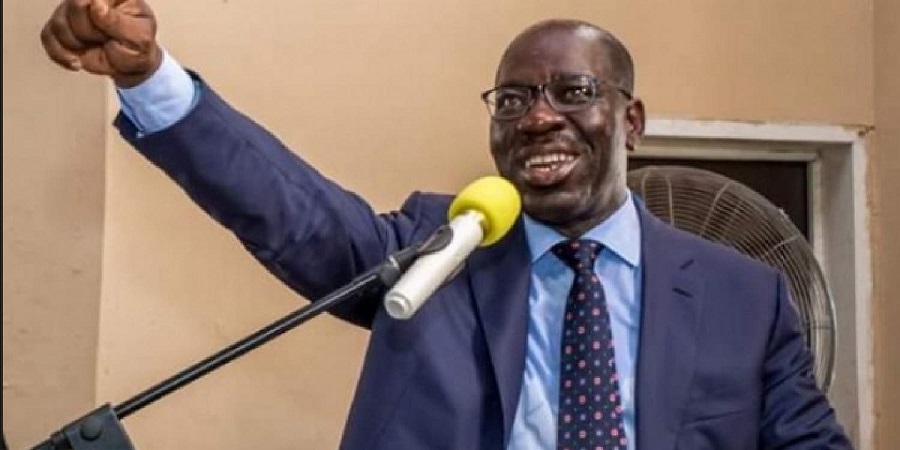
To mark 2022 Workers’ Day, the governor of Edo State Godwin Obaseki, has increased the minimum wage for workers in the state from the N30,000 ($72) federal government-approved minimum wage to N40,000.

The surprising decision was announced by the governor during the commemoration of Workers’ Day in Benin, the State’s capital, disrupting the norm and setting the pace for other states amid rocketing cost of living in Nigeria.

Obaseki said his government will continue to prioritize the welfare of Edo workers, equipping them with the capacity and environment to deliver efficient and quality service to the people.

“As we all know, the minimum wage of N30,000 can barely sustain a family. It will be immoral and mindless of us to continue to pretend that we do not know that our workers are suffering.

“The government of Edo has now decided to review the minimum for Edo workers from N30,000 to N40,000 a month. Undoubtedly, Edo is the first state since the current outbreak of coronavirus to take this initiative.

“Even though we would have loved to pay more, we hope that this little adjustment would enable us to cushion the impact of the inflation that we are faced with. There is no doubt that the financial implications will be heavy and put another burden on the government.

“But as a government, we are prepared to make the sacrifices so that the workers can live a better life. Your welfare is our number one priority,” he said.

Besides the minimum wage, Obaseki spoke on another issue that has become a menace – the plight of pensioners. He decried the height of hardship senior citizens have been subjected to by many states owing pension while pledging his support for them.

The governor noted that the cost of living has skyrocketed, subjecting pensioners to further hardship and announced that he has approved, effective this May, the agreement the State  reached with the Union of Pensioners that the harmonized amount would be paid from May 2022.

“I am particularly interested in our senior citizens because they are one of the most vulnerable in our society. We took interest in payments of outstanding pensions to our pensioners although these pensions were held by the previous administration.

“In view of the prevailing economic circumstances, I have now approved, effective this May, the agreement we reached with the Union of Pensioners that the harmonized amount would be paid from May 2022.

“Government is aware of the difficulties faced by the pensioners due to the non-payment of pension and gratuities to pensioners by previous governments. This responsibility is huge, and it will require a substantial part of our resources to settle them.

“However, we are not a government that is known for running away from challenges; we will look for a way to tackle these challenges,” the governor added.

This development has stirred a new challenge for many states in Nigeria that have been finding it hard to implement the N30,000 minimum wage and to pay pensioners in a backdrop attributed to massive revenue drop.

Seven states; Zamfara, Taraba, Benue, Kogi, Cross River, Abia and Imo, are yet to implement the minimum wage which was signed into law in 2019, by President Muhammadu Buhari, as a way to cushion the effect of petroleum pump price hike. These states sticking to the former minimum wage means that their workers go home with a monthly stipend of N18,000 ($44), which compared to the current cost of basic necessities in Nigeria, is a mockery to workers’ plight.

Nigerian states depend largely on their monthly federal allocations (FAAC) to survive. Apart from Lagos, no other state in Nigeria generates enough revenue to sustain itself. This means, as the federal government’s struggles with revenue decline due to the drop in oil prices and covid-induced economic headwinds, many states are barely surviving – making it difficult for the governors to pay workers N30,000 monthly.

Edo State’s decision to move a little above the minimum wage was apparently inspired by the increase in its revenue generation. The Edo State Internal Revenue Service (EIRS) said last year the state’s monthly Internally Generated Revenue (IGR) now stands at N2. 8billion as of the first quarter of 2021 compared to N1. 6billion in 2017. The government said it has the capacity to generate more by increasing the number of taxpayers in the state. Edo State ranks second behind Lagos State in total number of taxpayers with TIN (tax identification number).

Some experts have fingered meager disposal income as the bane of economic development in Nigeria. With N30,000 monthly pay, most workers in Nigeria , who can’t afford their basic needs have sunk deep into multidimensional poverty. This means also that many small scale businesses that rely largely on the patronage of these workers will share their fate.

With most states in Nigeria yet to figure out a way to generate enough revenue to minimize their dependence on federal allocation, the implementation of livable minimum wage will remain one of the most controversial issues in the country.


Why Managers Should Desist From Micromanaging Their Team Members

0

Micromanagement is the worst thing that managers can do to their employees in the workplace. According to Merriam Webster’s dictionary, it defines micromanagement as a form of management with excessive control.

Any manager who desires to see the growth of the business or organization, should never try to micromanage his or her team members, because it has a lot of devastating consequences on the employees, such as; low productivity, lack of creativity, heightened stress, etc. Micromanagement reduces the freedom of employees which also destroys the team culture.

Managers who are fond of micromanaging their team members are usually looked upon as a villain, which can unfortunately cause them to be rebellious. When managers feel as if they have total control over their team members, they often micromanage them.

This often happens when a manager is a perfectionist and likes things being done in a certain way. They just can’t help but take control over every little thing that the team member does. Some common traits of managers who micromanage are;

  • Taking away responsibilities of some team members without justification
  • Always a strong critic of team members’ approaches towards a project, even if the outcome was a success.
  • Frequently moving around the office in search of what to complain about.
  • Take a controlling approach when completing tasks or projects.

Managers must understand that regardless of how intelligent they are, rather than criticize team members when they make mistakes, they should form the habit of always putting them through in a subtle manner. They must understand that no one is perfect, so they should be willing to overlook certain mistakes committed by the team members. Perfectionism is only a mirage, it is in human nature to err.

Let’s buttress some common signs of micromanagers;

They Have Difficulty In Delegating Tasks: These managers are not so comfortable with delegating tasks among team members. They always have the mindset that no one will be able to do it right, if not for them. Per adventure they decide to delegate tasks among team members, they won’t give them the freedom to properly execute them because they will always interfere in their work to change certain things.

They Keep Knowledge To Themselves: One common trait that is synonymous with micromanagers is that they have the habit of always keeping knowledge to themselves, I.e they do not love to share what they know that will benefit and improve the team members. They always want to be seen as a know-it-all, because it swells their ego. They feel that divulging such knowledge to their team members will someday undermine their position. Whatever knowledge they stumble upon, rather than share, they withhold to themselves in order to be seen as superior to others.

They Don’t Take Feedback: Proper feedback entails a breakdown of the opinion of the team members and possible suggestions for certain issues. With Micromanagers, they see feedback sessions as a room to tell the team members what to do, instead of hearing their opinion and what they think about a situation at hand. It is more about them and what they have to say, than the opinion of the team members.

Final Thoughts

Managers who micromanage team members must understand that doing so makes life unbearable for them in the workplace. It often leads to low productivity and an apathetic nature towards work. Managers must come down from their high horse and understand that no one knows it all, even them as the manager. Constantly micromanaging the team members without allowing them to implement their talents and intelligence undermines their ability. In order to have a thriving workplace, team members must also be allowed to proffer certain solutions to problems in the workplace.

Requirements for Setting-Up A Licensed Real Estate Investment Company in Nigeria

0

In this article, we will be looking at Real Estate Investment Schemes or Trusts (REIS/REITs) which are Collective Investment/ fund management schemes engaged mainly in investing in income-generating real estate assets or real estate-related assets.

Understanding this topic better will be attempted by the use of a question and answer format. Happy reading!

Question:- Like typical Unit Trust schemes, can Real Estate Investment Trusts be Open-ended or Close-ended?

Answer :- Yes, they can. REITs are simply Unit trust schemes that focus on Real Estate Investments.

Q:- What time range Investment objective is best suited for Real estate Investment Schemes?

A :- Real Estate Investment Schemes are best suited for Intermediate and long-term investment interests in Real Estate.

Q:- Do Real Estate Investment Schemes also come with Unit-based participatory interests as with Unit Trust Schemes?

A :- Yes, they do.

Q :- Under what legal structures can one engage in or issue a Real Estate Investment Unit Scheme?

A :- This can be done either by setting up a company registered by the Corporate Affairs Commission (CAC) and then getting licensed by the SEC as a Real Estate Investment Company (REICO) or as a licensed Fund Manager under the SEC rules you can launch a registered Real Estate Investment Unit Trust (REIT).

Q :- What the minimum required value of an issued Real Estate Investment Trust Fund?

A:- The minimum value of an Initial Public Offering (IPO) Real Estate Investment Trust is 1 Billion Naira. Subsequent offerings come with a minimum value requirement of 500 Million Naira.

Q :- Who actually owns property acquired via a licensed Real Estate Investment Trust?

A :- The SEC rules ( as amended) in Rule 509(1) states that a REIT can wholly acquire and hold legal title to a property or chose to hold equitable title through a Trust deed or other structure acceptable to the Securities and Exchange Commission (SEC) which governs the licensing of Collective Investment Schemes in Nigeria.

What this means is that a Real Estate Company can hold legal title to a property on behalf of the Investor beneficiaries of a Real Estate Investment Trust who hold an equitable title through a Trust deed or the Fund itself can acquire and hold Legal title to property.

Q :- What are the safety measures to be put in place where a Real Estate property is held by a Trust deed or alternate structure acceptable to the SEC?

A :- The following safety measures are required to be put in place in such a situation by Rule 509(2) of the SEC rules –

  • The registration of a caution indicating the interest of the Investment Scheme in the relevant land registry where the property is located;

  • The fixture of plaques or other notices on the relevant property indicating the interest of the Investment scheme;

  • Depositing the original title documents and other relevant pre-signed documents with the scheme’s Custodian;

  • The provision of such indemnity to the scheme as may be necessary.

Q:- Can a REIT qualify as a security?

A :- Yes it can. A REIT can qualify as asset- backed security or mortgage-backed security.

Q :- Do real life examples of Real Estate Investment Trusts exist in Nigeria?

A :- Yes they do. Notable examples include UPDC Real Estate Investment Trust and Sky Shelter Fund.

Q :- What’s the difference between a REIT and Land Banking?

A :- A Real Estate Investment Trust ( or REIT) involves offering the public participatory interests in a pool of funds geared strictly towards investing in Real Estate Asset Securities for Intermediate or Long term interests.

Land Banking on the other hand is the practice of buying small or large quantities of undeveloped land with the intention of profiting from their resale based on anticipated substantial infrastructural development or population growth in the area which generally leads to Real Estate value appreciation.

Q :- What are the requirements for the registration of a Real Estate Investment Scheme as required under the SEC rules?

A :- The following requirements are :

  • A filled application form SEC 6A;
  • 2 copies of the scheme’s draft prospectus;
  • 2 copies of the scheme’s Trust deed;
  • letters of consent from the prospective parties to the trust;
  • 2 copies each of the Certificate of Incorporation and Memorandum and Articles of Association of the Fund Manager/Investment Company duly certified by the Corporate Affairs Commission;
  • 2 copies of the Certificate of Incorporation and Memorandum/Articles of the scheme’s Trustee duly certified by the Corporate Affairs Commission;
    -2 copies each of the particulars of the particulars of the directors of the scheme’s Fund Manager and Trustee certified by the Corporate Affairs Commission;
  • a sworn undertaking to file evidence of the maintenance of separate trust accounts in a reputable bank;
  • evidence that the minimum paid-up capital of the Fund Manager & Trustee complied with SEC rules and regulations.

Q:- What are the requirements for the registration of units of a Real Estate Investment Trust?

A :- The requirements are as follows :

  1. The name under which the issuer of the units is doing business & the address of its principal office;

  2. the name of the proposed scheme;

  3. commencement date of the scheme;

  4. the Investment objective of the scheme;

  5. investment outlets of the scheme;

  6. the number of units proposed for issue;

7 the nominal value per unit;

  1. the names & addresses of the directors or persons performing similar functions, the Chief Executive Officer and the Chief Accountant;

  2. the names and addresses of brokers to the scheme;

  3. the names and addresses of all persons owning 5% and above of any class of shares of the issuer both on record & beneficially as at the date of filing the application for registration of the trust scheme;

  4. the amount of the proposed units of the issue to which any person specified in 8,9 and 10 has indicated an intention to buy or subscribe;

  5. the general nature of the business transacted or to be transacted by the manager;

  6. a sworn undertaking to file quarterly reports with the commission;

  7. any other information required by the SEC from time to time.

Q :- When is a REIT a better funding option than a mortgage?

A:- A REIT is a better option for co-owning comparatively heavy Real Estate assets like apartment complexes, warehouses , commercial buildings, massive residential schemes,shopping malls, hotels , office complexes or Real Estate-related assets like Mortgage-backed securities sold by Mortgage banks and for ensuring constant profits over a longer period of time.

Mortgages, Venture Capitalist financing, or Real Estate Joint ventures are a better option for developing relatively smaller land developments for the purpose of excision applications and relatively quick development and sales/rental objectives.

It is hoped that a better understanding of how REITs work and when they should be accessed has been gained by the article which can be used to make better-informed investment and finance-sourcing decisions.

Join our academic excursion which begins June 6, 2022

0

The next academic excursion begins next month. The courses are set, from strategy to innovation, from marketing to technology, from design thinking to accounting, and MORE. More than 200 business leaders from companies you admire, locally and internationally, will lead it.

Good People, you are invited to register for the next edition of Tekedia Mini-MBA today – and beat the early bird deadline and save.

Come, let’s go to this academic excursion together here https://school.tekedia.com/course/mmba8/

Nigeria 2023: Presidential Aspirant Secretly Buys Bauchi State Governorship Forms?

0

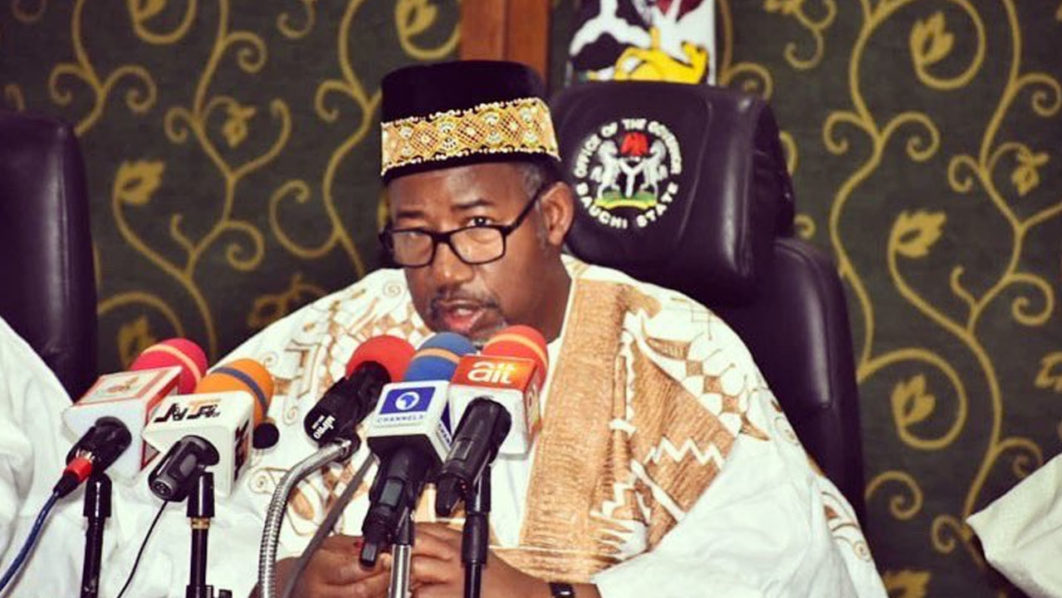
While he is publicly seeking the presidential ticket of the Peoples’ Democratic Party (PDP), the governor of Bauchi State, Mr. Bala Mohammed has reportedly secretly obtained the Nomination and Expression of Interest forms and been cleared to contest in his State’s governorship primary.

It’s noteworthy that Mr. Mohammed will serve out his first term as governor of the State in 2023, hence eligible for re-election.

There have been speculations over who will emerge as his successor in 2023 after he declared his intention to run for Nigeria’s presidency.

One of such speculations suggested that the Secretary to the Government of the State, Mr. Ibrahim Kashim entered a pact to act as placeholder for the governor.

According to the claim, Mr. Kashim secretly resigned and obtained the governorship nomination and expression of interest forms of the party and would proceed to compete in the primary.

The peddlers of the speculations are of the view that if Mr. Kashim wins, and Mr. Mohammed is not successful in his bid to be the party’s presidential candidate, the former would step down and be replaced by the latter who has been his boss.

But party insiders with knowledge of what is being played out in the State’s PDP secretariat have dismissed this speculation as untrue, informing that Mr. Mohammed has not only secretly purchased the form for the State’s gubernatorial primary but has been screened and cleared to compete during the primary.

This revelation gives credence to the allegation by another contestant for the party’s presidential ticket, Nyesom Wike, the governor of Rivers State, that some of his rivals in the contest are not as committed as he is because they have secretly obtained nomination and expression of interest forms for other positions they hoped to fall back on.

Last month, Mr. Mohammed and a former senate president, Bukola Saraki, were controversially selected as consensus candidates of the northern region during the party’s primary. But other contestants from the region rejected that decision.

When reached for response, the Spokesperson for Mr. Mohammed’s presidential campaign, Udenta Udenta, described his boss’ clearance to run for the Bauchi PDP’s gubernatorial primary, as being speculated, as a rumour and declined to tender further comments.

“I don’t comment on mere rumours. What I know is that he had been screened to contest for the presidency and he has joined a long list of other candidates.” he said.

But some sources have refuted the spokesperson’s claim, saying the purchase of the gubernatorial forms by Mr. Mohammed is beyond mere rumours and that he would most likely withdraw from the presidential race before long.

This manner of behaviour has become a norm among the teeming Nigeria’s politicians, who I often referred to as politicos. They keep on deceiving their gullible followers, who apparently have no say of their own.

A similar act was displayed by Sen. Rochas Okorocha, the erstwhile governor of Imo State, in 2014 prior to the 2015 general elections when he was aspiring to clinch the presidential ticket of the All Progressives Congress (APC). He wasn’t successful in his presidential bid, hence later fall back to emerge as the party’s governorship flag-bearer in Imo, after which he eventually became the State’s governor for his second term.

Time has obviously come for the Nigeria’s electorate to wake up from slumber, else they stand to regret it once again come 2023.