DD
MM
YYYY

PAGES

DD
MM
YYYY

spot_img

PAGES

Home Blog Page 5184

Building Collapse In Nigeria

0

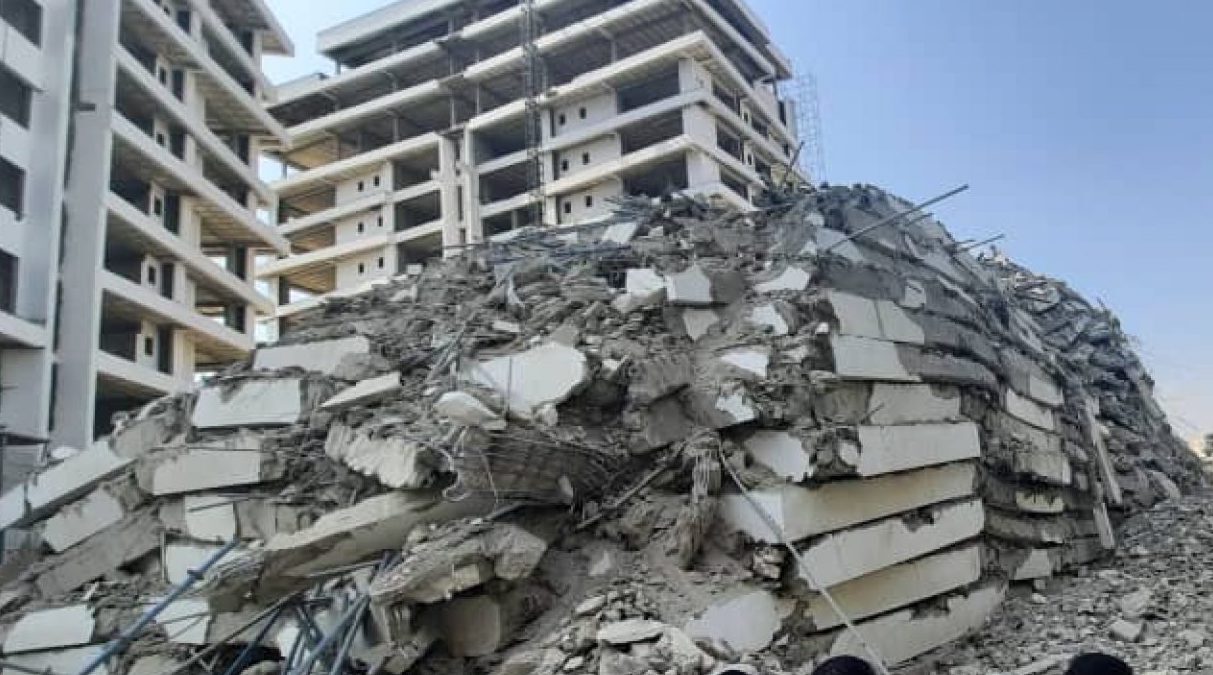
The collapse of buildings in Nigeria is a recurring issue, as there are recorded events of building collapse happening almost every year in one region of the country or another. Recently, a three-story building collapsed on Ibadan Street in the Ebute-Metta area of Lagos state.

According to reports, several residents of the collapsed building were trapped and a search rescue operation went underway to rescue the trapped victims. Findings have so far shown that the death toll from the collapsed three-story has risen to Eight (8).

Looking at all these collapsed buildings happening in the country, a careful observation of them, one will notice that some of the causes have problems ranging from Faulty construction, Faulty design, Incompetence, Bribery, and corruption, Negligence, Inferior materials, weak foundation. Some Engineers and architects out for selfish gains, use inferior materials to be able to pocket what is left from what they are given.

A new report has identified structural defects as a major cause of the incessant building collapse in Nigeria. Statistics showed that the rate of building collapse in the country was predominant in the Southwest.

Most of these buildings are constructed with low-quality building materials. It’s shocking to note that between 2011 and 2019, a total of 84 buildings collapsed across Nigeria. Only 21 out of the 84 happened in Lagos. The case of incessant building collapse in the country could be avoided if only stakeholders in the construction industry and landlords adhere strictly to the provisions of the building code.

Recall last year, when tragedy happened in Ikoyi, Lagos state, where a 21-storey building collapsed, killing a lot of people including the owner of the building known as Mr. Femi Osibona. According to reports, it was disclosed that the ikoyi collapsed building had earlier been sealed for four months by the Lagos state government, following some defects and anomalies observed on the structure. They however stated that such defects should be corrected to avoid collapse from occurring.

It was however disclosed that the owner of the property used his connection to get his sealed building opened for work to continue. After it was opened, rather than correcting those defects which prompted the building to be sealed, he ignored the caution and commanded the engineers to keep on working on the building. Information also gotten disclosed that the Engineering company hired to construct the building withdrew from the project, stating that it no longer shared the vision with the client.

The building was initially slated for a 15-storey building, but the client insisted that they should make it a 21-storey building which eventually led to its collapse. Negligence continues to be one of the major problems of building collapse in Nigeria.

You will often see a building marked by the government, stating that occupants should evacuate because of some anomalies observed. Surprisingly, you will still get to see people living there unbothered.

A lot of buildings in Nigeria are a disaster waiting to happen. The federal government should create an enabling law to strengthen the National building code (NBC), a mandatory document adopted by the development authorities to formulate building by-laws.

The government must ensure that professionals go around cities, observing building constructions and sealing up those with structural defects. Also, those already occupied should be marked for demolition to avoid more casualties from happening in the country, and also prevent buildings from further collapsing.

Everton 1-0 Chelsea: Blues get trumped at Goodison Park as Arteta and Conte moil for classic European football

0
Richarlison's match opener cum winner on Sunday meant a couple of things

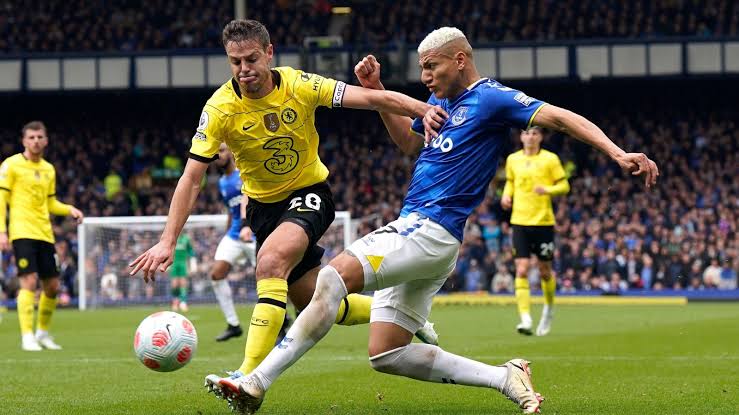
Chelsea were the subjects of a dissatisfying 1-0 loss to relegation-haunted Everton as Matchday 34 saw the likes of Arsenal and Tottenham climb closer to the third-placed team

A goal from Toffees’ Richarlison kept alive the hopes of the North London neighbours as both simultaneously conquered Westham and Leicester to ensure that the UCL remained on their tabs. For Everton, Richarlison’s effort was all it took to give Lampard’s men the three points they needed to remain optimistic in their quest to stay above deep waters.

Chelsea have not really been at their best this year. We all know Guardiola and Klopp are currently thriving but the Blues have this year suffered double the number of EPL defeats they did last year(4:2) Knocked out by Los Blancos in the quarter-finals of the Champions League, Tuchel and co have not had things their way of recent. Whether it’s the 4-1 upset to Brentford or 2-4 fumbling to Arsenal, Stamford Bridge can really do better in the coming weeks especially considering the fact that they have two rivals on their tail.

United can’t but definitely Tottenham and Arsenal can turn this around

For Ragnick’s side, this looks to be a done deal as Old Trafford are almost definitely going to Europa next season (logically, but not yet arithmetically). With 55 points, a game more than the top five and bearing in mind United’s currently unpredictable form, it’s about 95 percent close to correct to say that Erik Ten Hag would be slugging it out on Thursday nights after the summer break.

For Arsenal, The Gunners look to be in form and have nullified a three game losing streak with a three game winning one. Successes against Chelsea, United and Westham have proved pivotal in furthering Arsenal’s ambitions to book a spot in next season’s edition of the UCL, a competition they last featured in 2016-17. Tottenham however, have a more recent history with Europe’s elite stage, last playing UCL in 2020( a 4-0 last 16 exit to Leipzig).

Both teams would really want to be out there in Europe’s most prestigious tournament. That of course has to happen at the expense of one of all three London clubs. Arsenal have a safer bet owing to the fact that they are a minature-win(three points) behind The Blues. Spurs can also make it to their dream pitch if they outstrip Arterta’s men, who are two points ahead, on 63. To unsettle Chelsea however, The Lilywhites would have to overcome a 5-point deficit at the summit. Difficult but not impossible.

What this means for Everton

Less than average-form Everton have done well in securing all three points against an obviously better side. It looks as though Lampard and co  have a really good chance in escaping the June-bound demotion as they are situated just two points behind Leeds with a game in hand. Leicester, Watford, Brentford, Crystal Palace and Arsenal are the five remaining fixtures for the Toffees which is relatively easy when put side by side with Leeds(Arsenal, Chelsea, Brighton and Brentford).

If Everton are really serious with the remainder of the season, they should definitely be able to jump The Peacocks and ultimately elude relegation. It’s certainly up to them to turn things around.

You’re Invited to Tekedia Capital Special Startup Demo Day

0

Join us at Tekedia Capital Syndicate on May 7 at 4pm WAT as we host two companies in this Special Demo Day which is coming just days after our Q1 investment cycle.  One processes N4 billion per month and is growing at a really fast rate (we supported it when it was processing just N5 million per month).

Another, since its launch in Sept 2021, has processed $11 million (we provided its first $15,000). These firms are available and you can own a piece of them. Details in the Board; new Syndicate members are invited; begin registration here 

Tekedia Capital offers a specialty investment vehicle (or investment syndicate) which makes it possible for citizens, groups and organizations to co-invest in innovative startups and young companies in Africa and around the world. Capital from these investing entities are pooled together and then invested in a specific company or companies.

Workers Day: Governor Obaseki Increases Minimum Wage to N40,000 for Edo Workers

0

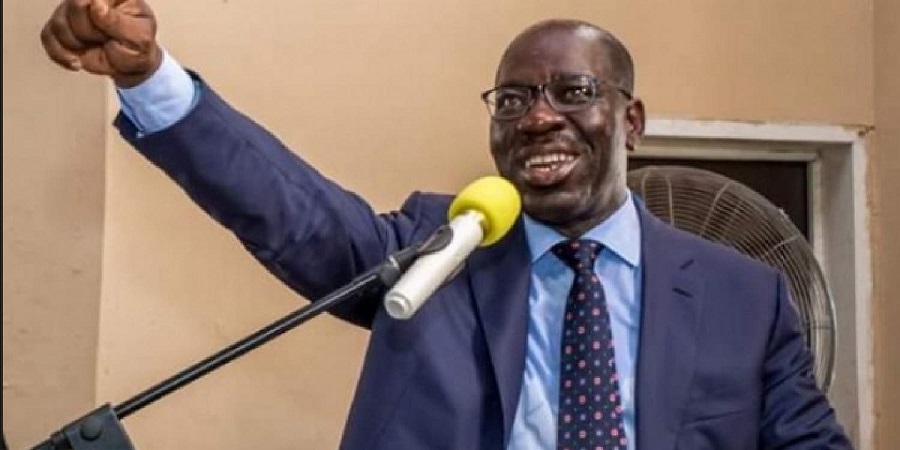
To mark 2022 Workers’ Day, the governor of Edo State Godwin Obaseki, has increased the minimum wage for workers in the state from the N30,000 ($72) federal government-approved minimum wage to N40,000.

The surprising decision was announced by the governor during the commemoration of Workers’ Day in Benin, the State’s capital, disrupting the norm and setting the pace for other states amid rocketing cost of living in Nigeria.

Obaseki said his government will continue to prioritize the welfare of Edo workers, equipping them with the capacity and environment to deliver efficient and quality service to the people.

“As we all know, the minimum wage of N30,000 can barely sustain a family. It will be immoral and mindless of us to continue to pretend that we do not know that our workers are suffering.

“The government of Edo has now decided to review the minimum for Edo workers from N30,000 to N40,000 a month. Undoubtedly, Edo is the first state since the current outbreak of coronavirus to take this initiative.

“Even though we would have loved to pay more, we hope that this little adjustment would enable us to cushion the impact of the inflation that we are faced with. There is no doubt that the financial implications will be heavy and put another burden on the government.

“But as a government, we are prepared to make the sacrifices so that the workers can live a better life. Your welfare is our number one priority,” he said.

Besides the minimum wage, Obaseki spoke on another issue that has become a menace – the plight of pensioners. He decried the height of hardship senior citizens have been subjected to by many states owing pension while pledging his support for them.

The governor noted that the cost of living has skyrocketed, subjecting pensioners to further hardship and announced that he has approved, effective this May, the agreement the State  reached with the Union of Pensioners that the harmonized amount would be paid from May 2022.

“I am particularly interested in our senior citizens because they are one of the most vulnerable in our society. We took interest in payments of outstanding pensions to our pensioners although these pensions were held by the previous administration.

“In view of the prevailing economic circumstances, I have now approved, effective this May, the agreement we reached with the Union of Pensioners that the harmonized amount would be paid from May 2022.

“Government is aware of the difficulties faced by the pensioners due to the non-payment of pension and gratuities to pensioners by previous governments. This responsibility is huge, and it will require a substantial part of our resources to settle them.

“However, we are not a government that is known for running away from challenges; we will look for a way to tackle these challenges,” the governor added.

This development has stirred a new challenge for many states in Nigeria that have been finding it hard to implement the N30,000 minimum wage and to pay pensioners in a backdrop attributed to massive revenue drop.

Seven states; Zamfara, Taraba, Benue, Kogi, Cross River, Abia and Imo, are yet to implement the minimum wage which was signed into law in 2019, by President Muhammadu Buhari, as a way to cushion the effect of petroleum pump price hike. These states sticking to the former minimum wage means that their workers go home with a monthly stipend of N18,000 ($44), which compared to the current cost of basic necessities in Nigeria, is a mockery to workers’ plight.

Nigerian states depend largely on their monthly federal allocations (FAAC) to survive. Apart from Lagos, no other state in Nigeria generates enough revenue to sustain itself. This means, as the federal government’s struggles with revenue decline due to the drop in oil prices and covid-induced economic headwinds, many states are barely surviving – making it difficult for the governors to pay workers N30,000 monthly.

Edo State’s decision to move a little above the minimum wage was apparently inspired by the increase in its revenue generation. The Edo State Internal Revenue Service (EIRS) said last year the state’s monthly Internally Generated Revenue (IGR) now stands at N2. 8billion as of the first quarter of 2021 compared to N1. 6billion in 2017. The government said it has the capacity to generate more by increasing the number of taxpayers in the state. Edo State ranks second behind Lagos State in total number of taxpayers with TIN (tax identification number).

Some experts have fingered meager disposal income as the bane of economic development in Nigeria. With N30,000 monthly pay, most workers in Nigeria , who can’t afford their basic needs have sunk deep into multidimensional poverty. This means also that many small scale businesses that rely largely on the patronage of these workers will share their fate.

With most states in Nigeria yet to figure out a way to generate enough revenue to minimize their dependence on federal allocation, the implementation of livable minimum wage will remain one of the most controversial issues in the country.

Why Managers Should Desist From Micromanaging Their Team Members

0

Micromanagement is the worst thing that managers can do to their employees in the workplace. According to Merriam Webster’s dictionary, it defines micromanagement as a form of management with excessive control.

Any manager who desires to see the growth of the business or organization, should never try to micromanage his or her team members, because it has a lot of devastating consequences on the employees, such as; low productivity, lack of creativity, heightened stress, etc. Micromanagement reduces the freedom of employees which also destroys the team culture.

Managers who are fond of micromanaging their team members are usually looked upon as a villain, which can unfortunately cause them to be rebellious. When managers feel as if they have total control over their team members, they often micromanage them.

This often happens when a manager is a perfectionist and likes things being done in a certain way. They just can’t help but take control over every little thing that the team member does. Some common traits of managers who micromanage are;

  • Taking away responsibilities of some team members without justification
  • Always a strong critic of team members’ approaches towards a project, even if the outcome was a success.
  • Frequently moving around the office in search of what to complain about.
  • Take a controlling approach when completing tasks or projects.

Managers must understand that regardless of how intelligent they are, rather than criticize team members when they make mistakes, they should form the habit of always putting them through in a subtle manner. They must understand that no one is perfect, so they should be willing to overlook certain mistakes committed by the team members. Perfectionism is only a mirage, it is in human nature to err.

Let’s buttress some common signs of micromanagers;

They Have Difficulty In Delegating Tasks: These managers are not so comfortable with delegating tasks among team members. They always have the mindset that no one will be able to do it right, if not for them. Per adventure they decide to delegate tasks among team members, they won’t give them the freedom to properly execute them because they will always interfere in their work to change certain things.

They Keep Knowledge To Themselves: One common trait that is synonymous with micromanagers is that they have the habit of always keeping knowledge to themselves, I.e they do not love to share what they know that will benefit and improve the team members. They always want to be seen as a know-it-all, because it swells their ego. They feel that divulging such knowledge to their team members will someday undermine their position. Whatever knowledge they stumble upon, rather than share, they withhold to themselves in order to be seen as superior to others.

They Don’t Take Feedback: Proper feedback entails a breakdown of the opinion of the team members and possible suggestions for certain issues. With Micromanagers, they see feedback sessions as a room to tell the team members what to do, instead of hearing their opinion and what they think about a situation at hand. It is more about them and what they have to say, than the opinion of the team members.

Final Thoughts

Managers who micromanage team members must understand that doing so makes life unbearable for them in the workplace. It often leads to low productivity and an apathetic nature towards work. Managers must come down from their high horse and understand that no one knows it all, even them as the manager. Constantly micromanaging the team members without allowing them to implement their talents and intelligence undermines their ability. In order to have a thriving workplace, team members must also be allowed to proffer certain solutions to problems in the workplace.