DD
MM
YYYY

PAGES

DD
MM
YYYY

spot_img

PAGES

Home Blog Page 5192

Challenges of Working Remotely In Nigeria

4

The impact of the covid-19 pandemic forced companies/organizations to adopt a new way of working remotely, by enabling their employees to work from home. The prevalence of remote work varied greatly across occupations and industries. This also gave rise to more remote jobs where employees get to work from the comfort of their homes.

According to statistics, it was disclosed that around 18% of people work remotely full time. Aside from the fact that remote work offers flexibility to employees, working in Nigeria remotely is often faced with some challenges. A typical Nigerian who resides in the country knows that electric supply is nothing to write about.

The country is still ravaged by widespread power blackouts which affect businesses and also remote workers are not exempted. For a large percentage of people working remotely in Nigeria, one major drawback has been the poor supply of electricity across the nation. No doubt this poor electricity supply has slowed down the productivity of the workforce in Nigeria.

The poor supply of electricity has seen most remote workers spend a large part of their income on buying petroleum products to use to power their generators to carry out their work. While some others have opted for the use of solar.

Some of these remote workers who cannot afford any of the aforementioned have seen themselves miss out on gigs, unable to maintain steady communication with their employers, miss out on deadlines and vital information. Due to the challenges of not keeping in touch with their employers and skipping work due to poor power supply, some of their employers have been forced to lay them off from work.

The lack of steady electricity supply in the majority of the cities in Nigeria is having an adverse effect on working remotely in the country. A steady source of power supply is a necessity and a major requirement to work from home in Nigeria. Unfortunately, not all remote workers can afford some of these equipment, as the cost of generators and solar is very expensive, which also requires high maintenance.

This is a challenge as not all remote workers are high earners, as some still earn meager pay which makes it difficult for them to keep up with work. Some organizations who are familiar with the challenges some of these remote workers face in the country, out of their benevolence, increase their pay and also offer allowances for these workers to cushion some expenses. Some organizations that are in the country give these workers the option to decide when to come to the office or work remotely.

Despite the challenges of working remotely in Nigeria, surprisingly, many individuals and employees will still prefer to work remotely even if it costs them a lot to ensure a steady power supply. Most employees who are employed by organizations in Nigeria are usually happy to work remotely because they won’t get caught up in traffic which is one major challenge in the country.

Those who stay in Lagos, Nigeria, will relate better because it is almost impossible to always be on the road in Lagos and not get caught up in traffic which can really be frustrating. In order to beat traffic, they have to wake up very early in the morning, which is a difficult lifestyle for some of them to keep up with. Not everyone is cut out for this hassle, which is the more reason why they will anyway opt to work remotely regardless of how much it will cost.

The probable fate of Peter Nwachukwu, husband of gospel singer Osinachi Nwachukwu

18

The name “Peter Nwachukw”  has been reigning notoriously for weeks now. He was the husband of the late gospel singer, Mrs. Osinachi Nwachukwu. 

Mr. Peter Nwachukwu was accused of causing the untimely death of his wife due to the constant domestic violence and physical assaults he melted on the wife at every slightest provocation. 

He even carried out these acts in the presence of the children and the children who stood as witnesses narrated to the police how their dad always beat up their mother till she died. Other witnesses who were friends and neighbors of the deceased also corroborated this report that indeed the husband always beat up the wife and the wife definitely died as the result of the beating she got from the husband. 

One of the neighbors said she always hears Osinachi screaming and her husband addressing her with derogatory words all the time. 

What will be the fate of Mr. Peter Nwachukiw at law if the autopsy report also corroborates this narrative that he caused the death of his wife? 

If the autopsy report shows that what caused the death of Mrs. Nwachukwu was the beating she received regularly from the husband then Mr. Peter Nwachukwu will be prosecuted and held liable to have murdered the wife. 

The statute highlighted some ingredients of murder or some circumstances in which murder will be said to have taken place in S.316 of The Criminal Code act:

  1. Definition of murder

Except as hereinafter set forth, a person who unlawfully kills another under any of the following circumstances, that is to say?

(1) if the offender intends to cause the death of the person killed, or that of some other person;

(2) if the offender intends to do to the person killed or to some other person some grievous harm;

(3) if death is caused by means of an act done in the prosecution of an unlawful purpose, which act is of such a nature as to be likely to endanger human life;

(4) if the offender intends to do grievous harm to some person for the purpose of facilitating the commission of an offence which is such that the offender may be arrested without warrant, or for the purpose of facilitating the flight of an offender who has committed or attempted to commit any such offence;

(5) if death is caused by administering any stupefying or overpowering things for either of the purposes last aforesaid;

(6) if death is caused by wilfully stopping the breath of any person for either of such purposes, is guilty of murder

In the second case it is immaterial that the offender did not intend to hurt the particular person who is killed.

In the third case it is immaterial that the offender did not intend to hurt any person.

In the three last cases it is immaterial that the offender did not intend to cause death or did not know that death was likely to result.

To this effect, according to the provisions of S. 316 of the criminal code, if the autopsy report shows that the cause of death of Mrs. Nwachukuw was the beating she got from the husband then Mr. Nwachukwu will be said to have murdered the wife and the punishment for this crime is a death sentence or life imprisonment. So Mr. Nwachukwu could be facing a life jail term if he escapes death sentence. 


MTN Focused On Being Africa’s Dominant Player In The Fintech Services

0

Multinational mobile telecommunications company MTN, which operates in many African countries, has recently disclosed that it wants to be Africa’s leading digital platform in the fintech ecosystem. With Africa regarded as the world’s second-fastest-growing and profitable payments and banking market, the fintech ecosystem in Africa is entering a new and challenging phase with more capital and more competition from incumbents.

Recall that the telecommunications company recently launched its mobile money, MoMo in Nigeria which is said to be its biggest market after it was granted a banking license earlier this year. With the aim to bridge financial inclusion in Africa, as well as offer consumers the opportunity to send money across Africa with ease, MTN saw the need to dole out its mobile money app, MoMo which they believe will help solve money transfer issues.

MoMo offers MTN users a platform to send and receive cash. Users of the app can also make payments for products and services from other participating merchants using the App. According to MTN, they disclosed that the financial services and E-Commerce penetration in Africa are marginal, instead of presenting a challenge, the conditions offer an opportunity to accelerate digital disruption with financial services, remittances, lending insurance, and e-commerce.

With the company’s recent venture into the fintech ecosystem, it has started to position itself as a major dominant player in the fintech space. They are said to be building the largest and most valuable platforms that are distinctly African digital marketplaces for the widest variety of products and services.

According to MTN, in their words; “We want to be Africa’s leading digital platform unlocking economic growth through financial and digital solutions for consumers and businesses of all sizes”. 

With the strong competition currently in the Nigerian financial service space, the inclusion of MoMo will no doubt heighten it because MTN is already a strong force which already has millions of subscribers on its network which gives them a big head start. The company will pose a major threat to some greenhorn fintech systems due to its high customer base and popularity. Millions of people in Africa already use the MTN network, which means that the company could leverage on that to offer its services.

It might interest you to know that late last year, MTN entered into a Mobile money partnership with one of Africa’s leading fintech companies, Flutterwave. MTN no doubt is going into this fintech space with full force as regards its strategic collaborations. In June last year, MTN MoMo had already gotten 48.9 million active users and 581,514 merchants.

Its partnership with Flutterwave will offer its mobile money to be put as a payment option on the Flutterwave app for the company’s business customers. Indeed MTN MoMo’s journey to becoming the largest fintech platform in Africa has already started on a very bright note. 

One thing I love about its partnership with Flutterwave is that there is indeed a strong advantage in collaboration. Collaboration is a powerful business tool for companies, regardless of their size or industry, which allows them to tap into the combined expertise, knowledge, and capabilities.

Rather than blindly compete, the company deemed it fit to leverage on Fluttewave’s dominance in the fintech space, which through this partnership will build a strong ecosystem and expand to reach more consumers and businesses in Africa.

South African Startup Inseco, Secures $5.3m in A Seed Round to Expand Production

0

African startups are finding a new path in the food and agriculture sector, pushing to solve frictions that have accelerated the continent’s hunger crisis. This means creating tech-based mechanisms to grow plants, fight drought, preserve food products and mitigate waste.

For the market viability, investors are showing increasing interest in the African food industry, pumping millions of dollars into food-focused startups.

South African based Inseco announced that it has raised $5.3 million in a seed funding round led by Futuregrowth Asset Management with participation from E4E Africa, and Oak Drive Ventures.

“The investment into Inseco fits well within our responsible investment philosophy. In comparison to traditional protein sources, insect protein has an inherently lower environmental impact, as the process directly reduces food waste, involves minimal greenhouse gas emissions, limited water usage and makes zero use of arable lands. In addition to the strong ESG case, insect protein has a superior nutritional content, which results in higher feed conversion rates compared to traditional protein sources,” Amrish Narrandes, Head of Unlisted Equity at Futuregrowth said.

Inseco operates the biggest insect protein plant in the southern hemisphere. It is a 10 000 square metre (108 000 square foot) plant based in Cape Town that converts the larvae, known as maggots, of the black soldier fly into 100 tons of insect oil and meal a month. Insect products are high in nutrients and, because the process sees the maggots fed with waste, is seen as a climate-friendly way of feeding farmed fish, poultry and pets.

Fly eggs are produced at Inseco’s plant and then transported to where the waste is produced, either as a byproduct of a food-manufacturing process or so-called canteen waste, from restaurants.

“We are finding a new home for food products that would have been otherwise destined for landfill,” Simon Hazell, Inseco’s chief executive officer, said in an interview.

The meal is used to feed poultry and fish as a supplement to fishmeal, made from small fish netted in the sea, cutting down on its use, Hazell said. The use of insect protein boosts growth and it also has immune system boosting properties, Hazell said.

Inseco intends to increase its manufacturing capacity and fund ongoing research and development with this new investment. It also has plans to expand into the rest of Africa, Europe and the US.

According to the United Nations Food and Agriculture Organisation, up to 35% of the food produced globally is wasted. This places a significant cost on economies and environments. In the South African context, the waste that ends up in landfills results in the production of carbon dioxide and methane gas. In addition, the global population is projected to grow substantially by 2050 and current food production systems will be unable to meet the growing demand.

Simon Hazell, Inseco’s CEO, identified insect farming as the perfect solution to these challenges and co-founded the company in 2017. “Now, more than ever, we’re seeing the importance of sustainability – and the responsibility that we have, to be a more resource-efficient society for future generations. At Inseco, we believe that insects will play an important role in this transition, becoming a widely available source of sustainable protein, and an important form of nutrition to help meet the food demands of the future.”

Factories and Warehouses of Nigeria Hold the Strength of Naira

1
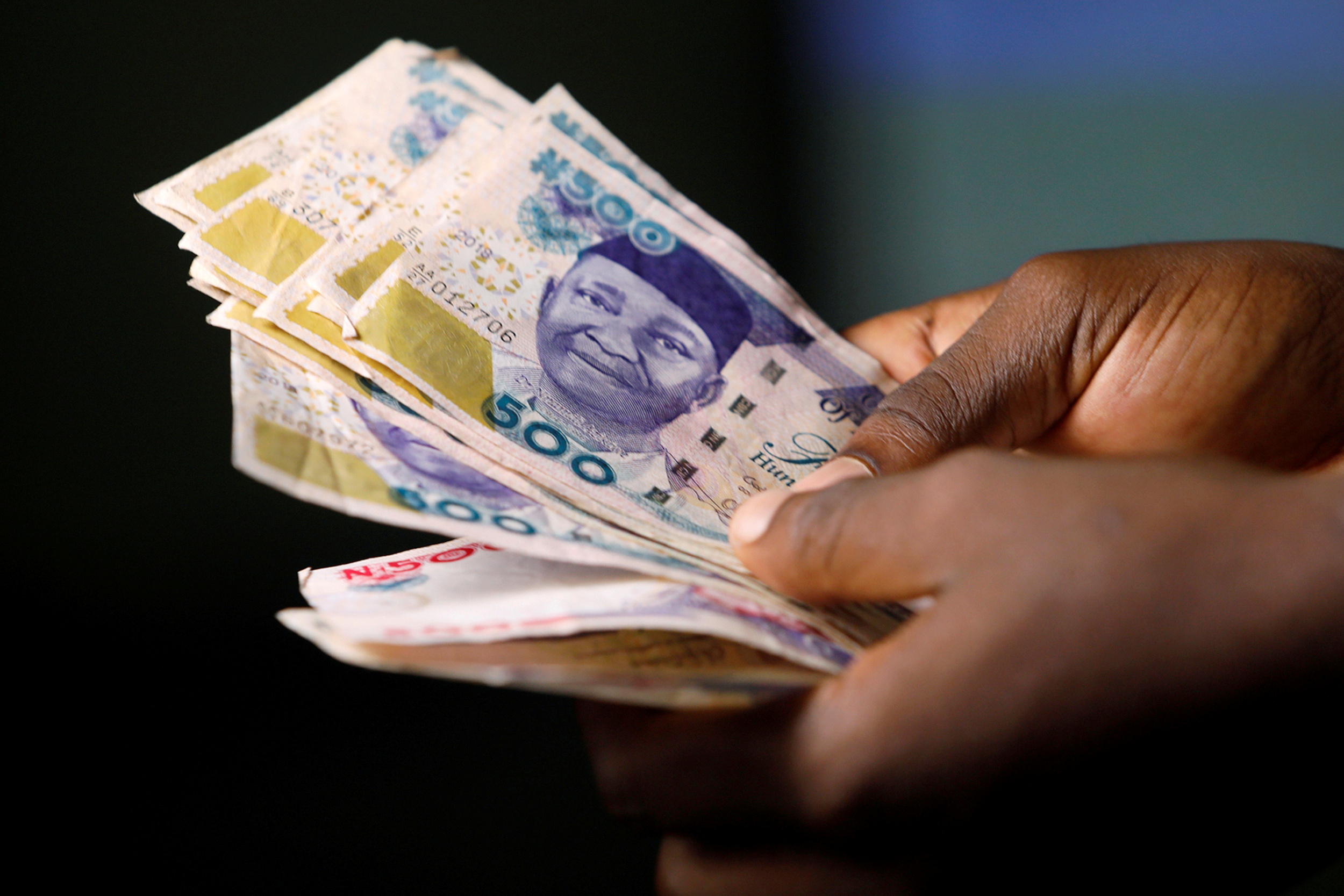
Nigerian naira banknotes are seen in this picture illustration, September 10, 2018. REUTERS/Afolabi Sotunde/File Photo

The strength of Nigerian Naira comes from warehouses and factories, and not from the Central Bank of Nigeria (CBN) headquarters. Those warehouses and factories include the old (the traditional firms like Innoson Motors, Dangote Cement) and the modern  ones (like Paystack, Tomato Jos). Until the CBN can use its monetary tools to elevate them, it cannot win the fight for Naira.

As this election season begins, if you want to strengthen the Naira, vote for visionaries who understand the multifaceted global economic system, with defined roles on where Nigeria can play.

Anyone who tells you that he will make N1 = $1, via fiat, is a liar by default; only the factories have the real powers to determine those. So, the question is really: who can help us create better factories, the old and the modern?

I have a minor roadmap here here