DD
MM
YYYY

PAGES

DD
MM
YYYY

spot_img

PAGES

Home Blog Page 5215

Bola Tinubu And His Political Claims To Succeed Buhari As President

1

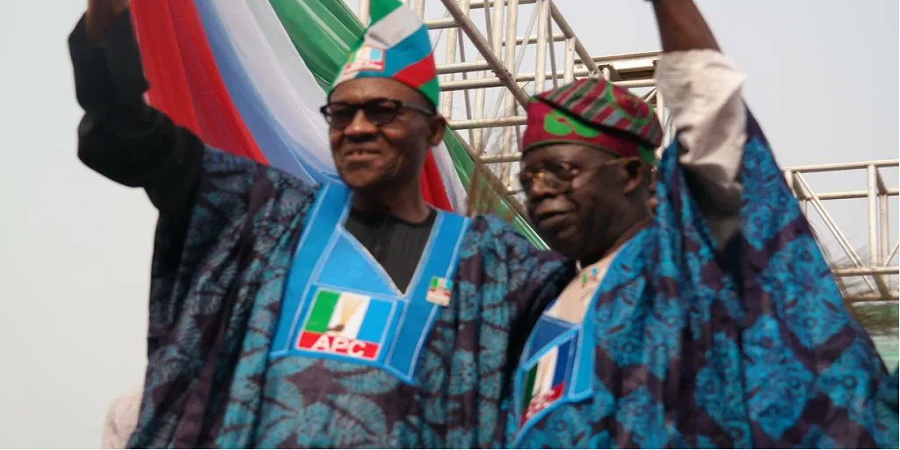
      The former Governor of Lagos State and National Leader of the All Progressives Congress (APC), Sen. Bola Tinubu, on Wednesday, 13th April 2022 gave reasons he was and remained the best candidate to succeed the incumbent President of Nigeria, Muhammadu Buhari come 2023.

     He said he was the ‘courageous person’ who could step in and bring about the needed change and desired development across the country.

     Tinubu, who spoke at a one-day parley between current Speakers and Deputy Speakers of all APC-led States across the country in Lagos State, used the avenue to disclose his presidential bid to the State legislators.

    The event, which had ‘The Legislature, Changing times and Nigeria’s Democratic Journey’ as its theme, saw the presence of countless dignitaries of Nigeria origin.

     He acknowledged the nation was endowed with great human capital to experience a true transformation, but said a premium must be placed on the leadership ability of individuals jostling to run for the position of president.

     Tinubu said, “It is a very challenging time for us in the country and we need to decide the next leadership right. We need to intellectually assess the current situation, and bring in a person with a clear vision and ability to deliver. Accelerated development of our country is all about thinking, doing, and being courageous. I am a thinker and a doer.

     “I was raised with courage and that is what is driving me to push on my vision to create a Nigeria that will work for all. We can build this nation and reverse the carnage. What we need is leadership, the visioner to drive the change we desire. That is why I have presented myself to canvas for your support.”

      The APC national leader said he was prepared to take over the mantle of national leadership legitimately through the ballot, and not make attempts to gain political power passing through the back door.

      He further hinted that he possessed the capacity to truly transform the country, noting his administration as Governor of Lagos initiated many unprecedented steps toward lifting the State’s economy.

     If given the chance to become the President, Tinubu said he would bring his new capability to bear and transform the potential of the country into a reality.

     “As I need Nigeria, the country needs my competence. I have been a good example with a shrewd, daring, and can-do attitude. And I have never lost a single election,” he landed.

     Having perused through these claims, I make bold to say that Tinubu might be quite ‘courageous’ and resourceful as he rightly claimed, but what Nigeria truly needs as a President goes beyond the aforementioned qualities.

     The country doesn’t just need a competent person, but a very sincere and genuine one. The acclaimed giant of Africa isn’t just in need of a dogged individual but someone who is and remains truthful in all ramifications.

     I’m not in any way saying that Tinubu is not trustworthy, but it’s pertinent for the electorate to acknowledge fully that only a truthful Nigerian can usher in the change the country yearns for. So, the teeming Nigerian voters need to go beyond competence and eligibility while seeking a person that can transform the country positively.

    Nigeria has unarguably gone through a lot in recent times, socio-politically and economically, hence she can’t afford to continue in this direction come 2023. The choice lies in the hands of the electorate. 
Tekedia Live – Risk Management

0

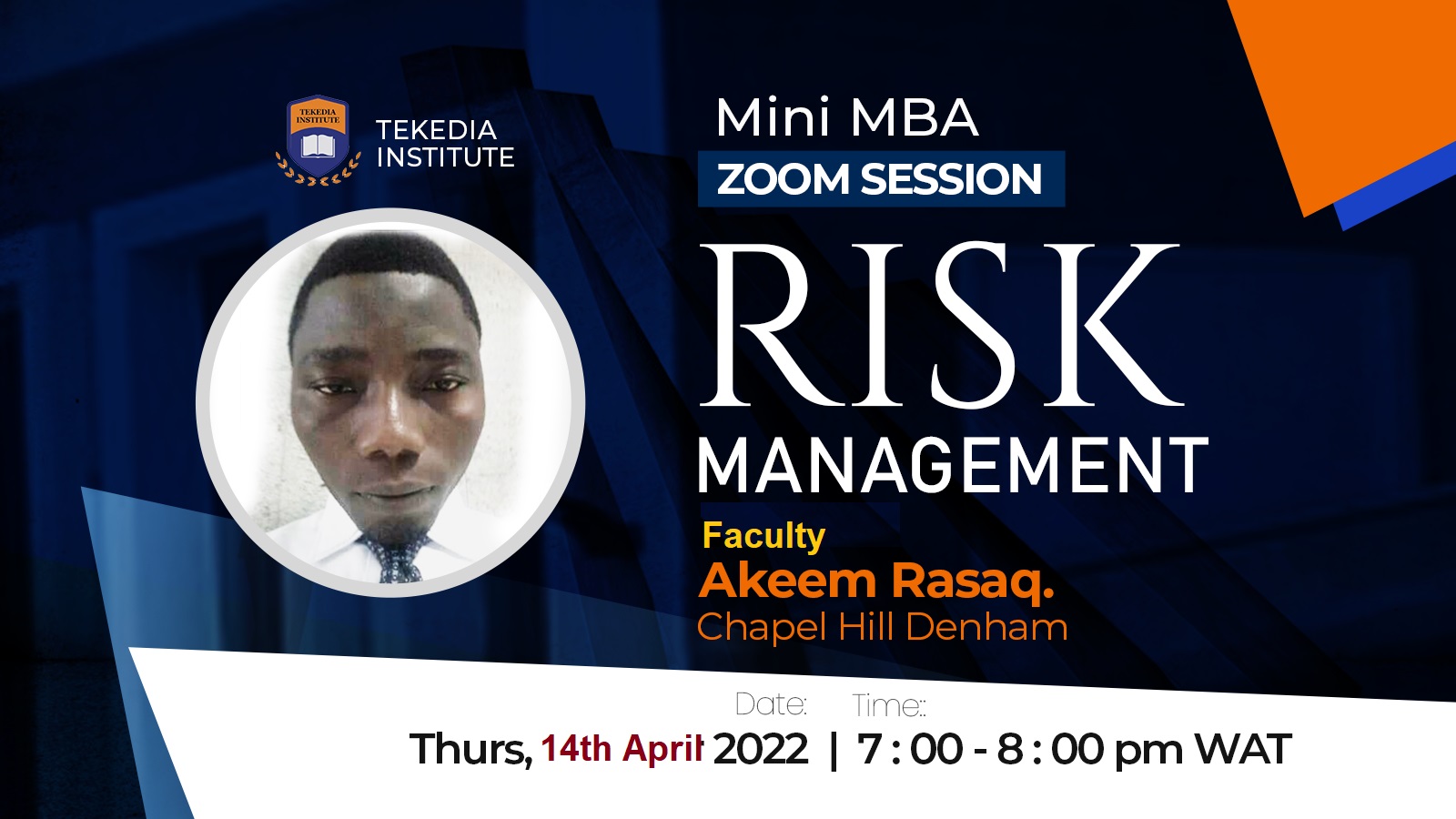
He brings a practical perspective on why risk management must be an integral part of any strategy. He communicates it down to the Onitsha Main market importer and Lagos banker. He worked in Risk Analytics in Ecobank, and served Fidelity Bank as a Risk Analyst and Strategist.

Then, he moved to Sterling Bank where he was a  Market & Liquidity Analyst before  becoming Head Of Risk Management at Chapel Hill Denham, one of Africa’s leading independent investment banking, securities trading and investment management firms.

Akeem Rasaq, BSc, MRM, MScFE, a Tekedia Institute Faculty, holds BSc (Actuarial Science) and Master of Risk Management from University of Lagos. He also holds a Master’s degree in Financial Engineering from WorldQuant University.

He will be live tomorrow at the Institute. Come and understand risk management from one of the zen-masters of risk management.

Tekedia Institute >> learn from the best

Nigeria Approves New Private Varsities As ASUU Strike Continues

0

Penultimate week, precisely on Wednesday, 6th April 2022, the Federal Executive Council (FEC) of Nigeria approved the issuance of provisional licences for the establishment of new 12 private universities across the country.

The Minister of Information and Culture, Mr. Lai Mohammed disclosed this to the State House correspondents at the end of the Council meeting, which was presided over by President Muhammadu Buhari.

According to the minister, the universities in question would be located in Kano, Niger, Gombe, Sokoto, Delta, Abia, and Anambra States as well as the Federal Capital Territory (FCT), Abuja.

He said: “Council approved the memo for the issuance of provisional licences for the establishment of twelve proposed private universities.

“The proposed private universities are Pen Resource University Gombe, Gombe State, Al-Ansar University, Maiduguri, Borno State, Margaret Lawrence I University, Delta State and Khalifa Ishaku Rabiu University Kano, Kano State.

“Sports University Idumuje Ugboko, Delta State, Bala Ahmed University Kano, Saisa University of Medical Sciences and Technology, Sokoto State, Nigerian-British University Hasa, Abia State and Peter University Acina-Onene, Anambra State as well as Newgate University, Minna, Niger State, European University of Nigeria in Duboyi, Abuja and the North-West University Sokoto. ”

Mr. Mohammed stated that the Minister of State for Education, Mr. Chukwuemeka Nwajiuba presented the memo on behalf of the National Universities Commission (NUC) and it was conbsequently approved by the Cabinet.

The Information Minister further highlighted that each of the new universities would be mentored by the old ones situated nearer to them.

He went ahead to argue that establishment of additional universities for an over 200 million-populated country was necessary if the policy of educating a larger percentage of youngsters was to succeed, perhaps contrary to the insinuations among many Nigerians in various quarters.

It’s noteworthy that, in a related development, the FEC gave approval to the FCT to revise the estimated total cost of the contract for the extension of the Inner Southern Expressway, from the Outer Southern Expressway to the Southern Parkway, among sundry issues discussed therein.

It could be recalled that the members of the Academic Staff Union of Universities (ASUU) embarked on a one-month warning industrial action on 14th February 2022 to press home their demands as regards the lingered 2009 Agreement and the subsequent Memorandum of Action (MOA) entered between the Federal Government (FG) and the Union.

The strike was subsequently pronounced to be indefinite upon expiration of the initial warning part, reportedly owing to the FG’s inability to address the issues squarely as expected by all the concerned parties, particularly the Union members.

It’s worth noting that the other unions on the universities’ campuses, such as the National Association of Academic Technologists (NAAT) and the Senior Staff Association of Nigerian Universities (SSANU) eventually joined in the industrial action.

Hence, as I write, the loggerheads between the aforementioned stakeholders – which aren’t unusual – still linger to the utmost worry and bitterness of the citizenry and the affected parents/guardians who are currently of the view that the FG does not care about the country’s education sector.

Amidst the strike whose end is yet unknown, Nigerians were informed that twelve new private varsities would be established across the country.

This unequivocally ostensibly indicates that the government is gradually shifting responsibilities of the Nigeria’s education industry to mainly the private sector, which indeed does not augur well for the citizens and the country at large if painstakingly considered.

Thereafter, barely less than one week after, on 12th April 2022 to be precise, Nigerians were equally informed of the FG’s intention to establish three more polytechnics within the shores of Nigeria, precisely in Kano, Abia and Delta States.

At this juncture, any rational and right thinking Nigeria ought to be of the notion that the government is getting tired, if not already exhausted, of managing public varsities situated across the country.

When no tangible remedy has been found, or may not be considered, to resolve the ongoing impasse between the governments and the university teachers and technologists, the FG was more apparently concerned on how to establish new tertiary institutions. This indeed is enough reason to worry about Nigeria’s education sector.


As a Federal Cabinet Member, Ndubuisi Ekekwe Will Automate Out Procurement Corruption in Nigeria

8

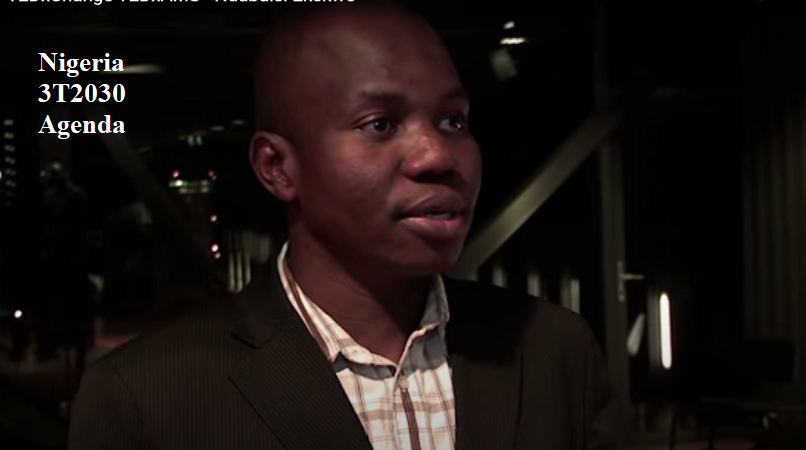
Good People, the big boys are hitting the cities, communities and state houses, making their cases on why Nigerians should hire them as the next President. In my small domain, I am making a case for my candidacy into a federal cabinet.  Drawing from my “3T2030 Plan for Nigeria” – a plan designed to push the GDP of Nigeria from the current sub-$500b to $3trillion by 2030, I present how, as a federal minister, will work with Mr. President, to fight procurement corruption in Nigeria. We will automate out corruption, by building hardened and resilient public institutions.

If the tech guys in the ministries cannot execute, I will ask Mr. President for two weeks to build the stacks and deploy them myself by asking young Nigerians to come for a hackathon with the Honourable minister. We will provide zobo, nkwobi, amala with RSVP (rice and stew very plenty!); here we go.

Number 1:  New Vision for EFCC/ICPC to Focus More On Prevention than Prosecution

I will seek for new KPIs (key performance indicators) to be developed for EFCC/ICPC. I will push for it to spend more resources to build resilient institutions where corruption would be harder than simply and mainly focusing on fighting and prosecuting corruption. We will reform the operations, focusing on how it helps to prevent corruption rather than how many corruption cases it tries and wins. In other words, at the end of any operating year, EFCC/ICPC must explain what it has done in the nation to make it harder for corruption to take place. And those things must be institutionalized.

Will get them to  focus more on preventing corruption than merely fighting and prosecuting it. New KPIs will be developed to ensure they work to PREVENT than just PROSECUTE.

Number 2: Track All Payments of N10million and Above

We will build a corruption-free nation where it would be extremely impossible to perpetuate procurement-based corruption because technology will make things obviously transparent. All government systems must be structured to be corruption-resilient so that people that want to perpetuate corruption will fail. We will publish any government expense that is more than N10 million, quarterly, in a web diary which all citizens will have access to. This applies to all levels in the federal government, from ministries to agencies. For national security reasons, a segment will be available to the accredited civil society and press team.  They will be directions to avoid invoice splitting.

Number 3:  Eliminate or Reduce Procurement Fraud to Near-Zero

(Small section from 3T2030 Document)

Brief: Big data analytics is a special area of computer science that uses high-level mathematical models to provide patterns or trends out of large datasets. Corruption can be drastically reduced in Nigeria through pattern matching and analytics. 

The Idea: Analytics is used to track payment patterns and ascertain procurement integrity.  The idea is to deploy analytic tools to help find inflated or fraudulent procurements made by federal agencies/workers. At the moment, the Central Bank of Nigeria (CBN) pays most federal contractors directly after the specific agency has certified work completion. We will put these contracts in a database and then query them to discover patterns in costs and other parameters. CBN has these documents, they will be scanned and dumped into a server for machine vision.

At the ICPC/EFCC/(or a special unit in the Presidency), our technology will query those documents tracking historical and present costs to see patterns. When too much deviation occurs, the watchdog (for example EFCC)  will get an alert via email. The watchdog will then examine the alert and see if there is need for further investigation.

For example, if Agency A buys a Toyota Camry for N10 million and Agency B plans to buy the same car for N18 million within the same month and city, the system will flag Agency B. The EFCC would like to know if there is fraud or simply the Director General is not a good bargainer when paying for things. Where necessary, the EFCC may recommend training on procurement systems for Agency B. More so, EFCC will have new power with CBN to offer for the contractor which supplied Agency A to supply Agency B. If that happens, the car is purchased and Agency B will still have N8 million to do other things in its bank account.

(CBN makes payments to all federal contractors; we will scan all contract documents and use machine vision to check deviations to mean. Where threshold is exceeded, EFCC will be alerted before payment)

There will be no purchase over an agreed price range, say N2m that will not be tracked. This will become a policing system that puts pressure on agencies of governments to cut costs. The system will also recommend standardizations on RFP and other items so that algorithmic comparisons can be effective.

We think this will help “police” the system and help reduce corruption. The goal is to have a real-time system that looks at every expense in government and determines if the government is getting value for the money spent. As the database matures, the government can decide that any planned purchase outside a certain deviation within a mean amount should be declined. 

And where possible, the watchdog can offer the purchasing officer to use another contractor that will provide the same services at a better price based on historical data in the database.

Number 4 and more: (will share more from the plan with His Excellency)

Comment on Social Media Feed

Comment (edited(: The Cabals controlling Nigeria won’t give room for this.

My Response: Do not lose confidence in yourself and your nation. The reason corruption thrives in Nigeria is that the system talks with people, and is designed around humans. If you use technology which cannot be negotiated with, everything will fall in line. Do you know that we can build a procurement regime which will be human agnostic eliminating most elements of corruption?

 I do not need to talk to a DG but the tech will do it. Either he adheres to the process or he cannot progress. So, I do not care if the DG or agency agrees, provided Mr President has approved it, they will be left to deal with technology systems and not Ndubuisi.

Yes, for that payment to be made to the contractor, upload the contract documents to CBN server where AI will scan it for compliance. If you do not do it, your agency contractor will not be paid!

3 Ways Companies Can Reduce their Fleet’s Fuel Costs

0

The conflict in Ukraine has sent the cost of various commodities skyrocketing, with fuel being chief among them. This is pushing many companies with large fleets to review their strategies in the face of fast-rising operational costs. Companies that didn’t make efficient driving a priority will need to from now on if they want to stay competitive. Thankfully, there are various tools and techniques companies can use to mitigate fuel costs. Here are a few of them.

Reduce Idle Time

The simplest way for companies to reduce fuel costs for fleets is to monitor their drivers better through telematics. And one thing they have to pay very special attention to is how long drivers leave their vehicles idle.

A lot of people aren’t aware of this, but did you know that a truck can burn as much as 1 gallon of fuel per hour while staying idle? Or that leaving a vehicle sitting idle for 30 seconds burns more fuel than restarting the engine? If you have a large fleet and employees driving a range of hours, these costs can easily add up and put a dent in your finances, so do not take this part lightly.

Monitor and Correct Aggressive Driving Patterns

Pay close attention to how aggressive your drivers are on the road, and, if you notice bad patterns, you need to bring bad drivers in for an evaluation and consider giving them specialized training. Aggressive driving could add as much as 31% to your fuel costs, so make this a priority and constantly give your drivers feedback so they can improve on their habits.

Look for things like rapid acceleration, tailgating, harsh braking, and excessive lane change. These are all signs of an aggressive, expensive driver. 

Again, only good telematics tools will allow you to monitor your drivers’ behavior efficiently, so get the best tools you can afford and implement them correctly. You can use the information you get to score drivers. Create a score leaderboard to foster healthy competition between your drivers.

You could go a step further by setting real-time alerts. Many telematics tools allow you to do that and give auditory cues to drivers when they’re driving irresponsibly. This alone could greatly improve their driving by making them more conscious of what they’re doing.

Optimize Routes

You should also try to use the most efficient routes for your drivers. You might assume that more efficient means shorter, but that’s not always the case.

You have to think about elevation as well. If you can take advantage of a downwards slope and avoid going upwards when possible, do it. Going uphill puts a lot of pressure on a semi-truck’s engine, especially when it’s hauling a heavy load. Even things like road quality can affect your fuel costs. So, get information on the terrain and set up pre-scheduled customized routes for them.

These are all ways companies can reduce their fuel costs. Every little thing you do will help, so focus on monitoring behavior and trends down to the last detail while constantly encouraging your drivers to do better.