DD
MM
YYYY

PAGES

DD
MM
YYYY

spot_img

PAGES

Home Blog Page 5220

6 Reasons Why Opening A Business Abroad Might Be A Good Idea

0

There are many reasons why opening a business abroad might be a good idea. Many entrepreneurs are starting to see the benefits of doing business in other countries. Perhaps you’re looking for new opportunities to grow your business. Maybe you’re feeling stifled by the current economic conditions in your country. Or maybe you just want to experience a new culture and lifestyle. Whatever your reason, there are many benefits to it. In this blog post, we will discuss six of the most important ones!

Opening a business abroad will require a lot of attention

This is not a process to be taken lightly. Many opening businesses are opening in other countries because they want new opportunities. You will have to work hard, though! On the other hand, you can also hire a growth marketing agency and make the process slightly easier and more understandable. Before opening, you should do your research on the market and make sure that there are no legal barriers to entry. You will also need to be familiar with the local customs and culture so that you can avoid any misunderstandings. Of course, you should not go into the entire process unprepared. Do research online and gather as much information as you can before starting the project.

#1 A lot of room for growth

One of the biggest benefits of expanding abroad is the potential for growth. In many countries, the economy is growing at a much faster rate than in developed nations. This provides plenty of opportunities for businesses to expand and thrive. There are also often fewer restrictions on businesses in developing countries, so you’ll have more freedom to operate your business as you see fit.

#2 Being introduced to a new market

Another big benefit is that you’ll have access to new markets. By opening a business in another country, you’ll be able to tap into a new customer base that you wouldn’t have otherwise had access to. This can help your business grow exponentially. You’ll also be able to learn about new cultures and lifestyles, which can be beneficial for both personal and professional growth.

#3 Many countries offer financial benefits for foreign businesses

There are also tax benefits to this. In many countries, the corporate tax rate is much lower than it is in developed nations. Additionally, there are often other financial incentives offered by governments to encourage businesses to set up shop in their country. This is a great tool to use to ensure a good and stable start.

#4 Finding a new approach

One of the best things about opening a business in another country is that you’ll be able to learn new ways of doing things. In many cases, the way businesses are run in other countries is much different than how they’re run in developed nations. This can be a great opportunity to learn new methods and strategies that you can apply to your own business.

#5 Access to a new, unexplored pool of talent

Another big benefit is that you’ll have access to a whole new pool of talent. In many countries, there is a large population of highly skilled workers who are looking for opportunities to work in foreign businesses. This can be a great way to find talented employees for your business.

#6 New business opportunities

Lastly, opening a business in another country can also lead to new business opportunities. By being in another country, you’ll be able to network with other businesses and learn about new markets and industries. This can help you identify new areas for your business to expand into. Furthermore, if you are planning an expansion abroad, these new contacts can help you improve your entire business plan back home.

Should you expect any challenges?

Of course, there are also some challenges that come with opening a business abroad. One of the biggest ones is language barriers. If you’re not fluent in the local language, it can be difficult to communicate with customers and suppliers. Additionally, cultural differences can make doing business in another country challenging at times. But if you’re prepared for these challenges, they shouldn’t deter you from taking advantage of all the benefits that opening a business abroad has to offer.

So if you’re thinking about opening a business in another country, don’t let the challenges scare you away. There are plenty of reasons why it can be a great decision for your business. With the right preparation and mindset, you can overcome any obstacle and reap all the rewards that come with doing business in another country. 
As Buhari Signs Executive Order 11, What Next?

0
Nigerian leaders

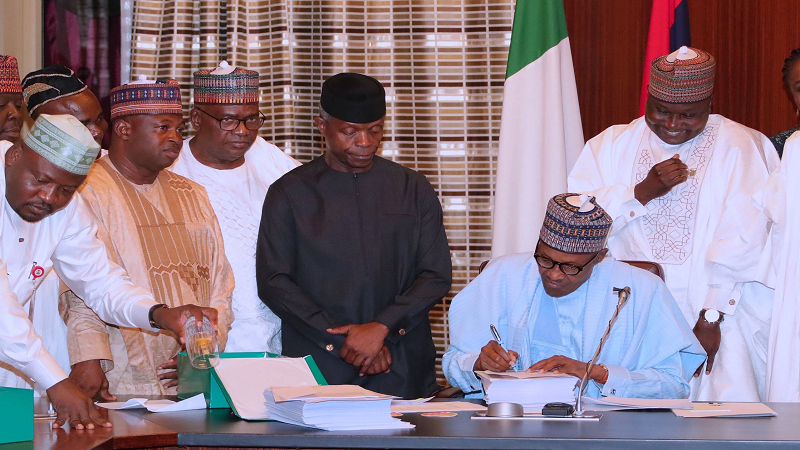
It was another story in Nigeria on 6th April 2022 as President Muhammadu Buhari graciously signed Executive Order 11 on the ‘Maintenance of National Public Buildings’.

The President, who assented to the epochal document on Wednesday morning in Aso Rock Villa prior to the commencement of the usual weekly Federal Executive Council (FEC) meeting that held at the Council Chambers of the State House, Abuja, informed that the Executive Order 11 was targeted to address some existing uncalled norms within the shores of the Nigerian public service.

Speaking shortly before signing the Order, the Nigerian number one citizen directed all Ministries, Departments and Agencies of government (MDAs) to set up maintenance departments in line with the provisions of the new Executive Order.

He stated that the Order now gives legal backing to the country’s national maintenance policy, following its earlier approval by the FEC. According to the President, the government had already started utilising the policy to give a face-lift to some of its buildings like the federal secretariat, Abuja, and 24 others spread across the country.

He said, “Since the approval of the policy by the Federal Executive Council, the federal government has consciously started the implementation of maintenance of strategic facilities like the federal secretariat Abuja and federal secretariats in 24 states of the federation, where at least 40 people are now daily employed in each of those 24 secretariats.

“The office of the Head of Civil Service of the Federation has approved the establishment of a Department of Federal Public Assets Maintenance as a vital step in support of the implementation of this national policy, which is unprecedented in our history and approach to maintenance.

“In order to ensure the fullest implementation and impact of the policy, it is my pleasure to sign this Executive Order that ties maintenance directly to our economy. By this Order, I expect Ministries, Departments and Agencies to set out and ensure the operation of their maintenance departments and make necessary procurements for their maintenance in accordance with the provisions of the public procurement act,” he landed.

It was indeed a great and commendable move as made by the Federal Government (FG) of Nigeria under the watch of President Buhari, knowing full-well that maintenance culture has been a thing of tremendous concern across the lengths and breadth of the Nigerian State.

It’s not anymore news to any citizen of Nigeria that the prime reason most of the infrastructural edifices within the shores of the country are currently moribund is simply owing to lack of maintenance culture by the government officials.

This is the reason the private sector remains the only part that grows or improves  in Nigeria as the years unfold to the detriment of the public sector and at the expense of the poor citizenry, thereby greatly affecting areas such as education, health and manufacturing.

Hence, the Executive Order 11 signed by the President could be a way forward and an avenue of liberating Nigeria’s public sector that has obviously suffered from an age-long disease, curable though. It could be a way of freeing Nigeria’s public sector from the life imprisonment it was sentenced many years ago by the country’s political leaders.

The Order could be a way of putting a full stop to the said sector that has apparently been neglected and abandoned by those meant to protect and adore it.

However, the FG must understand some pertinent facts if truly it is ready and prepared to ensure the success-story of the newly introduced Executive Order.

Aside from its assent by the President, the Presidency needs to take into cognizance that the move doesn’t just stop at signing the Order, hence some stringent actions ought to be followed towards ensuring a holistic implementation.

Overtime, Nigeria has been reckoned to be a country that’s good in bringing up a sound and laudable policy, but the major plight remains its apt implementation. This is exactly where the problem lies. 

Elon Musk Rescinded His Decision to Join Twitter Board: What Could Have Gone Wrong?

0

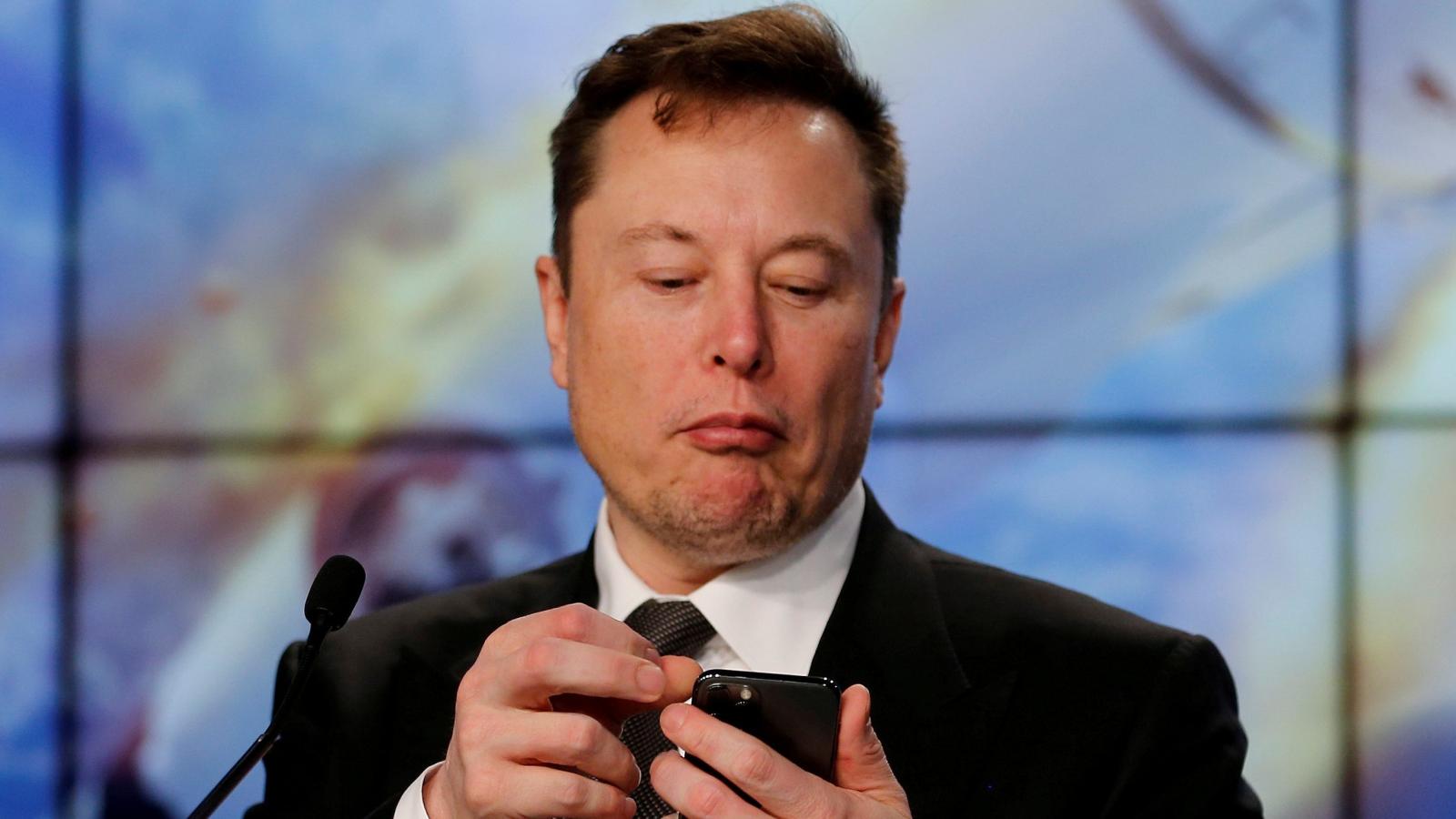
Tesla CEO, Elon Musk, has made a U-turn from his earlier decision to sit on Twitter board. Musk’s decision to back down was made known on Monday, via a statement issued by Twitter CEO, Parag Agrawal.

The new Twitter CEO said Musk had opted out of his earlier decision to join the board in the morning his appointment was to take effect.

“Elon’s appointment to the board was to become officially effective 4/9 [April 9], but Elon shared that same morning that he will no longer be joining the board. I believe this is for the best. We have and always value input from our shareholders whether they are on our Board or not. Elon is our biggest shareholder and we will remain open to his input,” he said in the statement.

Parag said that the board had believed that having Elon as a fiduciary of the company where he, like all board members, has to act in the best interests of the company and all our shareholders, was the best path forward.

What could have made Musk change his mind?

Prior to the news that he’s become Twitter’s highest shareholder with 9.2% stake, and subsequently, his appointment to the microblogging app’s board, Musk conducted a series of polls seeking Twitter users’ opinion on issues bordering on the platform’s free speech policies and the need for an edit button.

The polls came off as a suggestion, after the news of his Twitter shares and appointment to the board, that Musk was going to bring about unprecedented changes to the company. With the majority of his responders agreeing that Twitter needs an edit button and a review of policies around free speech. The belief was that in no time, Musk will usher in a new Twitter.

Thus, his U-turn has come as a shock to many. There are many theories flying around as possible reasons for Musk’s abrupt decision to quit the board. But one that comes close has to do with the agreement of being a board member.

Part of the agreement document seen by Tekedia has some bearings that Musk apparently wouldn’t want to take. According to the item 1.01 of Twitter’s Material Definitive Agreement, dated April 4,2022, “for so long as Musk is serving on the Board and for 90 days thereafter, Musk will not, either alone or as a member of a group, become beneficial owner of more than 14.9% of the Company’s stock outstanding at such time, including for these purposes, economic exposure through derivatives securities, swaps for hedging transactions.”

Weeks before he was announced as Twitter’s highest shareholder, Musk openly touted the idea of starting a social media platform where free speech will be paramount. Musk’s aim in buying a stake in Twitter is believed to be borne from a plot that will eventually see him having a controlling stake that will open the possibility of a hostile takeover.

The board had apparently seen the handwriting on the wall and didn’t want to wait for Musk to read the interpretation for them in the future, so they came up with the agreement. Musk knows what it will mean if joins the board. He will be setting his aim up to fail – so he declined at the last hour.

Thus, Musk’s rescinding his decision to join Twitter board means he now stands a chance to increase his shares in the near future, unless the board again, finds a way to stop him. It is a challenge that Parag probably acknowledged in his statement on Monday.

“There will be distractions ahead, but our goals and priorities remain unchanged. The decisions we make and how we execute [them] is in our hands, no one else’s,” he said.

The Safety Chic, Welcome to Tekedia Mini-MBA

0

Through a partnership with the “Women Entrepreneurship for Africa” (WE4A) in collaboration with European Union (EU), the Organisation of African, Caribbean and Pacific States (OACPS) and the German Federal Ministry for Economic Cooperation Development (BMZ), Tekedia Institute celebrates many African women entrepreneurs.

We are super-excited that through this partnership, The Safety Chic under the leadership of Ugochi Obidiegwui will join the next edition of Tekedia Mini-MBA on a full scholarship.

We commend the efforts of Ugochi and other women leaders to make our schools and workplaces safer. Welcome to Tekedia Institute.

Time for mobile virtual network operators (MVNOs) in Nigeria?

1

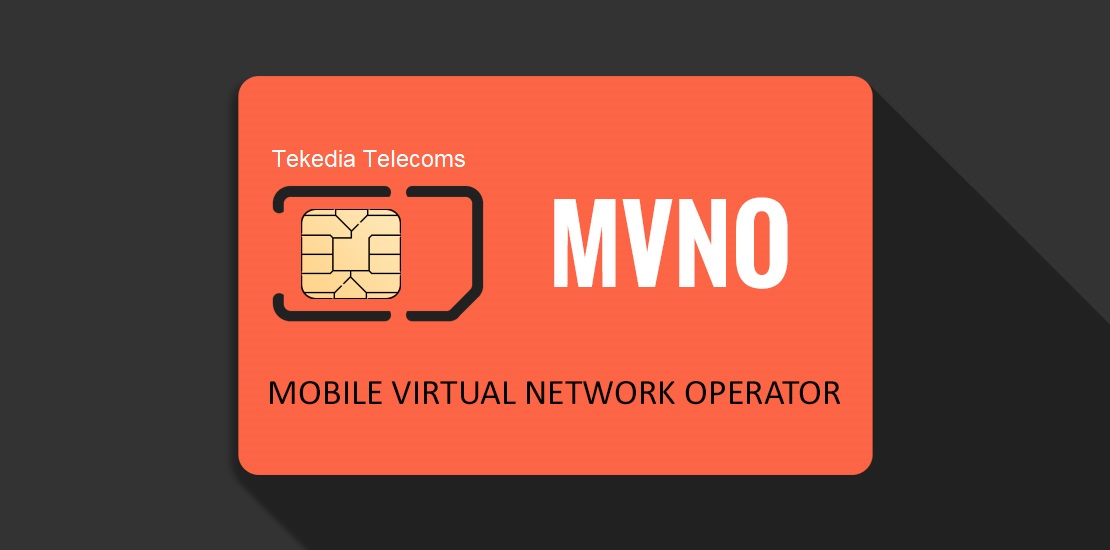
They have this thing they call mobile virtual network operators (MVNO) in the United States. Typically,  an MVNO enters deals with a mobile network operator (say MTN, Glo, Airtel, AT&T, Verizon) and acquires bulk access to network services at wholesale rates, then resells to end users. Most MVNOs use their own customer service, billing support systems, marketing, and sales personnel. You will think they are a full network operator!

The business works this way: in January you go to MTN to buy 1 million hours of call, 1000GB of data, 1 million SMS and MTN gives you 60% discount for that bulk purchase. You then open a business like Tekedia Telecoms and resell to the end users. You differentiate via customer service, pricing innovation, etc even though the core infrastructure and networks are powered by MTN.

Can we have Tekedia Telecoms?  Lol. In the US, it is largely possible. Why can’t that  happen in Nigeria? Can we ask for it now? Sure, MVNO works in domains with excess capacity which may not be the case in Nigeria. Nonetheless, to deepen competition via customer service, there is an opening on that business model if the regulator approves.