DD
MM
YYYY

PAGES

DD
MM
YYYY

spot_img

PAGES

Home Blog Page 5230

Apple Will No Longer Repair iPhone Flagged As Stolen Or Missing

0

American multinational technology corporation that specializes in consumer electronics, software, and online services, Apple recently disclosed that it will no longer repair iPhones marked as missing or stolen. The company now demands that repair technicians deny users a repair of their device if they are notified of its missing status in the mobile genius or GSMA systems they use to service customers.

The GSMA device registry is a database of device serial numbers with information about the status of each device. That is to say, if someone reports their iPhone as stolen to law enforcement, the authorities will flag the device through GSMA, which can help repair providers identify a device as missing if it is brought to their shop for repair.

This is good news for all iPhone users, as Apple has assured them that in case their iPhone gets missing or stolen, it won’t be repaired by Apple or any of its authorized providers. For iPhone users to enable this feature on their device, they need to input their details in the GSMA registry.

The GSMA registry is a global database where users can register their devices IMEI with a status such as misplaced, stolen, etc. This feature by iPhone will make it difficult for the iPhone device to be stolen. Apple builds on its existing rules that restrict technicians from removing a device’s activation lock unless the customer can provide proof of ownership.

Before the addition of this feature, iPhone had a similar existing feature that allows its users to recover their phones either lost or stolen. All they had to do was to sign in to the icloud and find their device. Or they could mark the device as lost, which remotely locks it with a passcode keeping users’ information secure. I assume these features were never enough, the reason for the upgraded new feature by Apple.

Seeing all these features rolled out by iPhone, I am not surprised as to why Apple sets its company apart from the rest, because they tend to focus on the needs and privacy of their customers, giving them their desired satisfaction. No doubt, this newly upgraded feature by Apple will reduce theft on the iPhone, although I feel there is a minor constraint as regards the use of this feature.

It is a known fact that Apple products are usually expensive, especially the iPhone, such high prices have however given rise to the purchase of second-hand Apple devices. My concern is, in case one buys a fairly used iPhone device, and unfortunately, the phone gets misplaced or stolen. I feel there might be a challenge in trying to retrieve it because the user of the iPhone bought it already.

Also, it might discourage people from buying second-hand iPhone devices outside of official and authorized sources, unless they are purchasing a new one. Although looking at the feature with a holistic approach, I will say that a large percentage of iPhone users can now heave a sigh of relief as the chances of their mobile devices getting stolen will be reduced.


Fintech Startup, Fast, is Shutting Down

0

As the fintech startups, blessed by overwhelming investor interest, burgeon into a multibillion dollar emerging market, scaling to sustainable growth is increasingly becoming a hurdle as the industry gets saturated and competition heats up.

The situation means many startups offering common services will have to wield a magic wand to stay afloat, otherwise they’d get drowned in the sea of competition dominated by big fish. This is the story of Fast, a startup that provided online checkout products.

On Tuesday afternoon, the fintech announced that it will shut down, confirming the fears many had expressed for days now about its future. Reports indicated that its 2021 revenue growth was modest, its cash burn high and its fundraising options limited.

The Information, citing sources, broke the news that the company is winding down. In a statement issued later, Fast confirmed the news saying that in the wake of “making great strides on our mission of making buying and selling frictionless for everyone, we have made the difficult decision to close our doors.”

TechCrunch ran a brief on Fast’s journey to its unfortunately botched great future.

The company, founded by Domm Holland and Allison Barr Allen, went on to describe itself as a “trailblazer,” saying that not all such parties make it to “the mountain top,” claiming that while it failed, the startup managed to “forever” change the world online commerce. How much credit the short-lived company can actually claim for work in the one-click checkout market is far from clear, but at least Fast is going out as it lived: giving itself more props than perhaps its business results warranted.

Fast posted a paltry six-figure revenue total in 2021, despite raising a $102 million Series B led by Stripe. The company’s burn rate was said to be as high as $10 million per month, or a simply massive multiple of its revenue, let alone gross profit.

A company imploding a year after raising nine figures won’t be a common story this year, but startup failures come in degrees; this is a more high-profile crash. Others will be slower-motion and less violent in their halt.

PitchBook data indicates that Fast was last valued at around $580 million, measured on a post-money basis. For the employees holding options that are now worth nothing, the company’s shuttering is a shock. Whether the company’s founders were able to sell some shares in the company’s huge Series B is not clear, but if they did, let’s hope they distribute the cash to their former staff.

The company has raised $124.5 million since its 2019 inception, according to Crunchbase. Besides Stripe, other investors include Index Ventures, Susa Ventures and Global Founders Capital.

As recently as March 28, 2022, Fast was inking deals such as one with The Honest Company to implement one-click checkout for its customers. Earlier this year, NPR reported on how CEO Holland had his share of controversy in Australia prior to starting Fast. Holland’s former startup Tow.com.au, which aimed to be “the Uber of towing,” failed in what at least one person described as a “disaster.” NPR’s article noted that Holland’s previous venture was embroiled “in a multimillion-dollar billing dispute with the Australian state government over towing and impounding fees that led to the startup’s liquidation in 2018.”

Meanwhile, in the wake of Fast’s demise, community resources are already cropping up — including a list of former workers. A quick scan of social media indicates that a number of companies are looking to snap up Fast staff. The talent market for startup workers is still hot, so perhaps the impact on those laid off today will prove short-lived.

Fast’s conclusion comes after some other richly valued startups have begun to pull back. Layoffs are ticking back up more broadly in startup-land, and one very well-known unicorn cut its valuation to better incentivize its workers. Earlier today, TechCrunch reported that Workrise — which was valued at $2.9 billion last year after a $300 million raise —laid off what is believed to be “hundreds” of employees. 2022 is shaping up to look at a lot different from 2021.

Nigeria 2023: It’s Time To Ask Pertinent Questions

0

I give God all the thanks and glory for always keeping us fit and sound in order to witness another outing in line with the tradition of this divine movement.

It’s no longer news that it has become a tradition for us to gather here towards doing what the Almighty has directed us to do. This simply means that we always look forward to witnessing a moment like this.

Since it’s clear to everyone that the initiation of this movement was as directed by God, I have vowed to ensure that we do not depart from the truth as long as it lasts. Therefore, we shall continue to stick to the gospel truth whenever we are gathered here.

I sincerely welcome each of us once again for finding time to make it to this arena. Your continued audience has clearly shown that we are really attracted to the truth. I welcome us wholeheartedly because the reactions I have received so far from you are very encouraging.

In last week’s edition, we clearly stated that the impending 2023 race in Nigeria is strictly meant for only qualified aspirants. I took time to explain to us why the race is not for just anybody but only for competent and reliable citizens of the acclaimed Giant of Africa.

We made it clear and understandable that only the most qualified and credible set of aspirants would participate in the fast approaching race. It would be open for only those who have distinguished themselves from those who think anyone can come from anywhere to lead Nigerians.

This edition is interested in letting us know that this is the time to ask pertinent questions. It is the right moment to ask not just questions but “very important” ones. It is mainly concerned with letting us know that if we fail to ask good questions, we may not understand where exactly we are expected to go from here.

Fellow Nigerians, this is really the appropriate time for us to ask reasonable and very crucial questions. It is the right time to find out the exact road we are supposed to follow in order to arrive at the main destination. It is the real moment to come up with questions whose answers would help us to take the right actions.

First, we need to ask at this time about the background of those who are aspiring to contest for various key positions come 2023. We need to know where they are coming from. It is our duty to find out what they have been into in the past, or the kind of business/work they had done before now. Such inquiry will make us realize who truly they are or what they are made up of.

The background or antecedents of the aspirants wouldn’t be hard to ascertain if we are truly determined to do so. Without any one’s assistance, we can individually find out where they are coming from and what they had done in the past, or had been able to accomplish before now.

It is so important to find out the background of the aspirants because, it has become clear that most of them are not even worthy to dine with Nigerians let alone leading them. Most of them have done and are still doing a lot of dirty things without our knowledge. It is our responsibility to dig deep in this very aspect.

It is also time for us to ask about the aims of the aspirants. We need to find out from them their actual intention or what they intend to do for Nigerians, or the electorate, as the case might be, if they emerge victoriously.

The above inquiry is very necessary because most of them do not have any single aim and talk more of how they intend to actualize it. They are only interested in coming to defraud us of our common treasure. They are only concerned in gambling with the country’s funds if elected the President or lawmakers, as might be the case.

They must therefore outline their agenda before we can listen to them let alone voting them into power. It won’t be embarrassing if we find out that most of them cannot boast of any agenda because they have not occupied any leadership position in their entire life. How can someone who has not held any leadership responsibility before be given the opportunity to lead a country or state?

They must therefore be willing and always prepared to at all times remind us of their actual agenda for the leadership positions they are aspiring for. Hence, their aims or agenda ought to be written in our minds because they have severally been tendered before the electorate.

Their aspiration for the country must be clear and very easy to understand by everyone. Their aspiration and motive are very transparent, that even a-day-old child can read for himself. The aspirant must be reckoned as one who is very close to the people.

Dear Nigerians, this is really the time to ask very important questions as the topic reads. It is the right time to find out for ourselves where these numerous aspirants are coming from as well as their vision for the country if eventually elected into office.

At this juncture, please, permit me to take a break till we meet again to continue from where we stopped.

SIM Cards, NINs and Fixing Insecurity in Nigeria

1

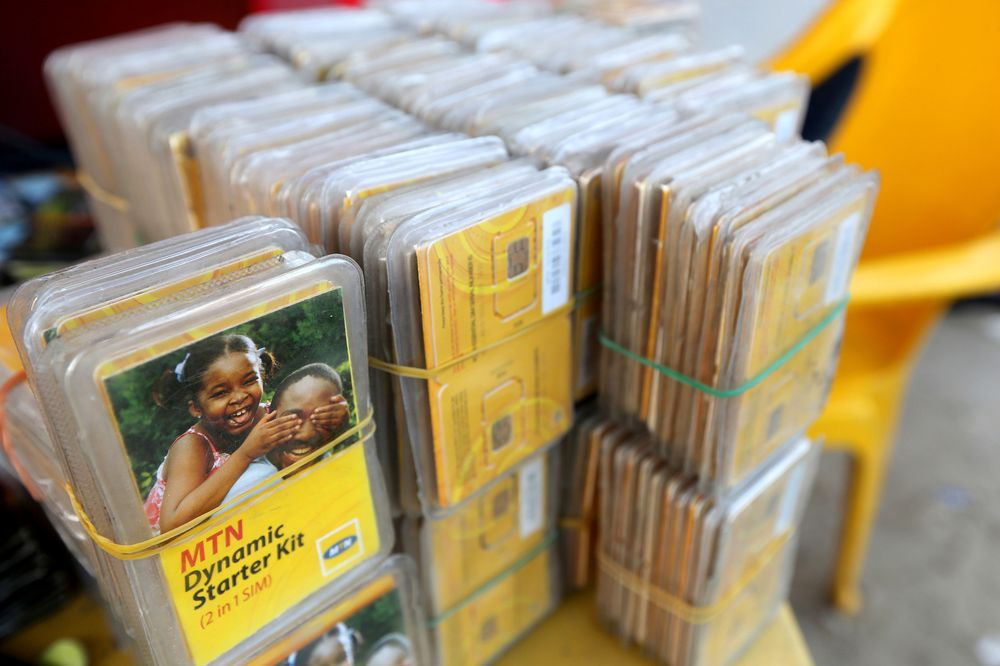
Reading this piece, if losing N70 billion will fix insecurity in Nigeria, the government should go ahead and link the SIM cards to the national identity numbers (NINs): “The Association of Telecommunications Companies of Nigeria (ATCON) said the average revenue per user in Nigeria’s telecom market is N1,420. Using this figure, the loss is expected to hit over N70 billion.”

On Monday, the Federal Government of Nigeria ordered telecom SIM lines not linked to the National Identification Number (NIN) barred from making outgoing calls. The decision has come on the heels of deadly terror attack in Kaduna, which resulted in the death of at least 10 people and multiple injuries.

In 2020, the Federal Government initiated the NIN-SIM linkage to curtail the use of mobile phones in execution of crimes by criminals. The idea is to have every telecom line linked to the national identity database, making it easy for security operatives to identify individuals linked to any phone number involved with crime.

Nigerians were mandated to register and link their phone numbers to their NIN to avoid being disconnected from telecom services. It has been about two years and 125 million SIMs linked since the NIN-SIM linkage initiative, which has impacted a huge loss on the telecom industry, kicked off, yet the security situation in Nigeria has deteriorated.

However, I personally do not believe that will do the magic. Using SIM – NIN linkage as an excuse is not fair to the victims of insecurity  of Nigeria. Of course, I agree that we need to link these SIM cards to the NINs. But it is key to note that without doing the right thing, the outcome will not change.

We know the right thing but we like to deceive ourselves in that nation!

Comment on LinkedIn Feed

My response on the “right thing”: I made my point specifically on the nexus of security. The fact is this: we know where these guys are camped. You do not need a SIM to know that. Bringing SIM creates an illusion that these are aliens which must be tracked.

NIN-SIM Linkage: Nigerian Government, Telcos Set to Lose Billions in Revenue

NIN-SIM Linkage: Nigerian Government, Telcos Set to Lose Billions in Revenue

0

On Monday, the Federal Government of Nigeria ordered telecom SIM lines not linked to the National Identification Number (NIN) barred from making outgoing calls. The decision has come on the heels of deadly terror attack in Kaduna, which resulted in the death of at least 10 people and multiple injuries.

In 2020, the Federal Government initiated the NIN-SIM linkage to curtail the use of mobile phones in execution of crimes by criminals. The idea is to have every telecom line linked to the national identity database, making it easy for security operatives to identify individuals linked to any phone number involved with crime.

Nigerians were mandated to register and link their phone numbers to their NIN to avoid being disconnected from telecom services. It has been about two years and 125 million SIMs linked since the NIN-SIM linkage initiative, which has impacted a huge loss on the telecom industry, kicked off, yet the security situation in Nigeria has deteriorated.

Consequently, the Federal Government has reasons to believe that about 70 million unlinked telecom subscribers could have a bearing on the worsening insecurity in Nigeria, as the relatives of many of those kidnapped in the train terror attack were contacted through mobile phones. Thus, it issued the directive to telcos to put a call restriction on phone lines yet to comply with the NIN-SIM linkage policy.

“Consequently, the Federal Government has directed all Telcos to strictly enforce the Policy on all SIMs issued (existing and new) in Nigeria. Outgoing calls will subsequently be barred for telephone lines that have not complied with the NIN-SIM linkage Policy from the 4th of April, 2022,

“Subscribers of such lines are hereby advised to link their SIMs to their NINs before the telcos can lift the restriction on their lines. Affected individuals are hereby advised to register for their NINs at designated centres and thereafter link the NINs to their SIMs through the channels provided by NIMC and the Telcos, including the NIMC mobile App,” the statement issued by the Nigerian Communication Commission reads.

The NIN-SIM linkage policy was met with heavy criticism in the beginning as the timeframe allotted by the government for the exercise was deemed unrealistic. However, the timeframe was repeatedly extended.

“… President (Muhammadu Buhari) graciously approved the many requests to extend deadlines for the NIN-SIM linkage. At this point, however, the government has determined that the NIN-SIM Policy implementation can proceed, as machinery has already been put in place to ensure compliance by citizens and legal residents. The implementation impacts on government’s strategic planning, particularly in the areas of security and socio-economic projections,” the statement added.

However, this new move by the Federal Government poses a fresh threat to the growth of the telecom industry. In June last year, the telecom industry came under the weight of the policy, losing 20.83 million subscribers that amounted to N29.58bn in revenue loss.

The telecom industry has served as Nigeria’s economy’s cash cow, largely sustaining the troubled economy during the covid-induced economic headwinds.

As of February 2022, Nigerian telecom subscribers amounted to a total 197,77 million, with MTN having the largest share of 74.93 million, Airtel 55 million, Globacom 55.99 million and 9mobile 12.84 million, according to data from the NCC. The figures denote a decline compared to the telcos’ customer-base pre-NIN-SIM linkage policy.

Thus, implementing the NIN-SIM linkage now will mean barring over 70 million subscribers. Although the NCC said that the average number of SIMs linked to one NIN is about three to four, the move poses a huge loss for both the Federal Government who will no longer collect its 7.5% VAT on calls and the telcos who will lose their revenue.

The Association of Telecommunications Companies of Nigeria (ATCON) said the average revenue per user in Nigeria’s telecom market is N1,420. Using this figure, the loss is expected to hit over N70 billion.