DD
MM
YYYY

PAGES

DD
MM
YYYY

spot_img

PAGES

Home Blog Page 5250

Reviewing Nigeria’s Journey on Technology

0

There’s absolutely no doubt enthusing that Nigeria is a great country, but how greatly has she thus far fared in the area of technology? This is a candid and succinct question we must genuinely attend to if, as a people, we are truly determined to arrive at a definite destination.

If the gospel truth must be told in regard to the above inquiry, anyone who truly understands the situation here would boldly assert that Nigeria is nowhere to be found on the world map whenever tech-driven matters are being discussed.

This is the reason the concerned authorities are requested to sit up with a view to addressing the ugly and pathetic circumstance without further ado by facing the realities squarely at all cost, solely in the overall interest of the citizenry.

Facing the facts as expected would enable the relevant quarters to henceforth jettison every parameter or iota of temptation that would make the governments at all levels to continue to dwell on retrogressive issues when progressive ones are seriously needed.

For us as a nation to get it right, we are required to commence from the education sector. The area in question is presently bearing a deplorable and pitiable physiognomy, yet virtually no tangible step is being taken towards alleviating the obvious plight of the sector.

Nigeria has conspicuously grown of age that, by now, she’s meant to holistically realize that no existing nation becomes great, particularly in the field of technology, without duly embracing education. At her present age, she shouldn’t be reminded of the inevitable impact of education on a country’s quest for development and innovations.

Nigeria is unarguably not getting any younger, hence the compelling need for her to hold the bull by the horn in her apparent quest to reach the next level. It’s therefore high time she started doing the needful for the benefit of all.

The current administration led by President Muhammadu Buhari, not unlike the past ones, has laid so much emphasis on technology. It ought to be told, without equivocations, that the people are losing patience with regard to the numerous promises of the government in terms of technology.

Nigeria has been widely noted as a country that talks more but does less. Well-meaning individuals, not just in Nigeria but across the globe, have gotten weary of the continued promises of the government, yet end up doing virtually nothing.

The country has indeed come of age, hence the need to be accorded a well-deserving respect by the various leaders. Technology isn’t about tendering a myriad of speeches, but delving into actions aptly.

Time has really come to start walking the talk. It’s imperative to acknowledge that this lofty agenda as presented in Tokyo cannot be well achieved without prioritizing technology, which depends majorly on research.

It’s indeed a shame that an average university in Nigeria, that’s supposed to be a research-oriented institution, can barely boast of the needed facilities to thrive in the area of creation of patents let alone commercializing them.

The country can at the moment hardly boast of functional technical colleges across the federation, yet the leaders keep ‘informing’ the world that they are doing the right things. These colleges used to be viable in the past, and tremendously helped in grooming our young ones in skills acquisition in various fields ranging from automobile, electrical/electronic services, sculpturing, wood work, to painting, and what have you.

It’s noteworthy that on a regular basis, Nigeria’s budget allocates about merely 9 per cent to the education sector, contrary to the 20% stipulation by the United Nations Educational, Scientific and Cultural Organization (UNESCO). We need to restore the lost glory of the country’s educational system by placing it as a priority.

A hub needs to be created by the governments towards enabling the youth to aptly thrive in the area of Information and Communications Technology (ICT), which is gradually dominating the global space, thereby making it look like just a village. ICT – popularly known as IT – has obviously come to stay, thus must be fully embraced by all and sundry.

The fact remains that the required talents as regards technology, or technically-inclined issues, are abundant in Nigeria. All the government needs to do is to create an enabling environment to allow the talented ones to wholly develop and sell their patents.

The country can’t be technologically great when the needful is being swept under the carpet on a daily basis. The concerned leaders must, therefore, be very courageous in their quest to get it right.

Nigeria must discover her numerous prospects as regards tech issues with a view to putting them into practice for nation-building. 
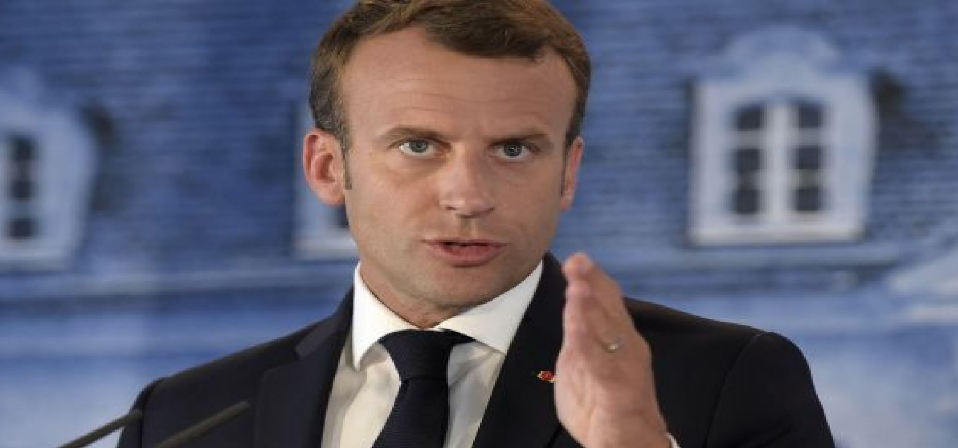
French President Emmanuel Macron Worried About War Escalation As Biden Calls Putin ‘Butcher’

0

France President Emmanuel Macron recently showed his displeasure against World leaders hurling derogatory words at Russia’s President Vladimir Putin following his forceful invasion of Ukraine. This is coming after the United States President Joe Biden recently called Putin a ‘butcher’ who cannot remain in power. He however warned against verbal insults as it can lead to the escalation of things following the Russian-Ukraine war.

Macron, who is hell-bent on brokering peace between Russia and Ukraine, told French broadcasters that he sees his task in the conflict as achieving first a ceasefire and then the total withdrawal of Russian troops by diplomatic means. He further stated that for this to be achieved, there should be a cease in words or actions that will escalate the conflict. Amid the ongoing Russia-Ukraine war, Paris has kept diplomatic channels to Moscow open throughout Russia’s military build-up on Ukraine’s borders and invasion of its neighbor.

France’s stance has come with heavy criticisms from some world leaders, but Emmanuel Macron stood his ground by stating that France’s action is very vital to limiting damage from the war. Despite Emmanuel Macron’s move of trying to douse tension, he nevertheless accused the Russian leader of wanting to return Europe to empires of domination, without respect for the integrity of borders and nations’ right to decide for themselves. 

Mr. Macron has earlier said that Russia’s objective was “not Ukraine, but a clarification of the rules with Nato and the EU. He however hopes that his dialogue with the Russian president would yield something meaningful and that he believes Putin would be open to discussing wider issues and also seek ways to organize the evacuation of civilians from the heavily bombarded port city of Mariupol

Displeased with President Biden’s remark, the Kremlin stated that such harsh comments could harm bilateral relationships. I know Vladimir Putin’s attack on Ukraine was uncalled for, but then I quite agree with what Emmanuel Macron says about the avoidance of the use of harsh comments from further escalating the war.

Diplomacy is still the ideal way to end the war, although Putin has not shown willingness to end the war. Of course, world leaders have every right to condemn Putin’s action, but then I do not feel they can ever negotiate, communicate or engage in diplomatic efforts with offensive terminologies. The war has not only affected Russia and Ukraine, but it has affected other parts of the world. Its ripple effect is being felt globally, and what the world needs at this moment is peace and not war. So anything that will further escalate should be avoided.

Although some people have stated that using diplomatic means might be futile and not effective as Putin is refusing to show signs of willingness, of which they disclosed that negotiating with him was a waste of time. But let’s not forget that Russia has been opening its doors to its allies like France and Pakistan where their leaders get to have a tete-à-tete with the Russian leader. The ideal thing for these leaders to do is to use this influence to broker peace and demand a ceasefire from Russia which has to be the prerequisite for bringing the war to an end.

African Mask Sold For $4.6 Million In France, People Protest

1

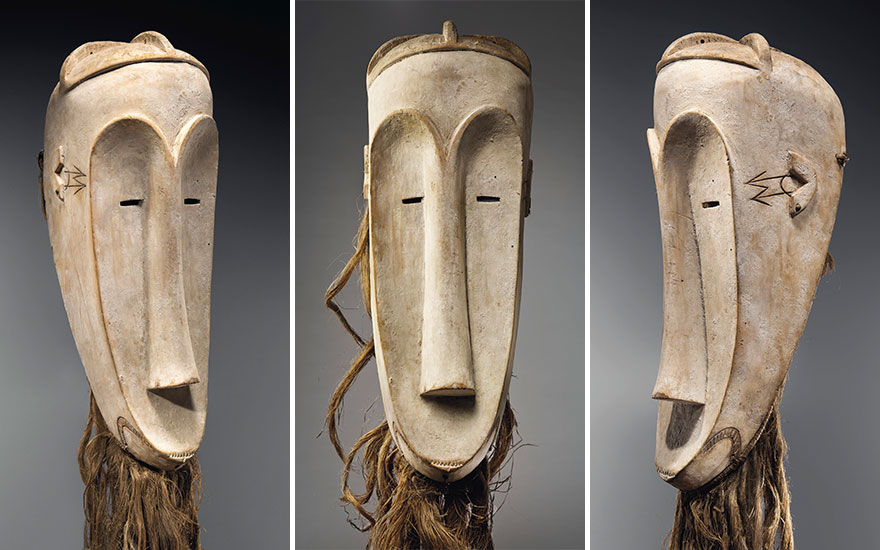
There was chaos at an auction site in Southern France after it was disclosed that a local Gabonese community staged a protest against the auction of a 19th-century wooden carved mask that was sold for $4.6 million. Activists who disrupted the auction protest stated that whoever bought the mask was acquiring stolen property. According to information obtained, it was disclosed that the rare wooden “Ngil mask” is used in ceremonies by the fang ethnic people of Gabon.

The Ngil mask is believed to have played a huge influence on the work of famous European artists including Picasso and Modigliani. According to the protesters, they disclosed that they will go further to file a complaint against such an inhuman act by France, and they will do everything to ensure that they recover the stolen artifact which was ill-gotten by the colonial masters. Amid the protest, Jean Christophe Guseppi the auctioneer in charge of the sale of the mask stated that the object belonged to the secret society of the Ngil vigilantes who roamed the villages to flush out troublemakers, among whom were individuals suspected of witchcraft.

He, therefore, concluded by saying that the auctioning of the object was legal as he saw nothing wrong in it. I strongly condemn this act of France for auctioning the Gabonese Ngil Mask, despite claims from them in trying to retrieve their artifact. According to history, it is a known fact that during the colonial era, most European countries invaded the African region and plundered all their precious artifacts that were sacred, symbolic, and spiritual to the African people. Some other artifacts were seen as metaphorical, as they spoke to the worldview and aspirations of the African people.

A lot of them have admitted that these artifacts were illegally obtained from Africa, of which some countries like Germany and Britain have returned some stolen artifacts in their possession back to their roots in Africa. I see no reason why some other European countries should still hold on to these objects, knowing full well the history of how it was illegally acquired by their colonial masters. Europeans must understand that these artifacts are not just mere objects, but rather, these objects help shape African history. Without it, history wouldn’t be complete.

French President Emmanuel Macron had in the past commissioned a report that the artifacts plundered from sub-Saharan Africa during the colonial era should be returned through permanent restitution. I am surprised at the recent development that just happened in France, concerning their refusal to return the “Ngil mask” to the Gabonese people. These European countries must understand that Africa’s treasure rightly belongs to Africa as it is sacrosanct to the people and it helps to shape their history. Selling it for financial gain is gross wickedness as it makes no sense to do that.

Prolific writer Chimamanda Adichie in one of her speeches in Germany stated that “European countries must see the need to have the courage to say that these arts are not ours, it should be returned to where it rightly belongs”. Some European countries have however made condescending statements as regards the stolen artifacts stating that they won’t return the arts, as African countries won’t take good care of them. Since when did it become their business how Africans took care of their arts? This is a specious argument, rooted in racist attitudes that somehow indigenous African people can’t be trusted to curate their own cultural heritage. It is also a product of the corrosive impact of colonialism.

One thing they fail to know is that Africans hold these artifacts in very high esteem, so saying they won’t know how to take care of them, doesn’t hold water at all. It doesn’t matter whether they can take care of them or not, what matters is that it is theirs. Since most European countries claim to practice the rule of law, they should live up to the ideals with which they define themselves by returning these arts. It might interest you to know that a lot of African arts are still being kept in Western Museums claiming that they are doing so for posterity’s sake. According to the most commonly cited figures from a 2007 UNESCO forum, 90% to 95% of sub-Saharan cultural artifacts are housed outside Africa.

The Elon Musk Impossible Social Media Project

0

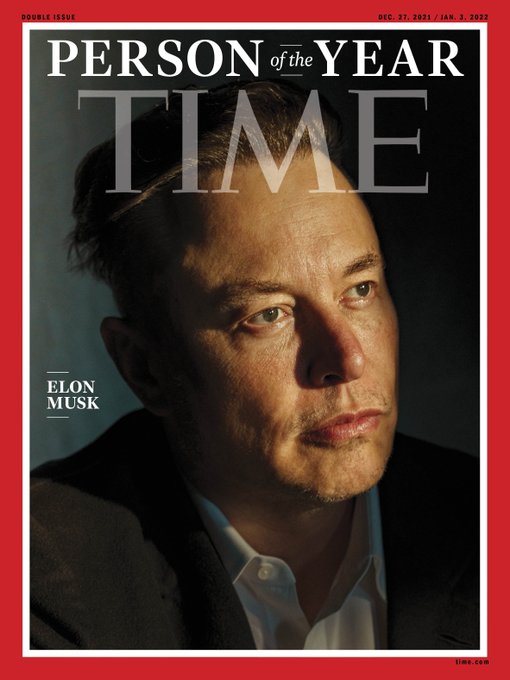
His generation’s finest innovator wants to add a social media platform, free of censorship, to the list of his trophies.  But do not buy that, because as soon as Elon Musk unveils whatever he has in mind, he will attain a stable equilibrium state and that is censorship.

The problem is not the censorship. The real issue is people pretending that they do not censor. So before you plan to join Musk, understand that he will do the needful, sooner or later.

Censorship is global. In Russian websites over the weekend, the #1 trending video was the shooting of Russian Prisoners of War by Ukrainian soldiers. Magically, that video is severely restricted in our part of the internet. It is the same way Russia blocks videos of bombed hospitals in Ukraine, in Russia, even as they trend in our part of the web.

Elon Musk is brilliant but there is one thing he cannot achieve: a zero-censorship social media platform. Since they censored me, I have stopped writing about the Ukraine war as there is no need wasting time on issues I cannot freely express my views. Will Musk provide that freedom? My answer is IMPOSSIBLE.

Apathy toward social media is growing with a recruiting dynamic that has drawn popular voices to jump the bandwagon of its criticism, and the idea of creating an alternative platform devoid of propaganda and censorship as a solution to social media platforms’ undoing.

The latest recruit is Elon Musk. On Saturday, the world’s richest man started a series of tweets accompanied by polls on Twitter, where he revealed that he is seriously thinking about starting a social media platform.

The SpaceX founder and CEO started the conversation with a poll asking whether Twitter algorithm should be open source. 82.7% of the 1.12 million responders voted yes at the close of the poll.

Elon Musk Is Considering Starting His Own Social Media Platform

Elon Musk Is Considering Starting His Own Social Media Platform

0

Apathy toward social media is growing with a recruiting dynamic that has drawn popular voices to jump the bandwagon of its criticism, and the idea of creating an alternative platform devoid of propaganda and censorship as a solution to social media platforms’ undoing.

The latest recruit is Elon Musk. Last week, the world’s richest man started a series of tweets accompanied by polls on Twitter, where he revealed that he is seriously thinking about starting a social media platform.

The SpaceX founder and CEO started the conversation with a poll asking whether Twitter algorithm should be open source. 82.7% of the 1.12 million responders voted yes at the close of the poll.

This was followed by another poll the next day. Musk tweeted that “Free speech is essential to a functioning democracy,” and then ask if people believed that Twitter was rigorously adhering to this principle. He then urged people to vote carefully as the consequences of the poll would be important. At the end of the voting session, 70.4% of the 2.04 million respondents said “No”.

He then went on to say that “Given that Twitter serves as the de facto public town square, failing to adhere to free speech principles fundamentally undermines democracy. What should be done?”

A couple of minutes later, Pranay Pathole, an Indian software developer asked the Tesla CEO if he would consider building a new social media platform, “One that would consist an open source algorithm, one where free speech and adhering to free speech is given top priority, one where propaganda is very minimal. I think that kind of a platform is needed.”

To this, he answered that he was “giving it a serious thought.”

https://twitter.com/PPathole/status/1507780749629730817?t=TLTc6_QiAoFXUucUHGDB-Q&s=19

Musk’s weekend conversation and polls on Twitter have resurrected a fresh discussion around freedom of speech, disinformation and hate speech that social media platforms have been continuously fingered as its enablers.

In January last year, Twitter, Facebook, Instagram and YouTube banned the accounts of former US president, Donald Trump, following the January 6 Capitol insurrection he was accused of stoking using social media. The ban drew mixed reaction, which mostly centered on free speech, around the world.

Last year, Nigeria’s president Muhammadu Buhari banned Twitter after his tweet was removed for violating Twitter policy. While his decision was widely condemned, it got a lot of support from many popular individuals, including Trump himself.

Trump’s attempt to strip social media platforms of some powers and to hold them responsible for activities on their platform, by amending section 230(c)(2), which provides immunity from civil liabilities for information service providers, allowing social media sites to remove or add warning labels to users’ posts or even suspend people who violate their rules, was vetoed by the Congress.

Since then, Trump has made two attempts to establish his own social media platform where he claimed people will have liberty to express themselves without being censored. The latest, Truth Social, has gained a lot of attention since it was announced, though people doubt that it will be anything near a platform of free speech since Trump himself is known for being intolerant to criticism.

Social media companies have found themselves in between the devil and deep blue sea. Many governments around the world are working to limit what everyone is allowed to post on social media, while outside the governments, the people don’t want to be censored on social media.

Besides governments’ pressure to control the narrative, social media is seen to be struggling to find a balance in an era of woke and cancel culture, where unnatural ideas are becoming a norm and people are not allowed to speak out against them. Many are accusing social media platforms of censorship while others say they have allowed users to create unhealthy environments in the name of free speech.

Musk’s revelation that he is “seriously” considering establishing a social media platform may be the disrupter that the industry should be wary of, especially Twitter, which is his platform of choice. But would it solve the problem? In a world where one man’s truth is another man’s lie, running a social media platform on uncontrolled freedom of speech beckons disaster.

Before succumbing to pressure to ban Trump from Facebook, CEO Mark Zuckerberg said that social media platforms shouldn’t act as arbiter of truth. He said that the first time Twitter affixed a label on Trump’s tweet, highlighting it as a potential lie. But with pressure piling up on social media as legislators and rights organizations step up efforts to stem online hate and disinformation, Facebook has updated its policy and has begun taking similar action against users.

Musk is currently worth a whopping $250 billion, weighs a huge social media influence and can easily create a successful social media platform. But will it be immune to regulatory influences? Will it not become a sanctuary for hate and bullying at the long run? It is believed that just like in Trump’s case, individuals’ idea of starting a social media platform is borne from the desire to promote what they believe in.