DD
MM
YYYY

PAGES

DD
MM
YYYY

spot_img

PAGES

Home Blog Page 5255

Egoras – Bundling Zero-Interest Financing with Engineering

0

Trade in is a great business model: you exchange a used asset in part payment for another. Example: he traded in his old Toyota car for a new Innoson Motors in Nigeria. Looking at the data, we figured out that many things could be traded in easily. At Egoras, a portfolio startup, the team designed a model, using zero-interest financing, to soup things up, capturing more value in used items.

But what do you do with the used items? You refurbish them – and that requires a new playbook, bringing and training technical brilliant minds to operate at another layer.

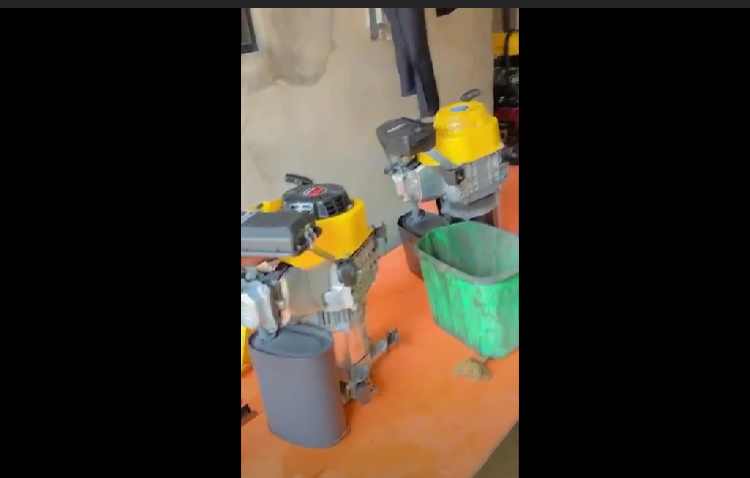
This young company will likely hit 2,000 staff by December. It is opening factories where electric fans, generators, smartphones, etc are refurbished at scale. You see the big billboards in PHC; it is on the way to Onitsha and Enugu.  When you buy an Egoras refurbished asset, you get a 6-month guarantee. And if you want a new asset, you can trade in your old asset via a zero-interest financing system.

Jobs. Jobs. Jobs – Nigeria needs them. And new business models will unlock many. CEO Ugoji Harry and the team have impressed. They will be hiring 60 people in Enugu next month.

Video: Egoras.com refurbishment unit in PHC. The packaging (not shown) is done at Aba. They have also engaged Awka blacksmiths to shape some metals. In other words, they work the clusters, finding most things needed within Nigeria.

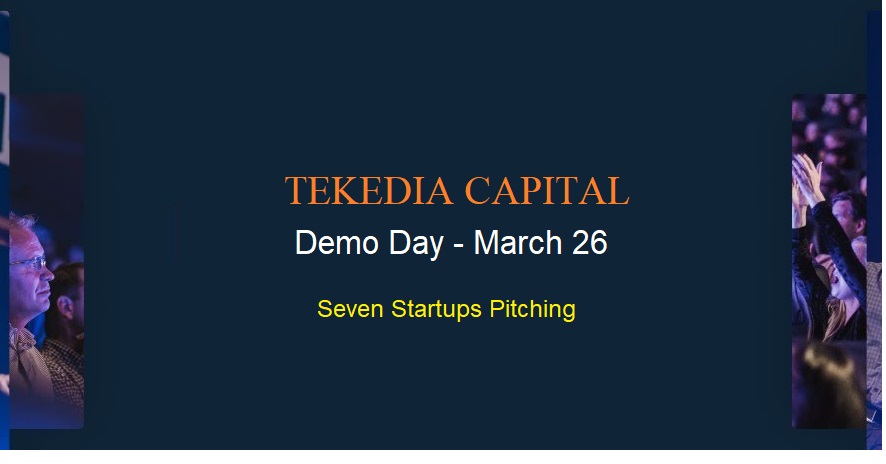
Tekedia Capital Demo Day is March 26

0

On Saturday, March 26, seven startups will pitch before Tekedia Capital Syndicate members. We hope to support another class of great startups. In our last three cycles, we have incubated startups which ended up joining YCombinator or Techstars. In other words, we understand what works.

And to the Nigerian people, thank you. One of these startups received a $5 million deal as captured in the national budget. It built something so amazing that the Senators, House Members, and the Presidency came onboard. I see a category-king and a leader in markets.

To be a part of Tekedia Capital, visit our website here

Tomato Jos Launches First Fully Made In Nigeria Tomato Paste

0

Good news coming in from Nigeria, as a factory in the country can now boast of Manufacturing tomato paste, courtesy ‘Tomato Jos’ factory. The factory which is based in Kaduna state Nigeria is led by American-born entrepreneur Mira Mehta. The facility is said to be the third-largest of its kind in Nigeria. The idea to process tomatoes in tomato paste first came to Mehta as she was traveling for non-profit work in the northern part of Nigeria in 2008 where she saw first-hand the post-harvest loss of tomato crops.

She then proceeded to attend Harvard Business School in 2012, where she fine-tuned her business plan, and ever since then, her company tomato Jos has been perfecting its tomato farming process, increasing its yields and training local farmers.

Just recently, the company launched its much anticipated Tomato Jos paste variant into the Nigerian market, which is already in circulation in the Northern part of Nigeria. The new tomato paste is packaged in a 65-gram sachet, which comes in a superior flavor and color. According to information obtained, the tomato paste variant is said to be the company’s first consumer product since it began operation.

Speaking at the unveiling event of the “Tomato Jos Paste, the company’s CEO Mira Metha had something remarkable to say.

In her words, “It is a dream come true. Though entrepreneurship is full of ups and downs, I feel encouraged whenever I see my passion for this business ignite in one of my colleagues. I am incredibly proud of the Tomato Jos team for their hard work and belief that we could achieve something on this scale. The facility is the only one of its kind in Nigeria that can produce sachet tomato products directly from fresh tomatoes. The product is currently available throughout Kaduna State, and we intend to expand to more states by the end of 2022. Our company’s theme for 2021 was ‘Let’s Do This!’ and, well, we did it! The future looks bright for Tomato Jos. We will continue to grow until we become a household name across Nigeria”.

I am very ecstatic to see this good news come from Nigeria because the country has been depicted to be more of a consumer economy than a producer economy. According to statistics, Nigeria is the world’s 13th largest importer of tomato paste, even though the country is richly blessed with fresh tomato products. It is indeed a thing of joy that a company in the country can now manufacture tomato paste because facts have it that there are usually post-harvest losses of approximately 45% of tomatoes in the country because buyers cannot be found.

According to Metha, she disclosed that driving across Northern Nigeria, she would see piles of tomatoes that farmers couldn’t sell. Not anymore, as the company can now transform those leftovers into tomato paste. This is a perfect time for the government to partner with Tomato Jos company and invest properly into the company, as well as going to set up many more companies like that so that there can be massive production of tomato paste in the country, which will stop the country from the importation of tomato paste.

According to the CEO of Tomato Jos, Metha, she disclosed that her company plans to raise an additional $10 million in debt and equity to fund further growth and expand its reach across the country. The exportation of these products will greatly improve the country’s economy as many countries will seek to patronize these products. Permit me to say that Nigeria is on its path to becoming one of the highest manufacturers of tomato paste.

Are investors in African Startups biased towards foreign-educated CEOs?

1

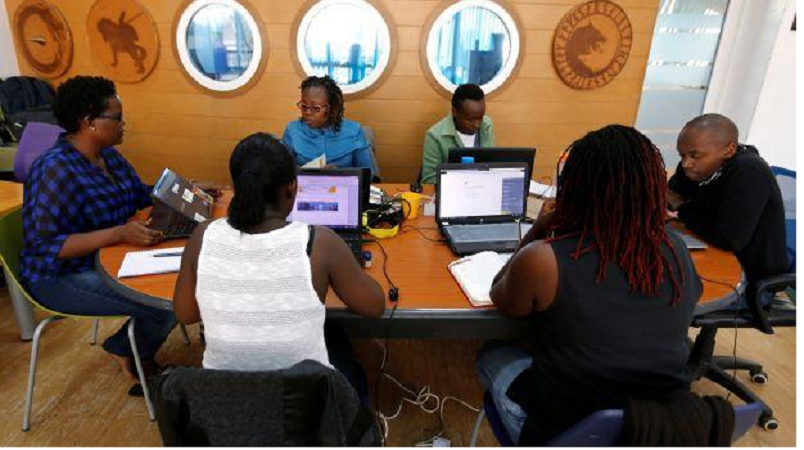
The Big Deal – a substack newsletter that covers startup deals in Africa – recently released data shows that in 2021, 73% of the over $4 billion raised by African startups was by CEOs whose latest degree was a Masters or MBA obtained from a university outside of Africa.

The data shows that both in terms of the number of deals and amount raised, “it is US-educated CEOs who lead the charge, followed by their UK-educated peers.” In the numbers, Startup CEOs who last studied in Africa signed 44% of the deals but raised only 28% of the over $4 billion raised by African startups. This was true for all African countries except Egypt and South Africa. For the two countries, more than 60% of the capital raised in 2021 was by CEOs who last studied in their home country.

The conversation around this has tried to suggest that there might be investor biases or existing prejudices that favor founders who have acquired a degree outside the continent, over the founders who only schooled at home. This may or may not be true, and the authors of the data have agreed that more research would be needed before any such claim can be made.

Let’s talk about it. As an entrepreneur, does where you go to school matter? Are there things you would be taught outside of the continent, that is not being taught in African higher institutions? Are all of this education and certificates even necessary?

The direct answer is a No. The school you attended will not matter in the real scheme of things, because education is continuous especially if you are an entrepreneur. Besides, there are now different ways you can educate yourself without going through the four walls of a higher institution, and some of them are just as effective as any formal education you can get. There are online courses and certifications if you consider all that to be necessary. What counts, and I speak for most entrepreneurs and investors, is your productivity and ability to provide the results that will solve people’s problems.

But how can we explain the lopsided investment pattern that the data reveals for African startup founders? I will attempt to look at it from two angles – perception and reality.

In terms of perception, when people (investors or not) come across someone who has traveled outside the shores of his country to get an education, the perception is that this could be a person who places a higher premium on education and exposure; and so he has traveled thousands of miles in search of it. This may not always be true. A local institution may be offering better quality education of the specific field of study he has, but the discomfort of traveling to school just gives the impression that he or she must have traveled in search of the best.

Now let’s consider reality.

What are investors on the lookout for when they invest? Irrespective of whatever biases or prejudices they have, investors generally want to put their money into a business that has a higher possibility of success. They want to back that CEO who looks like he has what it takes to carry the idea through. This is highly subjective of course, and that is why the same business one investor refuses to fund, can have several others who are willing to inject the needed funds.

Thankfully, data is only showing a slightly imbalanced pattern with foreign schooled CEOs getting 56% of the funding deals, while those who schooled locally signed 44% of the deals. The major difference comes when you begin to consider the funds secured in those deals.

Why are investors willing to throw more money behind CEOs who schooled outside the continent? Here is what I think.

Most times, startups founders in their pitch will talk about plans to expand into other countries and take their business beyond their current locality. Given this, an investor would naturally prefer a CEO who has some exposure outside their current country of operation. Schooling outside of your country or even continent means that the foreign schooled founder has more exposure and multicultural experience.

Most investors might consider it folly, to give you money to expand your business into a country you have never lived in. You may not be familiar with the system there, its market structure, regulatory issues, and the like. In such a terrain, your chances of failure may be higher than your chances of success. If however, you have someone on your team, a partner, or a co-founder who schooled or lives in that location, it could help your case.

On a radio show recently, the CEO of a software company in Nigeria mentioned that he had started his business in the UK even while he was servicing Nigerian clients. During this time, all his efforts at fundraising were futile because investors insisted that he needed to live in Nigeria to serve Nigerian clients or get a partner who had schooled or lived in Nigeria for decades. He had to relocate the business to Nigeria and get a fully Nigerian partner before the funds came in.

This, in my opinion, shows that there may not necessarily be a bias against founders and CEOs who schooled locally. Investors want to ensure that people have been exposed to that environment that they want to play in. If you are proposing a business that crosses a nation’s boundaries, it just helps to have multi-cultural experience, cross-border exposure, and an international network with ex-colleagues or ex-coursemates in other climes. It means you will have a better understanding of the culture, and the people.

Take all these away, and you may be seeing a lot of cultural clashes and knowledge gaps that could become a clog in the wheels of the business. Keep in mind that before any pitch, you should increase your chances of getting funds by getting a partner who has those qualities that you lack. Learning never ends, so there could be other opportunities for studying that could come your way.

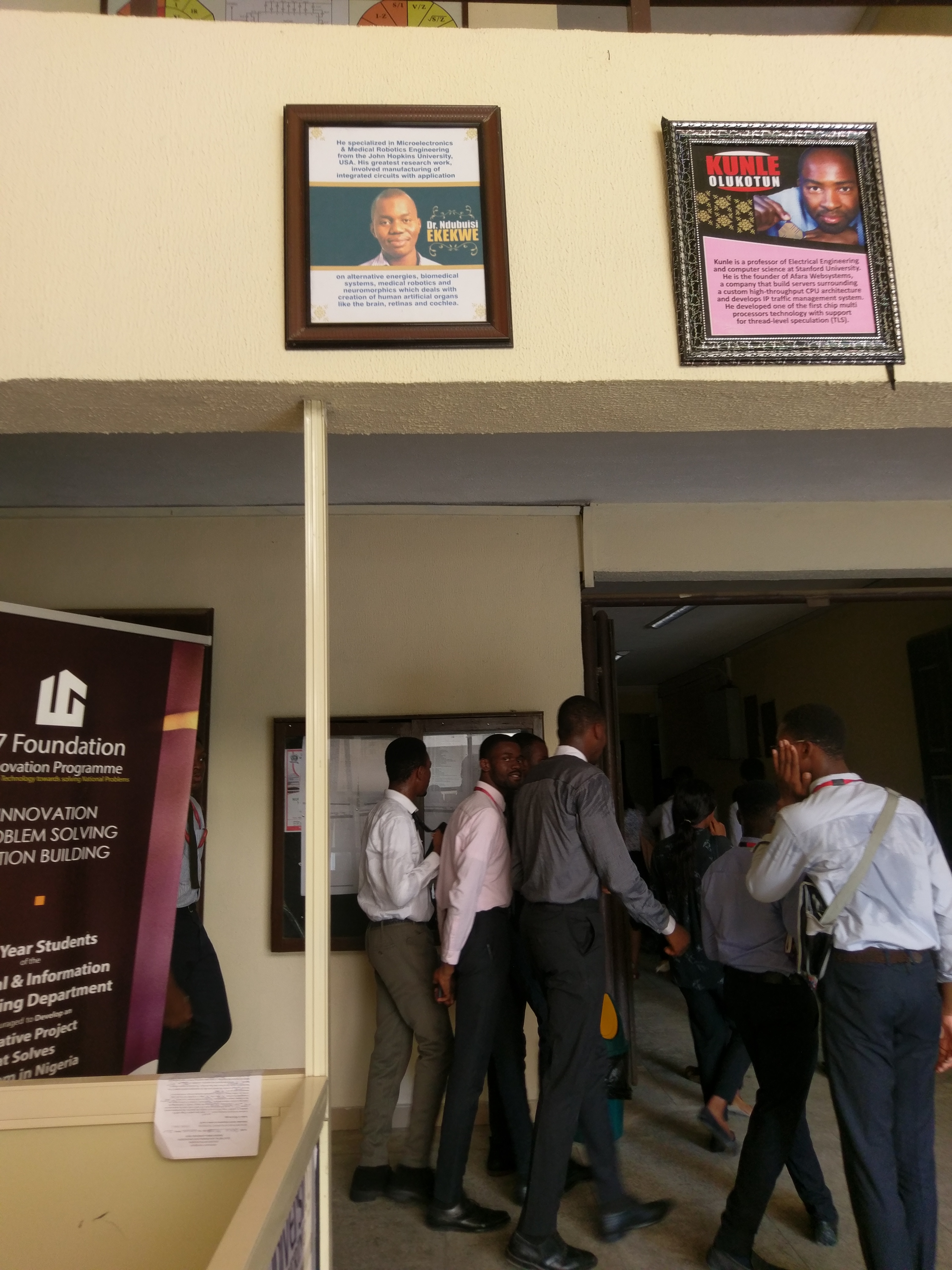
#IamAnEngineer

1

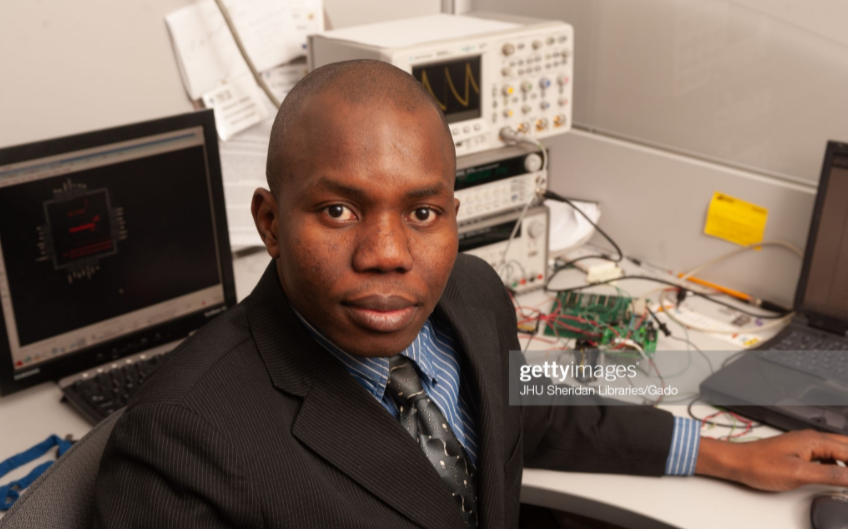
Never a bigger honour than when Africa’s finest private university puts your portrait in its building. They referenced my PhD thesis in the Johns Hopkins University, and the patent out of it, and which the United States Government sought and received assignee rights. I developed a way to make it possible for robots to operate on humans (minimal invasive surgery across abdominal, thoracic, etc). It turns out that the technology is also useful for astronauts as they navigate limited gravity in space. I am so proud that my work is going to be used in space. Thanks Covenant University for the honour. #IamAnEngineer