DD
MM
YYYY

PAGES

DD
MM
YYYY

spot_img

PAGES

Home Blog Page 5266

Nigerian Students on ASUU Strike, Join Tekedia CollegeBoost

0

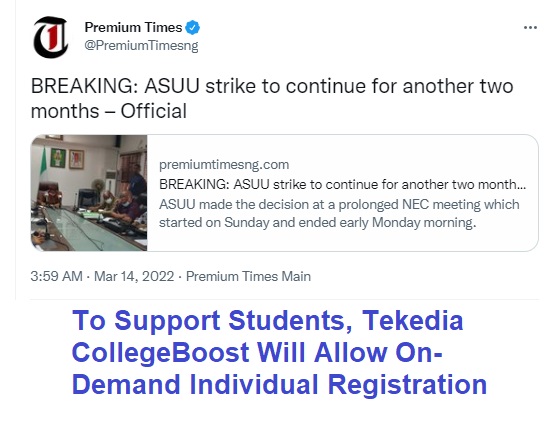
ASUU (university teachers in Nigeria) has extended its current strike by two months. To support students, Tekedia Institute CollegeBoost will allow on-demand individual registration. Tekedia CollegeBoost is an Advanced Diploma in Business Administration designed for students in colleges. It is an 8-week program offered to a group of students.

But we’re making some changes due to the strike. So any student can register now. Also, we are reducing the cost to N10,000 (or $30) per student. Go here and register and be learning while you wait for ASUU to fix issues with the government. This offer will end March 31, 2022 .

Nigerian students, Tekedia CollegeBoost has been temporarily adjusted to accommodate the two-month ASUU strike. Now, you can register individually for the 8 week program. Get your Advanced Diploma in Business Administration while you wait for ASUU and the government to sort out their issues (sample certificate below).Tekedia CollegeBoost is a community for students. In 2021, thousands of students from many colleges in Africa attended it. Register and be learning during this ASUU strike. 

At the end, you get this certificate

Child Found With Dispatch Rider Not Stolen: The reason for the right to fair hearing.

0

Right to fair hearing is a constitutional provision in s.36 of the constitution which it’s import is that every citizen despite the offense he’s been accused to have committed (be it civil or criminal) have the right of audience, right to be heard, right to share his or her own side of the story, right to defend himself in person or with the aid of a legal practitioner in the determination of his case. 

The implication of this section is to protect citizens from other overzealous citizens including law enforcement agents who are always ready to take laws into their hands and dispense jungle justice to any and every accused person  immediately without letting the law take its course and without proper investigation into the matter. 

Most importantly, this section tries to discourage jungle justice and act as a reminder that there are always two sides to every story and every accused must be given the audience to share his or her own side of the story to avoid punishing an innocent man. 

Most times, people that get melted jungle justice end up being innocent but they were not given the opportunity to share their own side of the story before the get mobbed just like the case of the alleged kid kidnapper last week that was merciless brutalized by mobsters who turned out to be an innocent man. This has been the case where persons were set ablaze, brutalized and killed by mobs due another person raising an alarm and accusing them of committing one offense or the other in the public which turn out to be a false alarm. 

Some excerpts of s.36 of the constitution which provides for right to fair hearing is reproduced below: 

S.36(1) In the determination of his civil rights and obligations, including any question or determination by or against any government or authority, a person shall be entitled to a fair hearing within a reasonable time by a court or other tribunal established by law and constituted in such manner as to secure its independence and impartiality.

36(6) Every person who is charged with a criminal offence shall be entitled to-
a. be informed promptly in the language that he understands and in detail of the nature of the offence;

b. be given adequate time and facilities for the preparation of his defence;

c. defend himself in person or by legal practitioners of his own choice;

d. examine, in person or by his legal practitioners, the witnesses called by the prosecution before any court or tribunal and obtain the attendance and carry out the examination of witnesses to testify on his behalf before the court or tribunal on the same conditions as those applying to the witnesses called by the prosecution; and

e.have, without payment, the assistance of an interpreter if he cannot understand the language used at the trial of the offence.

The case that trended last week of a dispatch rider kidnapping a 10 months old kid is an eye opener why the need for the right to fair hearing and secondly, a reminder for the need why jungle justice should be made a serious offense with serious punishments for those who still engage in the act of jungle justice. 

What the law provides is that when a person is being accused of any offense, especially criminal offense, he should be reported or handed over  to the law enforcement agency who will then conduct a thorough investigation on the offense the person is accused of committing, if there is a prima facie case established after the investigation, the accused person will be charged to court. The court after hearing the matter will determine if the accused is guilty or not, if guilty the court in her wisdom will give the offender the punishment he or she deserves, but if the court after hearing the matter finds out that the accused person is innocent, the court will graciously allow the accused to go a free man. 

This is why there should never be a room for jungle justice because there are avenues that have been laid down for seeking justices in the society and the public should never engage themselves doing the jobs of the judiciary because whenever they do, an innocent person gets killed and the society will turn into a jungle where a person can be killed or brutalized on a false alarm. 

We all saw a video of the dispatch rider that was mobbed for being accused of kidnapping  a 10 months old baby in the Sangotedo area of Lagos some days ago. The man who after investigation turned out to be innocent was never given a chance to explain his own side of story, he was mercilessly beaten, brutalized, called a kidnapper, recorded and trended online. 

The Lagos state police command ordered for full investigation on the case and they found out that the man never kidnapped the young boy rather, according to the mother of the alleged kidnapped boy, the dispatch rider is a relative of the mother of the boy and the boy is very fond of the man, always wanting to go along with him all the time and with the mother’s permission the dispatch rider took the boy along to make some quick deliveries. 

The Lagos State Police Command on Monday disclosed that a dispatch rider, who goes by the Williams Tadule, got the consent of one Lovina Biturs, the mother of the boy to take her 10-month-old baby away.

The story according to the mother is that the rider wanted to go pick up something in the neighbourhood and the baby’s uncontrollably cries won’t let his mother be, pacify the baby, his mother allowed him go with the rider,” 

In the official statement made available to the public by the police, titled, ‘Child Found With Dispatch Rider Not Stolen’. 

The statement read, that On 11th March, 2022, a video of a dispatch rider accused of concealing a suspected stolen child in a courier box went viral on the social media, causing apprehension.

“Although the incident was not reported at any police station, however, the Commissioner of Police, Abiodun Alabi, fdc, mnim, psc, directed that the incident should be investigated immediately.

“The child’s mother, Lovina Biturs, was contacted. It was then revealed that the child was actually taken away and put on the dispatch motorbike by the rider with the consent of his mother.

“According to the mother, the 10-month-old baby is fond of the rider who is a relative, a neighbour and was crying uncontrollably when he (rider) wanted to go pick up something in the neighbourhood. To pacify the baby, his mother allowed him go with the rider.

“Passersby who saw the child with the rider along Sangotedo area, Ajah on the said day, became suspicious and concluded that the child might have been stolen, raised the alarm which attracted a mob. The mob subsequently pounced on the rider, beating him without finding out the truth.

“The dispatch rider later identified as Williams Tadule, was said to have been rescued by the Chairman of the Sunview Estate, Sangotedo.

“The Commissioner of Police, therefore warns members of the public against any form of jungle justice as such uncivilized action has grave consequences.”

Tekedia Capital Welcomes Indian Investors

0

Tekedia Capital is speaking with many investors from #India on opportunities in the African tech ecosystem. We run a syndicate which enables many people to co-own a piece of some of the most amazing tech-anchored startups out of Africa. Our India-based partner, Asif Chowgule, is coordinating this for Tekedia Capital.

He has been reaching Indian citizens in diasporas and the homeland with opportunities we have in Africa. I am making this open call for those interested to connect with Asif; he will explain our processes which you can also find here

Our goal is to unlock $millions from India this year.

When Will Nigeria Cease To Borrow? 

0

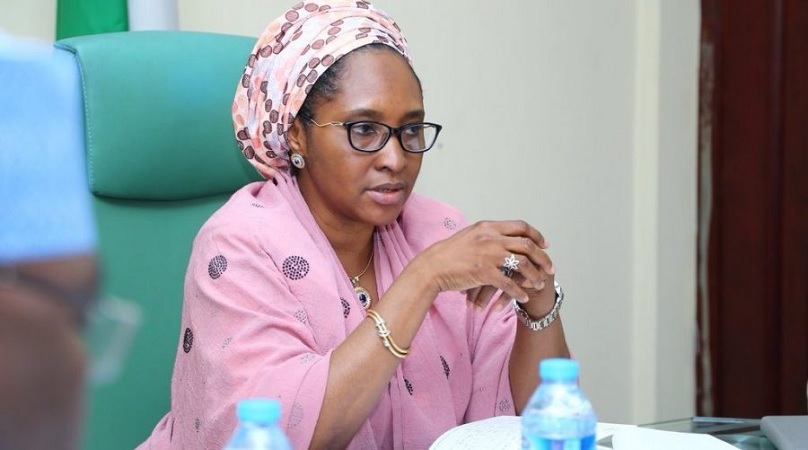
It’s noteworthy that a total sum of N17.126 trillion was passed by the Senators as Nigeria’s 2022 budget, as against the N16.391 trillion tendered to the joint session of the National Assembly (NASS) by President Mohammadu Buhari.

The 2022 budget has it that the projects to be executed in Nigeria within the ongoing fiscal year would be financed by the foreseen assistance of both local and international loans yet to be sought, having estimated the expected oil benchmark for the year among other sources of financing.

It’s pertinent to acknowledge that governments in rich as well as poor nations borrow money from such domestic and international markets as the World Bank, the International Monetary Fund (IMF), and commercial banks.

In rich nations, government borrowing obviously stimulates the private economy. It creates jobs and raises incomes of the majority of the population of the affected nation, thereby improving their standard of living. However, in poor or developing nations, government borrowing does not generally produce the same results or the required effect.

In Nigeria, for instance, for decades now, the government incessantly enjoys domestic and international borrowing but pathetically, such a gesture hasn’t stimulated the private economy as anticipated. To say the least, the role of Foreign Direct Investment (FDI) in the country’s economy has not been significant.

Between 2009 and 2015 alone, the government engaged tremendously in international borrowing. This gesture was reflected in the country’s balance of payments deficits.

In spite of the enormous borrowing by the government, grants received out of benevolence, and funds coming from plea bargaining, as well as debts rescheduled or forgiven, the nominal income per capita hasn’t shown any significant improvement.

The country average income per capita on a monthly basis for the recent years was about USD130 dollars or thereabouts which was far below the $500 average income for the poorest African countries. Pitiably, the country cannot presently boast of up to USD80 dollars as its monthly average income per capita.

Nigeria has recently faced an unprecedented population growth. Although the population is increasing at an alarming pace, its purchasing power is not.

Such a phenomenon as posited above has two cogent and inevitable effects on the economy. The first is that the rapid increase in population impoverishes the country as a whole, hence making the accumulation of capital very difficult. Secondly, the low purchasing power limits the internal market.

The major economic plight in a country like Nigeria remains that the government has not been accountable to the people. Thus, it can borrow as it pleases, and the unsuspecting electorate would still foot the bills.

We must acknowledge that the government will continue to borrow as long as there are interested lenders, provided the fiscal policies of the country remain docile. This is why suchlike policies are seriously yearning for restructuring.

Besides, there’s enormous politics involved in international lending. Though Nigeria can invariably find her way as regards assessing loans from either official or unofficial sources via the use of her international connections or immunity, for how long will she continue to depend on external borrowing? This, among other paramount questions, is required to be raised by any one or analyst who truly thinks good of the country.

It would be recalled that during 1966-1974, or thereabouts, developing nations were growing at a high rate simply because they were yet to be involved in external borrowing or importation of goods and services. In view of this, their annual average growth rate stood at 7%.

But in order to meet their subsequent population growth needs, many of them began to import heavily, particularly capital goods, oil and foods. Funnily enough, they are mostly involved in export-oriented strategy as it’s presently witnessed in Nigeria in the oil sector.

It’s not anymore news that the borrowing, especially external, that’s captured in the Nigeria’s 2022 budget, which is not unusual in the country’s budgeting pattern, has been generating a lot of ripples and mixed feelings in various quarters, thereby making several Nigerian analysts as well as social commentators to be involved in series of fallacious arguments.

It’s amusing and perhaps very awful to realize that sometimes most Nigerians play politics with issues of national interest, particularly very sensitive economic matters. This kind of lifestyle has conspicuously caused the country more harm than good.

We are not unaware that borrowing is necessary, but it ought not to be seen or adopted as a measure that must be taken for a country to survive or grow. Hence, such a mindset needs to be jettisoned headlong.

It’s worth noting that such an economic approach as borrowing becomes consequential only in certain circumstances, and not in all as being presumed in various quarters.

Even as an individual, if you dare take borrowing as a tradition or norm, you will surely live to regret it. We, either as individuals or groups, need to borrow sometimes but not always.

Of course, many are of the view that provided you are borrowing for a tangible project, it’s a welcome development. No doubt, borrowing becomes paramount and necessary only when the prospective borrower intends to use it for feasible projects such as capital expenditure.

Ab initio, Nigeria was borrowing for tangible reasons. But as a result of corruption, rather than doing the needful or investing the borrowed funds meaningfully, she invariably ends up doing otherwise.

So, if Nigeria as a people failed to address such a lapse, the nauseous phenomenon would continue to repeat itself, thereby making the country indulge in borrowing perpetually.

On a yearly basis, Nigeria’s international debt increases colossally, thus negatively affecting her current account balance which is expected to rise steadily. This is indeed an aberration, to assert the least.

Survey indicates that the external debt in Nigeria averaged USD6.38 billion from 2008 till 2015 when it reached an all-time high of USD56.74 billion in the fourth or last quarter of the said fiscal year which was about 10.9% of her GDP for that very year, though it recorded a low of about USD3.63 billion in the first quarter of 2009.

Furthermore, Nigeria’s total public debt stock stood at N33.107 trillion or USD87.239 billion, as at the end of the first quarter of 2021, and the same debt profile lingers till date. Worse still, a large portion of these debts are owed to private lenders at variable interest rates.

Rather than being preoccupied with how to repay the backlog of debts, the government keeps borrowing at the expense of the country’s economy. This implies that Nigeria has hitherto apparently absorbed incessant borrowing as a tradition.

Having acknowledged that it isn’t a wholesome belief or practice, there’s a compelling need to put up stiff measures towards addressing the monumental anomaly.

Against this backdrop, let’s briefly take a tour to the history book. The IMF then imposed its Structural Adjustment Programme (SAP) conditionality on the deficit countries, which Nigeria was inclusive, to force them to take necessary steps toward reducing their payments deficits and consequently earn sufficient foreign exchange to enable them to pay back their loans.

Hence, they had to devalue their official exchange rates, abolish or liberalize foreign exchange controls, introduce anti-inflationary programmes as well as adopt a free trade policy.

Notwithstanding, the ‘almighty’ SAP didn’t produce any successful result; rather, it ended up constituting more problems, perhaps still due to corruption. Now, the question is: how can Nigeria escape from this lingering debt trap as well as desist from her unending borrowing tradition?

The country needs to embark on an economic lobotomy. The apex government is expected to, without much ado, shift course from an internationally-dependent growth to domestically-based economic development plan. This can only work if the country’s financial and monetary policies are revisited and reviewed.

To this end, the concerned authorities have to strengthen most of the country’s fiscal policies, participate in frugal expenditure, initiate deflationary economic measures, revive moribund economically-oriented projects, detest construction of white-elephant projects; and most importantly, tackle the unbridled corruption as well as security challenges with the last drop of their blood.

We must understand that growth can be self-generated by focusing on products commonly consumed by low-income citizens. Even a little improvement in the productivity and income in such a quarter will capture a sizable market and assist in sustaining development of other products and markets.

Therefore, instead of embarking on massive infrastructural projects, the government ought to start with improving such capital-oriented projects that make production cost-effective as road cum railway network, power cum water supply, and refineries.

So, acknowledging that borrowing is only regarded as a healthy practice when the borrowed funds are utilized judiciously and selflessly, it’s needless to reiterate that the governments at all levels must invest meaningfully and wisely to reap heavily and successfully.

Expect New Opportunities in Building National Firewalls As Companies Sanction China

0

A client: “Ndubuisi, where do you see public sector opportunities in markets for tech?”

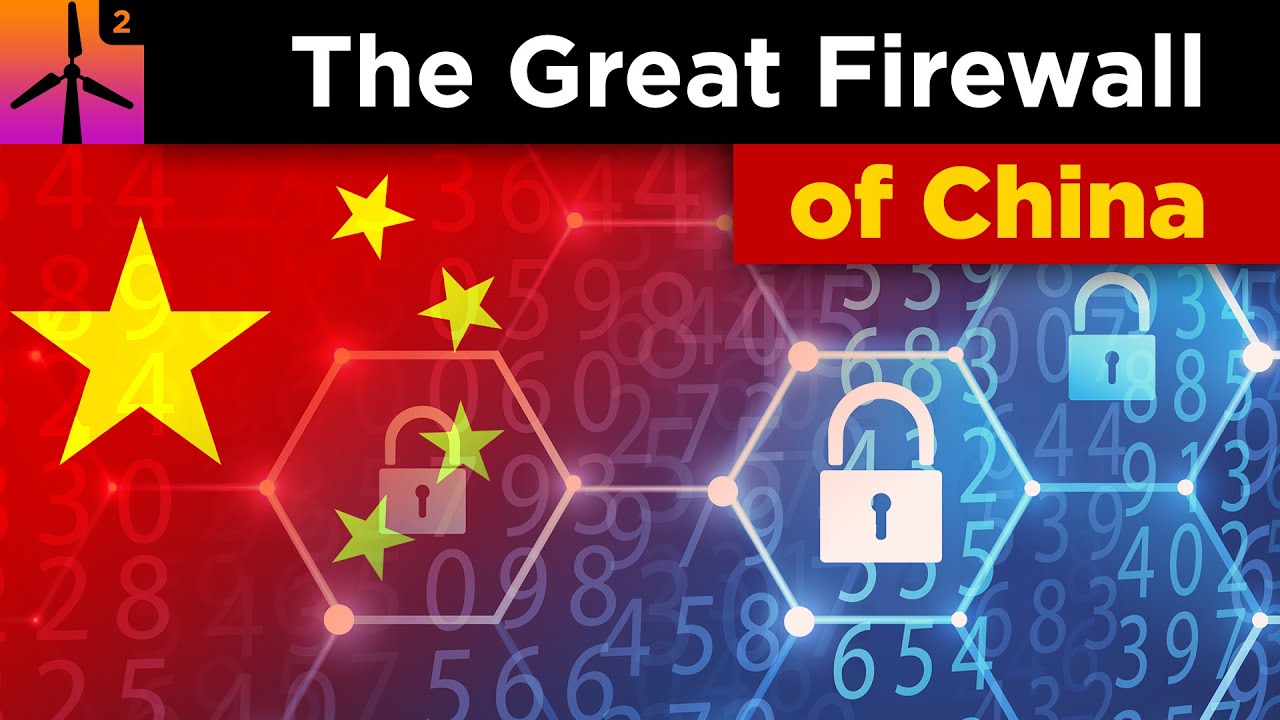
My response, summarized: I noted that companies which can execute and implement national firewalls like the Great Firewall of China will see growth in the next few months and years.

My postulation is based on the great corporate sanctions in Russia where many US and European tech firms are phasing out from Russia. I do think that Google, Mastercard, Facebook* and others, while doing a noble thing by protesting over the invasion of Ukraine, have also provided strong reasons to many countries to look for alternatives.

I expect India, Brazil and many other countries to visit China and ask for the code and playbook which it used to build the Great Firewall of China. Simply, you may not have to rely on non-national companies, and alternatives would be critical.

In other words, the corporate sanctions against Russia would be interpreted by many national security committees, and many will see what China has done for ages from a different angle now. Yes, China censors at the national level while the US does so using private companies like Facebook and Google which continue to limit “enemy” content. For example, Facebook has taken down Russia’s news channels.

People, this conflict will rewire the world order! Indeed, unlike government sanctions, private companies are willingly disconnecting from Russia even when no one asked them to. So, some countries will pay attention to this novelty. Expect governments promoting local brands and those will offer public sector tech opportunities across the world.