DD
MM
YYYY

PAGES

DD
MM
YYYY

spot_img

PAGES

Home Blog Page 5266

Thank you our donors for your generosity

0

This is to THANK all our donors and partners who continue to support young people to attend Tekedia CollegeBoost as schools embark on another ASUU strike in Nigeria. I want to thank Olu Ajanwachuku, Nnamdi Nebo, and many others who have supported by offering generous scholarships.

Tekedia Institute is a school for schools as it is the only institution in Africa where students from many colleges, universities, polytechnics, etc converge. 

Thank you. Eyitayo Adeleke is here for anyone who wants to support one or more. We discounted our CollegeBoost program, making it easier for students to attend while they wait for ASUU and the Nigerian government to fix their issues.

And with the new Funds we have created in Tekedia Capital, we are working to make it possible that great young people can leave colleges and build companies, under mentorship from experienced business leaders. We think the young grads are smarter, and they will lead the way.

You can learn more about the program here.

Nigeria And The Incessant Building Collapse

0

Building collapse has been of serious concern to any sane individual or entity domiciled within the contemporary Nigerian society.

The anomaly has hitherto constituted a colossal harm to not just the engineering-technology sector but Nigeria at large. In some quarters, many individuals have chosen to keep their eyes widely open while sleeping.

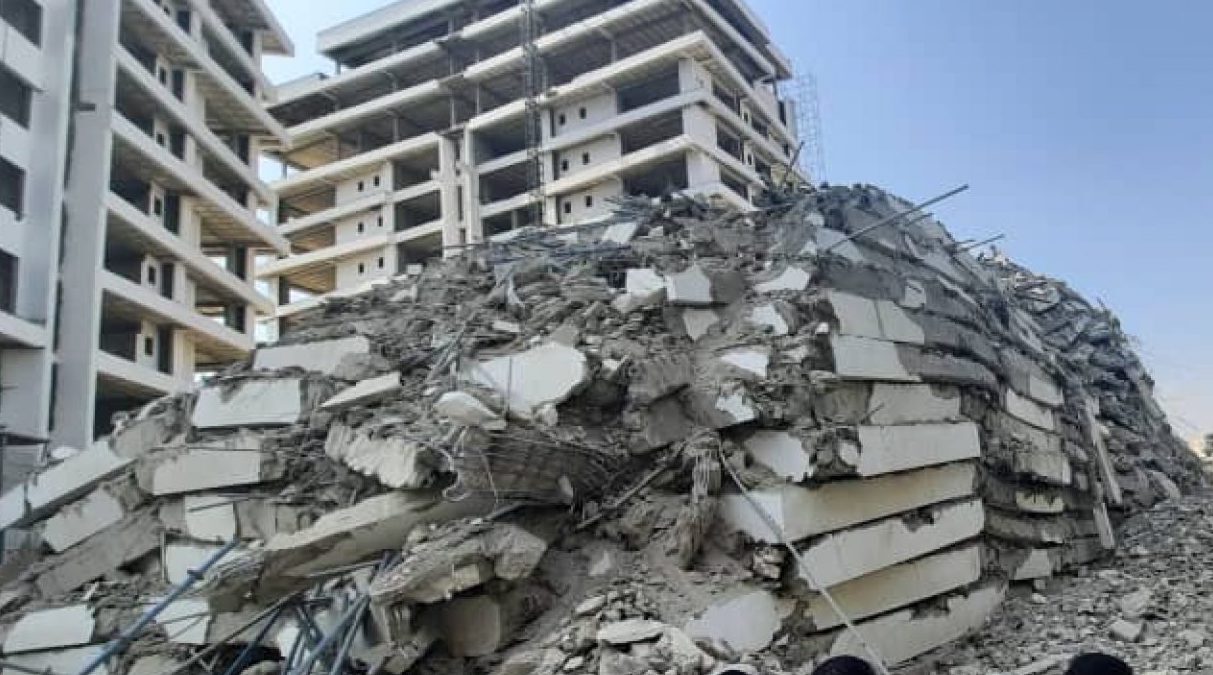
On 13th March 2019, Nigerians were shocked to their bone marrow when notified that a certain 3-storey building situated on the Victoria Island of Lagos State abruptly collapsed, thereby claiming about twenty lives and inflicting different degrees of injury on countless others.

It was consequently reported that the third floor of the collapsed structure was being occupied by primary school pupils who were already unfortunately present for their usual studies prior to the bad omen.

Barely forty-eight hours after the ugly and unspeakable incident, it was learnt that another 3-storey building in Ibadan, the Oyo State capital equally collapsed unannounced, injuring a lot of Nigerians, though no life was reportedly lost.

Statistics indicate that within the aforementioned period, countless buildings situated across Nigeria collapsed unceremoniously as if a structure can be brought to the ground at any time by mere breeze or thunder storm.

In March 2006, the top nine floors of a 21-storey building belonging to the Bank of Industry, located on the famous Broad Street – still on the Lagos Island – caved in, killing two and injuring twenty-three others.

In August 2010, a 4-storey uncompleted building at Ikoli Street in Garki, Abuja brought the Federal Capital Territory’s name into the list, thus reportedly claiming not fewer than twenty-one lives and endangered nine.

Survey reveals that between 2012 and 2016 alone, Nigeria recorded about fifty-four building collapses. Though the unfortunate situation is not peculiar to the country, its recent alarming rate calls for an apt and urgent attention.

To duly tackle the societal menace, the concerned authorities must comprehend the rudimentary factors that invariably constitute the quagmire. Building collapse is mainly attributed to substandard products, quackery, mediocrity, cheating, and/or soil texture cum topography, coupled with other environmental factors, as the case may be.

The dangers inherent in the use of substandard building materials cannot be overemphasized. These materials such as brick blocks, cement, sand, and rods, are not in any way meant to be used in constructing mere boys’ quarters let alone deploying their services in storey building constructions.

Regarding blocks, it’s either the cements used in the molding weren’t good enough, or the sand utilized was nothing to write home about. There are specified sands meant for molding but most block industries don’t bother going for them, probably owing to the cost of conveying it to the molding site.

Since people, especially those residing in cities are often in a hurry, they are invariably left with no option than to patronize such block firms as stipulated above, hence posing danger for the proposed structure.

Quackery and mediocrity cannot be left out. It’s worth noting, perhaps shocking, that most of those who claim to be structural engineers, architects, or what have you, never attended any engineering or architectural class even for a day let alone becoming professionals. These amateurs go about causing avoidable harm in their respective jurisdictions.

They are just mere quacks parading themselves as chartered technologists. Pathetically, some of them who had the privilege to pass through a higher institution didn’t obtain the required training or expertise, thereby constituting structural defects when contracted to handle a certain building project.

A sound and qualified contractor is expected to thoroughly inspect the site for the proposed building, adequately advise the prospective landlord, tactically implement the project, complete it within a stipulated period, as well as know what to do while converting a mere bungalow to a storey building. When any of these professional functions is missing, it becomes a burden to the affected building when purportedly completed.

Away from substandard products and quackery, soil texture or topography, as might be the case, has equally been a thing of great concern while discussing building collapse in Nigeria. Houses are usually built on swampy sites in reverie areas like Lagos and Port-Harcourt without carrying out the required preliminary design, thus leading to collapse in the nearest future.

The aforementioned type of land is not strong. They are sandy or loose, but contractors build on them using templates that are meant for better compacted lands. Sometimes the contractor would know what to do but rather than doing the needful, would be only interested in his money or what he stands to gain as long as the contract lasts. This aspect of cheating or insincerity is currently on the rampage in the present days’ Nigeria.

Similarly, an architect is expected to thoroughly ascertain the nature of the land where the proposed building is to be sited before putting up the required design. The kind of structure to be erected on a certain site is directly dependent on the type of soil or land topography. It’s even more appalling to realize that most of these structures are erected without a building plan.

There must be a plan before a proposed house or building is eventually built. And an eligible civil engineer is needed to inspect the design or building plan before it would be implemented by the site contractor who should be a builder or structural engineer. These professionals are meant to work hand-in-hand towards erecting a formidable structure.

The Standards Organization of Nigeria (SON) in collaboration with the Nigeria Customs Service (NCS) must take a drastic and severe step toward ensuring that substandard materials are no longer smuggled into the country as it has reportedly been the case in recent times. Hence, the various borders need to be holistically strengthened headlong. The SON ought to also properly regulate the locally made ones.

On the other hand, relevant professional bodies, including the Council for the Regulation of Engineering in Nigeria (COREN), Nigerian Institute of Building (NIOB), Nigerian Society of Engineers (NSE), and Nigerian Institute of Architects (NIA), ought to respectively employ a stiff measure towards addressing the crisis.

When any building is under construction, they should in their, individual or collective, capacity endeavour to ascertain the contractor handling the project to ensure his credibility as well as inspect the site and plan being utilized.

If a building eventually falls, they must ascertain the root causes of the collapse and not hesitate to issue the apt sanction to the affected contractor if found guilty. They should equally go beyond sanctioning; any culpable individual ought to be arraigned without any fear or favour, so that he will squarely face the wrath of the law.

Inter alia, the authorities on physical planning or development control situated in the various states across the federation must be very proactive and professional in their respective dealings with prospective landlords and developers.

It has been reported in various quarters that most of these government agencies oftentimes pay attention to frivolities to the detriment of priorities. The concerned governments must therefore look inwards with a view to addressing this kind of illegitimate and uncalled for acts.

Intending landlords are also advised to consult aptly whenever they intend to erect a building. Don’t just jump to any so-called contractor you find on your way. If you succeeded in contracting any, endeavour to confirm his/her authenticity or background by enquiring from the relevant authorities.

Eligible structural contractors, on their part, ought to feel free to consult their colleagues for any professional assistance when need be. And, they should also regularly be research-oriented towards enhancing their expertise at all times.

Above all, all structural professionals must take into cognizance that foundations and pillars, coupled with decking in the case of storey building, remain the basic factors that determine the validity of any structure.

Revisiting Nigeria’s NHRC Mobile Tech Solution To Combat Sexual Assault

0

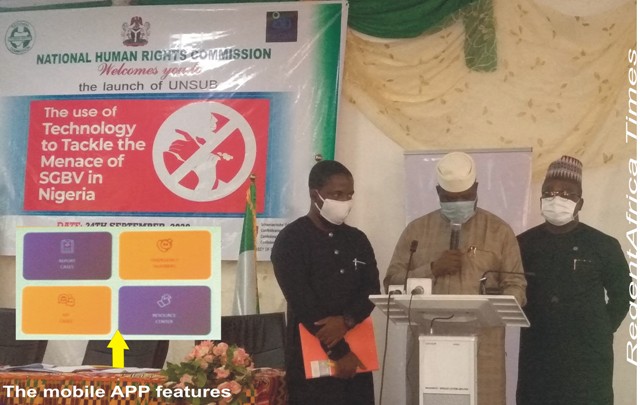
Two years back, precisely on 24th September 2020, the National Human Rights Commission (NHRC) in Nigeria graciously launched a digital platform called UNSUB in her quest to aptly tackle Sexual and Gender-Based Violence (SGBV) in the country.

Sexual violence or SGBV is any sexual action or attempt to obtain a sexual pleasure via violence, act to traffic someone or directed against his/her sexuality, irrespective of the offender’s relationship with the victim.

SGBV could take place either in peace or armed conflict situations. It is widespread and considered to be one of the most traumatic and common human rights violations in the contemporary global community.

It has constituted a severe public health plight and a colossal short cum long-term impact on both physical and mental health, including an increased risk of Sexually-Transmitted Diseases (STDs) and reproductive issues. It has equally resulted in increased cases of suicide.

It’s noteworthy that murder occurring either during sexual assault or as a result of honour killing in response to the act is equally a factor of SGBV, though women and girls mostly fall victim of this aspect.

Research indicates that victims of SGBV are usually stigmatized in every setting. This is the reason the rate of disclosure of the assault varies between societies. Generally speaking, it’s a widely underreported phenomenon, hence available data tends to underestimate the real scale of its occurrence.

The fact that the incidence of SGBV is underreported across the globe, particularly Nigeria, could be what informed the recent action of the NHRC. Though the move could be described as late, “it is better late than never”.

According to the NHRC, in Nigeria, less than 25 percent of rape cases or SGBV is being reported, whilst less than 15 percent is pursued to a logical conclusion. This practice has reportedly created huge gap in the justice system for rape survivors.

The aforementioned gap is seemingly what the newly introduced digital platform is set to address. It is targeted to tackle all lapses surrounding SGBV and allied matters.

The platform was reportedly designed to offer a tech-driven service aims at ensuring that more cases of SGBV are regularly reported by the victims and/or stakeholders as well as poised to end the challenges of data gathering.

The NHRC made us acknowledge that it is a web and mobile application (App) required to facilitate synergy among responders of SGBV. Hence, innovation is a safe space that would usher in a safer society.

SGBV has continued to pose a serious threat to humanity and the world at large. Funnily enough, it hasn’t been seriously handled or fought by the concerned authorities over the decades.

Millions of individuals are on a daily basis dying in silence – while many have committed suicide – owing to SGBV, yet it’s ostensibly overlooked by those who are seen as messiah towards ending the ugly trend.

If well understood, every sane and discerning mindset could boldly attest to the fact that SGBV has in recent times caused far more harm to the wider society than any social vice in existence. This is why most schools of thought describe it as a societal monster that deserves no mercy.

In view of the above assertion, I and my likes have over the past years expected several relevant bodies – such as the NHRC – to do more actions than speeches. Going by the newest invention by the said agency, it seemed they eventually became prepared and willing to walk the talk.

Recently, technology has proven beyond doubts to be the apt and best way to tackle any form of crisis or challenge. Hence, those who are yet to fully key into its mechanism could be rightly described as dreamers. This is the reason the action of the NHRC ought to be noted as apt, though not timely.

More so, like I earlier stated at time the device was invented, taking into cognizance that lack of maintenance culture had overtime bedeviled most of Nigerian policies and measures, there’s need for the NHRC and its partners to look inwards with a view to ensuring such tech-driven approach didn’t fade away in the long run.

Two years down the line, nothing tangible has apparently been heard concerning the invention, hence the compelling need for a holistic review by the authority.

Against this backdrop, the commission must comprehend that enhancement is key in any innovative move. Hence, from time-to-time, courtesy demands that the newly introduced App should be reviewed by the experts involved for possible upgrade and what have you.

They need to equally be mindful of hackers, hence the security architecture of the platform must be rigid and rugged. This is an aspect that mustn’t be relegated to the background if the commission is truly interested in recording tremendous success as the journey progresses.

There’s also a compelling need for massive awareness and sensitization to make the general public acknowledge this innovation and its prime motive. This won’t be duly actualized if all the needed channels aren’t deployed in the process.

Most importantly, there’s a need for Nigeria as a country to revisit her policies and laws towards imbibing technologically-driven clauses in the document. Time has obviously come for the laws binding all forms of SGBV to be reviewed in earnest in order to inculcate technology or tech-driven measures therein.

This is where the lawmakers need to come in, especially at such a time like this the country’s various laws and Acts are being reviewed and amended. For adequate implementation of any innovations, such as this introduced by the NHRC, the extant laws or Acts must be meant to recognize them. Thus, governments at all levels have a vital role to play in this regard.

Away from the NHRC, other human rights groups or agencies such as the National Agencies for the Prohibition of Trafficking in Persons (NAPTIP), on their parts, ought to equally key into technology in their bid to totally get rid of every kind of human rights abuses and violations.

They must also engage formidable and reliable tech experts to manage the functionality of the platform to ensure sustainability and reliability, among others. It’s worth noting that only qualified personnel can be entrusted with the technicalities involved in the day-to-day operations of such a platform.

Human rights violation is a serious issue that shouldn’t be treated or handled with kid’s gloves. Hence, all concerned must be willing to deploy every available tool while combating the societal monster.

As the NHRC is apparently poised to properly combat SGBV by adopting technology to breach the existing gap or lapse, the concerned stakeholders must note that the onlookers are equally watching their footsteps.

Tekedia Capital Makes Investment in Africa’s Building Materials Marketplace, CinderBuild

0

Very excited to share that Tekedia Capital has taken a position in CinderBuild, a marketplace for building materials in Africa. As a CinderBuild verified Buyer, you’re guaranteed uninterrupted product availability, at the very best price, all the time. We achieve this for you by partnering with verified suppliers in your region. Indeed, CinderBuild brings bulk off-takers and suppliers onto one collaborative platform streamlining the materials procurement process from requisition to delivery.

It saves cost. It saves time. And offers financing so that your project can move faster.

Many great brands like Dangote Cement, Cutix Cables, APEX, etc are partnering with us, providing genuine products at best prices for cement, electricals and cables, roofing, flooring and tiling, etc. Our vision is clear: digitize the building materials industry!

Buyer, Seller, please visit cinderbuild.com and open a free account.  We have offices in Lagos and San Francisco, USA, and scaling across Africa. For partnership in any part of Africa, reach out.

  • Ndubuisi Ekekwe
  • Board Member, CinderBuild

Tekedia Capital Invests in Student-Run Tech Semester

0

Tekedia Capital is excited to announce that we have made an investment in a student-run startup Tech Semester.  As we offer scholarships to students in Tekedia Institute, Tekedia Capital has been making investments to support student-innovators and we think even during this long ASUU strike, we will keep many focused.

Led by Arinze Onyeasigbulem and his Unilag team which has broadened to other schools, these students have earned revenue and supported customers as far away as America.

Our goal is to support them and possibly seed a great company in the nation.