DD
MM
YYYY

PAGES

DD
MM
YYYY

spot_img

PAGES

Home Blog Page 5277

Russian-Ukraine War: U.S Calls On African countries To Speak Against Russia’s Attack

0

Displeased with Russia’s incessant attack on Ukraine, the United States of America through its assistant secretary of state, Molly Phee has urged African nations to come in solidarity and speak with one voice against Russia’s attack on Ukraine. She made the call on Thursday while speaking with African journalists at a digital press meeting. She sought to mainly talk to African journalists to discuss with them the ongoing Russian invasion of Ukraine, in the context of its impact on African nations.

According to her, she believes that African voices matter in the international community, and their votes are very important to effectively send a message that Russia’s attack on Ukraine is highly unacceptable. She believes that in this critical time, it is a time for the international community to demonstrate unity and speak with one voice against Russia’s aggression.

In her words, “We recognize that the early days of this conflict are already having an impact on African economies as they are in the United States and elsewhere in the world. We see the rise of fuel prices, commodity prices and we know that this disruption is doubling hard given the earlier impact of the Covid-19 pandemic. We are already engaged in efforts to promote stable energy and commodity prices, we are working on the supply chain.

You saw this week that President Biden joined other international leaders in releasing strategic oil reserves in efforts to manage fuel prices. I also know that there has been genuine concern and alarm about the treatments of Africans who have been studying in Ukraine. I want you to know that we are proud of Ukraine. The foreign minister has made clear that all individuals caught up in the chaos of this war must receive equal treatment. The government of Ukraine has established emergency hotlines for African students.”

On Wednesday, the United Nations General Assembly overwhelmingly voted to reprimand Russia for invading Ukraine, demanding Russia to stop fighting and withdraw its military forces. UN general assembly resolutions are known to be non-binding which makes them carry political weight. With Wednesday’s vote, there might be a symbolic victory for Ukraine as the resolution was supported by 141 out of the assembly’s 193 members. 35 members abstained and 5 voted against. There was an unusual shock at the UN as Russia’s traditional ally Serbia voted against them.

The UN secretary-general Antonio Guterres made some remarks immediately after the vote. In his words, “the message of the General Assembly is loud and clear. End hostilities in Ukraine now. Silence the gun now. Open the door to the dialogue now”. After the vote at the UN, Zimbabwe had to come out to say that the vote denouncing Russia’s invasion of Ukraine further complicated the situation. Zimbabwe alongside Namibia, Congo, South Africa, Angola, Mozambique, Tanzania, Uganda, Burundi, Senegal, South Sudan, Mali, Sudan, Guinea, Gambia, Algeria, and Madagascar is said to be the African countries that abstained from voting.

According to analysts, they see Zimbabwe’s approach as returning the favour of Russia, after the superpower alongside China vetoed a UN Security Council resolution seeking sanctions against Zimbabwe in 2008. According to Zimbabwe’s government, “the situation in Ukraine is a very complex one and is deeply rooted in the history and geopolitics of that region”.

I am not surprised that quite a good number of African nations refused to vote against Russia because, in 2019, Russia held its first Russia-Africa summit which was attended by 43 African leaders. Trade and diplomatic relations drastically increased between Russia and Africa in the area of energy and mining mostly. According to Stockholm International peace research institute, Africa accounted for 18% of all Russian arms exports between 2016 and 2020, with Algeria, which also abstained, being the largest recipient.

While the U.S is happy that the vote at the UN was higher than almost any vote count they have seen in response to international events, they should not forget to note that quite a good number of African nations (17) abstained from voting against Russia. I feel it is not in their place to urge African countries to vote against Russia, as some of them are in a good relationship with Russia, with Zimbabwe as a case study. I believe every country has its right to whatever it pleases to do.

Analysts say that while many Africans disagree with Russia’s use of force, the continent’s governments are aware of Russia’s power on the world stage. Separately, South Africa issued a statement on Wednesday urging Ukraine and Russia to find a way to de-escalate tensions. Steven Gruzd, the head of the Russia-Africa Program at the South African Institute of International Affairs says that African states are well aware of Russia’s power in the international system. “African countries are mindful of the role Russia plays in international politics.

The U.S urging African countries to speak must note that Africa belongs to the non-Align group that stays away from the power bloc in international conflicts. Moreover, Africans depend on these blocs for aid and investments and cannot afford to antagonize any of them. E.g, Russia grants aid and scholarships to many Africans. What becomes the fate of these students if they’re expelled for reckless comments by their home governments?


Ndubuisi Ekekwe To Deliver Keynote at GEN4IR Global Summit in South Africa

0

Over a million years ago, the making of stone chopping tools and stone hand axes,  at Olduvai Gorge of the East African Rift Valley, represented the first step in the great human journey of shaping our world. And for many millions of years, the stone hand axes from Africa remained the cutting-edge technology. That creativity was spread across all parts of the world.

Indeed as our tools evolve so do our ideas, and then as our tools and ideas evolve, so also do we. Our current 21st century world and humankind, through a new set of modern tools characterized as emerging/exponential technologies, stands again at the verge of another radical evolution – a Fourth Industrial Revolution (4IR).

And just as with the story of the original beginning, the future of this technological revolution has a lot of promise from Africa. Africa gave the world modern civilization through mechanics of tools and innovations.

People, the cambrian moment is here  – and Africa has a big role.  At GEN4AIR Global Summit at Sun City Resort South Africa, Nigeria-born Prof Ndubuisi Ekekwe will examine these constructs in a keynote titled “The Cambrian Moment is Here”. He will look at technologies and the evolution of new entrepreneurial capitalism. 

Registration link – https://taffd2022.carlamani.com/register/

African Healthtech Startup, Susu, Raises €2m in Pre-seed Funding

1

The burgeoning African tech ecosystem, which is being spearheaded by fintech, is increasingly seeing health-tech rising. Although less when compared with fintech, health technology startups have been receiving millions of dollars in investments recently. This is largely due to the huge frictions in the healthcare industry in Africa.

Many of the health tech startups are carving out an area out of the many problems enveloping the African health industry. As such, Global health-tech company, Susu, focused on making healthcare accessible and affordable for every African, has completed a €2 million pre-seed funding round with angel investors.

Susu offers bundled health services that provide patients with planned, long-term health support, to ensure optimal monitoring of their health conditions, including pregnancy, child care, and chronic disease management. The startup is currently operational in Côte d’Ivoire, Cameroon and Senegal.

The company said part of the funding was also raised as debt, and grant financing from BPI France, the French government’s public investment bank.

Susu was founded in 2019 by Bola Bardet after she lost her father to complications of a chronic health condition due to poor management. Her experience with her father’s condition inspired Bola to help others avoid the same fate. Alongside her co-founders, Laurent Leconte (Chief Technology Officer) and Sandrine Egron (Chief Operations Officer), Bola has built the startup to serve thousands of Africans.

The startup is designed to tackle many of the challenges facing the African healthcare industry. Besides poor healthcare systems, growing population and urbanization have all contributed to a sharp rise in the mortality of chronic diseases like diabetes and hypertension. In addition, most people do not have access to quality healthcare and are in urgent need of solutions to manage their healthcare needs.

Studies show that the medical insurance penetration rate is less than 3% in Africa, leaving 97% of the population having to pay medical expenses out of pocket. Susu intends to mitigate this problem by supporting beneficiaries’ healthcare journeys through care bundles while using an integrated approach to better connect the patients, their families, and healthcare professionals.

Bola Bardet, CEO of Susu said the idea is to use tech to improve the healthcare sector just like the financial industry.

“I suffered the terrible loss of my dad due to the mismanagement of his medical condition. I knew that the situation could have been prevented if he had access to comprehensive healthcare and that’s why I started Susu, to provide access to quality and affordable healthcare to others. We should not be fatalist about access to quality healthcare in Africa.  Like financial inclusion is being improved with mobile payment solutions, technology is going to play a tremendous role over the next decade in providing solutions to tackle the challenges faced by the healthcare systems over the continent.

“There is a high demand for our service, so we are eager to expand quickly to other countries.  In 2021, we had a 400% growth rate in terms of revenue and multiplied our customer base by 5. On top of that, we see more family members and friends, especially those from the diaspora, wanting to contribute financially to the care of a beneficiary, so we have gone ahead to build technology that allows for several family members and friends to co-finance the service”, Bola said.

With this funding, Susu intends to grow the company’s team, enrich the technology platform with new features. The startup also intends to launch the service in 6 new countries in Sub-Saharan Africa, including Nigeria and Ghana. It is also developing new care bundles including a maternity care bundle to reduce mortality risk for pregnant women and their babies.

Christopher Neves, one of Susu’s angel investors and a senior executive with experience in multinational insurance groups said about the investment: “I have been following Susu since the beginning of the project. And I see its huge potential, focused on building a solution to provide access to affordable healthcare in Africa through technology. Since the start, Bola Bardet and her team have demonstrated their capabilities and ambition in executing such a project”.

On Computer-Based Testing And Its Prospects in Nigeria

1

Computer-Based Testing (CBT), otherwise known as e-assessment, can be defined as a pattern of administering tests in which the responses are electronically recorded and/or assessed.

It is conducted by the examiners by the use of various Information Technology (IT) equipment or mechanisms to include computers, the internet, networking, with the aid of special softwares.

The candidates, on their part, can sit for the test with the use of personal computer (PC) or an apt computerized gadget such as cell phone, particularly Smartphone, either at a testing hall or in their respective homes, as the case may be.

CBT is currently used for different purposes by various educational institutions. Many deploy it for entrance aptitude tests, some others for Continuous Assessment (CA), whilst few use it for their semester examinations.

It’s noteworthy that it is mainly in the case of CA or quiz that candidates are allowed to attend to the questions from any locality of their choice, thus the questions would be answered under no supervision.

In recent times, several academic institutions in Nigeria have adopted the CBT as an alternative assessment mode in contrast to the manual method that involves the use of paper and pen/pencil.

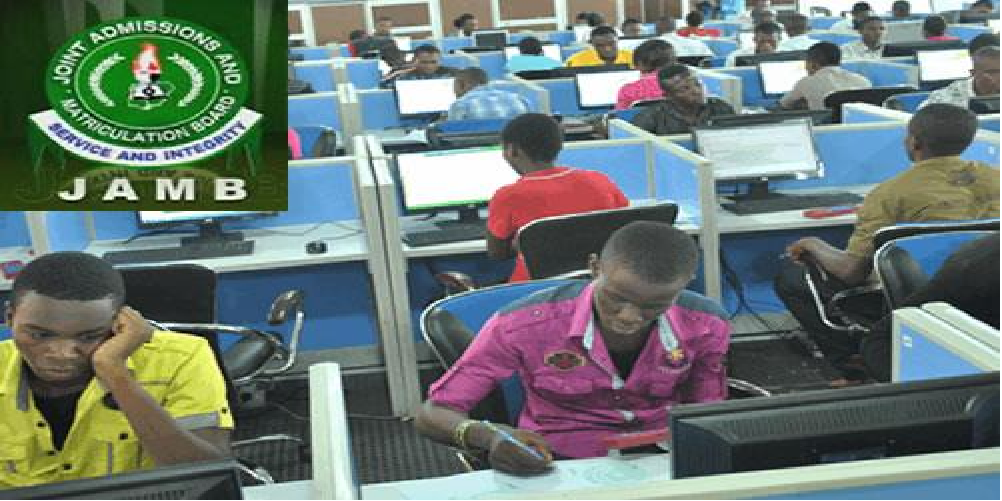
The Joint Admissions and Matriculation Board (JAMB) now deploys it for the Unified Tertiary Matriculation Examination (UTME) that tests the ability of candidates seeking admission in various citadels of higher learning in the country. JAMB fully commenced the use of CBT in the 2015/2016 UTME; prior to the said era, it was an elective mode.

Similarly, many professional bodies across the federation are making use of the CBT. It is equally used for promotional tests by some federal cum state’s Ministries, Departments and Agencies (MDAs).

There are two major types of CBT namely: linear and adaptive. A linear test is a full-length exam in which the computer selects different questions for the candidates without consideration of their performance level. This method is scored in the same way as a Paper-Based Test (PBT).

On the other hand, an adaptive test is one in which the computer selects the range of questions based on each of the candidate’s performance levels. This means that different test takers – even in the same exam room/hall – would receive different questions.

The CBT mode of assessment is arguably crucial and helpful, because it can measure different skills or sets of knowledge in order to provide new and better information about the candidate’s abilities. Moreover, the concerned institutions receive CBT results more quickly than those from the PBT, thereby enabling them to make their admission or promotion decisions, as might be the case, as fast as possible.

Furthermore, testing environments are more comfortable and individualized. Hence, candidates can write the test/exam with ease, or without much constraint.

For instance, in some such standardized tests as Test of English as a Foreign Language (TOEFL) and Graduate Record Examination (GRE), a word processor may be employed for writing essays more quickly contrary to the manual pattern.

In most CBT, a candidate might have access to immediate viewing of his or her scores on the computer screen, except in the case of essay-writing whose answers cannot be possibly programmed.

It’s worthy of note that one can sit for a CBT even if he/she has minimal or no previous computer experience. Instructions provided in a basic computer tutorial before the scheduled date of the test would give the candidate the required guidelines. This implies that any prospective candidate may have nothing to worry regarding an awaited CBT.

However, it’s imperative to acknowledge that there are numerous challenges attached to the CBT pattern required to be tackled, that if not duly addressed, both the candidates and the examiners would continue to groan while making use of it.

For the use of the CBT mode to be thoroughly successful in Nigeria, issues pertaining to power supply, software maintenance cum protection, and internet speed must be considered seriously. Also, cases concerning physical security, manpower, and what have you, ought not to be swept under the carpet.

Unsteady power supply can lead to many crises while the test is ongoing. Use of outdated softwares as well as lack of foolproof websites can warrant hacking among other dubious acts, which could make the test questions leaked to the public domain prior to the exam date. In the same vein, use of unreliable internet service providers or web browsers invariably leads to poor internet speed, and can as well make the site hang, freeze, or crash. Even bad hardwares such as mouse, keyboard and connectors, can cause several distortions.

Inadequate security personnel would enable criminals to invade the venue of the examination where valuables are kept with the purpose of causing obstruction or making away with the gadgets. Above all, the use of inexperienced manpower coupled with unavailability of IT experts cannot be undermined if we are truly determined to sustain this feat.

Aside from institutions that subscribe to the use of the CBT or e-assessment mode for entrance and promotional exams, which are usually annual or quarterly exercises, those who make use of it for CA are expected to be more vigilant and proactive.

The sites and gadgets being utilized ought to from time to time be upgraded, and a close monitoring and evaluation approach must be employed by the concerned authorities.

CBT is unarguably good and viable, but the users must endeavour to do the needful.

Fuel Scarcity Continues To Linger in Nigeria As Cargoes Remain Stranded

0

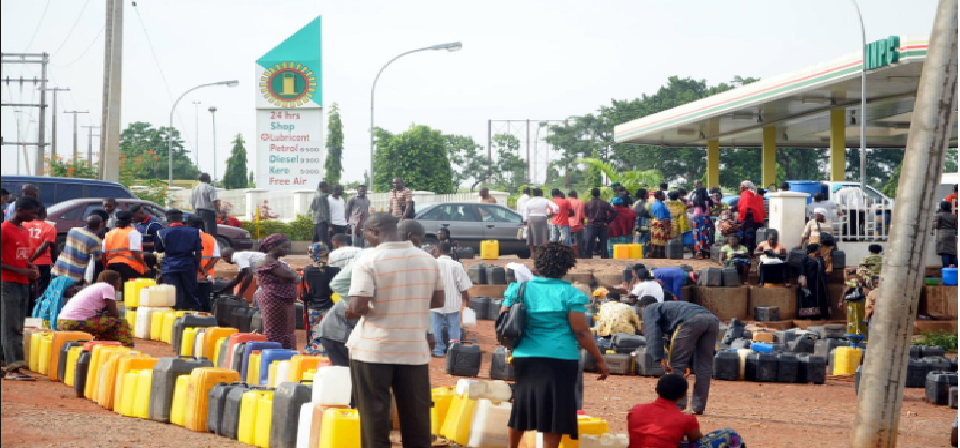
As fuel scarcity continues to linger in the country, it is not far-fetched to say that this issue is gradually grinding the economy to a halt. The hope of Nigerians continues to remain in despair as there seems to be no end to this fuel scarcity in view. A lot of businesses are facing it hard this period as they constantly have to spend heavily on petroleum products at an exorbitant price, which has accrued more losses on their business. A lot of motorists now spend hours at the petrol stations in long endless queues, which has led to the loss of working hours, causing them to be less productive, which is already felt in the economy.

It was recently reported that 17 cargoes ordered by the Nigerian National Petroleum Corporation( NNPC) which arrived in the country could not discharge the product. Reports stated that out of the 17 cargoes ordered by the NNPC, four had arrived at the Lagos port but could not discharge earlier this week as they were finding a space to anchor. Sources at the NNPC blamed the current scarcity on supply and logistics issues.

According to officials at Nigerian ports, they disclosed that Petrol will not be distributed to depots until ships have discharged their contents. What this implies is that as long as cargoes arriving at different ports in the country do not have where to anchor, there will still be scarcity of petrol. It is when petrol gets to various depots that retailers get their allocations and take it to the stations for sale. The disheartening thing about this whole issue is that the issue is proposed to linger for a week or two, meaning there is no immediate remedy.

Carefully scrutinizing the issue of the fuel crisis in Nigeria, one can observe that a major issue in all of this, is the continuous importation of petroleum products. The NNPC had last month, when the scarcity began, cited the issue to the “importation of adulterated petrol from Belgium”. For a country like Nigeria that is richly blessed with crude oil, to still be heavily involved in the importation of petroleum is an aberration. It just reveals the gross incompetence of present and past leaders. Immediate steps must be taken to end the importation of petroleum products.

Government should ensure to build more refineries so that the country can be able to produce its fuel to avoid these incessant reoccurring issues of fuel scarcity. They must ensure that all refineries in the country work in full capacity for a definitive end to the importation of petroleum products. According to a report by OPEC in 2020, Nigeria spent a whopping $43.46 bn on the importation of petroleum products which was higher than the revenue that the country earned from the export of petroleum products in the same year. Such an outrageous amount should rather have been channeled to the development of other sectors in the country, if only the country was refining its own petroleum products. But rather, it was spent on the development of another country’s economy.

Nigerian refineries continue to remain dormant for years, despite repeated turnaround maintenance done by successive governments on the facilities. The country continues to spend billions of dollars to import petroleum products than the amount of Foreign exchange being earned from crude oil sales. 

Despite claims from the government in ensuring that Nigeria refines its crude oil to save foreign exchange, the promise seems like an empty one because there is no evident change. One really sad thing about fuel scarcity in the country is its ripple effect on other sectors. The ripple effect of fuel scarcity impacts almost every aspect of living, and things would get tougher if a solution is not found soon.

Food prices have gone high because they are directly connected to transportation costs, as food products are usually transported from villages to markets. Beyond the cost of transportation, the cost of production of cooked foods is also directly impacted by a scarcity of fuel. Most businesses including restaurants generate their own electricity with fuel-powered generators. A prolonged fuel crisis can take a major toll on employment because due to the high cost spent on fuel to run an organization, they may not be able to employ new staff or may even be forced to lay off some of them.

This menace of fuel scarcity has to end, it is embarrassing that a major producer of crude oil is heavily exporting petroleum products from other countries.