DD
MM
YYYY

PAGES

DD
MM
YYYY

spot_img

PAGES

Home Blog Page 5280

The Ascension of Zenith Bank Plc – PAT of N245 billion in 2021

1

There is no argument – Zenith Bank Plc is at the zenith of Nigerian banking: “Zenith Bank Plc has released its 2021 full-year audited financial statement reporting a profit after tax of N244.5 billion the highest on record. This reflects a 6.07% increase year on year.” I expect Zenith Bank’s number to top GTBank’s GTCO by at least N40 billion.

This company is separating itself from other players and the gap is widening quarterly. We used to be this bullish with GTBank, but it seems very soon any comparison may be academic. Left and right, Zenith Bank is the category-king on making money in the banking sector of Nigeria!

Anything it is doing is working, and other banks should learn from its playbook. From Nairametrics, here are the key metrics.

  • Net Interest income which it earns from its lending business rose 7% to N320.8 billion.
  • However, a 51.6% spike in loan losses meant net interest after impairments was flat at just N260.8 billion.
  • Zenith Bank, however, made up for it with income from commission and fees rising 31% to N103.9 billion year on year. It also raked in N167.4 billion in net trading income representing a 37.6% increase year on year.
  • Zenith Bank also grew its deposits by a whopping 21.2% to N6.4 trillion while its total assets is now N9.4 trillion. Net assets rose 14.4% to N1.27 trillion.
  • Zenith Bank Plc last traded at N27.10 per share and its market capitalization stands at N850.84 billion as at Monday, February 28, 2021. Year-to-date performance shows that the share price of the company has gained 7.75%.
  • The bank has proposed a dividend per share of N2.8 per share up from N2.7 per share a year ago. Based on its current share price, Zenith Bank’s dividend yield is about 10%.

As Zenith Bank dances atilogwu, owambe, etc for this result, Dangote Cement is sharing an amount that is more than some states’ budgets as dividend. When you can distribute N341 billion as dividend in a year, the overriding trajectory is that everything has converged: the customers are buying and the company is executing at a high level. 

The Nigerian people are truly resilient to be powering these results for these companies despite the paralysis in the land. As they say in our churches, my turn MUST come. Say Amen somebody! But you have to invest and take risks first!
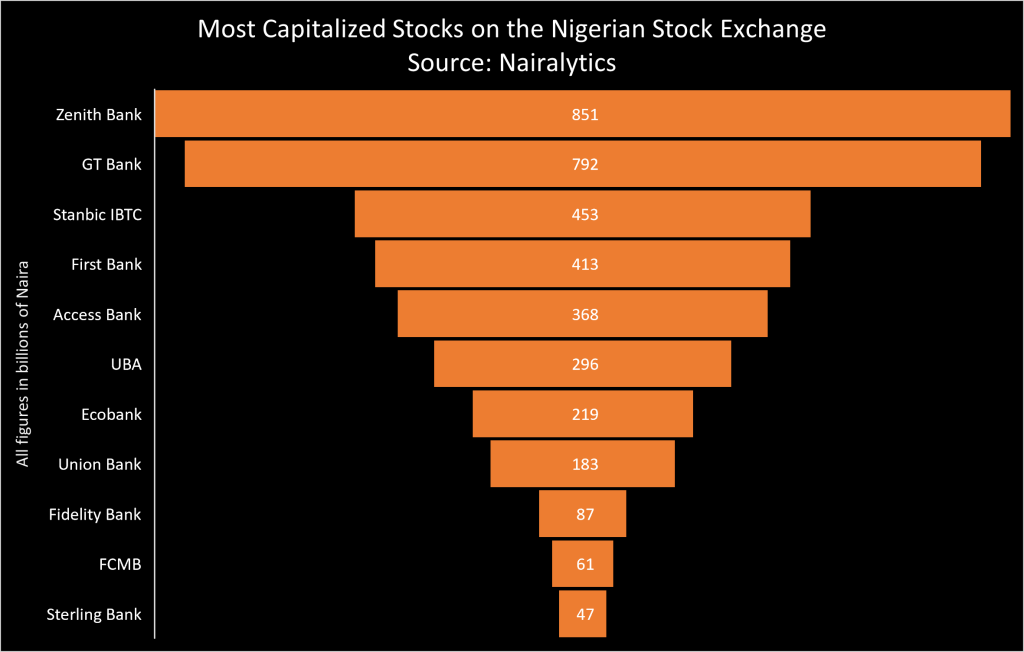
The hotels are also doing fine: “Transcorp Hotels Plc has announced its Audited Financial Statements for the full year ended December 31, 2021.?The?results published on the Nigerian Group Exchange showed?a 114% growth in Revenue to N21.74bn from N10.16bn as of December 2020,?while Gross Profit rose by 143 %?to N16.23bn from N6.67bn.

The Company’s results show an impressive growth in its performance signalling its strong recovery from the impact of the COVID- 19 pandemic in 2020. The performance also reflects the Company’s resilience and nimbleness, as it consistently leverages innovation to achieve an outstanding performance, breaking occupancy, and revenue records in 2021.”

GTCO of GTBank

Guaranty Trust Holding Co (GTCO) Plc has released its first Full-year financial result as a group which revealed a profit of N175 billion in 2021. This reflects a 13.21% decrease year on year….The statement revealed that in FY 2021, interest income fell by 12.77% from N288.28 billion to N251.47 billion in the current period. GTCO’s profit performance is on the back of all margin decline as income from interest and trading income all depreciated year on year.

UBA

United Bank for Africa (UBA) Plc has announced its audited results for the full year ended December 31, 2021.. gross earnings rose significantly to N660.2 billion representing an increase of 7 percent compared to N616.8 billion recorded at the end of the 2020 financial year. UBA’s Profit Before Tax was impressive with a 20.3 percent growth to N153.1 billion, compared to N127.3 billion at the end of the 2020 financial year; while Profit After Tax rose grew by 8.7 percent to N118.7 billion in 2021, compared to N109.2 billion recorded the previous year.

Note: This post was updated with more results, from Nairametrics reports

Tekedia Live – Information Security & Digital Forensics

0

One of the sector’s best who until recently was helping to build technologies to secure BMW of the future, from cybersecurity attacks, via its subsidiary, will be at Tekedia Live on Thursday to take us into an excursion to Information Security & Digital Forensics. Dr. Francis Nwebonyi of University College Dublin is super-amazing.

He earned PhD in Computer Science with focus on Network and Information Security from Universidade do Porto. His MSc in Computer Security and Forensics was from the University of Bedfordshire and he is a member of Tekedia Institute Cybersecurity and Digital Forensics Faculty. He continues to help us to update our curriculum in this age where most industries are going digital. We thank Dr. for this leadership.

It’s time for digital security; Zoom link in the Board. Tekedia Mini-MBA >> your better school.

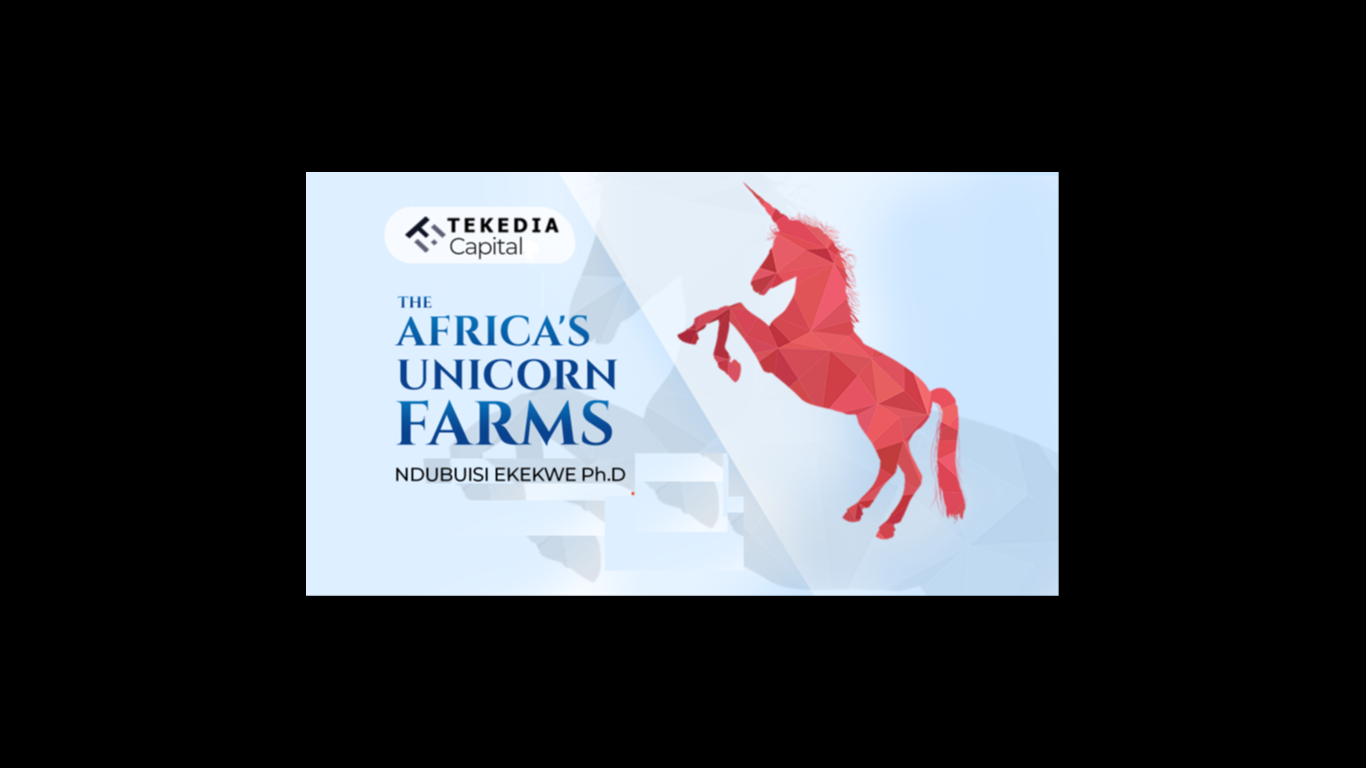
Video of Tekedia Capital OPEN – “The Africa’s Unicorn Farms”

0

We invite you to Tekedia Capital OPEN which is scheduled on Saturday, March 5 2022 at  4-5pm WAT. Global citizens, companies, investment clubs, families, etc who want to invest in emerging empires of the future, you are invited. And startups looking for funds, come and understand our processes and what we look for, to invest.

On March 15, the next batch of startups which our members will invest in via Tekedia Capital Syndicate will go live in our private deal room board. We invite citizens and corporations to join this cycle.

In this presentation, Tekedia Capital Chairman, Ndubuisi Ekekwe, PhD, will explain how clusters across major African cities are becoming farms, to breed special types of “animals” called unicorns – startups, mainly technology-anchored, with valuations of at least $1 billion.

We’re in a new age of value creation, a cambrian moment of entrepreneurial capitalism and it would be decades-long. This presentation will explain this redesign and how the transformations will offer new ordinances in Africa’s market systems. The implications will be massive: wealth, scaled exponentially for those who fund and seed the moments.

 Share this message and come with your friends, associates, colleagues, families, investment club members, etc.

  • Event: Tekedia Capital Open
  • Topic: The Africa’s Unicorn Farms
  • Date: Saturday, March 5, 2022
  • Time: 4pm – 5pm WAT
  • Zoom link here
  • Contact: capital@fasmicro.com

About Tekedia Capital: Tekedia Capital offers a specialty investment vehicle (or investment syndicate) which makes it possible for citizens, groups and organizations to co-invest in innovative startups and young companies in Africa and around the world. Capital from these investing entities are pooled together and then invested in a specific company or companies.

We invest in mainly technology-anchored companies and are sector-agnostic which means those companies could be operating in any industry, including finance, real estate, education, health, logistics, etc.

The opportunity is open for individuals in Africa, Africans in diasporas, global citizens in any place in the world, investment groups and organizations around the world. To learn more about Tekedia Capital Syndicate, go here.

Tekedia Capital charges $1,000 annual fee to include an investor in Tekedia Capital deal flows for 12 months or 4 investment cycles.

Build Wealth Via Tekedia Capital Syndicate; Join Today And Co-Own Great Startups

LinkedIn summary 1

There are about six unicorns in Africa today. Unicorns are startups, usually technology anchored, which have a valuation of at least $1 billion. Across the east, west, north, south and beyond, Africa has become a farm where unicorns are bred.

In this presentation, we will explain how these empires of the future will alter the ordinance of market systems. Value will be created, economic systems will be transformed – and citizens will see improved welfare because market frictions will be fixed. And we expect at least 15 unicorns by the end of 2023 for Africa.

Join us tomorrow (Saturday) at 4pm WAT in Tekedia Capital OPEN for a conversation on how Africa has become a farmland to breed new species of animals called unicorns.

LinkedIn Summary 2

Join us at Tekedia Capital OPEN as we discuss how Africa is emerging as farmland where special animals called “unicorns” are being reared. Of course unicorns are startups, usually tech-anchored, with valuations of at least $1 billion.

In this presentation, Ndubuisi Ekekwe, the Chairman of the Board of Tekedia Capital, a US-based investment company, which has invested in dozens of companies around the world, will make a presentation on the state of play and how empires of the future are being created through generation-shaping cambrian moment in entrepreneurial capitalism.

This moment has turned some African cities like Lagos into farms, breeding unicorns, the new species of “animals”.

Time: 4pm WAT

Zoom link (free) on click https://www.tekedia.com/youre-invited-to-tekedia-capital-open-the-africas-unicorn-farms/

We welcome everyone

Why Investors Like Dangote Companies: N340.8 billion Dividend for 2021

1

If you are looking for the Aliko Dangote secret which he cooked and continues to cook for Nigeria, here is it: the man likes to take care of his investors, and because he has that business-style, he has made many friends in markets. 

For 2021, he is going to share N340.8 billion with his investors. That dividend is coming from the N1.4 trillion he unlocked in the market. Recall that he paid N272.6 billion in 2020. People, left and right, he is sharing good stuff – real money. People, he shares more money than most state budgets!

Dangote Cement Plc will pay shareholders a dividend of N20 per share translating to N340.8 billion after recording a revenue of N1.4 trillion for 2021, the company said in a note to the Nigerian Exchange Limited on Monday.

The company rewarded its shareholders with N272.6 billion as dividend the previous year, meaning the newly declared sum is 25 per cent higher than that payout.

The cement-maker said the dividend, “subject to the appropriate withholding tax and approval, will be paid to shareholders whose names appear in the register of members as at the close of business on May 30, 2022.”

On 31 May, 2022, the register of shareholders will be closed to allow the company’s registrar to prepare for payment on June 15, 2022.

As Dangote Cement drops that massive number. Lafarge is also on its own game; “Lafarge Africa Plc will pay shareholders a final dividend of 100 kobo per unit of its 50 Kobo ordinary share, translating to N1.610 billion, the manufacturing company said Tuesday. Lafarge Africa said the dividend will be paid to shareholders whose names are on its register of members as of close of business on April 1.” Simply, cement is a big business and that is why they are paying massive dividends.

But Aliko Dangote is on another level and that is possible because there is a great incentive here: only 15% of Dangote Cement is available for investors. And what that means is this:  the other 85% remains under his control. If dividends go high, Dangote will have a great Salah.  If you have that type of structure, the amazing becomes magical in the Forbes list of billionaires.

Can Russia Survive As A Pariah State?

0

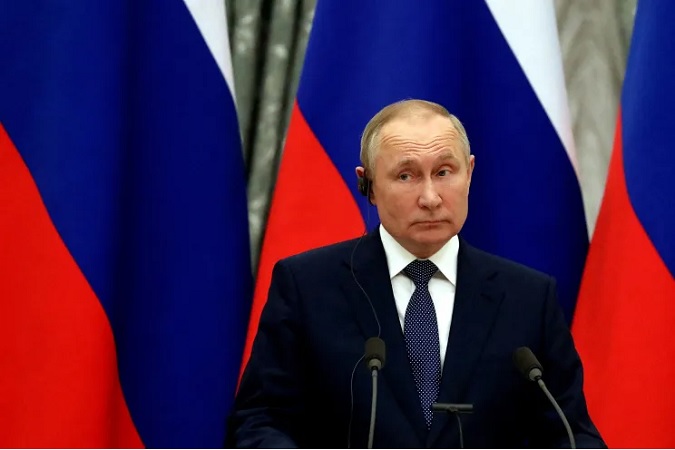
Nearly a week since Russian President Vladimir Putin invaded Ukraine, a global outrage accompanied by a series of sanctions designed to deter Russia from further escalating the conflict, have poured in.

Alas, as the United States and its allies announce the sanctions, Putin appears emboldened to advance his attack on Ukraine. A convoy of the Russian military that stretched over 40 miles is currently moving close to the capital Kyiv, in a defiant move to topple the government of Ukrainian president Volodymyr Zelensky.

As Russian ground forces, air force and Navy aim and fire at Ukraine, the Kremlin appears to be standing alone except for the unreserved support of its ally Belarus that has announced plans to deploy its army to Ukraine to support Russia. China, another country that is considered a friend of Moscow, has called for de-escalation of the conflict through negotiation.

“The situation in eastern Ukraine has undergone rapid changes … [and] China supports Russia and Ukraine to resolve the issue through negotiation,” Chinese President Xi Jinping said on Friday.

The escalation of the conflict is being buoyed by NATO-based national interests that neither Russia nor Ukraine is ready to compromise. And Putin’s Slavic ego is believed to be on the way, frustrating every effort at peace that no matter how many more sanctions are imposed on Russia, he would only double down not to appear weak.

Reeling at the mercy of the standoff are lives and means of livelihood. The ongoing destruction in Ukraine has triggered refugee crises across Europe, and there is on the other side, Russia’s economy spiraling downwards as the effects of the sanctions hit home. Russia is increasingly becoming isolated but definitely exposing its economy to avoidable turbulence.

The sanctions pile on

Russia’s Nord Stream, a system of offshore natural gas pipelines in Europe, running under the Baltic Sea from Russia to Germany, was among the first to get hit with sanctions. The certification of Nord Stream 2 was halted on February 22 following Putin’s recognition of the independence of Ukraine’s breakaway regions, Donetsk and Luhansk.

Thereafter came a flood of other sanctions as Russia invaded Ukraine. Each of the sanctions bears a weight of devastating impact on Russia’s economy. On February 25, the White House and the European Union announced the expulsion of Russian banks from the Society for Worldwide Interbank Financial Telecommunication (SWIFT), in an effort to collectively ensure that the war is a strategic failure for Putin.

“This will ensure that these banks are disconnected from the international financial system and harm their ability to operate globally,” they wrote in a joint statement.

This was accompanied by restrictive measures designed to prevent the Russian Central Bank from “deploying its international reserves in ways that undermine the impact of [the] sanctions.”

The US and its allies have embarked on a sanctions frenzy that touches many aspects of Russia’s economic well being.  The EU, the UK, Japan, France, Australia, New Zealand, Taiwan and even historically neutral Switzerland, have all announced different sanctions – from cutting ties with Russian businesses to banning its oligarchs, each sanction is aimed at scuttling Russia’s ability to lead a normal life while razing Ukraine.

To cap it, sports organizations are joining hands to ban athletes and clubs of Russian origin from sporting events. FIFA has announced the expulsion of Russia from the 2022 World Cup, while UEFA and the IOC have kicked the Russian football club side and the Russian national team respectively out of their sports tournament.

The consequences of the sanctions are trickling in.

Among other things, the Russian Ruble has dropped as much as 30% against the dollar, forcing the Russian Central Bank to hike interest rate 20%. Russia has built a fortress around its economy since 2014 when Putin annexed Crimea. Russia boasts of more than $630 billion in its external reserve and about $174 billion in the National Wealth Fund that appreciates as oil prices rise. These among other foreign-tied investments have kept Russia’s total external debt around $478 billion, a third of its GDP. Russia runs a budget surplus. But all these have come crumbling over the weekend.

But against this backdrop, Putin has remained adamant. New York Times columnist Peter Coy made reference to past sanctions to illustrate while they may not move Putin.

“There are two clashing arguments about whether the threat of economic sanctions can be effective now in deterring Russian aggression in Ukraine. One is that sanctions against Russia following the 2014 invasion of Ukraine didn’t prompt any movement in behavior, nor did sanctions promote good behavior when imposed against Cuba, Iran, Iraq, North Korea, and Venezuela. So it’s unrealistic to expect sterner sanctions to work against Russia this time. The contrary is that sanctions would be effective now because they could cause real economic pain,” writes Coy.

Can Russia survive as a pariah state?

China, Russia’s biggest ally that is among a few countries in the world yet to condemn its invasion of Ukraine, has proved to be Putin’s major lifeline. On Monday, Russia’s Gazprom said it has signed a contract to design a natural-gas pipeline from Russia to China that will deliver up to 1.8 trillion cubic feet of natural gas a year via Mongolia. The state-owned company said the contract is part of the construction of the Soyuz Vostok gas pipeline.

The move is geared toward mitigating the impact of EU’s decision to halt Nord Stream 2 certification and future energy-focused sanctions, although US President Joe Biden is not eager to impose sanctions on Russian energy. Germany’s E.ON, Europe’s largest operator of energy networks also rejected demands to shut down Nord Stream 1 gas pipeline, leaving a huge lifeline for Russia.

Russia wields a heavy influence in the global energy market and economies still emerging from downturns of covid-19 can’t afford the high cost of energy products a total sanction on Russian energy will bring.

Biden defended his decision to preserve access to Russian energy, saying it’s in order to “limit the pain the American people are feeling at the gas pump.”

Coal prices have hit $300 as demand surge in Europe, jeopardizing the fight against climate change. Oil price is up 9%, highest since 2014. Wheat, another commodity Russia leads, is up $990, highest since 2008. Last week, China relaxed its restrictions on import of Russian wheat, another move that is believed will ease the impact of the sanctions.

Russia is believed to be emboldened by all these even though they are the effects of its crippling economy. Analysts say that China alone can’t save Russia from the devastation the growing sanctions will bring upon its economy, the Asian country can only give Russia a lifeline. But it won’t be enough because the world needs Russia but Russia needs the world more.