DD
MM
YYYY

PAGES

DD
MM
YYYY

spot_img

PAGES

Home Blog Page 5308

Revisiting The Nigeria’s Bailout Fund And Its Intriguing Part

0

Be it an individual or a corporate body, no doubt, at some points in your existence, borrowing becomes a consequential and inevitable approach.

For the umpteenth time, I have categorically made it clear that borrowing becomes necessary if the funds to be assessed would be utilized judiciously; if the funds would be channeled only to the needful.

We must acknowledge that if a certain borrowed fund is utilized judiciously, it would enable the borrower to become financially independent in the nearest future, thereby making him/it to steer clear of borrowing in subsequent time.

The last time I checked, unequivocally, the best way a borrowed fund could be utilized is by investing it, or using it for capital expenditure. This implies that recurrent expenditure shouldn’t in any way warrant borrowing.

One of the basic examples of recurrent expenditure in any society or nation remains payment of salaries or pensions. You can’t borrow in order to pay others or to enable you service some debts; such a step is ridiculous and illogical. Read my lips!

If you borrow in order to settle a certain debt, how do you intend to refund? Obviously, indulging yourself in suchlike practice significantly means you will constantly continue to borrow, come rain come shine.

Aside from the economic implication of borrowing, the social implications are enormous. If you are reckoned to be a borrower, your colleagues or counterparts, as the case may be, would invariably stigmatize you; you might be treated like one who has leprosy. Of course, we are not unaware of the consequences that await someone who suffers from stigma.

Meanwhile, this critique was necessitated by the recent gesture displayed by the Federal Government of Nigeria (FGN) in respect of its apparent soft spot for the various state governments within the shores of the country.

Just a few years back, the President Muhammadu Buhari-led FGN graciously lent more funds to the states, in addition to the ones received in the previous years by the prospective beneficiaries.

According to the said benefactor, the kind move was targeted to salvage the state governments that have been colossally ravaged by the crisis occasioned by the economic turmoil the country was faced with.

It would be recalled that previously, the state governments received a total of #713.7 billion bailout funds from the FGN to enable them pay the backlog of salaries owed their respective workers. It’s noteworthy that the said fund was deducted from the nation’s Excess Crude Account (ECA) otherwise known as National Wealth Fund.

Unfortunately, merely a few months after, the various state governments were still grappling with the same challenges, perhaps owing to the poor monthly federal allocation they were receiving, which was informed by Nigeria’s dwindling oil revenue.

To this end, the FGN decided to release another #90 billion fund, which was believed would immensely assist the states in their bid to be less-dependent on the monthly handout from the federation account.

It’s worthy of note that the fund in question was given in form of a loan, hence fully repayable, although it had a secured tie against future dividends, revenues, or what have you the FG might have owed the states.

At that juncture, any rational being that meant well for Nigeria didn’t hesitate to inquire if these states would continue to receive bailout funds in order to pay their workers and pensioners, because such a step was not unlike robbing Peter to pay Paul.

However, the fascinating side of the FG’s gesture is that, apart from the fact that the loan was given over a period of one year, the states were meant to agree on a good number of conditions before they could assess it.

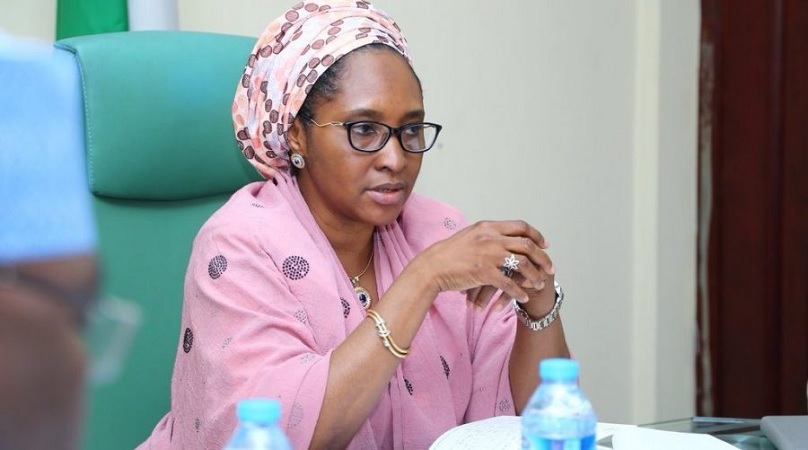
It might interest you to note that among the total of #90 billion of the second phase of the bailout, #50 billion was shared across the 36 states, coupled with FCT, for the first three months, and then #40 billion for the remaining nine months, which is an average of about #1.4 billion per state for the former and #1.1 billion for the latter. The then Finance Minister, Mrs. Kemi Adeosun disclosed that the idea was to tie states over for a year, so they could rebalance.

Most other uncompromising and laudable conditions meant to be reached by the state governments were, but not limited to, they are to individually: publish their audited annual financial statements within nine months of financial year end, comply with the International Public Sector Accounting Standards (IPSAS), and annually publish state budget alongside its implementation performance report online.

Others were: set realistic and achievable targets to improve independently generated revenue and ratio of capital to recurrent expenditure, implement a centralized Treasury Single Account (TSA), as well as establish a biometric capture of all the state’s civil servants to eliminate payroll fraud.

Additionally, the states were to comply with the existing Fiscal Responsibility Act (FRA) and reporting obligations of the country, to include: no commercial bank loans to be undertaken by them (the states) and routine submission of updated debt profile report to the Debt Management Office (DMO).

Hence, the FGN barred all the commercial banks in the country from giving loans to any state government regardless of the circumstance; the decision was taken in accordance to the Fiscal Sustainability Plan (FSP) of the former.

Undoubtedly, if the above guidelines were to be strictly upheld by the government via the effort of the Ministry of Finance, Nigeria would have been a better place. Suffice it to say that the additional bailout funds would have caused more good than harm in the long run contrary to the ongoing case or situation whereby it is observed the funds ended up constituting greater quagmire in the various states.

Ab initio, the plight with the Nigerian government has been the ability to proclaim a sound policy but failing to implement it as requested. Hence, this very measure was also expected to suffer same fate if the lingered political will the country had been known for wasn’t changed by the present administration.

If the above conditions were fiercely safeguarded, it must have deterred most of the states from assessing the bailout funds, thereby persuading them to concentrate on the needful.

In addition to the conditions, the various governors deserved to unequivocally be thoroughly investigated since it’s apparent the previous bailout funds received by them weren’t judiciously utilized. It’s not anymore news that workers and pensioners in most of these states are still owed till date for several months, if not years.

This is where the Economic and Financial Crimes Commission (EFCC) needs to come in toward ascertaining if the funds were truly used for what they were meant for. We can’t continue to live in the past amid an administration reckoned to be anti-graft.

The most appropriate step the states are individually required to take at this point is embarking on a massive Internally Generated Revenue (IGR) drive. In most of the states, the policies guiding the traffic sector that is meant to serve as a major revenue source are so porous for anyone’s liking.

Similarly, many of them are tourism-oriented, but the governments have refused to look inwards toward revamping the sector; rather, they chose to rely solely on the federal allocation, which is currently wearing a pitiable physiognomy.

So, rather than depending on bailout funds from the FG or keep seeking for loans from the banks, they are enjoined to generate the funds by themselves. They possess all it takes to do so, thus must learn to walk the talk.

We must always take into cognizance that it pays to be a creditor instead of the reverse. The truth is that, if the various governors concentrate only on the needful, they would in no distant time see the ongoing economic meltdown as a blessing in disguise.

MoneyHash Raises $3m in Pre-seed Fund to Integrate Payment Systems

0

Egypt and U.S.-based MoneyHash has raised $3 million in pre-seed funds to integrate payment systems. The company, which describes itself as the Middle East and Africa’s “first super-API for payment orchestration and revenue operations,” just emerged from beta to clinch the deal.

MoneyHash was founded in 2020 by Nader Abdelrazik, Mustafa Eid and Anisha Sekar to take on the gap created by unintegrated payment systems in industries, especially e-commerce.

The startup had previously in June, raised an undisclosed six-figure backed by investors such as Kepple Africa Ventures, LoftyInc Capital and lead COTU Ventures. The Middle Eastern early-stage fund also led this extension, with participation from previous backers in the initial pre-seed round and others like VentureSouq, VentureFriends, The Continent Venture Partners and First Check Africa. Angel investors include NerdWallet’s Tim Chen, Jake Gibson and Belvo’s Oriol Tintore.

MoneyHash said in a statement that it will use the funds to turbocharge its growth in the Middle East and Africa. The company’s plan includes expanding its team, currently 15 across the U.S., Egypt, the UAE, Nigeria and some parts of Europe, and hiring mid-level and senior software engineers.

The goal is to leverage its relationship with companies in providing a simpler payment method that will compress the multiple payment channels into one. Per TechCrunch, MoneyHash sits on top of payment providers and offers its infrastructure as an extension of companies’ product backend. This extension becomes their connection to the entire payment ecosystem in the markets they operate.

“The idea of the super-API is that you consolidate the different payment accounts and build all of these features on top of it. MoneyHash becomes this one-stop-shop product, or payments stack that you put in your product and manage all of these different integrations and checkout experience in each of the African and Middle Eastern countries and have all your information on one dashboard,” CEO Abdelrazik said on a call with TechCrunch.

While MoneyHash was founded in late 2020, the startup started operation in early 2021, in Egypt, when it began allowing 17 companies to use its sandbox environment to connect with its API and access payments gateways such as Fawry, Paymob and PayTabs.

Abdelrazik told TechCrunch that MoneyHash will plug into different payment gateways and processors active in the Middle East and North Africa post-beta. Some include Checkout, Stripe, Ayden, Amazon Pay, Tap and ValU. He said integration with payment providers in sub-Saharan Africa (mainly serving Nigeria, Kenya and South Africa) like Yoco, Paystack and Flutterwave will follow suit.

MoneyHash clients cut across different industries: e-commerce, travel and tourism, and remittances, among others. They can integrate payment providers with a few clicks, embed a unified checkout system, and access micro-services such as transaction routing, subscription management and invoicing on the platform.

Already the startup has five paying customers from the 17 companies testing its sandbox for free. MoneyHash generates revenue by charging companies between $150 and $1,000 per month, depending on the number of payment providers they connect to. The platform also takes transaction fees that start at 10 cents and go down as payments volume increases.

Abdelrazik said MoneyHash plans to become the AWS of payments in the Middle East and Africa. “What AWS did to the cloud, where it made it easy for companies to build as many services on top of the infrastructure, we think the payment industry, especially in emerging markets, is very fragmented and needs an AWS for money, which MoneyHash is doing when you connect with it and build as much as you need without needing to change anything,” he said.

Soludo Deploys Option A4 As He Begins A New Talent Playbook in Anambra

1

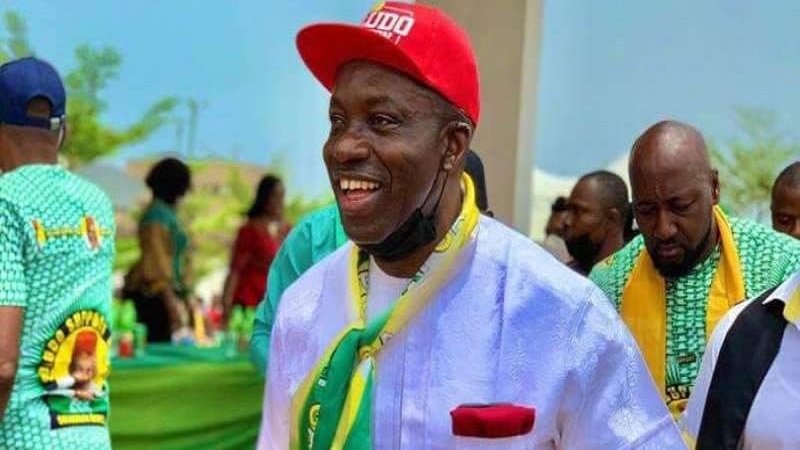
Anambra State Governor-elect, Prof Soludo, goes Option A4 as he searches for human capital to build his state: a talent database to help him pick qualified people for critical positions in the state. Put your name and skills, and you get called if you’re qualified, godfather or not.

Option A4 was one of the approaches arrived at, in the conduct of party primaries for 1993 Presidential election. It is a multilevel strategy for the emergence of party flag bearers, in which aspirants from a party slug it out at the ward level, before proceeding to compete with other wards’ winners at the local government level, while winners at this level compete at state level, till the process reached the federal level.

That is a nice playbook which mirrored how IBB pushed the nomination of presidential contenders from ward to LGA to state and to the federal levels. It would be a great experiment in Anambra state in a nation where we do not compete at the center but at the tribal/ethnic/religious/add more domains.

Yes, what happens if most of the top talented people come from one senatorial zone? Can Prof Soludo handle that? We will see the outcome of this experiment in a nation where the best graduating student is denied an automatic graduate assistantship lecturer job because of tribe, even as the school gives the same to the 5th best  because he has the right name.

We will be watching…and if he gets it and it scales, this could be the beginning of a new nation. As I have written, the day I went to FUTO and told Prof SOE Ogbogu that I would reject the automatic job the university offered me, it was a moment.

But imagine if because of my tribe, lack of godfather (but too much GOD of course), etc, FUTO did not make that available to me. Of course, I will not be happy. That I declined it because the same man had accepted an offer for me 9 months before graduation (no interview; he said “you do not need to interview my best”) even as he still provided what the tradition offered was superb.

Those who came after me knew that if you excel, a big reward awaits -and everyone then will compete to be the best. But Nigeria has killed that tradition with nepotism, corruption, etc.

Let’s get back to the old Nigeria of excellence, equity and fairness. Well done Mazi Soludo

As stated in his manifesto and repeated during his campaigns, the Governor-elect of Anambra state Professor Charles Chukwuma Soludo promised to give everyone (Anambarians) who has the requisite competencies, capabilities, and relevant valuable contributions to the good governance of Anambra state an opportunity to be actively part of his government. Just recently, the governor-elect seems to be fulfilling his promise towards the good people of Anambra state

He has set up a transition committee mandating them to ensure a seamless transition, among other things producing an #AnambrsStateTalentDataBank, which he will use as a tool for recruiting a talented team & volunteers who will serve Ndi Anambra in the course of his administration.

Therefore, to enable an accessible, open, credible, and competitive process, the governor-elect has approved the launch of an online system known as “Anambra Talent DataBank Expression Of Interest” to collect information on available competencies, experiences, and passion through a platform.

Anambra Governor-Elect Charles Soludo Announces Anambra Talent Databank, Calls For Expression Of Interest

0

As stated in his manifesto and repeated during his campaigns, the Governor-elect of Anambra state Professor Charles Chukwuma Soludo promised to give everyone (Anambarians) who has the requisite competencies, capabilities, and relevant valuable contributions to the good governance of Anambra state an opportunity to be actively part of his government. Just recently, the governor-elect seems to be fulfilling his promise towards the good people of Anambra state.

He has set up a transition committee mandating them to ensure a seamless transition, among other things producing an #AnambrsStateTalentDataBank, which he will use as a tool for recruiting a talented team & volunteers who will serve Ndi Anambra in the course of his administration.

Therefore, to enable an accessible, open, credible, and competitive process, the governor-elect has approved the launch of an online system known as “Anambra Talent DataBank Expression Of Interest” to collect information on available competencies, experiences, and passion through a platform.

This is a very laudable initiative from Prof. Soludo and indeed a practice of true democracy where the government is of the people by the people and for the people. It is no surprise to me, because Prof. Soludo is an erudite person, and merely looking at his portfolio, one can tell that a person with such achievements is likely to do exploits in the area of governance.

The governor-elect is being transparent as possible with his selection because the talent Data Bank offers a level playing field for talent search and team selection processes that are consistent with the vision of the governor-elect. This act is an exemplary one worthy of emulation.

All leaders ought to take a cue from this because when the people are actively involved in the affairs of the government, there is great progress. This initiative will indeed attract problem-solvers with passion, competence, capacity, and integrity who will be interested in proffering solutions and adjoining a team of other selfless public servants to transform Anambra started into a megacity.

To tell you that the Talent Data Bank is well-drafted by brilliant minds, it contains a comprehensive outline of political offices, volunteers, and public service options on the platform so that the people can choose the area which aligns with their competencies, experiences, and passion.

The people of Anambra will get to fill the form putting their value preposition where they would signify what problem the state is lacking that they would love to solve coupled with their qualifications stating that they are a good fit for the position. Prof. Charles Soludo has taken a very commendable step in recognizing real talents that deserve certain positions and not due to political affiliation or the power of ‘Iwe Mmadu’ which is to know someone. There is no favoritism in this initiative, but rather an open field that allows self talents to be exhibited. Indeed, political appointments shouldn’t be some sort of reward, but rather a call to serve

It also creates room to hire competent individuals. This is indeed a paradigm shift and a break from the norm in the history of governance in the state. It creates room for passionate individuals to join hands to develop the state and make it a better place. This is indeed a great opportunity for youths to be actively involved in the affairs of the government. Hopefully, this model will be adopted by other states in the near future. Just like his campaign slogan states #SoludoSolution, indeed Prof. Charles has started living up to it.

Still On Nigeria’s Technology For ‘Kilishi’ Production

0

The call of a good and lovely friend of mine residing in Germany filtered in just in the early hours of 7th October, 2020 immediately after my usual morning devotion.

In his usual style of asking about Nigeria, after exchanging pleasantries, the dude said “Comrade Fred, why is Nigeria still lagging behind in the area of technology despite the alarming need for it?” I didn’t know what actually informed his question.

In my normal way of making my response succinct and apt, I told him “The country will remain where she is until she truly understands the prime essence of research and innovation.”

I nevertheless further notified him that some of the individual capacities in the country were currently making waves as regards technology, but apparently discouraged by the lingering lack of enabling environment.

Lest I digress; two years back, a serious melodrama ensued on the floor of the Nigeria’s National Assembly (NASS) – the Upper Chamber to be precise – when the Director General (DG) of the Nigeria’s Raw Material Research and Development Council (RMRDC), Prof. Hussain Ibrahim appeared before the Senate Committee on Science and Technology.

When asked by the Committee Chairman, Sen. Uche Ekwunife to inform Nigerians how the agency had thus far fared since her thirty-three years of existence, the DG graciously stated that the Council had developed a technology for mass production of ‘Kilishi’.

According to the professor, the aforementioned development regarding manufacturing of Kilishi remained a major breakthrough since the creation of the research-oriented council.

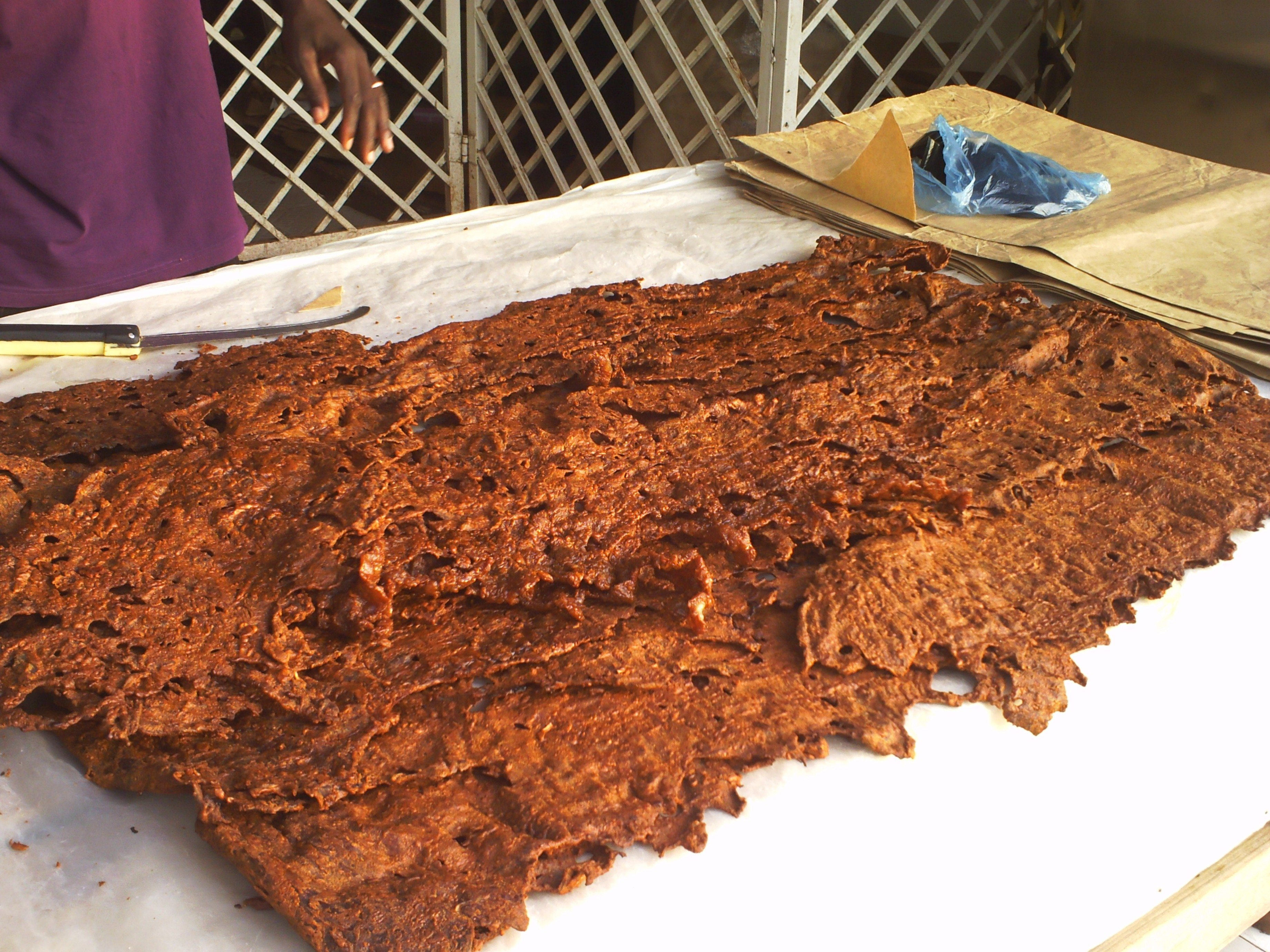
It’s noteworthy that Kilishi is a locally-spiced roasted meat made of beef. It’s very popular mainly in the Northern part of Nigeria. The product is similar to ‘Suya’, though tastes better and more palatable according to the consumers.

Prior to the above response, the DG was actually asked by the Senate panel to tell the teeming Nigerian citizens the specific raw material the agency had successfully produced in the country in partnership with other research institutes.

Prof. Ibrahim opined that in spite of the Council’s “lack of laboratory, we have reached milestone”. One might be wondering if it was development of tech-driven measures for optimization of Kilishi production that took the agency to ‘milestone’.

In a further quest of the committee, the DG was asked “Can you tell us the local raw materials you have developed in the area of health, brewery, construction, science and technology, or agriculture?”

The boss responded “We have developed two varieties of sorghum. We collaborated with agricultural research institutes, pharmaceutical industries because we produce ethanol from it and that is the basic raw material for the production of sanitizers.”

The DG equally highlighted “From the sorghum, we developed other products like glucose syrup, livestock feeds, materials for breweries and starch.”

The last sentence triggered more reactions towards clarifications, hence the committee further enquired if the Council had developed the Glucose Syrup to the stage where Nigeria would no longer import it.

Prof. Ibrahim strongly said, “We have not reached that stage. It goes through processes. We have tested it but the stage we are now is the pilot stage.” At this juncture, if your thoughts are as good as mine, you would then wonder if the pilot stage lasts more than three decades before the research process gets to the next level.

As if that wasn’t enough, the boss stated, “In our 30 years of research activities, we are still the largest research institute. But to be candid with you, we are making progress.”

But was the boss trying to assert that the Council was the largest in Nigeria, Africa or where precisely? Sometimes, one cannot help but remain astonished and puzzled over the manner of speech we invariably receive from some of these so-called professors or Nigerians in positions of authority.

Funnily enough, Prof. Ibrahim then landed with alacrity by enthusing “For now, we have developed technology to optimize kilishi production. Research activities take time. To be candid, we have reached milestone.”

Can you imagine? After about 3 decades of existence, someone was still asking for more time. What kind of time was he really referring to? One question, too many. Any discerning citizen of this country that watched the video clip of that very outing, I bet you, would hate himself for being a Nigerian.

It’s worth noting that the professor’s submission led to a prolonged laughter from the audience but rather drew the anger of the lawmakers (panelists). A member of the panel, Sen. Clifford Ordia then furiously uttered, “Is this the success story you are going to tell us after 33 years?”

In the 21st Century, we were being told by a professor that a technology had been deduced for Kilishi production. Away from that, we were still boggled with the information concerning sorghum, a commodity that can now be comfortably produced by even our secondary schools’ students.

Personally, I wasn’t really dumbfounded over the professor’s outrageous comments, because he was coming from an institution – Nigerian university – where research works have over the years been relegated to the background.

Aside from classroom teaching, research was the major reason that informed the establishment of universities across the globe. But it’s quite appalling that in this part of the world, particularly Nigeria, they are rather seen as places meant for only lecture rooms or auditoriums, thereby leaving our laboratories to suffer.

That annoying melodrama that occurred in the NASS, precisely on 8th June 2020, between the DG of the RMRDC and the Senate Committee truly had revealed that we are the reason Nigeria is where she is today in regard to technology and allied matters. That’s the kind of outing my pal in Germany needs to witness.

Had it been the appointment for the headship of the Council (RMRDC) was not granted to a professor, we would have perhaps been bitter over the gesture of the President. Please, don’t get it twisted; I’m not trying to ridicule our eminent professors who are widely regarded and addressed as the most learned persons in the world. After all, I’m aspiring to become one someday.

But that doesn’t override the fact that some of these ‘professors’ are just a shadow of themselves. The sound ones among them can boldly attest to this unequivocal assertion. Read my lips!

Lest I forget; away from competence and diligence to duty, we can’t possibly forget in haste that Nigeria as a country is still lagging behind as regards funding of research works and commercialization of patents, let alone creation of an enabling environment.

Over six years ago, Nigerians were promised by a serving minister that the country would soon be producing mere pencils, yet till date, we are still living in anticipation. How did we get here?