DD
MM
YYYY

PAGES

DD
MM
YYYY

spot_img

PAGES

Home Blog Page 531

Shiba Inu (SHIB) Holders Regret Missing the 2021 Top, Here’s the Crypto They’re Buying to Make 100x Gains Again

0

Shiba Inu’s explosive rally in 2021 created life-changing wealth, but many investors missed the opportunity to sell at its peak. Now, in 2025, attention is shifting to Little Pepe (LILPEPE), a meme-powered project with presale momentum, exchange listings ahead, and a Mega Giveaway capturing the interest of SHIB holders.

Why SHIB Investors Are Paying Attention to Little Pepe

Shiba Inu’s rise in 2021 showed the power of meme coins, but the market has matured significantly since then. Today’s meme coins are expected to combine cultural appeal with technological strength, and Little Pepe seems to be delivering both. The project is building a Layer-2 blockchain dedicated entirely to meme coins. It aims to provide faster, cheaper, and more reliable transactions than Ethereum. The blockchain will also feature a launchpad for new meme projects and has pledged to be the only chain where sniper bots won’t work, ensuring fair access to trading. For investors who regret missing SHIB’s peak, Little Pepe offers an early entry point into a project that blends meme culture with infrastructure-level innovation.

Presale Momentum: Nearing Completion

The ongoing Little Pepe presale reflects the significant demand the project has generated. At the time of writing, the token sale is in Stage 12 with the following progress:

  • Next Stage Price: $0.0022
  • Current Stage Price: $0.0021
  • USD Raised: $24,697,609 / $25,475,000
  • Tokens Sold: 15,379,813,056 / 15,750,000,000
  • Progress: 97.65% complete

As the presale approaches its sell-out, anticipation is building for its listing on two top centralized exchanges (CEX) at launch, with additional plans to pursue listings on the world’s largest exchange later. This structured rollout adds a layer of transparency and credibility that many meme coins lack.

Inside the Little Pepe Mega Giveaway

Community engagement has always been at the heart of successful meme coins, and Little Pepe is no exception. The project is running a Mega Giveaway tied to presale activity across Stages 12–17 to reward its early supporters. The structure of the giveaway is straightforward:

Over 15 ETH in prizes are available.

1st Biggest Buyer – 5 ETH

2nd Biggest Buyer – 3 ETH

3rd Biggest Buyer – 2 ETH

15 Random Lucky Buyers – 0.5 ETH each

In addition, every LILPEPE holder is eligible for a separate $777k community giveaway. Entry involves submitting an ERC20 wallet, completing a few social tasks, and buying tokens during the presale. The campaign will run until Stage 17 sells out. This event reflects a broader strategy: combining fair distribution with cultural hype to strengthen Little Pepe’s growing community.

Could Little Pepe Deliver SHIB-Like Gains?

Little Pepe drew parallels with Shiba Inu back in 2021, but the 2025 rival has a trick that SHIB never offered: a blockchain specifically designed for the meme itself. This difference could be key as meme coins continue to mature.     The presale sold out quickly, exchange listings are on the calendar, and the Mega Giveaway is just the latest promo showcasing that Little Pepe is aiming beyond the usual pump. It’s pushing for a proper meme-driven blockchain world that wants builders, artists, and everyday wallets in the same park.     For SHIB holders that still wish they’d boarded its hype train earlier, the chance to step on a fresh cultural and tech ride is here now and pretty tempting.

Final Thoughts

Shiba Inu gave the crypto world one of its most iconic rallies, but many investors are still searching for the “next SHIB.” In 2025, Little Pepe (LILPEPE) emerged as a strong contender, with its presale nearly sold out, exchange listings on the horizon, and a Mega Giveaway fueling its growing community. We’ll find out soon if Little Pepe can match or even beat what SHIB did, but there’s no doubt the coin is heating up just when the market needs a spark. If you want a taste of the 2021 hype, watch the Little Pepe presale or dive into the Telegram, where the buzz is loud.


For more information about Little Pepe (LILPEPE) visit the links below:

Website: https://littlepepe.com

Whitepaper: https://littlepepe.com/whitepaper.pdf

Telegram: https://t.me/littlepepetoken

Twitter/X: https://x.com/littlepepetoken
Apple’s Slim iPhone Air Faces eSIM Hurdles in China as Release Date Vanishes from Website

0

Apple’s latest hardware gamble, the ultra-thin iPhone Air, may be off to a rocky start in one of its most important markets.

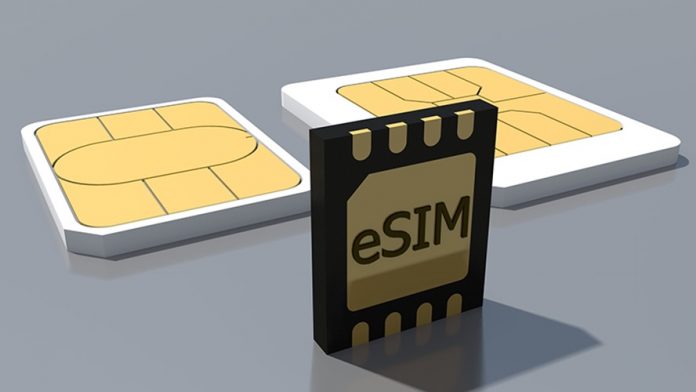
The device, unveiled Tuesday at Apple’s fall event, is the company’s thinnest iPhone yet, measuring just 5.6 millimeters. To achieve the slim profile, Apple removed the traditional SIM card slot and made the iPhone Air eSIM only, leaving more room for its compact battery and other components.

But that design choice poses a challenge in mainland China, where not all carriers have rolled out eSIM service, according to a report by Business Insider.

Release date disappears

Originally, Apple had scheduled iPhone Air deliveries in China to begin on September 19, alongside the iPhone 17 lineup. But in the days following the launch, the South China Morning Post noticed a quiet change: Apple’s Chinese website no longer listed the Air’s release date. Instead, it now displays a message reading: “Release information will be updated later.”

Apple does list China Mobile, China Telecom, and China Unicom as carriers that will support eSIM, but adds that rollout is “subject to regulatory approval.” While Apple didn’t specify which regulator is involved, the Ministry of Industry and Information Technology (MIIT) oversees telecoms in China and is likely to be the deciding authority.

The iPhone Air starts at 7,999 yuan (about $1,123) in China, placing it in the premium tier of the market.

Apple’s China challenge

This is not the first time Apple has hit turbulence in China. The company has steadily lost market share to domestic rivals like Huawei and Xiaomi, which offer competitively priced models that often benefit from government subsidies. Those local advantages have squeezed Apple, especially among price-sensitive buyers.

Still, Apple’s Greater China revenue grew 4% year-on-year last quarter, a surprise that cheered Wall Street analysts.

“This was a major step in the right direction for Cook and Cupertino, with China the star of the show,” wrote Wedbush analyst Dan Ives, who has long been bullish on Apple’s prospects in the region.

A risky but strategic bet

Apple’s push toward eSIM-only devices has been gathering pace. In the United States, it dropped the SIM card slot with the iPhone 14 in 2022, effectively nudging U.S. carriers to accelerate eSIM adoption. In Europe, too, regulators and carriers have been more aligned on digital SIM rollouts.

China, however, presents a trickier environment. While the big three state-run carriers have the technical capacity, rollout has been piecemeal, and adoption has lagged. Regulatory approval processes, coupled with state sensitivities about digital infrastructure, mean Apple’s strategy is colliding with a slower-moving system.

Analysts say the vanished release date highlights the risks of Apple’s hardware design decisions being outpaced by local market realities. Unlike the U.S. or Europe, Apple has less leverage in China, where government policies and local champions like Huawei can tilt the competitive balance.

Buzz vs. barriers

Despite the regulatory hiccups, early chatter around the iPhone Air — amplified by its record-thin design — has generated notable buzz among Chinese consumers, according to SCMP. If Apple can navigate the eSIM hurdle, analysts believe the Air could give its China business an added boost in the final quarter of 2025.

But for now, the device sits under uncertainty — a product that embodies Apple’s design ambitions, yet underlines how geopolitical and regulatory dynamics in China can quickly complicate Cupertino’s plans.

Avalanche Push for $1B Treasury, BitMine Continues Ethereum Buying Spree, Ethena Withdraws USDH Bid on Hyperliquid

0

The Avalanche Foundation is advancing plans to raise $1 billion through two U.S.-based digital asset treasury companies, as reported by the Financial Times.

This initiative aims to create structured vehicles for long-term AVAX accumulation, mirroring strategies like MicroStrategy’s Bitcoin treasury model. The funds would be used to purchase millions of AVAX tokens directly from the foundation’s reserves at a discounted price, potentially reducing circulating supply and supporting ecosystem growth.

Two separate $500 million raises. First: Led by Hivemind Capital (part of Dragonfly Capital ecosystem), via a private investment in an unidentified Nasdaq-listed company. Advised by Anthony Scaramucci (former White House press secretary and SkyBridge Capital founder). Expected to close by end of September 2025.

Second: Via a Special Purpose Acquisition Company (SPAC) backed by Dragonfly Capital, with a longer timeline (potentially October 2025). At current AVAX prices around $28–$29, $1B equates to roughly 34–35 million tokens—about 8% of the ~422 million circulating supply.

This could tighten liquidity and signal strong institutional commitment which aligns with a surge in corporate crypto treasuries, which have raised over $16B in 2025 per Kaiko data. Avalanche is also attracting TradFi players like BlackRock, Apollo, and Wellington for tokenized fund pilots.

AVAX surged ~8–10% in the 24 hours post-report, trading near $29 with network activity spiking. On X, discussions highlight this as a “buyback” play to boost adoption, with users like @ThuanCapital and @thecryptobasic emphasizing the Hivemind/Dragonfly involvement. This move positions Avalanche as a capital markets contender against Ethereum and Solana, though AVAX has lagged in 2025 price gains.

BitMine’s Latest ETH Acquisition

BitMine Immersion Technologies (NYSE: BMNR), the Nasdaq-listed Bitcoin miner pivoting to an Ethereum treasury powerhouse, acquired 46,255 ETH (valued at ~$201M) from BitGo. This brings their total ETH holdings to 2,126,018 tokens, worth approximately $9.24B at current prices (~$4,350–$4,400 per ETH).

This follows a $358M ETH purchase (80,325 ETH) from Galaxy Digital and FalconX last week, and broader accumulation of 319K+ ETH (~$1.4B) in early September. Total crypto + cash reserves now exceed $9.2B, including 192 BTC (~$215M) and $266M cash.

BitMine aims to control 5% of ETH’s total supply (~120M ETH) as a long-term reserve asset. Chairman Tom Lee (Fundstrat) views ETH as a “supercycle” bet tied to Wall Street’s blockchain shift and AI/token economies. Backed by heavyweights like Cathie Wood’s ARK, Founders Fund, Pantera, and Galaxy Digital.

On the same day, BitMine invested $20M in Eightco Holdings (NASDAQ: OCTO) via a $270M PIPE, supporting OCTO’s “Moonshot” strategy to build a Worldcoin (WLD) treasury—aligning with BitMine’s 1% balance sheet allocation to ETH ecosystem projects.

BitMine now holds ~1.8% of ETH’s circulating supply, outpacing rivals like SharpLink Gaming ($3.63B ETH). It’s the #1 ETH corporate treasury and #2 overall crypto treasury (behind MicroStrategy). ETH rose ~2.3% post-announcement, trading above $4,400 amid ETF inflows ($172M net yesterday, led by BlackRock’s ETHA).

On X, on-chain trackers like OnchainLens confirmed the transfer, sparking buzz about institutional ETH hoarding. BMNR stock dipped slightly (~0.5%) to ~$42 amid high volume ($6.4B daily average, #10 most liquid U.S. stock). These developments underscore 2025’s treasury trend, with $16B+ raised for crypto holdings YTD.

Both signal maturing institutional adoption—AVAX for L1 competition, ETH for DeFi/TradFi convergence. Watch for deal closures and Nasdaq/SEC scrutiny on these models.

Ethena Withdraws USDH Bid on Hyperliquid Amid Community Pushback

Ethena Labs, the team behind the synthetic stablecoin USDe, announced its withdrawal from the competitive bidding process to issue Hyperliquid’s native stablecoin, USDH.

This decision came after direct feedback from Hyperliquid’s validators and community members, who expressed concerns that Ethena—despite its strong track record—was not a “native” project to the Hyperliquid ecosystem, maintained broader product ambitions beyond stablecoins, and wasn’t committed exclusively to Hyperliquid as a partner exchange.

Ethena’s founder, Guy Young, acknowledged these points as valid in a detailed X post, describing the community’s engagement as “incredible” and congratulating rival bidder Native Markets on their strong position.

Hyperliquid, a decentralized perpetuals exchange known for its high trading volumes (recently hitting $330B monthly with just 11 employees), is launching USDH to reduce reliance on bridged assets like USDC, which currently dominate 95% of its $5.6B stablecoin supply.

The USDH issuer will control significant revenue from reserve yields (potentially $200M annually for the ecosystem), making the bid a high-stakes contest. Ethena entered the race on September 9 as the sixth bidder, proposing a fully backed USDH using USDtb (tied to BlackRock’s BUIDL fund via Anchorage Digital), pledging 95% of net revenue back to Hyperliquid, and committing up to $150M in incentives.

Other contenders included established players like Paxos (emphasizing PayPal/Venmo integrations and zero-cost ramps), Frax, Agora, Sky (formerly MakerDAO), and the upstart Native Markets. Validators vote on the issuer via staked HYPE tokens, with the process weighted by stake.

Prior to Ethena’s withdrawal, Native Markets had secured about 30-53% validator support, while Ethena held around 8%. Polymarket prediction markets now give Native Markets a 91-92% chance of winning ahead of the September 14 vote, with Paxos at ~7%.

Why the Withdrawal?

Community sentiment favored “native” teams deeply embedded in Hyperliquid’s ecosystem, viewing Native Markets (a team formed specifically for this bid) as a better cultural fit despite its limited track record.

Critics, including Dragonfly’s Haseeb Qureshi, questioned the process’s fairness, suggesting it was “custom made” for Native Markets and that validators showed bias against outsiders like Ethena, Paxos, and Agora. Young pushed back on complaints about Native Markets’ credibility, calling it a “level playing field where emergent players can win the hearts of the community.”

Ethena’s synthetic stablecoin model (USDe, which hit $12B market cap in August) also drew skepticism in this context, as Hyperliquid prioritizes fiat-backed reserves for USDH stability. Despite the exit, Ethena emphasized it will “put our full force” into Hyperliquid integrations, viewing the USDH bid as the “least interesting” part of its plans.

Key focus areas include:

hUSDe: A native synthetic dollar tailored for Hyperliquid users. USDe-enabled tools like savings accounts and cards. Enabling better risk management on Hyperliquid’s perps markets. Advanced features like reward-bearing trading collateral, modular prime brokerage, and perpetual swaps on equities.

Young framed this as Ethena’s core strength: “outcompete everyone else on product regardless.” This aligns with Ethena’s recent momentum, including $500M+ in cumulative revenue and integrations across Aave, Pendle, and Coinbase Institutional.

Native Markets’ likely win reinforces the platform’s community-driven ethos, potentially boosting HYPE (which hit $55 ATH amid the bids) through revenue shares for buybacks and ecosystem growth. It could shape USDH’s risk profile toward more localized, fiat-backed issuance.

The move avoids a divisive vote and lets the team pivot to high-upside products without the 5% revenue cap from USDH yields (especially in a declining rate environment). It highlights tensions between established DeFi players and ecosystem natives.

This underscores governance’s role in stablecoin issuance, with Hyperliquid’s process favoring alignment over pedigree— a model that could influence other chains. The vote concludes on September 14, but Ethena’s withdrawal has already streamlined the path for Native Markets.

Vest Acquico Drags Cornerstone Insurance Shareholders to SEC Over Collapsed N60.5bn Deal

0

Vest Acquico Limited has escalated its battle for control of Cornerstone Insurance Plc to Nigeria’s Securities and Exchange Commission (SEC), accusing the company’s majority shareholders of backing out of a signed deal to sell their 79% stake despite the buyer meeting all agreed conditions.

According to documents seen by Nairametrics, Vest Acquico wrote a formal petition to the SEC, with copies sent to the National Insurance Commission (NAICOM) and the Financial Services Commission of Mauritius. The firm alleged that the sellers abruptly walked away from the agreement after it had secured and delivered a N60.5 billion bank guarantee through Wema Bank Plc.

The Parties at the Heart of the Dispute

Vest Acquico Limited is a Nigerian-incorporated investment company promoted by Babatunde Edun, Akinfemi Akinware, and Jude Abalaka. The petition to the SEC was signed by Akinware, a former board member of VFD Group Plc who has been linked to investment ventures in fintech and infrastructure.

On the other side are long-standing investors in Cornerstone Insurance, including Pioneer Management & Business Ventures LLP, a Lagos-based investment partnership with ties to African Capital Alliance (ACA). Also named are Capital Alliance Private Equity II and III, Mauritius-incorporated funds managed by ACA. These shareholders hold their Cornerstone stake through Banc-Assure Limited and Capassure Limited, Mauritius-based vehicles that collectively own about 79% of the insurer.

The Disputed Deal

According to Vest Acquico’s petition, the transaction was structured around acquiring Banc-Assure Limited and Capassure Limited, which together hold 79% of Cornerstone Insurance. The deal was valued at N60.5 billion.

As part of the agreement, Vest Acquico was required to demonstrate financial capacity by providing a bank guarantee for the same amount. On August 12, 2025, a letter signed by Ashraf Deenmahomed for Capital Alliance Private Equity II and III, and Steve Iwenjora for Pioneer Management & Business Ventures, confirmed that the Share Purchase Agreement (SPA) was “agreed in form” and would be executed once the guarantee was delivered.

Vest Acquico says it complied, submitting the revised guarantee on August 29. But just days later, on September 3, the guarantee was returned by Nigerian investment veteran Okey Enelamah, acting on behalf of the seller group. Enelamah, co-founder of ACA and former Minister of Industry, Trade, and Investment under President Muhammadu Buhari, informed Vest that the sellers had decided not to proceed with the sale.

In its petition to the SEC, Vest wrote: “Despite these substantial efforts and full compliance with the Sellers’ requirements in procuring the Bank Guarantee, the Sellers have now refused to proceed with the completion of the Transaction, acting in bad faith and thereby exposing the Buyer to material financial exposure.”

It further argued that the refusal “constitutes an anticipatory breach of their obligations under the agreed terms.”

However, in the same August 12 letter, the sellers had inserted a caveat that the document was not “a binding legal obligation, liability or duty of care between the Sellers and the Buyer, or between either the Sellers or the Buyer, and any third parties” — a detail that could shape the legal battle ahead.

Why the Battle Matters

Cornerstone Insurance trades on the Nigerian Exchange at about N7.30 per share, giving it a market capitalization between N130 billion and N135 billion. The stock has more than doubled in 2025, rising over 100% year-to-date amid industrywide recapitalization expectations.

At current market prices, the disputed 79% stake would be worth over N100 billion — far higher than the N60.5 billion agreed deal value. That sharp gap underscores the high stakes involved and why control of Cornerstone has become such an attractive prize for investors.

The tussle comes as Nigeria’s insurance sector undergoes sweeping reforms under the Insurance Industry Reform Act, 2025. The law raised minimum capital requirements fivefold, forcing insurers to seek fresh funding or consolidate. Non-life insurers now must hold N15 billion in capital (up from N3 billion), life insurers N10 billion (up from N2 billion), and reinsurers N35 billion.

This recapitalization push is expected to trigger mergers, stake sales, and capital raises across the industry. For Cornerstone, whoever controls its majority stake will sit at the center of this transformation.

Recent Developments at Cornerstone

On August 29, 2025, Cornerstone Insurance announced the appointment of Mr. Ejakhaluse Zoe Omonkhogbe as a non-executive director. Omonkhogbe, who currently serves as Executive Director at Capital Alliance Nigeria, oversees the firm’s finance and tax functions — further underscoring ACA’s influence in the company.

Earlier in July, Cornerstone declared a dividend of N4.9 billion at its Annual General Meeting. Yet its half-year 2025 results showed a sharp decline in earnings, with pre-tax profit falling to N6.7 billion from N27.8 billion in the same period of 2024, as foreign-exchange-related gains that had boosted profits last year failed to materialize in 2025.

With the buyer accusing the sellers — Pioneer Management & Business Ventures LLP and Capital Alliance Private Equity II and III, both tied to African Capital Alliance (ACA) — of bad faith, and with the disputed stake now worth far more than the original agreement, regulators face a test of how shareholder disputes are resolved in an industry under reform.

Against this backdrop, analysts now present three possible outcomes:

1. SEC Forces Completion of the Deal

If regulators side with Vest Acquico, the deal could still be forced through. Such an outcome would immediately give Vest control of Cornerstone Insurance and place it at the center of the recapitalization wave triggered by the Insurance Industry Reform Act, 2025, which raised minimum capital thresholds fivefold. For Vest, this would be a strategic win, allowing it to consolidate influence in a sector bracing for mergers and fresh capital raises.

However, some lawyers believe that enforcing the transaction would depend on whether the SEC interprets the sellers’ letter as creating binding obligations despite their caveat. A ruling in Vest’s favor could set a precedent that increases the legal risks for private equity funds walking back from agreed sales when market conditions change.

2. Sellers Prevail, Stake Remains with ACA-Linked Group

If the SEC accepts the sellers’ position that no binding contract existed, the ACA-linked group would retain control of Cornerstone. This would keep the insurer within the orbit of one of Nigeria’s most powerful private equity firms, with Okey Enelamah and ACA continuing to influence its boardroom. The August 29 appointment of Mr. Ejakhaluse Zoe Omonkhogbe, an executive director at Capital Alliance Nigeria, as Cornerstone’s non-executive director already signals their continued strategic positioning.

The risk here is believed to be reputational. Walking back from a transaction after a bank guarantee has been delivered could make future deals with local investors more difficult, especially at a time when international funds are weighing Nigeria’s regulatory and market risks more closely.

3. A Compromise Deal Emerges

A third possibility is that the dispute prompts renegotiation. With Cornerstone’s stock having more than doubled in 2025, rising expectations of recapitalization could encourage both sides to seek middle ground. That could mean revising the deal value closer to current market levels, sharing control, or structuring a phased exit for ACA-linked sellers.

Such a compromise could also serve regulators’ interests by avoiding prolonged litigation that risks destabilizing one of the industry’s most visible firms.

Rivian CEO RJ Scaringe Says Chinese EV Cost Edge Is No Trick

0

Rivian CEO RJ Scaringe says Chinese automakers’ dominance in the global electric vehicle (EV) market is not built on secret technology tricks but on a systemic cost advantage that makes it almost impossible for Western automakers to compete on equal footing.

Speaking on the Everything Electric podcast, Scaringe said it was “inconceivable” that Western countries would indefinitely allow Chinese EV makers to export freely while restricting Western manufacturers’ ability to sell into China.

“It’s inconceivable that Western markets would not allow their domestic manufacturers to produce in China, but simultaneously allow freely those Chinese companies to produce in China and sell,” Scaringe said.

Scaringe’s warning comes as the United States and Europe are already moving to raise barriers. The Biden administration imposed a 100% tariff on Chinese-made EVs earlier this year, while President Donald Trump had leaned heavily on tariff threats to push automakers into expanding U.S. production.

Although Rivian does not currently operate in China, Scaringe said the company closely tracks developments there.

“The part that everyone needs to take note of is that these are technically very advanced vehicles and more advanced than a lot, most of, I should say, most of the Western vehicle manufacturers,” he said. “I’d say Rivian and Tesla being exceptions to that.”

The Anatomy of China’s Cost Advantage

The Rivian chief said the low cost base of Chinese automakers comes from a mix of factors: subsidized industrial development, cheaper labor, and a more efficient supply chain for everything from components to final assembly.

“We’ve taken lots of cars apart, every car manufacturer does,” Scaringe explained. “There’s not something magical when you take it apart that’s allowing these really impressive cost structures. There’s no secret magic thing that you’re like, ‘Oh, aha, they did this.’ But rather it’s the compounding benefits of a lower cost of capital.”

Protectionism Has Limits

Scaringe, however, cautioned that tariffs and trade barriers cannot be the sole solution. He noted that the United States remains heavily dependent on foreign sources for the raw materials needed to make EV batteries and other critical technologies.

“As you think about future technologies, we actually don’t have the same geological advantages that we had in the fossil fuel area,” he said. “So by necessity it requires trade and trade often with countries that we haven’t historically traded as much with.”

One glaring example is nickel, which Rivian requires for its batteries. The world’s largest producer is Indonesia, not the United States. Scaringe noted that the U.S. lacks both sufficient reserves and the social license to rapidly expand domestic mining.

“Even if we really wanted to, there’s not an ability for us to press a button and have a nickel supply chain, nickel mines pop up in the United States, putting aside the fact that there’ll be very, very few communities in the United States that want to have a nickel mine in their backyard or their people that want to necessarily work in that line of business,” he said.

Interestingly, Scaringe said the Trump administration “really does understand” the bind U.S. automakers face. While protectionist measures may shield domestic EV makers from immediate Chinese competition, they do not address the deeper structural dependency on imported minerals and components.

A Shared Concern Across the Atlantic

Scaringe’s warning echoes a rising chorus in Europe, where automakers like Volkswagen, Renault, and Stellantis have voiced similar concern about China’s EV push. The European Commission has opened investigations into Chinese EV subsidies, citing fears that cheaper imports are undercutting Europe’s auto industry. Germany’s carmakers, long reliant on the Chinese market for growth, are under particular pressure as domestic sales stagnate and Chinese rivals push aggressively into Europe with budget-friendly yet highly advanced models.

Industry analysts say the transatlantic parallels show that this is not just a U.S.-China trade fight but a systemic challenge reshaping the global auto industry. Chinese EV makers enjoy not only scale but also a commanding position in the battery supply chain, where they control mining, processing, and production at levels Western firms have yet to match.

For Rivian and its Western peers, the clear message is that survival depends on staying at the cutting edge of technology while navigating a global market tilted by both cost and geopolitics. Currently, competing with China means more than tariffs, and it doesn’t matter if you are in Detroit, Wolfsburg, or Paris.