DD
MM
YYYY

PAGES

DD
MM
YYYY

spot_img

PAGES

Home Blog Page 5315

Understanding the Concept of Money Laundering

0

What does the term “Money Laundering” really mean?

People are always asking what does the term “Money Laundering” really mean; is it a legal concept or a political concept? I will try to break down and explain in simpler terms what the term “money laundering mean”; the offense of money laundering in Nigeria and its punishment as a legal concept.

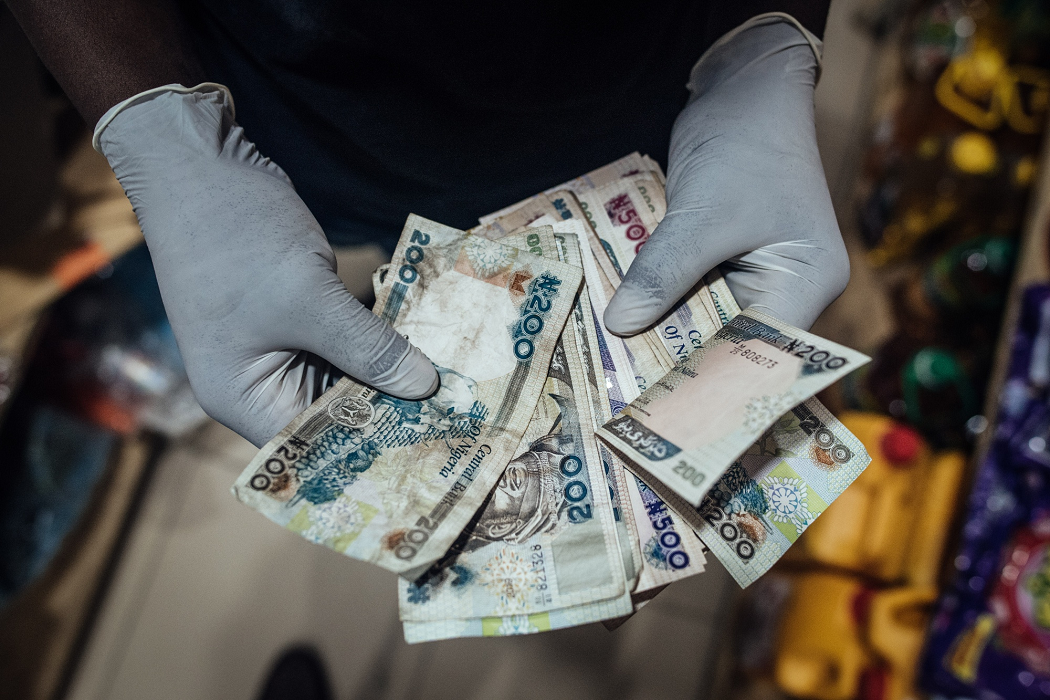
Scenario: Let’s assume Mr. Ade made about N500m from illegal activities like international fraud scheme, drug trafficking, arms deal, oil bunkering etc and there is no how he can spend such amount of money or take it to the bank without drawing the attention of the authorities to verify the source of the income and know what Mr. Ade does  for a living to justify him owning such an amount or having such a huge amount in his possession. Mr. Ade decides to invest the money in a business venture. The process  of investing such illegally acquired money into a legit business thereby covering the illegal money tracks is what is called money laundering. 

Just like the name implies, laundering is an English word which simply means washing or cleaning; therefore, money laundering simply means the act of washing or cleaning a “dirty” or money gotten through illegal means to become clean or legal by investing the money into a legal or legitimate venture.

It can also be said to be the concealment of the origins of illegally obtained money, typically by means of transfers involving foreign banks or legitimate businesses or Money laundering is the practice of making money that was gained through criminal means, such as smuggling weapons, look as if it came from a legitimate business activity.

When authorities arrest an individual for money laundering, they are simply saying that his business or source of income does not justify him owning such a huge amount he owns and definitely the money is a proceeds of some illegal activities.

Money laundering is a crime in most countries of the world, it’s an international crime that the offender can be arrested and tried in any country where he committed the offense. It is also a high class offense in Nigeria and the Money Laundering (Prohibition) Act, 2011 subsequently Money Laundering Prohibition (Amendment) Act, 2012 in consonance with the Economic and Financial Crime Act, 2004 are the main laws that regulate and provide for the offense of  and punishments for the crime of money laundering in Nigeria and the Economic and Financial Crimes Commission is the law enforcement agency charged with the statutory duties of arresting and prosecuting money launderers. 

The Economic and Financial Crimes Commission has a special department whose sole purpose is to regulate, educate, arrest and prosecute criminals of money laundering. The department is called ; Special Control Unit Against Money Laundering (SCUML) and they have offices in most states in Nigeria.

The offense of Money Laundering in Nigeria is not just limited to the act of investing ill gotten money into a legitimate business, The Money Laundering (Prohibition) Act 2011 makes it illegal for any individual to accept or make any cash payment that exceeds N5m (Five Million Naira).

This implies that if an individual pays or accepts in payment a cash that is above N5m without making use of financial institutions, then the transacting parties have committed the crime of money laundering. The transacting parties found guilty of contravening this are liable to imprisonment for a term of not less than 3 years or a fine of N10m (Ten Million Naira) or to both.

The Money Laundering act provides for the punishment of 5-10 years jail term  or more for anybody involved in money laundering activities in Nigeria.
Tekedia Mini-MBA Zoom Video Fixed (link here); Topics and Faculty for Next 2 Weeks

3

Greetings. Let me apologize for our Tekedia Mini-MBA Zoom session today. It was all my fault: my laptop was muted, preventing me from picking the mess from unmuted members. And when I later realized, we had already gone far.

I have made an updated video as our Week 1 is extremely important for what we will do in this program over the next 12 weeks. The noisy part has been cut-out and replaced, and then merged with the area where we recovered. Please invest time and go through our Week 1 courseware (videos, written materials and cases).

Again, we pride ourselves on our quality in this Institute. This is the merged video which you can access here. We’re making it public so that you do not even need to login into the Board to access it.

https://www.youtube.com/watch?v=fTxRR7fclik

Again, my sincere apologies. We also want to share with you schedules over the next two weeks.

Next week, we will have:

– Digital Transformation and Strategy – Jude Ayoka – Access Bank, Nigeria (Tue)

– Design Thinking and Innovation – Aderinola Oloruntoye – SAP Africa (Thur)

– Building Category-King Companies and Winners – Ndubuisi Ekekwe (Sat)

The upper one

– Business Growth and Supply Chain – Chibueze Noshiri, Barry Callebaut Group, Belgium (Tue)

– Business Strategy and Execution: Eromosele Omomhenle, Microsoft, Redmond, USA (Thur)

– Structuring Companies and Going Global, Out of Africa – Ndubuisi Ekekwe (Sat)

Regards,

Ndubuisi

Who Takes Responsibility for the Importation of the Contaminated Petroleum Products Causing Fuel Scarcity in Nigeria?

0

Nigeria, a country politically endowed with dramatic events that come now and then, has a fresh episode in the month of February. A sudden surge in fuel queues in petrol stations around the country forced a confession off the mouth of the Nigerian Midstream and Downstream Petroleum Regulatory Authority (NMDPRA), as consumers demanded answers.

“The Nigerian Midstream and Downstream Petroleum Regulatory Authority wishes to inform the general public that limited quantity of Premium Motor Spirit (PMS), commonly known as petrol, with methanol quantities above Nigeria’s specification was discovered in the supply chain.

“To ensure vehicular and equipment safety, the limited quantity of the impacted product has been isolated and withdrawn from the market, including the loaded trucks in transit,” the NMDPRA said in a statement.

While the bombshell statement provided an explanation to the ‘why is there surge in fuel queues?’ question, it also sparked another question that everyone is still eagerly waiting for its answer: who imported the adulterated PMS?

Nigerian president, Muhammadu Buhari has said those responsible for the importation of the off-spec products will be held accountable.

In its attempt to answer the above question, the Nigerian National Petroleum Company (NNPC) Limited, has in a statement issued on Thursday, pointed accusing fingers at five oil marketers: MRS, Emadeb, Brittania-U, Oando and Duke Oil, its subsidiary. The NNPC Group Managing Director, Mele Aba Kyari said that all defaulting suppliers have been put on notice for remedial actions, and that NMDPRA and the NNPC are going to take necessary actions in line with subsisting regulations.

The NNPC’s statement would have exonerated it from blame if not for the mention of Duke Oil and the subsequent response of the companies it has accused. Apart from Duke Oil, four other companies accused of being culpable by Kyari have each issued a statement denying involvement in the importation of the substandard fuel.

MRS was the first to issue a public notice to clear its name. In a newspaper advert on Wednesday last week, the company had said that it’s the sole responsibility of the NNPC to import fuel, making the claims linking it to the importation of adulterated fuel unrealistic.

“Due to the current subsidy regime, NNPC is the sole supplier of all PMS in Nigeria. Consequently, the NNPC through their trading arm, Duke Oil, supplied a cargo of PMS purchased from international trader Litasco and delivered it with Motor Tanker (MT) Nord Gainer. This vessel discharged in Apapa between the 24th and 30th of January, 2022,” the company said.

Other marketers who issued their statements after Kyari had made his claims, also denied having hands in importing the contaminated PMS – leaving only Duke Oil with the blame.

“Our imported products from our mother vessel, MT Torm Hilde, met all NNPC/NMDPRA product specifications, and we’re duly cleared by DPR (now NMDPRA) in line with Appendix 1 of the NNPC-DSDP Agreement.

“All the PMS from our mother vessel, MT Torm Hilde were discharged with all relevant certificate of quality after laboratory analysis as it was adjudged lead-free, ethanol-free, water-free, suspended matter-free and had a sulfur content of 0.0174 as against 0.05, which is within the acceptable content allowable by Nigerian Midstream and Downstream Authority…” Brittania-U said in a statement, adding that its consortium products had been discharged at retail outlets earlier in January.

NNPC and Duke Oil

At the mention of the name Duke Oil by both Kyari and MRS, Nigerians have been asking: “who is Duke Oil”? The answer to this question dates back to some decades ago. In 1989, the NNPC incorporated Duke Oil as a subsidiary but it was never registered as a Nigerian company. It was registered as an offshore company. According to findings made by investigative journalist David Hundeyin, Duke Oil has about 14 Nigerians headed by Kyari on its board. But that’s about its identity as the company is not quite known to Nigerians. So, when Kyari mentioned Duke Oil as the company responsible for importing the off-spec products, he’s indirectly saying that the NNPC, which by virtue of deregulation and FX management, has become the sole importer of refined crude oil products in Nigeria, was responsible for importing the adulterated products.

As Nigeria’s forex crisis deepened, the Central Bank of Nigeria (CBN) was looking to boost its foreign reserve by saving as much dollar as it could. The apex bank said the government spent N2.13 trillion from 2016 to 2019 subsidizing forex for oil marketers. To boost dollar liquidity in country and stop the naira from free-falling, the CBN needs to stop subsidizing forex for petroleum importers. Besides this, the federal government was pushing for the deregulation of the downstream sector. So came the decision to make the NNPC the sole importer of petroleum products in Nigeria.

However, the NNPC applies the Direct Sale-Direct Purchase (DSDP) arrangement, a swap method which allows a certain quantity of crude oil to be exchanged for its equivalent in refined petroleum products. This means that, even though marketers may be directly involved in bringing in refined petroleum products, the NNPC is still solely responsible for fuel importation while the NMDPRA ensures that the specifications and other requirements are met. Unfortunately, the NNPC said the procedural inspection does not include a test for methanol percentage.

“It is important to note that the usual quality inspection protocol employed in both the load port in Belgium & our discharge ports in Nigeria do not include the test for percent methanol content & therefore the additive was not detected by our quality inspectors,” the petroleum industry regulator said.

This statement is supposed to exonerate the NMDPRA from any wrongdoing if not that it has prompted another question: whose job is it to ensure that the specification of methanol for Nigerian-bound petroleum products is met?

As the drama unfolds, Nigerians are seeing more holes in every explanation given by the responsible agencies. Kyari is yet to issue a statement after the companies he accused earlier denied any wrongdoing, stoking the belief that he has been telling half-truth to shield Duke Oil from the responsibility. It is believed to be the usual ploy that the Nigerian government employs to avoid any responsibility when they make grave errors – and as usual, the Nigerian public will suffer the consequences.

Already, a large number of Nigerian consumers have been impacted by the contaminated petroleum products. Ardova Plc (formerly Forte Oil) an indigenous oil and gas marketing company said that it has had over 130 reported cases of car problems related to the adulterated fuel.

Over time the number is expected to rocket across the country, and the victims who will never get justice will bear the responsibility.

Your company valuation and how you pitch it to investors

0

Before booking that appointment where you pitch to investors, you should have sorted out everything about your valuation. There is absolutely no way you would pitch the idea to an investor and then ask for more time to go back for proper valuation. There is a previous post that talked about having a power pitch and how to go about that, but this post will focus on how you defend your valuation before investors.

Normally, when valuation is done, you should get a range figure of what your company is worth. But, like is normal in negotiations, the founder will choose to go with the figure at the top of the range, while the investor might be gunning for the figure at the bottom of the range. The goal should be how both parties can reach a mutually satisfying deal.

The debate is usually not about the funds to be raised, since it is assumed that the founder should have done his/her math and estimated the right sum needed to take the business to the next stage of growth. What both parties will have to settle for usually is what percentage of equity should be exchanged for the sum. If you have watched even one episode of the Dragon’s Den, you probably have a fair idea about how this works.

When you say your business is worth $100,000 or $1,000,000 what do you need to justify this claim to your investor?

Let me just state first that, as a startup founder, it is not wrong to go with the top figure in the valuation range. It shows potential investors that you have confidence in your business, what it is worth, and what it could become. This, however, does not mean that they would accept your figure just like that.

The previous post already gives out pointers to what a founder should be doing to get a proper valuation. This is not meant to be a repetition of that post. Rather, this post will show you how to justify the value that you have arrived at. After all, what would be the point of an excellent valuation done, if you cannot tell your investors why your business is worth that much and even more.

Make a good case for your business. If you have crunched your numbers right, then you can explain with ease how the revenue model works and how the growth potential for the business will be actualized. No investor wants a plan that stops in the paper or a juicy investment that never materializes.

If you currently have holes in your operations, or gaps in your management team, talk about it. You may think that by withholding such information, your company would be considered more valuable. In truth, it may not work out that way for you. Instead, talk about the gaps yourself and highlight how the lack of funds has limited you from building the team or the system that you want. Then go ahead to state how the funds will be used to secure the people needed to join the team, and close any gap.

Talk about the potential exit value for and from your company. For the most part, investors want to be part of your growth but only to a certain point and not forever. You should be able to clear any doubt or perceived obstacle for exit plans in the future. Also, explain the potential exit valuation, and give pointers as to how much returns investors could look forward to getting when they choose to exit the business, and how much returns they will get if they stay.

Ensure that you have done your homework. If there are similar businesses like yours that have recently raised funds and conceded more equity for less money, then try to find out what differences exist between both businesses. Who knows, it may fall on you to explain why you think your business is worth more than a similar business at a similar stage of growth.

Whatever it comes to, keep in mind that fundraising is not only about the money you bring in, but about the value. If you have to accept a lesser valuation from an investor(s) whom you think brings more to the table than just money, don’t be afraid to. If the investor has the network, experience, and wherewithal to take the business to the next stage, be ready to bend a little to accommodate that investor.

Like I said in an earlier post, getting partners or investors is just like getting married. You are generally better off with an investor who has more than money to bring to the startup.

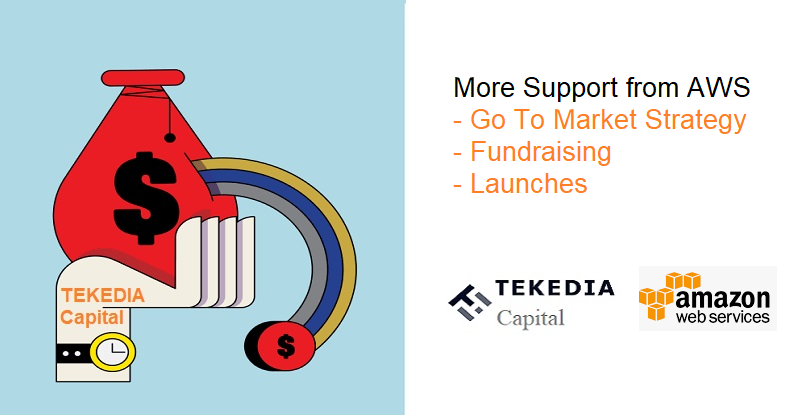
Tekedia Capital Serves Innovators and Builders, More Support from Amazon AWS

0

Tekedia Capital makes friends with innovators and builders. If you become one of our portfolio companies, you will have access to more support systems, beyond just money. This week, Amazon AWS elevated us. 

So, if you are in our community, we will make it possible for you to have a 1:1 meeting with the Amazon business team. In that meeting, you can discuss your near-term plans, explore more technical support, and Amazon will “provide business support including helping you with your Go To Market Strategy, product launches and  fundraising activities”. 

In other words, some of the best in the world will help you fine-tune your growth playbooks and also on fundraising, at no cost. We continue to offer $25,000 Amazon AWS. I want you to consider Tekedia Capital before any other fund as you begin your mission. 

Also, if you come along, your leadership team attends Tekedia Mini-MBA at zero cost.

Send your business pitch deck to us; we’re finalizing the funding list and those yet to get feedback will also receive feedback in coming days. Build with Tekedia Capital and go global.

Tekedia Capital invests in technology-anchored early stage startups and companies. Our opportunity antenna and grassroot connections with innovators enable us to see patterns as they develop.  We invite you to partner with us as we nurture and build category-king companies in Africa and beyond, and in the process advance citizens, communities and nations. At Tekedia Capital, we fund the foundations of the NEXT African economy.