DD
MM
YYYY

PAGES

DD
MM
YYYY

spot_img

PAGES

Home Blog Page 5320

Is your product-market fit sustainable?

0

To win in markets, you need to have a great product-market fit. It is a spot where the frictions in markets and the “forces” (the products and services) you are creating to overcome them attain equilibrium.

[Bear with me for using big grammar. My grandmother, Lechi, truly liked them because it showed that I was learning in secondary school. How do you come back from school without saying something she could not understand, after all the school fees? ]

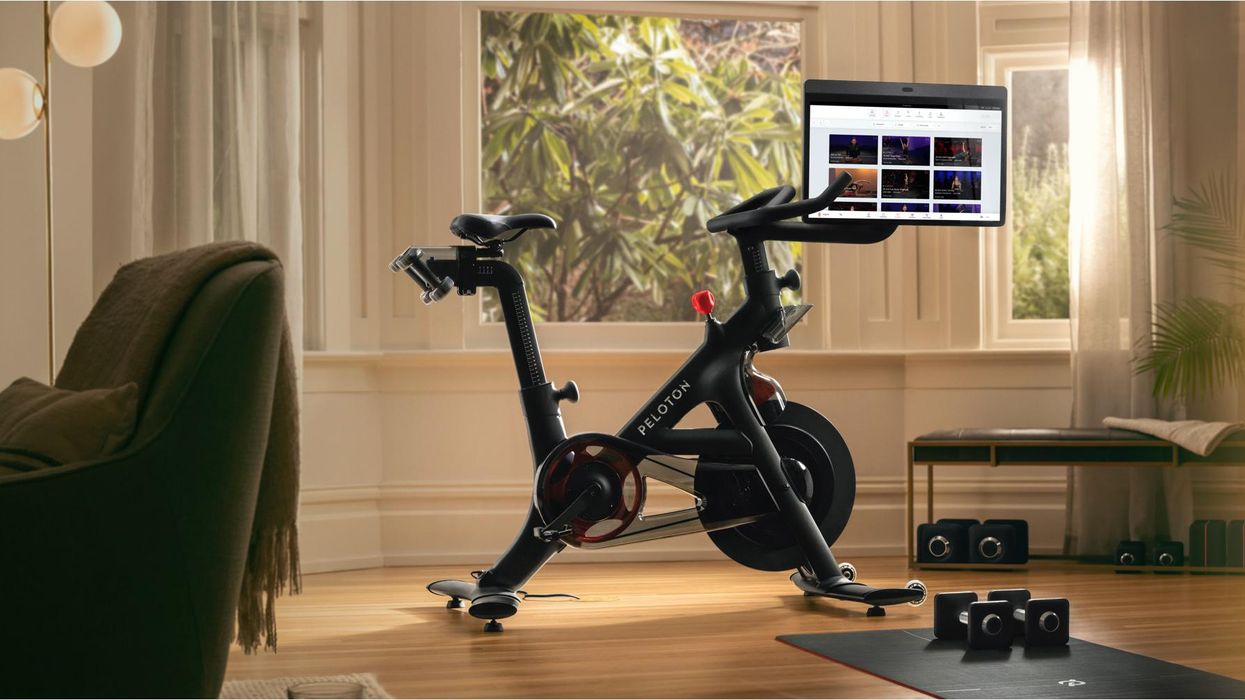
So, when Peloton, an experience exercise company, which helped people do exercise at home, was raking it at the peak of the pandemic, I wrote: “before you invest, think beyond Covid-fit to market-fit”. In other words, that product must not just do well during Covid pandemic, but also when normalcy returns.

Normalcy is fairly back and Peloton is crashing. According to CNBC, “the company said in a confidential presentation dated Jan. 10 that demand for its connected fitness equipment has faced a ‘significant reduction’ around the world due to shoppers’ price sensitivity and amplified competitor activity.”

This week, Peloton is replacing its CEO, updating the board and cutting  about 2,800 jobs, and may end up in the museum of also ran. Our prayers with the workers affected.

Is your product-market fit sustainable? Yes, do you have a moat to protect the castle?

Changes are afoot at Peloton. The exercise company announced it is replacing its CEO, cutting around 2,800 jobs and reconfiguring its board. Co-founder John Foley will be replaced as chief executive by Barry McCarthy, Spotify’s former CFO, and will become executive chairman. The layoffs include 20% of Peloton’s corporate positions, but do not affect its roster of instructors.

  • The company has been the subject of frenzied acquisition speculation, with Apple, Amazon and Nike all floated as potential buyers. Foley said the company is open to any deal that “could create value for Peloton shareholders.”

  • Laid-off employees will receive a complimentary 12-month Peloton subscription as part of their severance, Foley said in a press release about the changes.

  • Peloton employees are taking to LinkedIn to post about the layoffs.

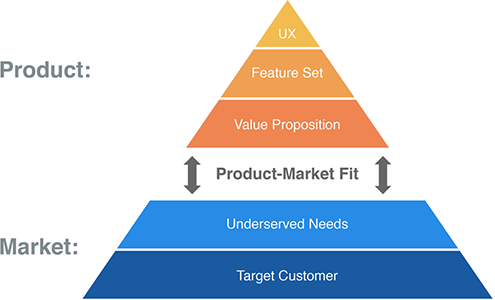
According to ProductPlan, “Product-market fit describes a scenario in which a company’s target customers are buying, using, and telling others about the company’s product in numbers large enough to sustain that product’s growth and profitability. According to entrepreneur and investor Marc Andreesen, who is often credited with developing the concept, product-market fit means finding a good market with a product capable of satisfying that market.”

The Product-Market Fit Pyramid framework was created by Dan Olsen

Beyond First-Mover Advantage to First-Scaler Advantage [video]

0

Questions from a member in Tekedia Mini-MBA:

In Technology-Market matrix diagram, especially, the rough sea quadrant – where both technology and market are moving fast,
1. should an organization ride on both tides?
2. what is your advice for a start-up in this scenario?

A first-mover advantage can be simply defined as “a firm’s ability to be better off than its competitors as a result of being first to market in a new product category”. The first scaler advantage is the advantage which comes to a firm for being  the first to become extremely popular and ubiquitous by scaling its services in a category.

But note this: the greatest companies in the world are known for one thing: great products. Interestingly, all great products are known by customers. That typically comes because they are well scaled. Extrapolate, you’re talking of  first-scaler advantage, a leverageable compounding competitive advantage which comes with economies of scale as a result of being the first company to achieve scale in that category and improve marginal cost, offering products at highest value and best optimized cost.

If you have a first-mover advantage and fail to scale, you will lose the competitive positioning to another company which comes and scales first. So, first-mover advantage is temporary because sustainable and durable monopoly requires enduring scale in product categories. If you cannot deliver that scale, forget your first-mover advantage.

This is my response. Sorry, I made two videos. Initially thought the first did not record.


Live session of Tekedia Mini-MBA begins this Saturday

0

The Live session of Tekedia Mini-MBA begins this Saturday. I will anchor it. Next week, our Faculty members from Access Bank Plc and SAP Africa will anchor the Tue and Thur respectively.

The upper week, two faculty members from Microsoft USA and Barry Callebaut Group Belgium will drive respectively. All details and Zoom links will be in the Board.  We’re truly honoured for the opportunity to co-learn with you all.

Welcome to the Institute.  We continue to welcome new members for this edition here.

Tekedia Institute offers Tekedia Mini-MBA, an innovation management 12-week program, optimized for business execution and growth, with digital operational overlay. It runs 100% online. The theme is Innovation, Growth & Digital Execution – Techniques for Building Category-King Companies. All contents are self-paced, recorded and archived which means participants do not have to be at any scheduled time to consume contents. Besides, programs are designed for ALL sectors, from fintech to construction, healthcare to manufacturing, agriculture to real estate, etc.

The sector- and firm-agnostic management program comprises videos, flash cases, challenge assignments, labs, written materials, webinars, etc by a global faculty coordinated by Prof Ndubuisi Ekekwe. It will run from Feb 7, 2022 to end May 7, 2022.

Is there a right time to raise funds?

0
Collection of vintage clock hanging on an old brick wall; Shutterstock ID 561021889; Purchase Order: ccg

“This is not the right time to raise funds. You should be focused on other parts of the business”

A statement like the one above made me ask the question of timing. When is the right time to raise funds? Is there such a thing as a right time or wrong time for fundraising?

Like the line from Chris Burgh’s song says “timing is everything in life”. If the rule of timing applies to every other thing in life, I believe it should apply to business even more. So, if I have to answer the question asked, I would say Yes, there is a right time to raise funds.

When?

Generally, investors would require that you should have figured out what the market opportunity is and who your customer is, at the very least. In addition, you should have a product that is already being adopted. The higher and more consistent the adoption rate is, the better your chances are for raising funds.

I have recently talked about raising funds from day 1, so not much will be said about that here. The funds being raised can be towards the launch of a new product, expansion of operations, scaling your market, marketing, growth, etc. Whether you are raising seed funds, Series A, Series B, and so on, here is one thing that can help you better time your fundraising expedition.

Milestones

What have you just achieved? What do you want to achieve?

Surely, you can’t wake up from sleep with the idea of the ‘next big thing’ and start looking for financiers. You want to ensure that you have achieved a milestone, based on specific metrics before you go looking for people to commit their funds. It could be that you have just launched your Minimum Viable Product (MVP), or you have acquired a certain number of customers or users. There should also be a clear milestone you want to achieve with the funds you are bringing in. Do you need the funds to scale up operations, to fund further research, to launch in a new country, or/and to get your product to the market?

The point here is that the milestone convinces your would-be investor that you have done something worthwhile, and so, require significant capital to take your product or solution to the next stage/milestone.

Valuation

Before you go on to raise funds, you need to have something that can be properly valued. Why? This is because you generally cannot raise more funds than the value of the startup. If, for instance, you are bringing in an equity investor, the amount invested should entitle the investor to a part of the business and you can only determine how much when you have valued the business. I will talk better about proper valuation subsequently but keep in mind that if you are raising $5 million in funding for a business that is valued at $5 million, you will be trading away 100% ownership.

What many startups do is to give a maximum of 20% equity when raising seed funds, and a maximum of another 20% equity for Series A. This is a way to maintain a reasonable ownership percentage especially where you have co-founders.

When you embark on fundraising, try to keep the sum within a range that would not dilute ownership, but is still sufficient to get you to your next phase of growth.

Imo State Nigeria Coping Without Substantive LG Chairmen

0

The last time I checked, Imo State – the Eastern Heartland – was still earnestly yearning to witness an era when the twenty-seven Local Government Areas (LGAs) in the state would boast of substantive chairmen who are expected to emerge via an electoral process.

The unabated quest has made many concerned onlookers to presume that the 1999 Constitution of the Federal Republic of Nigeria, as amended, no longer has provision for a Third Tier government otherwise known as ‘Local Government Council’.

It’s noteworthy that the lingering anomaly has existed for countless years ranging from 2007 till date. Under his reign as the State Governor, Chief Ikedi Ohakim came up with a façade that seemed like an LG election towards the end of his tenure in 2011.

Subsequently, the administration of Chief Rochas Okorocha, having understood the foul play displayed by his predecessor, thought it wise to disengage the elected officers who happened to be the product of the said façade as soon as it assumed duty in 2011.

Under Okorocha’s reign as Imo Governor, little or none was heard as regards LG election in the State. Once or twice, the citizens learnt of an arrangement targeted at the awaited electoral process all to no avail, in spite of all the wails from various quarters.

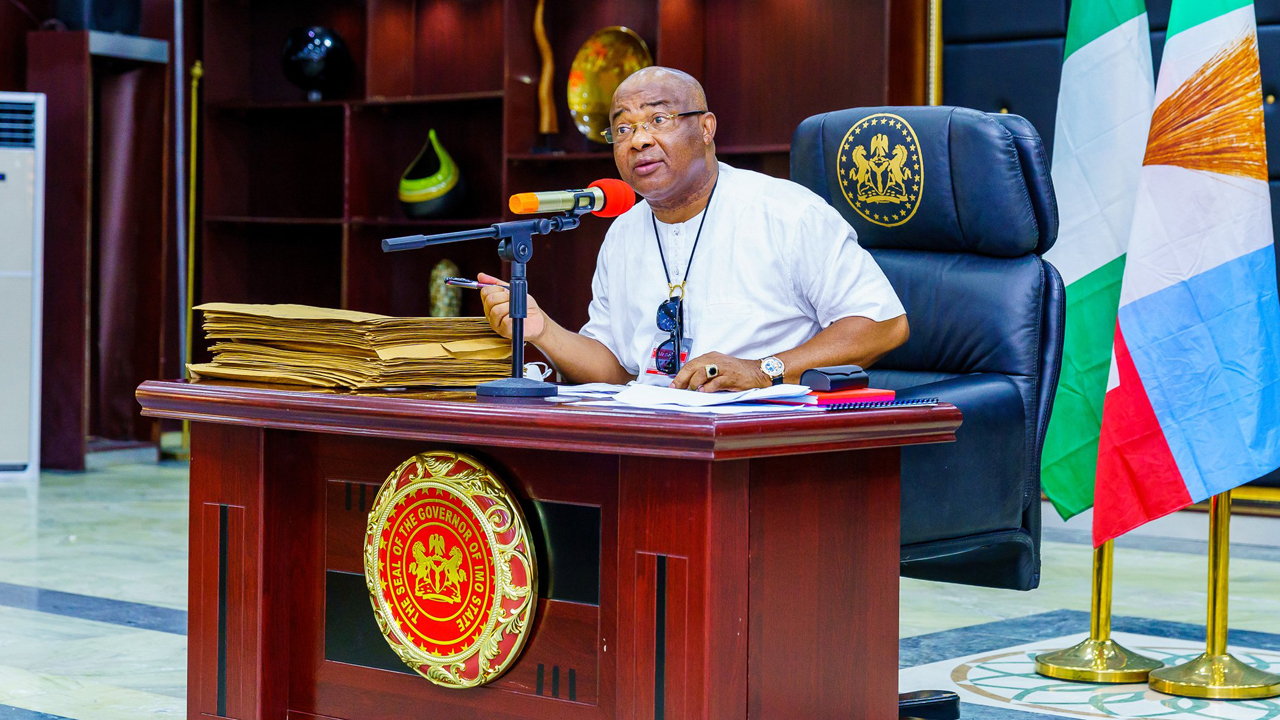
The current Government headed by Senator Hope Uzodinma is equally apparently toiling the same line, going by the body language. Two years have successfully gone under his watch, yet nothing tangible is being heard regarding the State’s LG polls.

Rather than substantive/elected caucus, what Imolites have invariably been witnessing at the local government level is transition or caretaker administration, whereby some certain individuals under the auspices of ‘Transition Committee’ would be empowered to be at the helm of affairs in the respective LGAs.

We are not unaware of the dangers inherent in suchlike practice, especially in a democratic system like ours. A transition-committee chairman or councilor, who can be disengaged or asked to leave by the sitting governor at any time, is no doubt surrounded with limitations.

There’s certain limits to which he/she is bound to operate as long as his/her reign lasts. Such an administrator is obviously acting directly in line with the directive of the governor who he sees as his boss; suffice it to say that he’s equally one of the aides of the governor.

The Nigerian Constitution wasn’t daft when it considered creating a provision for the third tier government. This is the government that directly touches the lives of the electorate; it’s the government that understands the true need of the people.

An LG Chairman, through the elected councilors, hears the overall views of the electorate in regard to governance. Thus, the Third Tier government is an intermediary between the citizens and the State Government.

It’s noteworthy that this tradition of using the caretaker committee in the LGAs isn’t peculiar to Imo State. Hence, no state across Nigeria is exceptional. Overtime, these governors invariably come up with frivolous excuses as regards the awaited conduct of the LG polls in their respective jurisdictions.

Under Okorocha’s reign, during a parley between him and Imo based journalists, he categorically revealed that he would only conduct election for the Local Government Councils if the legal barriers hindering the awaited polls were withdrawn by their sponsors or plaintiffs.

According to the then governor, some individuals in Imo had filed suits against him over the local government administration in the State, thus he was of the view it was unconstitutional or an insubordination to conduct an election regarding the LGAs with a view to upholding the Rule of Law which his administration had ‘vowed to protect’. He further stated it was more worrisome to notice that those who were sponsors of the aforesaid legal actions happened to be the people persuading him to conduct the election.

Such an excuse tendered by Okorocha was indeed laughable. If he was genuinely ready to conduct the awaited polls, he was required to take all the needed actions toward ensuring the election was duly conducted. Needless to say; the above excuse ought not to be regarded as a tangible reason for the inconsequential delay. We must endeavour to call a spade a spade whenever we’re leading, for posterity’s sake.

If truly there were existing legal barriers as claimed, I the then governor was meant to create a harmony between the government and the aggrieved minds. He ought to had set up a platform that would bring every warring party together, therein let them know the reason they must withdraw the legal suits for the interest of the State at large.

Since the suits in question were filed over LG election, the plaintiffs wouldn’t hesitate to withdraw them if given an obvious and genuine reason to do so, or if they are told that the polls would be conducted thereafter without further ado.

Towards the expiration of his eight-year tenure in Imo, Okorocha once again conducted a façade, which appeared like an LG election, thereby producing purport elected chairmen and councilors just not unlike in the case of Ohakim’s administration.

At the moment the people are looking up to Senator Uzodinma to do the needful. Who knows if he would also cite an instituted legal action as an excuse or barrier?

As a Constitution and Civil Rights activist, I want to remind the sitting governor that the people’s rights are being shortchanged, and the Nigerian Constitution isn’t finding the lingered atmosphere friendly. Hence, the needful ought to be done headlong.

Besides, the governor equally needs to acknowledge that suchlike loophole is liable to mess up any commendable effort he had recorded so far since the inception of his ‘3R administration’. We can’t afford to continue robbing Peter in order to pay Paul.

Spending about fifteen years without Substantive or elected LG Chairmen and Councilors is seriously telling on the State, just to say the least. Hence, those instigating this quagmire are henceforth expected to count their teeth with our tongues.