DD
MM
YYYY

PAGES

DD
MM
YYYY

spot_img

PAGES

Home Blog Page 5321

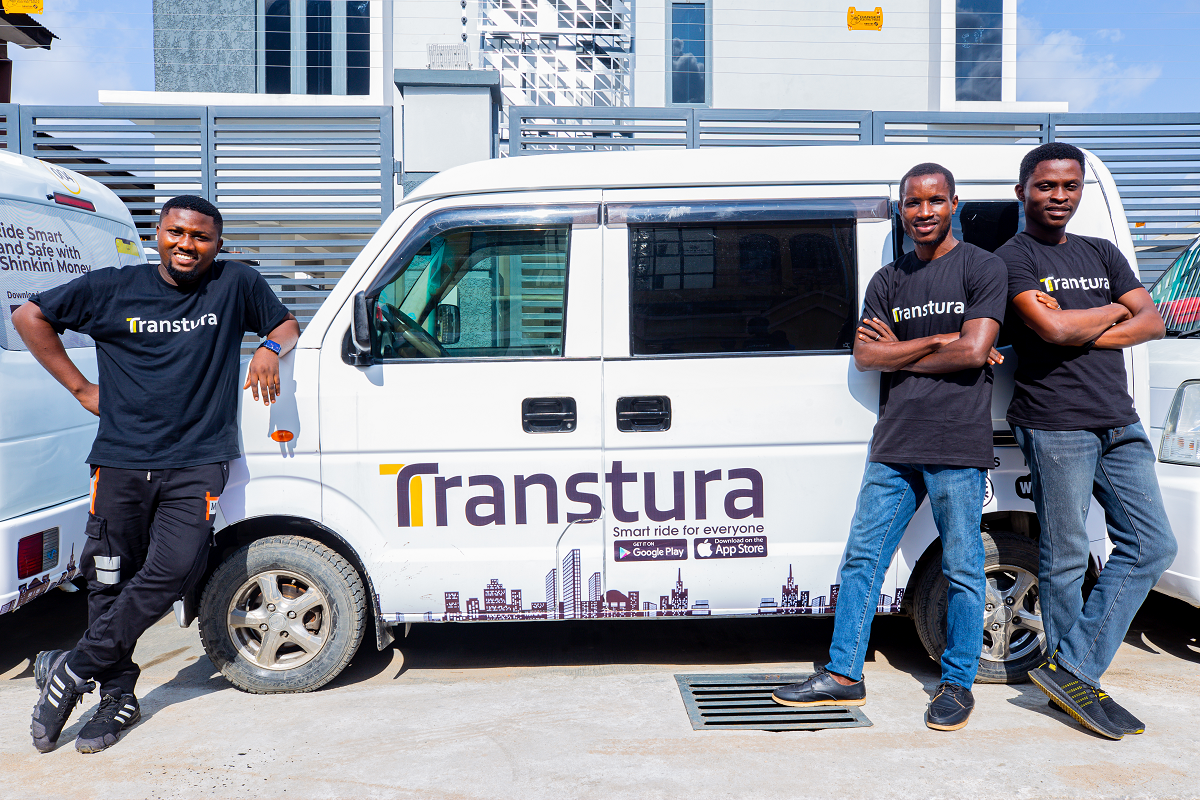
Transtura Acquires WazoMoney, Unveils Plan for Paytech, Marketplace for Transport Sector

0

On behalf of Tekedia Capital, I want to congratulate Transtura for the complete  acquisition of Wàzó Money to accelerate the launch of the payment and marketplace in the broad transportation sector. I also welcome Stephen Ilori and his Wazo team to Transtura. To CEO Transtura, Vincent Adeoba, well done. The frictions are huge, building this operating system will be catalytic in the industry.

— Full press release

Transtura Acquires WazoMoney; Set to Launch Payment and Marketplace Solutions for the Mobility Sector. 

Nigeria ride-hailing and shared mobility startup, Transtura has completed the acquisition of WazoMoney, a fintech startup which provides simplified payment solutions as it sets to launch its payment and marketplace solutions for the mobility sector. The company believe this will help unlock the enormous opportunities in the transportation value chain in Nigeria and other Africa countries.

Transtura commenced full-scale operations in October 2021, launching its shared mobility service in Lagos. The company has continued to record massive traction since launching, with thousands of riders queuing in its three major routes to use its shared ride service.

The startup is now expanding services across its platforms to include payments and a marketplace solution which is a one-stop shop for vehicles and mobility needs.

According to Vincent Adeoba, Transtura CEO, “our vision as a customer-centric company is to become Africa’s everyday mobility super app by providing shared mobility, payment service, and marketplace solutions for the over 1 billion people on the continent. We are on a mission to improve the way people commute and travel around the continent and how payments are made in the transportation value chain.

“We are leveraging on technology and automation to facilitate and improve the way people ride, travel and pay for service while also supporting companies in the mobility sector with spend management solutions.”

In the coming months, Transtura users will be able to leverage their payments solution to pay for transactions on the Transtura marketplace — a one-stop for vehicle registration, documents renewal, auto insurance, vehicle parts and accessories purchase, auto repairs, car care and other related vehicles and mobility needs — pay for intracity rides and interstate travel, automate bills payment, and manage expenses. The technology and solutions are expected to help remove some of the bottlenecks stiffening the growth of the transportation sector.

Transtura CTO, Philips Olajide said in a press release, “Africa is a home of enormous opportunities, with several local and innovative solutions. This is evident in the ways startups on the continent have continued to play important roles in solving problems across different sectors.

“For us at Transtura, we want to continue to innovate local solutions to the challenges facing the transportation sector. We are not afraid to make mistakes and learn from them as we continue to solve important problems in the mobility space.

“We believe only Africans can develop Africa, and we want to play an important role in building the Africa we want by unlocking and creating opportunities for people in the transportation sector.”

Transtura is on an exciting journey to redefine the way people commute, travel, pay, and manage expenses in the transportation space. The payment service and marketplace will help to deepen and improve financial inclusion across the continent.
GTBank’s parent, GTCO, Begins Habari 3.0 With Acquisitions of One Funds, One Pension

1

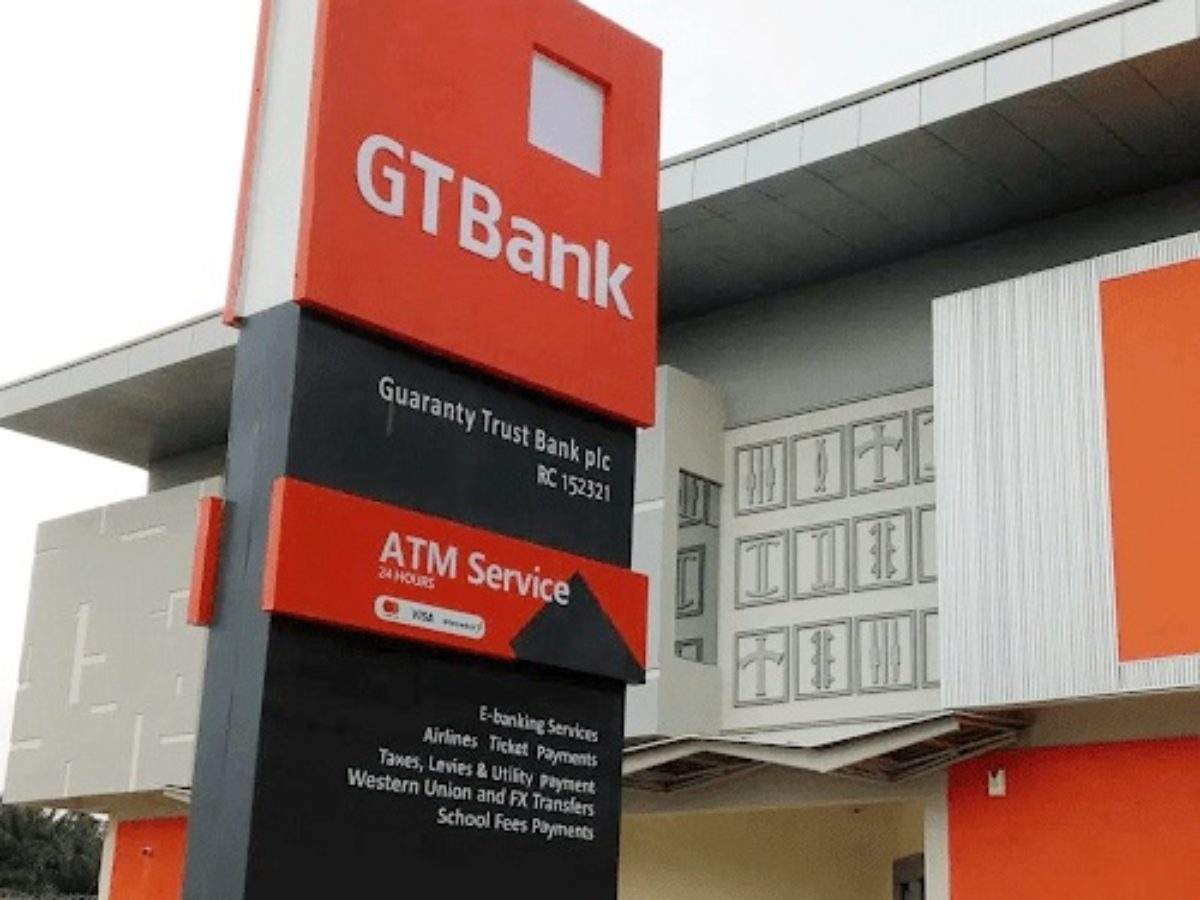
GTBank’s parent company (GTCo) lost its medal and badly wants to reclaim it. That medal was the most valued publicly traded financial institution in Nigeria. To make that happen, GTCO has to unleash new playbooks in the  market. Call it Habari 3.0.

The first Habari was a massive success; GTBank was the bank for the professionals. It turned most of its customers into fans as using GTBank bank account was seen as a symbol of “being there”. But there were many own-goals which the bank scored against itself.

Habari 2.0 did not really deliver. That unification of commerce was disintermediated by an amalgam of digital startups which went ahead and executed the gameplan which GTBank has been plotting for years. Today, GTBank’s app is not likely the place you will book your next ticket to London or where to find the logistics carrier to move your yam from Kano to Lagos.

But Habari 3.0 is here: “GTCO Plc … today notified the Nigerian Exchange Group (NGX) and the investing public that GTCO Plc has concluded the acquisition of the 100% equity stake in Investment One Pension Managers Limited (IOPM) and Investment One Funds Management Limited (IOFM) (together, the Companies) held by Investment One Financial Services Limited (IOFS or the Seller).” That is the start of the game.

As GTCO moves deeper into the game, it is what happens at the injury time that will decide how this will end. Pension gives you fees but paytech startups give you “taxes”. Interestingly, most people like those taxes on transactions. GTBank will likely acquire a major fintech startup to juice its playbook.

But it is not just GTBank; everyone needs a way to get into those “taxes” because when you receive money with Paystack and Flutterwave, you expect them to deduct some money. But your bank cannot do that since it is expected that they have your money and can lend it and make money via it.

Unfortunately, what if your Flutterwave is your store of value? In other words, that fintech wallet is where you keep money with no plans to send it to the traditional bank? If that redesign stays, GTCO will add a fintech in that holding empire for a chance to win that medal which Zenith Bank Plc holds.

The battle in the next decade will be massive in Nigerian banking: Access Bank provides a real threat even as UBA unifies the continent through its presence in more than 20 countries in Africa. The insurgent First Bank is there even as Zenith Bank holds the zenith spot of the sector. A digital native solution remains a promise.

But not only GTBank but most banks because the disrupters are coming….. Who moves money from his/her fintech wallet to a bank? You just spend from there! That is disintermediation.

——–Press Release

Guaranty Trust Holding Company Plc (GTCO Plc or the Group) (GTCOplc.com), a diversified financial services provider, today notified the Nigerian Exchange Group (NGX) and the investing public that GTCO Plc has concluded the acquisition of the 100% equity stake in Investment One Pension Managers Limited (IOPM) and Investment One Funds Management Limited (IOFM) (together, the Companies) held by Investment One Financial Services Limited (IOFS or the Seller).

IOPM is licensed by the Nigerian Pensions Commission (PenCom) to operate as a Pension Fund Administrator in Nigeria. On the other hand, IOFM is licensed by the Securities and Exchange Commission (SEC) to undertake fund management and investment services on behalf of clients and manage collective investments schemes as a corporate investment adviser. The Seller is regulated by the SEC and offers a wide range of services including Investment Management, Trust Services, Financial Advisory Services, Security Brokerage and Pension Funds Management. Forthwith, the Companies cease to be subsidiaries of the Seller and have become wholly owned subsidiaries of GTCO Plc.

In line with GTCO Plc’s aspirations to operate across the financial services sector value chain in Africa, these acquisitions would expand the product and service offerings of the Group into the Assets and Funds management segments whilst positioning GTCO Plc as a dominant player for all critical financial services.

Commenting on the completion of the Corporate Reorganization, Mr Segun Agbaje, the Group Chief Executive Officer of Guaranty Trust Holding Company Plc, said: “We are very excited to get started on the next phase of our incredible journey to driving Africa’s growth by making end-to-end financial services easily accessible to every African and African Businesses by leveraging Technology and Strategic Partnerships. As a bank, we were always looking to meet every customer need; with our corporate reorganization, we will be able to do more to help our customers thrive in this new world of digital technologies and unprecedented possibilities”.

He further stated that, “Whilst we are evolving as an organization, we remain committed to our founding values which have endeared our brand to millions of people across Africa and beyond, and which continue to drive our financial success. As a Proudly African and Truly International brand, we will continue to live by these values — of excellence, hard work and integrity, even as we create faster, cheaper, safer and products for people and businesses through every stage of life.”

The acquisitions were facilitated by Exotix Advisory Limited and Vetiva Capital Management Limited as Financial Advisers, Aluko & Oyebode as Legal Adviser and Deloitte & Touche (Nigeria) as Financial Due Diligence Adviser.

The Football Coach and Interviewing for a Job Which Was Not Available

0

This should not shock my African audience here since we do it all the time in Abuja and our state capitals. Yes, advertising tender opportunities for projects which HAD been executed and commissioned. Those advertisements are for cleaning up the policy procedural books.

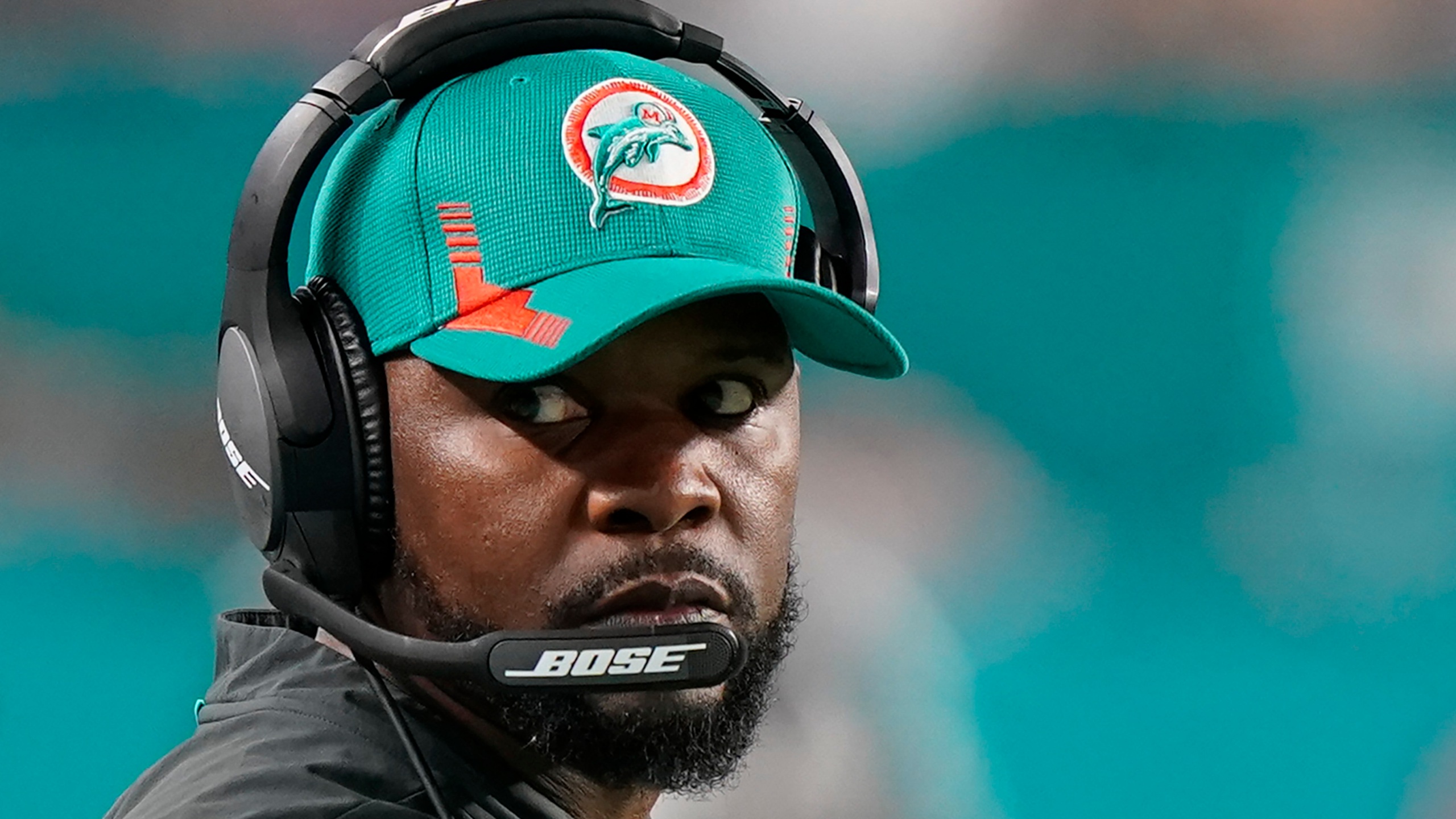
But that such can happen in America’s largest sports empire, the National Football League, will come as a shock to many. A man, Brian Flores, was supposed to be interviewed for a head coach job but in an accidental message, another coach was already sending congratulations to someone who HAD been hired for the same job!

A big accidental message indeed. Largely, if the guy had not received that message, he would have gone ahead – 3 days later – without knowing  that he was just coming to help the team make up a number: we also interviewed minorities and ended up picking the guy we picked. Yes, the black dude was given an opportunity but he failed. But no one will know that the job was not available when the guy came for the interview.

It is very unfortunate indeed. The color of your skin, sound of your name, gender, etc must not be the yardstick to allocate opportunities in the world. It was the same message I put when ex-President Trump team said that Ngozi Okonji-Iweala was not qualified for a WTO top job, even when Ivanka Trump was out there negotiating trade deals with China. A World Bank former executive with MIT PhD and a fashion diva; the difference comes down to color of the skin!

From Nigeria where discrimination comes from the sound of your name (Hausa, Igbo, Yoruba, etc) to America where it is defined by color, people should consider the implications of these toxic systems. No human will feel good knowing that a job you are preparing to interview in 3 days HAD already been concluded! That is not the spirit of sports and I hope it changes. 

Last Tuesday, the National Football League dismissed Brian Flores’ claims of racial discrimination in the league’s hiring processes as “without merit.” Over the weekend, however, NFL commissioner Roger Goodell did an about-face, sending a memo to all 32 teams calling efforts to promote diversity among head coaches “unacceptable.” Seven teams have hired a head coach since the regular season ended, but only the Miami Dolphins have selected a minority candidate, Mike McDaniel. (LinkedIn News)

People, what is wrong with humans? Why is the sound of our names, the color of our skins, etc, are so powerful against decent, honour, values, etc in societies?

How Not To Love Nigeria

0
A Nigerian youth seen waving the Nigerian national flag in support of the ongoing protest against the unjust brutality of The Nigerian Police Force Unit named Special Anti-Robbery Squad (SARS) in Lagos on October 13, 2020. - Nigerians took to the streets once again on October 13, 2020, in several cities for fresh protests against police brutality, bringing key roads to a standstill in economic hub Lagos. Demonstrations organised on social media erupted earlier this month calling for the abolition of a notorious police unit accused of unlawful arrests, torture and extra-judicial killings. The government gave in to the demand on October 11, 2020, announcing that the federal Special Anti-Robbery Squad (SARS) was being disbanded in a rare concession to people power in Africa's most populous nation. (Photo by Benson Ibeabuchi / AFP) (Photo by BENSON IBEABUCHI/AFP via Getty Images)

The last time I checked, countless number of Nigerians claimed to be in love with Nigeria. But when critically and closely examined, you would observe they actually meant something contrary.

Sure, anyone can put up a claim as it pleases him/her, but sticking to the true meaning of the claim is a totally different ballgame.

In life, there are two major phenomena you must not take for granted; when you are truly in love, and when someone really loves you. You are bound to understand when your heart is wholly and sincerely attracted to a colleague, relative, associate, friend, or what have you.

On the other hand, you are required, at all times, to be aware of when someone cares about your happiness. If you take any of these factors for granted, you may live to regret it.

The truth is, life is controlled or governed by a four-letter word known as ‘Love’. This is why the Holy writ stipulates that it (love) is the rudiment of every commandment provided by the Creator.

This is so, because if you really love someone or vice-versa, any rule binding the relationship can easily be adhered to with ease. If you love someone with your whole heart, you can sacrifice anything whatsoever towards ensuring he or she does not lack happiness regardless of the circumstance.

Same is applicable to a pet in your household. If you love your pet passionately, you can do anything to keep it alive. A society isn’t left out when discussing love; if you care about the well-being of a society you belong to, you would never attempt to indulge in any act that would be to the detriment of the happiness of the society in question.

Let’s get it straight; if you are a citizen of any country, and you are of the view that you love it, you would always do things that would contribute to the uplift or welfare of the country.

At the moment in Nigeria, particularly in its socio-political domain, some politicians tend to showcase a façade that they truly care about the country, unknowingly to their unsuspecting followers or the onlookers that they are only interested in personal aggrandizement.

For instance, if the Nigeria’s President erred or erroneously implements a policy, rather than criticizing constructively, they would prefer to display an action that would end up causing more harm to the country.

The truth is that, if you candidly love a country, you would always think of the effect of your proposed criticism on the leadership of the country before tendering it.

First, we need to acknowledge there are some basic recipes that are expected to accompany any criticism. When you criticize, courtesy demands that you proffer a remedy to what is being criticized. The primary aim of every genuine criticism ought to be to correct an error or address any presumed anomaly.

So, if your interest truly lies on the well-being of the affected country, you would invariably focus on how to make amends, or the way forward, instead of constituting more troubles. When you criticize, you are expected to concentrate on the lapse, and not on the personality of the initiator of the policy/process being criticized.

A true lover of any country should be concerned about its uplift, not the other way round. In politics, the reverse is often the case; people claim to love their country but mean otherwise.

If you are a leader of a country and the development of the jurisdiction matters much to your person, you would never be propelled to initiate actions that would yield nothing but good governance.

In other words, you would willingly wish to carry out projects as well as initiate policies that would see to the betterment of the overall people of the country, and so does a good follower.

A good and genuine follower or stakeholder, as might be the case, is always interested in a way forward at all cost; he is tirelessly involved in issues of general interest rather than personal; he is invariably ready to sacrifice something toward ensuring that the concerned society becomes a better place to live.

He’s prepared at all times to compromise some attitudes for the sole interest of the society; above all, he always thinks of other members of the society in all his actions as well as concerned about what their reactions would be as regards any criticism he intends to come up with.

The bone of contention is that Nigeria is not interested in those who claim to love her, but those who genuinely strive relentlessly to ensure that her wellbeing is not tampered, or relegated to the background.

The country is only pleased with Nigerians who encounter sleepless nights while thinking of how to help the government usher in sound governance, which remains the sole dream of the electorate. Nigeria is interested in seeing people who wish to ‘die’ for the good of the country.

To this end, it’s needless to reiterate that anyone who keenly loves his or her country of origin/residence must be involved in activities that would assist the government to succeed.

President Muhammadu Buhari is probably yet to please the majority of Nigerians as the country’s leader, but it’s more imperative to note that anyone who means well for Nigeria cannot participate in anything that would witch-hunt the country, rather, would only be focused on how to make the said government succeed.

Hence, involving yourself in actions or causes that are aimed at generating upheaval or malice among the people is obviously how not to love a country, and Nigeria isn’t an exception.

The Benefits of Investing in Strategic Market Research for Businesses

0

After a succession of brainstorming sessions and scribbling, businesses emerge. It doesn’t end there, though. A data-driven decision-making structure is required for a business that will not fail in a short period of time. Only via strategic market research can this be accomplished. In today’s competitive corporate world, this is referred to as SMR. There’s no denying that having access to trustworthy, validated data is essential for effective decision-making at the strategic and tactical levels of any company model. The business-to-consumer approach is one of the most data-intensive. Adopters of the approach must often seek out information on current or potential customers.

This leads to the present trend of organizing structured data gathering, interpretation, and transformation into strategic insights for suitable decision making in line with the company’s already identified concerns at the corporate and operational levels. SMR functions similarly to a Google Map, indicating where transporters and passengers should or should not pass during peak traffic hours. It accomplishes much more in the commercial sector. SMR assists small and large enterprises in reaching the congestion point and examining demographic statistics, purchasing power, and behavioural patterns of important objects. There must be a clear goal for acquiring the data while doing so.

Identification of product or service types that potential customers would like to buy and that are profitable to the company that started it, determination of customer satisfaction level, and providing top managers with in-depth information about crucial factors that have an impact on the target market and current business climate are three major advantages of using SMR as a tool.

Despite the advantages, there are several misconceptions regarding how to use it. Many business owners assume that SMR is only useful when their companies are doing well, although it is necessary at all stages of development. Managers at the strategic level, on the other hand, frequently assume that providing entire knowledge about a situation is irrelevant. On the contrary, a lack of information has the potential to point concerned employees in the right direction.

What is the cost of performing a good one that will assist in making informed judgments if SMR has been well understood? Experts have suggested a variety of budget types. The most commonly used budgets are annual and project-based budgets. When you pick the annual option, you must set aside a specific amount of your money to undertake SMR when the situation occurs. The proportion fluctuates depending on the size of the organization and the industry sector.

The majority of businesses chose a percentage of their revenue between.02 and 1%. It’s also been suggested that allocating 50% or more of sales revenue to research isn’t a bad notion as long as the study is tailored to the company’s current demands without sacrificing the possibility of future ones. The project-based method, on the other hand, is a one-time action that determines how much money to spend on materials and people.