DD
MM
YYYY

PAGES

DD
MM
YYYY

spot_img

PAGES

Home Blog Page 5347

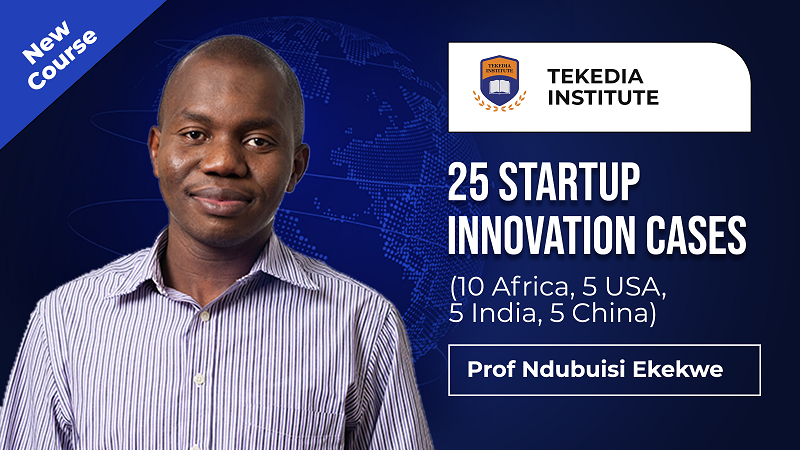
Tekedia Introduces A New Course: “25 Startup Innovation Cases (10 Africa, 5 USA, 5 India, 5 China)” by N. Ekekwe

0

Extra 200 participants are joining Tekedia Institute Mini-MBA from India, according to an update this morning, from our India-based Lead Asif Chowgule. I told him that Tekedia will create a dedicated program with focus on India as the numbers are significantly ramping up. This is in recognition that India is one of the fastest growing markets for Tekedia Mini-MBA and Tekedia Startup Masterclass.

Yet, we will make sure that we’re glocal, using cases which help all learners, encapsulating local and global perspectives. In all our programs including Tekedia Mini-MBA, Tekedia Startup Masterclass, Tekedia Practice, Tekedia Industries and Phase 1  Corporate Virtual programs, you will see a new course, from Feb 7: “25 Startup Innovation Cases (10 Africa, 5 USA, 5 India, 5 China)”.

To make things easier, here is a table of all programs with costs – and how to join

Thank You – And Have A Great Day

0

In the Igbo Nation, it takes the killing of one leopard to be called a killer of leopards. Yes, your Like, your Share, your comment, etc has made this feed amazing. I want to thank everyone – and wish ALL a GREAT Day. The Governors Forum extended an invitation. How did we get there? A member of our community shared our post with His Excellencies; please continue to share on WhatsApp, emails, etc. Very appreciated. Happy Sunday.

Fuel scarcity in Abuja?

0

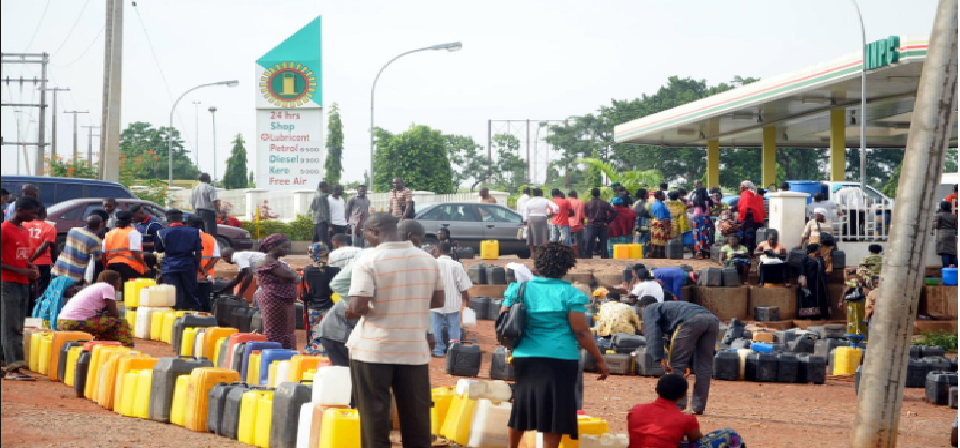
For about two weeks now, I have been queuing  up for at least an hour just to purchase fuel in petrol stations here in Abuja, and that routine is becoming tiring. Some of the petrol stations locked up their outlets, some said they don’t have petrol for sale while others said they are keeping theirs for the future.

Some of the petrol stations that are fortunately dispensing petrol to buyers are insisting that a buyer is not allowed to buy more than N3000 worth of petrol at once and that’s the order from their management. If you insist that you must buy more than N3000 worth, the fuel attendants won’t attend to you unless you are connected to one of them.

What is the reason for the fuel scarcity in Abuja?

It seems that the fuel scarcity (so to be called) is only happening in the federal capital territory, as other states and cities are going on with their regular fuel and petrol availability. Abuja residents have been asking the question; “what is the reason for the fuel scarcity currently ongoing for weeks now”. 

Many are yet to get the answer to this question. Some claim that there is no fuel scarcity; motorists are  just “panic-buying” due to the back and forth policy of the government on the fuel subsidy removal, hence, the reason for the long queue at petrol stations. 

Some also said that the reason for the fuel scarcity is that petrol stations decided to lock up their outlets to hoard fuel and save it for future sales just because of the government policy on fuel subsidy which could drive the price of fuel up in the near future.

Whatever the reason for the fuel scarcity in Abuja is, the government should step in and ameliorate the situation. These have been causing traffic gridlock as vehicles queue up from the petrol stations to the roads. Productive times are also wasted queuing up for hours just to get fuel.

The government is yet to make up its mind on the fuel subsidy policy. It seems they are not sure what they are going to do yet.

CBN Slashes Banks’ ATM, Cards and Electronic Transaction Fees

1
Central Bank Governor, Nigeria

Nigerians have got a reprieve following years of lamentations over arbitrary charges by commercial banks. The situation, which has resulted in apathy toward commercial banks in the country that are seen to be enriching themselves with money extorted from depositors, has discouraged Nigeria’s push for financial inclusion.

In response to the growing outcry, the Central Bank of Nigeria (CBN) has revisited its policy that allowed Money Deposit Banks (MDBs) to impose those charges on their customers.

The CBN has announced a downward review of charges for electronic banking transactions in its revised guidelines to charges by banks, other financial institutions and non-bank financial institutions, NAN reports.

A circular by Chibuzor Efobi, for the Director, Financial Policy and Regulation Department, stated that the review was in response to “further evolution in the financial industry in the last few years.”

The apex bank stated that the new guide included review of other bank charges to align with market developments.

It stated that it also comprised inclusion of new sections on accountability/responsibility and a sanction regime to directly address instances of excess unapproved, (arbitrary) charges.

It added that the revised guidelines took effect from January 1.

The CBN has the mandate to issue the guide to bank charges. The guide provides a basis for the application of charges on various products and services offered by banks and other regulated institutions under the purview of the apex bank.

The guide was first released in 2004 and revised in 2013 and 2017 due to market developments such as new innovations in products and channels, as well as new industry participants.

These are bank charges affected by the policy review.

The annual cost for foreign currency (FCY) denominated cards has been cut from $20 to $10.

ATM fees are decreased from N65 to N35 following the third withdrawal within a month.

The fee for hardware tokens will be based on cost recovery, with a maximum charge of N2,500, as opposed to the previous maximum charge of N3,500.

The fee for SMS obligatory alerts will be based on a cost recovery from the previous maximum price of N4.

Bill payments made through e-channels will incur a maximum fee of N500 based on 0.75 percent of the transaction amount up to a maximum of N1,200.

A pricing scale for electronic transfers to replace the present N50 flat cost. As a result, transactions below N5,000 would incur a maximum fee of N10; transfers between N5001 and N50,000 will incur a charge of N25; and transfers above N50,000 will incur a charge of N50.

It is believed that the new guide has become necessary in the face of the fintech boom and alternative banking services being widely adopted, which are threatening Nigeria’s traditional financial industry.

Nigerian banks recorded a drop in deposit rate in 2021, as bank customers increasingly seldom leave money in their accounts, mainly due to low interest yields and the incessant complaints of bank charges depreciating savings accounts. The situation forced some banks to review their deposit interest rates upward to attract deposits.

Google Picks 1.28% of Airtel India for $1bn, After Investing $4.5bn for 7.73% in its rival, Jio

1

The next battle for digital technology supremacy will move to a new domain, and that domain will be controlled by massive permutation on demand (yes, users), at the infrastructure layer, well below the application utility layer. Companies like Google and Facebook understand this redesign, and are doing everything to position themselves.

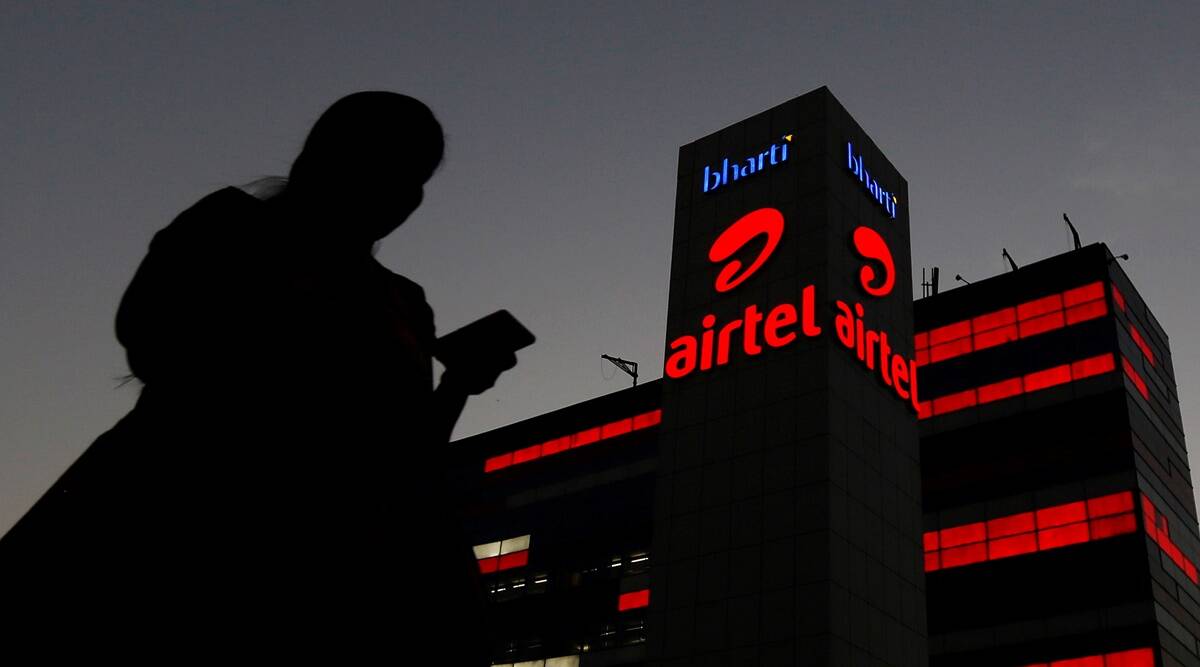
The playbook is simple: do everything so that head or tail, you win. That is why Google is investing $1 billion in Airtel for 1.28% stake in India even when it had invested in Airtel’s rival, Jio, shipping $4.5 billion for 7.73%.

It is like the same foreign company coming to Nigeria to invest in BUA Cement and Dangote Cement; everyone is happy because the truckloads of money hit the bank accounts. This construct is not typical: companies used to define friends and enemies, but today, in the digital domain, you lose if you think of competition from that angle.

Yes, you are likely going to be better off if you bring your 100 users and I bring my 90 users, and both of us can claim we have 190 users! In the industrial era economies, that was not possible, but in the digital age, that is the game: partnership.

So, for Google, if Jio has the numbers, great. But if they move to Airtel, great. Irrespective of the outcome, we are sure of one thing: Google will be represented in those playbooks. It is like politics, no permanent enemy or friend, it is all permanent interest. So, Google can invest in India’s largest telcos at the same time. Magical.

Now, you see why I have referred to companies like Google and Facebook as ICT utilities because largely there are limited options in the digital world,  if you want to avoid them, just as moving into a neighborhood, and you want to avoid your local water board.

AIMING TO build 5G specific use-cases and bring affordable smartphone offerings to the market, mobile services firm Bharti Airtel and Google announced a long-term agreement Friday that would entail the American internet giant investing $700 million for 1.28 per cent stake in the Delhi-based company, in addition to up to $300 million towards potential multi-year commercial agreements.

“Airtel and Google share the vision to grow India’s digital dividend through innovative products. With our future ready network, digital platforms, last mile distribution and payments ecosystem, we look forward to working closely with Google to increase the depth and breadth of India’s digital ecosystem,” Sunil Bharti Mittal, chairman of Bharti Airtel, said in a statement. Google’s biggest investment in India, however, was a $4.5 billion infusion in Airtel’s chief rival Reliance Jio back in 2020 for which it picked 7.73 per cent stake. The deal also involved building of an entry-level 4G smartphone that was launched last year.

Meanwhile,  Apple wants to disintermediate companies like Square by integrating the tap-and-pay functionality in the iPhone. With that feature, some of the core products in Square will not be necessary.

Citing ‘people with knowledge of the matter’, Bloomberg says the company has been working on the new feature since around 2020, when it paid $100 million for Canadian startup Mobeewave.

The feature is likely to provide a setback to Square and the new breed of SoftPOS vendors, by providing the tap-and-pay functionality as an integrated part of the device, with no need for third party help.

Apple may begin rolling out the feature via a software update in the coming months, say Bloomberg sources. The company is expected to release the first beta version of iOS 15.4 in the near future, which is likely to see a final release for consumers as early as the spring.

Comment on LinkedIn Feed

Comment: I wouldn’t use Google investments as a yardstick for good investments. For one, Google has so much cash pile than it knows what to do with.

Alphabet, which doesn’t pay a dividend at all is sitting on cash and investments of $168.5 billion. That’s more than 6% of all the S&P 500’s cash in the hands of a single company. And it just keeps piling up. Alphabet isn’t creating enough ideas to soak up these cash, yet it can’t find great Startups or Businesses to invest them into

Of the top four, Amazon tries the best to reinvest its money. That company sure never loses its ability to be Ambitious and Grow. It’s cash reserves as of last year amounted to $86.2 billion. For context, Apple had $190.5bn in cash as of Nov. 2021, Google comes in 2nd at $168.5bn, Microsoft has $137bn stashed away. These are Capital that would have otherwise been put to great use.

I wouldn’t classify Google investments as significant because when you’re investing from a $170bn cash pile that’s only increasing, there is no element of risk to such investment. If it’s not really risky, where’s the fun?

Response: Great point but tell Google to bring some of of those to Abia state Nigeria! The fact that it continues to put this money in one place and not everywhere is significant: it is looking for value.