DD
MM
YYYY

PAGES

DD
MM
YYYY

spot_img

PAGES

Home Blog Page 5348

Why do Startups look for funding?

0

For the lay mind, it is easy to wonder why startups are always in search of some funding or the other. Why don’t they go the old-fashioned way of bootstrapping, using up savings, using personal assets to get bank loans, and selling personal assets to raise capital?

To answer this question, we would start first with what is a startup?

A startup, in its simplest explanation, is a company that is built to grow fast. It is not just one of those businesses people start to stay self-employed, recycle their funds or keep at a minimal growth stage for long. Startups, as we have come to know them, are most techy but there is no rule to this. Moreover, we are in a period of high technological advancement, so most businesses are wont to rely on tech to a large extent. 

Importantly, startup companies will require lots of funds (what we call capital) to purchase equipment, rent office space, hire staff, experts and consultants, and so on. As the business gets started, the startup will also need funds to move from one stage of growth to the other. They will need funds to move from the point of servicing 10 customers, to servicing 100 customers, up to 1000 customers, and so on.

At every stage, funds will be needed. And no matter how much money the entrepreneur has at the beginning of the business, he will come to a point when he has a business project or expansion that demands more than his cash flow can handle. That might be the point where he needs to raise funding.

The initial capital a company will raise to get its operations off the ground is what we generally refer to as “seed” capital, and though a significant number of investors bootstrap, there are several others who will also need to raise funding from day 1. Besides the initial capital, there is a lot of ‘burn capital’ needed if the startup is going to grow at the rate expected of it. So there will be other stages of raising funds Series A, Series B, and so on.

Now, the issue of how much funds should be raised at each stage of the business is relative and will depend on what stage the business has come to, what target is hoped to be achieved, and what stage of expansion it is in. A business with 100 customers trying to scale to 1000 will not require the same funds as one looking to scale to 100,000 customers.

While managing the funds is of critical essence to the eventual success of the business, it will not be the focus of this article. However, founders should be careful not to raise fewer funds than they will need at that stage of the business. It will be an indication of poor business management if a startup is looking to raise funds again, barely two or three months after raising some funds.

High-growth companies – which we are referring to as startups – always need some form of capital to sustain their growth pace until they finally achieve profitability. There are very few, if any, startups that successfully bootstrap until they break even and become profitable. Particularly when founders get to the point of hiring key staff into your marketing, sales, business development, and so on, they will realize that they need some more funds to keep this staff sustained until the business becomes profitable.

Where fundraising is concerned, there is good and bad news. Here is the bad news. The process of raising funds can be complex, difficult, unnecessarily long, and require a lot of patience. A sample of opinions shows that this is the task founders consider to be least appealing. Some admit that raising funds is a “full-time job” in itself, and if not properly managed, you could wake up someday and discover that you left the business to suffer while you were devoting 100% of your time to raising funds.

It is a path every founder will toe at some point but must be done at the right time, and structured right so that it does not affect the startup operations, especially when there is just one founder. If there are two founders, you could have one focus on keeping the business going, while another focuses on raising funds.

The good news, however, is that there is a lot of funds out there simply looking for the right startups to invest in. We will talk more about funds in subsequent posts.


Before You Buy that Gubernatorial Form in Southeast Nigeria

2

In Southeast Nigeria, you have 87% chance of being a governor if the outgoing governor supports you. In short, statistically bound, it is easier to beat an incumbent governor than to beat his anointed one in the region! Simply, going against the anointed one is very tough. This is because ideas largely don’t matter and the gatekeepers have closed the flanks.

As we celebrate Prof Soludo of Anambra State and his excellent public leadership, it is key to understand that even when he was at his zenith (freshly leaving Central Bank of Nigeria as governor), he could not break into the state mansion. Largely, his stellar accomplishments could not overcome the roadblocks, put by the gatekeepers!

He lost in 2009 (PDP), did not advance much in 2013 (APGA); he sought the state mansion in both cases.

But with the anointing of the outgoing governor, those great qualities compounded and he leveraged them to become the governor-elect. As you plan to contest, understand the asymmetric influence outgoing governors have. I am a math guy – I ran the numbers; it is hard business.

Sure – this is not to say that you have no chance. But examine your playbook well before you begin that journey. Do not be carried away by the effervescence of social media; elections in Southeast Nigeria, and Nigeria in general, demand more than social media Likes and Shares.

What I Told A Portfolio Founder On Why He Cannot Deploy Blockchain Now

1

One of our fastest growing startups dropped this message which I have edited for brevity: “We are working on a roadmap for blockchain technology on our platform. We are using  blockchain as a mechanism to give customers authenticity, transparency and traceability…It will make a lot of sense in this modern world of technology adoption and it will make us stand out”.

I responded: “I hope that is not a distraction. You don’t have resources yet for that. You can record your goods well. Blockchain will not do magic if you can not provide the data. I will suggest you focus on execution with what you have now and hold on blockchain later”.

His response: “Well noted Sir”.

But honestly, I am not sure if I have provided the right guidance. It is a huge burden to use a simple paragraph to shape what founders are thinking, understanding that you can make a mistake. Typically, they take my perspectives very seriously and that makes whatever I share to be the best possible among options. This startup is growing very very well. I feel going into a new tech rebuilding will be a distraction. Also, blockchain despite the optimistic exuberance has not shown any major promise outside financial services [this startup is not a fintech] in Africa.

 In other words, blockchain, while promising, does not offer any compelling leverage which can compound to make this company better, immediately. So, instead of spending the scarce funds it has and distorting the execution rhythm we have by integrating blockchain, I want the team to stay focused on using the technology that we have at the moment which customers truly like and understand.

I do cite the IBM and Microsoft/Apple case study which we have in Tekedia Mini-MBA. IBM began the quest to build esoteric technologies with IBM Watson, quantum computers, etc, and filed the most yearly patents. But yet, 15  years away, IBM is worth about $120 billion while Apple hits close to $2.8 trillion and Microsoft $2.3 trillion.

Simply, too much tech has not helped IBM. But what seems to have worked is this: delivering great services to customers, irrespective of tech. So, if the tech cannot change that outcome, whatever it is called does not help! After all, the mission of firms is to fix frictions. Tech is just a component in the production process of creating the products and services.

I do not see how blockchain can change the game plan in a sector where users do not even embrace web and mobile apps, preferring phone calls and physical visits. But possibly, in 3 years, those can change, and then we can soup blockchain in the business. What do you think?

Comment on FB feed

I agree absolutely. Tech doesn’t solve every problem. In fact, in some cases, it further complicates the problem at hand to be solved.

Someone called me last week to help him deploy an event registration app for a major annual event coming up in his organisation. Previously, they had been using Google form to achieve the same objective and it had worked flawlessly.

So I asked him why he was considering dumping the Google form solution for an event reg web app. I further asked him for the challenge they were having with the Google form. He answered that they had no challenge using the Google form so far. Someone in the event planning committee just suggested an event reg web app. I guess the person was trying to introduce a more sophisticated approach to the process, which was unnecessary.

Just to be sure, I asked him for the objective he wanted the registration process to achieve. From his response, it was obvious that the Google form approach would achieve the objective faster and more efficiently.

The Mercantilist System and Pursuit of Market Frictions

0
hire

Since Adam Smith wrote his classic, in 1776, the Wealth of Nations, to upend the mercantilist system and set forward the basic foundations for modern classical economics, we have seen corporations come and go. The core pillars of productivity, and division of labour, have remained the tenets in the organization of firms which have succeeded in their missions of fixing market frictions. Across industrial sectors and market geographies, a free market system has provided the cement mortars for firms and nations.

Andrew Carnegie lived. John D. Rockefeller lived. Aliko Dangote is living. Bill Gates is living. Jeff Bezos is living.

These men are icons of their generations, pursuing the noble cause of entrepreneurial capitalism – aligning assets and knowledge to provide services where market fictions exist, between those that want products and those selling what they have. Corporations exist to simplify that interplay of demand and supply, and these entrepreneurs and others, thrived in providing solutions that eliminate frictions. They pursued different levels of innovations at scale, improving productivity, advancing specialization and deploying uncommon vision.

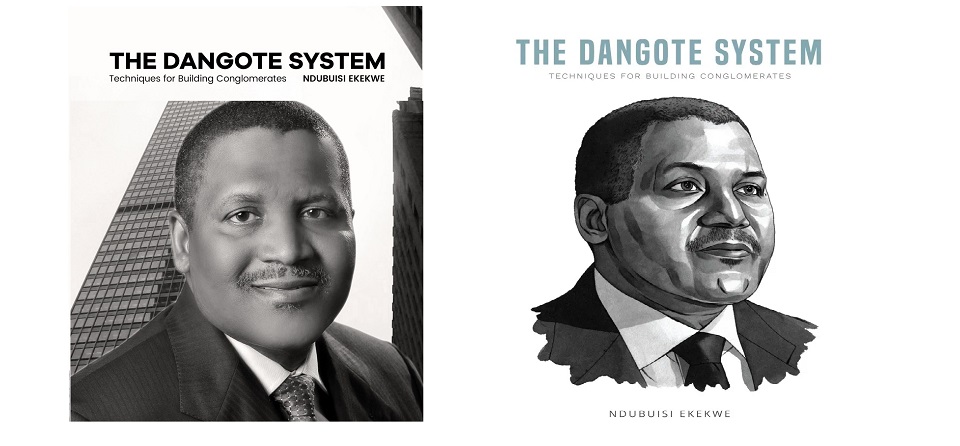
Continue reading in my book, “The Dangote System” here.

Beat Tekedia Mini-MBA Early Registration Deadline And Read Exclusive Book On Dangote

0

“Manufacture, don’t just trade. There is money in manufacturing even though it is capital intensive. To achieve a big breakthrough, I had to start manufacturing the same product I was trading on; which is commodities.” – Aliko Dangote

From ‘The Dangote System: Techniques for Building Conglomerates” by Ndubuisi Ekekwe, exclusive for Tekedia Mini-MBA early bird registrants. Beat the deadline which is today and read this book which has transformed the mindsets of many.

Register here and read this amazing book,