DD
MM
YYYY

PAGES

DD
MM
YYYY

spot_img

PAGES

Home Blog Page 5349

WhatsApp Goes After Emails, Zoom, via Updated WhatsApp Web and Desktop

1

WhatsApp Web has evolved and this one is very consequential: simply, you do not need to have your phone linked anymore to chat via WhatsApp web. And if you install the WhatsApp Desktop, you will never need Skype for anything. Why? WhatsApp Web now supports advanced chatting and phone calls via your laptops and desktops.

The implication is huge: if you use WhatsApp Web or the desktop version, you can “wmail” – I am making that up for messages sent via WhatsApp Web or WhatsApp Desktop. By partially unbundling WhatsApp web from phone, Meta (yes, Facebook) is going after Zoom. This is a major disintermediation to the traditional email system provided you have the person’s WhatsApp contact. Most Zoom scheduling begins at WhatsApp; now, that video call can happen at WhatApp.

Expect them to offer slideshow support in the next coming months. Magically, everything Zoom and Microsoft Teams currently do will be available via your WhatsApp Desktop. The main difference now is that your phone sync to WhatsApp Web/Desktop is the logging you need in Zoom and Teams.

Possibly, WhatsApp web and WhatsApp desktop could offer a clear path for monetizing WhatsApp by Meta, at a deeper level. By moving things to the big screen, besides advertising, subscription is now evidently possible now for enterprise users who may need this service besides chats.
LinkedIn Comment on Feed

Comment 1: The competition has always been about who can keep customers on their platform longer. The more value users get on a platform, the longer they’ll stay. WhatsApp’s primary drawback was their overdependcy on the mobile application which was an advantage years ago, but has been hit by this new work-from-anywhere economy where users now want seamless transitions between all their devices wherever they choose to work from.

To point out though, WhatsApp is already being monetized through the Business APIs available for enterprises that allows them provide personalized and improved customer engagements:

Comment 2: That space is no longer a blue ocean where you go in and try things out, for Whatsapp to become a force there, it has to offer something better, with thrilling experience; right now it doesn’t feel like it’s close to doing that.

For Zuckerberg to play the subscription game at scale would be like swimming against the tide, because he made his name from freemium, which the world appreciated at the beginning, but now feels he’s constituting a good degree of nuisance. Nobody has ever satisfied people of the world, not even Jesus Christ.

Meta’s empire is already scary in its current state, so angling for mass adoption in market spaces where winners and laggards are more or less known, is not going to end in praises.

Zoom is the verb that owns the video call space at enterprise level, Microsoft and Google are having some shouts, others are in the also-ran league, and Whatsapp is coming to join the queue…

My Response: WhatsApp does not need to be as good as Zoom to thrive. The strategy is this: have the one oasis and try to be good in many things to reduce the churn, and keep your customers with you. So, provided WhatsApp video is good enough, that it is not great is irrelevant.

Comment 3: I do think, there is nothing possible, right?

But when considering going into a space, market, or ex ecosystem that is different from the very strategy that a company has laid, it is sometimes difficult or completely impossible, hence a complete overhaul of the existing design, strategy, or/and tactics might need to be done.

Following what Francis Oguaju said in his comment, I agree with him. The space is a Red ocean for WhatsApp. And with some features and the perception that Whatsapp has at hand, for me, it makes it impossible for me to believe it can compete in that space. It has to change a lot of things or completely change to make it possible for it.

I would leave the features to everyone’s information, which I believe we know.

Comment 4: I think WhatsApp is going after Telegram. With more than 500 million monthly active users, WhatsApp should be bothered by their obviously superior technology.

On Telegram, you can have video calls with an unlimited amount of people for an unlimited duration and the data consumption is very low.
Also, Telegram has always allowed users to connect an unlimited amount of devices to their accounts.

Telegram is cloud-based so you don’t lose your content even when you change your device. So you don’t get that ‘memory-full’ message that WhatsApp is notorious for.

Telegram is king o. It combines messaging with social excellently. I guess its only limitation is that it’s Russian.

Comment 5: The way a brand is positioned in the mind of users is very important.

WhatsApp can’t beat Zoom at the game of video conferencing; the brand was positioned to offer free chatting and data call services and that’s what we know her for.

Zoom on the other hand is premium video conferencing – I’ll subscribe to always have a team meeting for this service.

According to Prof. John Gourville, many innovations fail because consumers irrationally overvalue the old while companies irrationally over value the new, for new entrants to stand a chance they can’t be just better, they must be nine times better.”

The bar is high because old habit die hard and requires a lot to shake users out of old routines.

GoogleMeet should be asked how market? by WhatsApp before rolling this playbook.
Google to Invest $700m in Airtel India

0
Airtel Nigeria

Global interest in India’s digital economy has continued to birth investments from the big names in the tech industry. Google, Amazon, Facebook, Apple and others are either setting up companies in India or putting money in companies of Indian origin.

In 2020, Google announced $10 billion investment fund for India’s digital economy, and that’s besides previous investments it had made. The $10 billion fund opens a new chapter in Google’s India investment spree, and many companies in the internet market are set to benefit.

As part of its $10 billion commitment to India, Google will invest $700 million in Indian telecom operator Airtel, tightening its grip on the world’s second largest internet market, TechCrunch has reported.

Google said it will invest $700 million to acquire a 1.28% stake in Airtel, the second largest telecom operator in India with over 300 million subscribers, and pour up to $300 million more to explore multi-year commercial agreements with the telco.

The two firms said they will work to build on Airtel’s extensive offerings to cover a range of Android-enabled devices to consumers via “innovative affordability programs.” The companies also said they will explore partnerships with smartphone makers to “bring down the barriers of owning a smartphone across a range of price points.”

“Airtel is a leading pioneer shaping India’s digital future, and we are proud to partner on a shared vision for expanding connectivity and ensuring equitable access to the Internet for more Indians,” said Sundar Pichai, chief executive of Google and Alphabet, in a statement.

“Our commercial and equity investment in Airtel is a continuation of our Google for India Digitization Fund’s efforts to increase access to smartphones, enhance connectivity to support new business models, and help companies on their digital transformation journey.”

Friday’s announcement comes at a time when Airtel and Vodafone have been scrambling for ways to repay billions of dollars they owe to the Indian government. Vodafone gave away over 35% ownership to New Delhi earlier this month, making the Indian government its largest shareholder.

Vodafone and Airtel compete with Jio Platforms, run by Asia’s richest man Mukesh Ambani. Jio Platforms has amassed over 400 million subscribers in India, thanks to its cut rate voice calls and data offerings. Google invested $4.5 billion in Jio Platforms in 2020. Facebook and nearly a dozen more firms backed Ambani-controlled firm that year.

Airtel said on Friday that it will explore “larger strategic goals” with Google and “potentially” co-create India-specific network domain use cases for 5G and other standards. The companies also plan to collaborate on “shaping and growing” the cloud ecosystem in India, they said. Airtel, which already serves over 1 million small and medium-sized businesses with its enterprise connectivity offering, said Friday’s announcement will “help accelerate digital adoption.”

“Airtel and Google share the vision to grow India’s digital dividend through innovative products. With our future ready network, digital platforms, last mile distribution and payments ecosystem, we look forward to working closely with Google to increase the depth and breadth of India’s digital ecosystem,” said Sunil Bharti Mittal, Chairman of Bharti Airtel, in a statement.

With over 600 million internet users — and just as many yet to come online — India is one of the last great growth markets for American technology groups. Both Google and Facebook ran programs in the past decade to bring internet connectivity to tens of millions of Indians.

Tekedia Mini-MBA Double With BusinessDay Newspaper

0

There is no better deal in business education: you master the secrets of business and read the news around markets. Yes, Tekedia Institute and Africa’s finest business journalism, BusinessDay, will help you become all-round-business-ready. Go to BusinessDay and register today.

From Feb 7, we will begin the excursion for 12 weeks. My first zoom class is titled “The Innovation of Firms and Building Category-King Companies”. It promises to be amazing.

Tekedia Institute offers Tekedia Mini-MBA, an innovation management 12-week program, optimized for business execution and growth, with digital operational overlay. It runs 100% online. The theme is Innovation, Growth & Digital Execution – Techniques for Building Category-King Companies. All contents are self-paced, recorded and archived which means participants do not have to be at any scheduled time to consume contents. Besides, programs are designed for ALL sectors, from fintech to construction, healthcare to manufacturing, agriculture to real estate, etc.

The sector- and firm-agnostic management program comprises videos, flash cases, challenge assignments, labs, written materials, webinars, etc by a global faculty coordinated by Prof Ndubuisi Ekekwe. It will run from Feb 7, 2022 to end May 7, 2022.

NIPOST Launches Banking Platform, Debit Cards to Boost Financial Inclusion

0

The Minister of Communication and Digital Economy Dr.Isa Pantami has launched the Nigerian Postal Service (NIPOST)’s debit card and agency banking platform. Pantami unveiled the new NIPOST features alongside 27 courier vehicles, commissioned in partnership with Speedaf Express, an international company, aimed at helping the postal service facilitate fast delivery service across the country.

Pantami explained during the launch that the move is geared towards keying NIPOST into e-governance and a sustainable digital economy.

NIPOST is among Nigerian government’s institutions tainted with allegations of corruption. The Minister said the new services will curtail malfeasance and improve transparency.

“We are in the process of digital transformation, transformation will not be possible without digitalization. What we are doing today is to ensure that NIPOST is digitalised so that they will deliver in their mandate by law,” he said.

Pantami said the postal agency’s debit card and banking platform were designed to reach the unbanked population residing in remote areas.

“We are not agitating that it must replace our other debit cards but rather an alternative banking platform. Most importantly, this service can be used online and offline. It is complimentary and provides other alternatives, particularly to the people living in unobserved and underserved environments. NIPOST exists in many places where other banks do not because the service is in every local government.

Pantami also explained that the Ministry will deploy satellite service to provide internet service for the underserved.

“We want to leverage on that, and ensure we use NIGCOMSAT to provide Internet connectivity all over the country in places where there are no ATMs and banks, and that will be an alternative for the underserved communities.

“There are many economic impacts because when you simplify financial transactions for citizens, you enable them to spend more at the comfort of their homes,” he said.

Financial inclusion has been advocated as a layer of economic growth, and many government institutions in Nigeria are beginning to participate by developing subsidiaries offering financial services to the unbanked.

Pantami said the new NIPOST services will help in attaining Nigeria’s full digitization target by 2030.

“It is the first of its kind in Nigeria because it works offline and online, and it is the first time that NIPOST has come up with a solution similar to this and it is indeed a multipurpose card for financial transaction, conditional cash transfer, payment of bills and many more,” he said.

Pantami also hinted at NIPOST’s plan to launch a microfinance bank soon, a move he said will help all Nigerians carry out financial transactions everywhere there is a post office in the country.

“This is just like a pilot programme of another subsidiary of NIPOST that will come up soon, that is the NIPOST Micro Finance Bank in which we are to leverage on the existing infrastructure of NIPOST ad make sure that our citizens all over the country as long as they have access to the post office, they will be able to conduct their financial transactions,” he said.

Post-master General and CEO of NIPOST, Ismail Adewusi, said the move will help align NIPOST with global best practices.

“This is, however, all geared towards reducing operating costs, increasing the revenue base and rejuvenating the system to restore public confidence,” he said.

What makes the debit card unique is that it relies heavily on biometric information of the user, like fingerprints which means it can work online and offline. The multi-teller NIPOST’s POS-based platform is available in every local government across Nigeria, where NIPOST could be found.

Fellow Nigerian, Where Is Your PVC?

0

The last time I checked, Nigerians as a people are at the peak of the pre-electioneering era that everyone needed not to be told or reminded that he/she was meant to fasten the seat-belt towards averting any form of carnage.

In every facet of the country, the story isn’t different. One would observe that every dick and harry has inadvertently become perturbed as regards what the next second entails as regards the awaited political ritual.

In all corners within the shores of the country, even in the market arena, the story remains the same. One may ask; what is the story in question? It is nothing but the fact that we are fast approaching yet another set of general elections, which is expected to take place across the federation.

Constitutionally, in any democratic terrain, elections can never be overridden by anything whatsoever. This implies that such a factor is invariably regarded as supreme by any sane and rational citizen, be it a leader or follower.

In the same vein, traditionally, it’s pertinent to acknowledge that there is a scenario that usually heralds any electioneering period. The preliminary era remains registration for, and collection of, voter’s cards by every eligible citizen of the affected country or state, as the case may be.

But, who is an ‘eligible citizen’ as mentioned above? An eligible citizen in this case is no other than someone who is constitutionally empowered to vote or be voted for. As it is enshrined in the 1999 Nigeria’s Constitution, as amended, any Nigerian citizen who has attained the age of eighteen (18) has the power to cast a vote for any contestant and equally possesses the right to aspire for some certain political positions.

However, it’s equally imperative to note that there’s a tool or device that authorizes any eligible citizen to cast his or her vote at the polls. The device is the voter’s card otherwise known and addressed as Permanent Voter’s Card (PVC). In other words, one without the PVC is not expected to be anywhere near a given polling unit let alone casting a vote for a candidate of his/her choice during elections.

It’s indeed disheartening and mind-boggling that in spite of the high level of awareness so far created by countless civil society groups such as the revered Right Thinkers Movement, among others, thousands of Nigerians are yet to collect, revalidate, or even register for, their PVCs.

One would then wonder how they intend to effect the change they are clamouring for come 2023. It’s not anymore news that most of these Nigerians are at the moment found in various quarters across the country and beyond discussing politics and governance, still virtually all cannot boast of the device that would guarantee them access to cast their votes at the polls. It suffices to assert that such persons have no electoral value. How do you reconcile this?

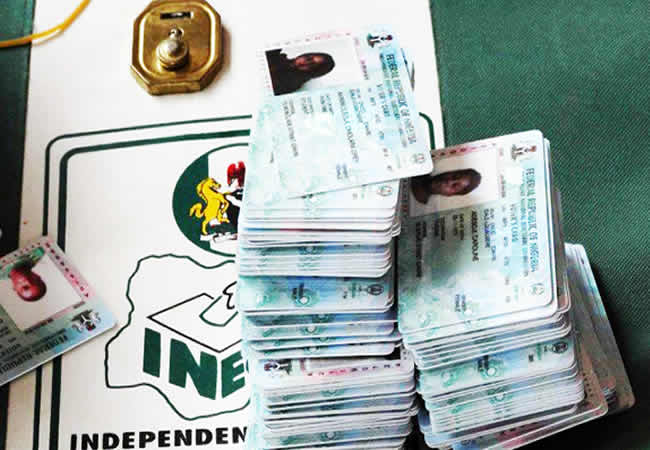
The news that got to my desk recently has it that several millions of PVCs are yet to be collected from the offices of the Independent National Electoral Commission (INEC) domiciled across Nigeria. Funnily enough, the irony of the anomaly is that most of those uncollected PVCs ostensibly belong to Nigerians who have been hitherto making the greatest noise in regard to the impending elections.

You are unequivocally really deceiving yourself if by now you are yet to collect, or even register for, your PVC, but are deeply involved in the ongoing politicking or political brouhaha within the country. The truth is that you are not only deceiving yourself but perhaps causing untold hardship for your entire generation.

The electoral umpire has in the past kept its offices open even during the weekends to enable everyone, irrespective of his/her nature of work, to go for the collection of their PVCs. But despite all these measures, millions of PVCs are still reportedly lying at the various offices of the INEC. Who is deceiving who?

We are therefore reminded by this notice to, without much ado, walk up to the nearest INEC office in our respective places of residence with a view to ensuring that our PVCs are duly collected.  You are equally required to conscientize your relatives or those in your neighbourhood to follow suit.

We need to fully comprehend that the power to usher in a better tomorrow strictly and solely lies in our bare hands. But it’s pathetic that we can never exercise such power if our PVCs are missing in our possession.

Most times I don’t relent in wondering the reason one in his/her right senses would wait until he is compelled before he could wear the zeal to go for his PVC. Is it that we don’t care about the elections or we have given up on the country?

The worst of all is the situation whereby virtually all those who are complaining about bad governance are yet to collect their PVCs and yet not making any effort to acquire such a vital tool that could usher in the change they are clamouring for. Isn’t it a paradox?

Fellow Nigerian, the polls are by the corner, hence no more time to be wasted in respect of responding to this candid and clarion call. No excuse is expected from us if we eventually fail to exercise our civic obligation at our respective polling units by casting our votes where and when need be.

Those whose PVC’s issuance date bears 2011 are required to go to the INEC office for revalidation. If the PVC bearing such date isn’t revalidated, it won’t be valid to cast any vote during the impending elections, because it can’t be read by any electronic card reader.

I know I’ve overtime analyzed this very socio-political lapse. Though it cannot be overemphasized, the truth is that there may not be further opportunity to comment on the anomaly, thus ‘a word is enough for the wise’.