


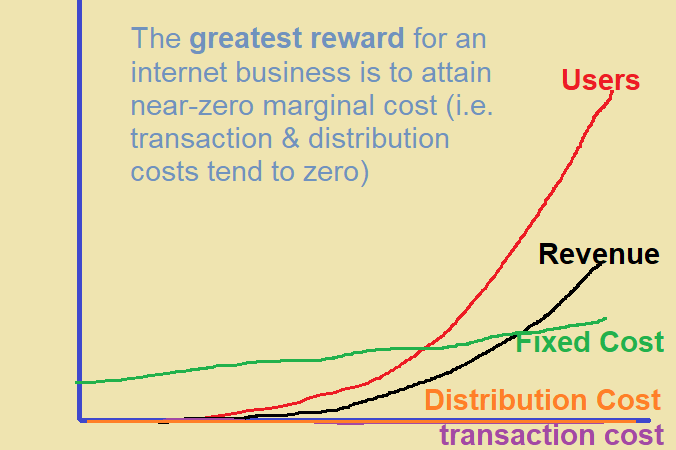
Join me to congratulate Africa’s largest micro-transaction fintech company, Touch and Pay Technologies Ltd (TAP), for making the YCombinator Winter 2022 program. TAP has more than 1.5 million users and powers Lagos contactless Cowry card system. With TAP, you have peace of mind with zero-leakage. Very proud of Ogo, Kabir, Olamide and Mike for what they have accomplished through innovation and flawless execution. I am always with the best #team. Congrats Team, more wins in 2022.
Preparing JumiaPay To Boost Jumia Group

Jumia is having a tough winter in New York. But it has a promise ahead. There are many latent opportunities in Jumia. If they unlock them, great things will happen.
There is a great playbook: “spin off” JumiaPay and embed “Buy Now Pay Later” in it . Then do three other things with JumiaPay.
JumiaPay has many latent leverageable factors which could compound in the 13 countries Jumia currently does business. It has to be the double play which Jumia will feed on.
How many fintechs are in 13 African economies with millions of users and still worth with the parent company less than $800 million? Only JumiaPay – and that should change. Yes, JumiaPay alone is worth more than $1 billion. Jumia, think differently; you have all the pieces already.
Comment on LinkedIn Feed
Personally, I think Jumia (eCommerce) hasn’t really found Product Marketing Fit to be honest. Jumia still rides the narrative that it’s the ‘Amazon of Africa’ and some investors still see it as a way to get exposure to Africa’s growing internet economy. My concern is that Social Commerce (WhatsApp and Instagram sellering) is slowly eating the eCommerce market, and people may not be aware of this yet.
JumiaFood’s is also another huge play, and it’s growing too, 2million deliveries a quarter is definitely impressive. I believe that when companies build at scale, they must capitalize on their advantages – this is why Microsoft Teams came after Slack but still dominates that market – Microsoft had too many inherent advantages to capitalize on. If JumiaPay is their salvation, they must capitalize on it.
One of my concerns is that we’re getting to see this because Jumia is public, only God knows what’s happening at some of our privately run VC funded tech firms bleeding capital like blood. We need to balance chasing growth with core fundamentals.
P.s: Don’t go public if your fundamentals aren’t right yet.
Your Nigeria’s permanent voter card (PVC) has no expiry date
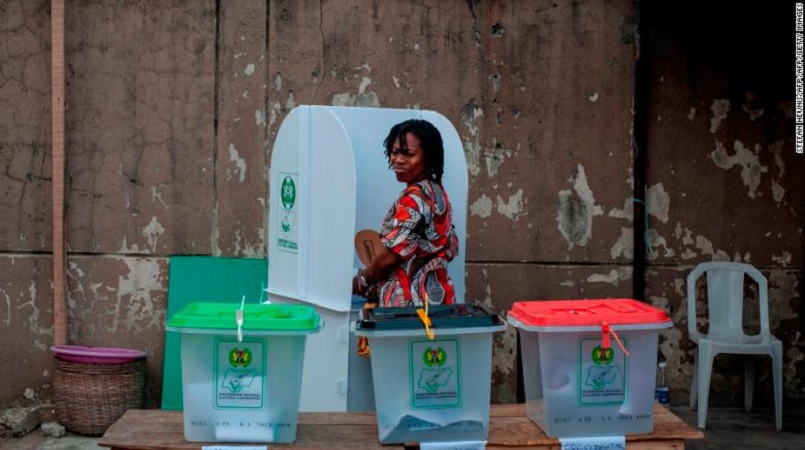
A viral statement which was accorded to the APC chieftain and national leader who happens to be a presidential aspirant, Bola Tinubu, has called for answers as to what the electoral act says. The former Governor of Lagos stated while addressing some of his campaigners during the week advised them to go get their permanent voters card (PVC), and make sure that they vote in the upcoming elections.
He also charged those that already have permanent voters card (pvc) to go and re-register with Independent National Electoral Commission (INEC) so that another pvc will be issued to them as the pvc currently in their possession may have expired. He’s quoted to have said: “Incase they (INEC) do not announce it to you on time, the PVC you have has expired”.
Does PVC expire?
Commonsensically, the use of the word ‘permanent’ indicates that a voters card issued to an individual is for a lifetime unless that pvc is lost by the holder, torn or defaced but as for expiration; pvc has no expiry date; it does not expire as claimed by the apc national leader, Bola Tinubu.
The law specifically provided in s.16(2) of the electoral act of 2010 that no voter shall hold more than one voters card and any body who does have or hold more than one voters card is an offender and shall be liable for 1 year imprisonment or a fine of N100,000 as provided in sub 3 of the section 16 of the act.
A voter is only allowed to apply for another permanent voters card if the voters card he was previously issued is torn, defaced or lost: these are the grounds a voter can apply to INEC for another pvc as provided by the electoral act. This is the provision of s.18(1&2) and it reads thus:. –
(1) Whenever a Voter’s card is lost, destroyed, defaced, torn or otherwise damaged, the owner of such card shall, not less than thirty (30) days before polling day, apply in person to the Electoral Officer or any other officer duly authorized for that purpose by the Resident Electoral Commissioner, stating the circumstances of the loss, destruction, defacement or damage.
(2) If the Electoral Officer or any other officer is satisfied as to the circumstances of the loss, destruction, defacement or damage of the Voters’ card, he shall issue to the voter another copy of the voters’ original voters’ card with the word ?DUPLICATE? clearly marked or printed on it, showing the date of issue.
On no account should a voter who is already issued with a voters card apply for another voters card as an act of having more than one voters card in your possession is a crime as provided in s.16(3) punishable with prison sentence.
Permanent voter cards don’t expire.
The Technology Impacts on Jobs

With the world rapidly evolving and so many technological advancements emerging, no doubt technology has improved the standard of living and created employment opportunities for some individuals.
Although there has been a recurrent fear that these technological advancements will lead to mass unemployment. A lot of people in certain jobs already feel threatened by the fact that technological advancement would be the cause of unemployment in the near future.
Many businesses/ companies have begun to introduce high-end technologies into their business to improve efficiency which would lead to higher productivity and also high profit. Advancements in information technology, robotics, and other promising technologies emerging out of science offer the promise of increased productivity and therefore economic growth in the years to come.
But while technology has come to make life easier and is improving production and efficiency in organizations, it has begun to create problems for employees and has become a threat to job security. Technology has had not only a positive impact on jobs but also a negative one. This article focuses on the negative impacts of technology on jobs.
For example, ATMs popularly known as automated teller machines have replaced some bank jobs. Certain individuals were in the past handling the giving out of money to customers, before the invention of ATMs which has made the job redundant. The new wave of technologies like automation and artificial intelligence is a threat to so many jobs.
A lot of machines and automation are replacing low-skilled workers. Lots of companies are already opting to replace human labor with technology because of the efficiency and high productive nature of technology. Failure for them to replace human labor with technology is equal will see them losing out, due to the high competition from other companies that use technology.
Technical advancements have forced and are still forcing people to update their knowledge to remain relevant in the job market. This can be so overwhelming for some to balance work and personal life. According to reports, technology has already replaced 90 percent of the jobs that humans do, from customer care, filling papers, factory workers, etc.
Low-skilled workers are those greatly affected by these technological innovations, jobs such as switchboard operators, mail sorters, etc, have fallen drastically or even gone into extinction because of the invention of technologies that replaced human efforts. For example, by investing in industrial dishwashing machines, restaurants would no longer see the need to employ a human dishwasher. Fewer people now work in car factories than in the last century.
Most car factories now routinely use machines to lose, repair, and paint body parts, which has seen the reduction of human effort in car factories. In China, a restaurant uses robots to deliver a fully automated dining and cooking experience for customers. At food restaurant, robotic arms prepare fast food after they are programmed to follow recipes for making noodles and stir-fry dishes.
A large number of economists believe that technology enhances productivity and creates wealth in the society. Although there have been less dramatic changes created by technology in clerical and professional services.
Conclusion
Although technology has come to make life easy, those greatly affected due to job loss are at the losing end of it. They will now be forced to learn other high-income skills to remain relevant. In these times of rapid technological advancements, it is reasonable for anyone who feels threatened, especially low-skilled workers to ensure they don’t wait till they are finally laid off from their jobs before they begin to learn other skills.
Technology has come to stay, and with more advancements taking place, more people will be out of jobs, except those who have deemed it fit to move with the flow.
Exploring Resources Toward Economic Emancipation Amid Covid-19 Scourge
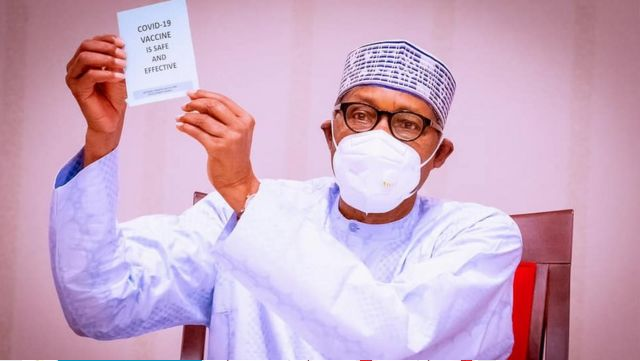
As the global community suffers great economic setback owing to the ongoing Coronavirus disease (COVID-19) pandemic, it has ostensibly become compelling for Nigeria as a country to look inwards towards discovering her entire natural resources with a view to harnessing them towards emancipation of her economy.
Some of the common natural resources on earth are land, water, sunlight, atmosphere, wind, coupled with animal life and vegetation. A natural resource may exist as a separate entity like fresh water and air as well as a living organism such as fish, or it might exist in an alternate form, which must be processed to obtain the required resource to include petroleum, metal, ores, and most forms of energy.
It’s noteworthy that some, including air and sunlight, can be found everywhere, and are known as ‘ubiquitous resources’. Whilst, most resources only occur in restricted areas, and are referred to as ‘localized resources’.
There are very few resources that are considered inexhaustible – these are solar radiation, geothermal energy, and air, though access to pure air may not be possible.
The vast majority of resources are theoretically exhaustible, which means they have a finite quantity and can be depleted if improperly managed; a good example of this is petroleum. Such finite resources required a sound policy and regulation, to be implemented by the concerned government, towards their preservation.
It’s pertinent to acknowledge that every man made product consists of one or two natural resources. Suffice it to say that everything required or used by mankind constitutes, at least, a natural resource. In most cases, some of these resources such as air and water, are directly utilized or consumed by man without processing them.
The above outlined phenomenon proves beyond doubts that humankind cannot survive or strive successfully, as the case may be, without natural resources. This assertion is not unconnected with the reason every rational government makes frantic effort toward adequate use and preservation of the natural resources found within its country.
In Nigeria, hundreds of natural resources abound, in which each state including Abuja is a beneficiary. Some of these resources are petroleum, tantalite, lead, zinc, glass-sand, copper, gemstone, crystal, oil/gas, bitumen, phosphate, gold, coal, clay, salt, gypsum, iron-ore, uranium, and limestone, in addition to sunlight, wind, land, water, vegetation and air that are ubiquitous in nature.
Some of the aforementioned substances can enable any country to massively embark on agriculture, and attain to any desired height. Nigeria does not possess just land, but a well fertile land that can produce crops in any quantity and quality. Its vegetation and atmosphere is equally invariably good enough to raise every kind of animal life, including wildlife.
Though crop and livestock farming used to be the talk of the day in the Nigerian society, it’s sad to note that currently such lucrative occupation is being relegated to the background owing to over-reliance on mono-resource, petroleum.
It’s really high time we as a people desisted from this irritating high level of dependency that has eaten deep into our socio-economic bone marrow, especially at this time the crude oil price has globally fallen.
Proper utilization of clay alone can take the country’s tourism industry, that’s presently moribund, to enviable heights. Same is applicable to the use of other similar compounds or metals that are in abundance across the federation, to include uranium, limestone, and gold.
In the same vein, it is disheartening that an essential mineral resource like coal has, over the decades, been swept under the carpet; coal can be used to produce energy, both in the form of heat and electricity.
It’s mind-boggling to hear that a country like Nigeria that can boast of abundant sunlight, wind and what have you, is still battling on how to generate steady and reliable electricity, whilst countries like the U.S.A blessed with just a limited amount of the resources, are experiencing uninterruptible power supply.
Away from energy; it could be observed that our forest reserves that could produce enough timber for importation, are currently wearing a pathetic physiognomy as a result of docile policies.
Indeed, Nigeria is densely endowed with various lucrative natural resources, but it’s very sad that the governments at all levels are not doing enough as regards the adequate use and conservation of the resources; hence, this calls for drastic turnaround via deployment of genuine political will.
Now that the sale of petroleum resources is no longer booming, it’s high time we retraced our steps toward ensuring that each of the available resources is thoroughly harnessed for the needed economic emancipation.
The government really needs to ensure adequate conservation and sustenance of these natural resources, through implementation of strict and viable policies cum laws, and their proper enforcement.
Most of these needed policies such as Land Use and Forests Reserve Acts, which were duly upheld in the past, are presently abused or overlooked in various quarters.
We need to urgently revive them, make apt amends where necessary, as well as introduce new ones toward attaining the required emancipation of the country’s economy, which is currently in a dilapidated state.
On the other hand, individuals on their parts, ought to equally think outside the box with a view to diversifying their respective sources of income to avert the foreseen state of doom. The good news is that, if the needful is done, this will surely be regarded as a blessing in disguise in no distant time.
So, as hunger looms in the land, occasioned by the emergence of the dreaded COVID-19 pandemic, the concerned authorities must take into cognizance that there’s no better time than now to act accordingly.