DD
MM
YYYY

PAGES

DD
MM
YYYY

spot_img

PAGES

Home Blog Page 537

Appeals Court Revives $600,000 Copyright Verdict Against Disney Over “Beauty and the Beast” Technology

0

The 9th U.S. Circuit Court of Appeals on Thursday reinstated a $600,000 damages award won by motion-capture technology firm Rearden LLC, which had accused Disney of misusing its proprietary software in the 2017 live-action remake of Beauty and the Beast.

The three-judge panel overturned a ruling by U.S. District Judge Jon Tigar, who had previously set aside the jury’s verdict in favor of Disney. In its decision, the appeals court found that there was sufficient evidence to support the jury’s conclusion that Disney could have acted to prevent or limit the misconduct of its contractor, Digital Domain 3.0, which allegedly used stolen technology belonging to Rearden.

Rearden, founded by former Apple scientist Steve Perlman, first sued Disney in 2017, alleging that a former employee had stolen its Mova Contour facial-capture technology and taken it to Digital Domain. The company claimed Disney then worked with Digital Domain on Beauty and the Beast, thereby infringing on its copyrights.

While Rearden had sought monetary damages, including a share of profits from the Disney blockbuster — which grossed more than $1.25 billion worldwide — the appeals court on Thursday affirmed that Rearden was not entitled to any portion of the film’s revenues.

A California jury in 2023 had originally sided with Rearden, awarding the company nearly $600,000 in damages. Judge Tigar, however, overturned that verdict last year, reasoning that Disney was not directly involved in the animation process that relied on Rearden’s technology and therefore could not have recognized or policed any infringement by its contractor.

The appeals court disagreed, reviving the jury’s award. “There was sufficient evidence to support the jury’s finding that Disney could have stopped or limited Digital Domain’s misconduct,” the panel wrote.

The case, Rearden LLC v. Walt Disney Pictures, is docketed as No. 24-3970 in the 9th U.S. Circuit Court of Appeals. Rearden is represented by Mark Carlson of Hagens Berman Sobol Shapiro, while Disney is represented by Kelly Klaus of Munger, Tolles & Olson.

What the ruling could mean for Hollywood

The revived verdict, though modest in dollar value compared to the film’s billion-dollar gross, carries significant weight for the entertainment industry. The appeals court has reinforced the principle that studios may bear responsibility for monitoring how their contractors source and use third-party technologies by siding with Rearden. Legal analysts say this could set a precedent that forces major film companies to conduct deeper due diligence in outsourcing deals.

For Hollywood, where reliance on external VFX houses and tech startups has become routine, the ruling could mean stricter vetting of software licenses, audits of contractor practices, and potentially higher production costs. Some intellectual property attorneys believe it’s a wake-up call for studios, warning that future disputes could trigger damages far beyond $600,000.

Rearden’s partial victory also highlights the growing value of proprietary visual effects technologies, which underpin much of the industry’s push into photorealistic animation and live-action remakes. As competition intensifies in the era of generative AI and advanced graphics, ownership battles over such tools are likely to become more frequent.

Against this backdrop, some believe that if the decision prompts studios to become more conservative in their contracting, smaller VFX firms may face tighter compliance requirements and higher legal risks. Some could struggle with the added burden, consolidating the market in favor of larger, well-capitalized players.

For Disney, the ruling is unlikely to dent its financial position given the relatively small damages, but it may expose the company to reputational scrutiny as it continues to lean heavily on remakes and visual effects-heavy projects. A prolonged legal fight could also embolden other tech firms to pursue claims if they believe their tools have been misused by contractors tied to big studios.

In a broader sense, the case underscores the fragility of Hollywood’s reliance on outside innovation, raising questions about whether studios will begin bringing more VFX development in-house to mitigate liability risks. Should that happen, the balance of power between tech startups and the film giants could shift dramatically.

VanEck Eyes Hype ETF Filing, Amid Forward Industries Solana’s $1.65B Treasury

0

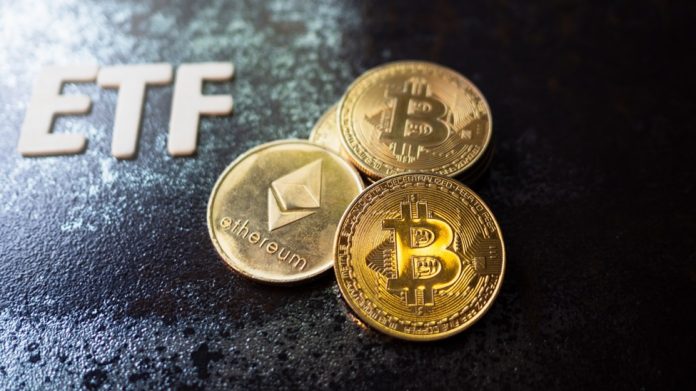
Asset manager VanEck, known for pioneering crypto ETFs like Bitcoin and Ethereum spot products, is preparing to file with the U.S. SEC for a spot-staking ETF tied to HYPE, the native token of the Hyperliquid decentralized exchange.

This would mark HYPE as the youngest token to receive such a filing, following VanEck’s pattern of being first-to-file for Solana and Ethereum ETFs. The proposed ETF would offer U.S. investors exposure to HYPE’s price appreciation plus staking yields, handled internally by the fund to simplify access for traditional investors. VanEck is also planning a parallel physically backed exchange-traded product (ETP) in Europe, where approvals are faster—21Shares already launched a Hyperliquid ETP there in August.

Executives like Kyle Dacruz and Matt Maximo highlighted strong demand and Hyperliquid’s focus in their liquid fund strategy, with the platform topping DeFi revenue charts for four weeks straight. The firm is even considering using ETF profits for HYPE buybacks or ecosystem support, similar to their Bitcoin and Ethereum commitments.

Approval odds are uncertain amid SEC backlogs on XRP, SOL, and DOGE ETFs, but VanEck sees this accelerating a potential Coinbase listing for HYPE. The news propelled HYPE up 22% to a new all-time high of $55.34, reflecting broader DeFi momentum.

Forward Industries’ $1.65B Solana Treasury Close

Nasdaq-listed Forward Industries (FORD), a 60-year-old design firm pivoting from medical/tech products to digital assets, has closed a record $1.65 billion private investment in public equity (PIPE) to launch the world’s largest corporate Solana treasury.

The funding, in cash and stablecoins like USDC/USDT, was led by Galaxy Digital, Jump Crypto, and Multicoin Capital (committing over $300M combined), with participation from existing shareholder C/M Capital Partners and others. Proceeds will primarily buy SOL tokens for active deployment in staking, lending, and DeFi on Solana, aiming to generate on-chain yields and boost SOL per share beyond passive holding.

Galaxy will manage treasury operations (trading, staking, infrastructure), Jump provides engineering via Firedancer (a high-performance Solana client), and Multicoin’s Kyle Samani joins as board chairman for strategic guidance. Cantor Fitzgerald led placement, with Galaxy as co-agent.

The move positions Forward as the top publicly traded Solana player, outpacing Upexi (2M+ SOL) and Sharps Technology ($400M raise). FORD shares surged 128% pre-market on the initial announcement, while SOL rose 2.3%, underscoring institutional conviction in Solana’s $1.2B Q2 economic value and 7,500+ developers.

CEO Michael Pruitt emphasized long-term shareholder value through ecosystem participation. A HYPE ETF would bring decentralized finance (DeFi) exposure to traditional investors, legitimizing Hyperliquid’s platform and potentially driving broader retail and institutional interest in DeFi tokens.

It could set a precedent for other DeFi-focused ETFs, accelerating crypto’s integration into conventional portfolios. The 22% surge in HYPE’s price to $55.34 reflects market enthusiasm, but ETF approval could further boost demand, liquidity, and price stability.

Staking yields within the ETF could attract yield-seeking investors, potentially increasing HYPE’s market cap and trading volume. A successful filing could pressure the SEC to clarify its stance on newer tokens like HYPE, SOL, XRP, and DOGE.

However, approval delays or rejections due to regulatory uncertainty could dampen market sentiment and slow DeFi ETF momentum. VanEck’s first-mover advantage may spur competitors (e.g., Grayscale, BlackRock) to explore DeFi ETFs, intensifying competition.

In Europe, the parallel ETP filing could capitalize on faster approvals, potentially drawing global capital away from U.S. markets if the SEC lags. VanEck’s potential use of ETF profits for HYPE buybacks or ecosystem support could strengthen Hyperliquid’s development, attracting more developers and projects.

Implications of Forward Industries’ $1.65B Solana Treasury

Forward’s massive Solana treasury sets a benchmark for public companies diversifying into digital assets, potentially inspiring other firms to allocate to crypto. This could drive institutional demand for SOL and validate blockchain treasuries as a corporate strategy.

The $1.65B infusion, used for staking, lending, and DeFi, will increase Solana’s on-chain activity, TVL (total value locked), and network security. Partnerships with Galaxy, Jump, and Multicoin signal robust infrastructure support, potentially accelerating Solana’s scalability and adoption.

FORD’s 128% share surge and SOL’s 2.3% rise reflect bullish sentiment. The treasury’s active SOL deployment could sustain upward pressure on SOL’s price, especially if yields outperform traditional assets. However, large-scale SOL purchases could cause short-term volatility.

Forward’s pivot to a Solana-focused treasury aims to boost SOL per share, offering shareholders indirect crypto exposure. Success could redefine Forward as a hybrid tech-crypto firm, but failure to manage treasury risks (e.g., crypto volatility, DeFi hacks) could harm investor confidence.

The involvement of heavyweights like Galaxy, Jump, and Multicoin underscores Solana’s institutional appeal, potentially attracting more VC funding and developer talent. It also positions Forward as a competitor to Upexi and Sharps, intensifying the race for corporate crypto dominance.

Both moves signal growing institutional confidence in DeFi and Solana, potentially fueling a broader crypto rally, especially for layer-1 and DeFi tokens. Large-scale crypto investments and ETF filings may invite stricter oversight, particularly if the SEC perceives risks to retail investors or market stability.

Forward’s pivot and VanEck’s ETF highlight the blurring lines between traditional finance/industry and crypto, which could reshape investment strategies and corporate balance sheets. These developments could catalyze significant capital inflows into DeFi and Solana, but their success hinges on regulatory clarity, market conditions, and execution.

Why Nations Are Poor And How Nations Become Rich

0

Poverty is often discussed in terms of resources, or the lack thereof. We are told that nations are poor because they do not have oil, arable land, or access to the sea. But in the age of the knowledge economy, this is a flawed premise. The true physics of national poverty is not a lack of physical assets, but a deficit of ideas and a failure to transform them into value. History shows us that great civilizations were inventive—they created geometry and algebra—but they remained poor until they engineered those inventions into innovations that scaled productivity. This is why a nation of brilliant minds can still be a nation of poor people! I explain in this video.

To become rich, a nation must move beyond invention to embrace a culture of innovation. This requires more than just smart people; it demands a system that democratizes knowledge and enables entrepreneurial pragmatism. Wealth creation is not about simply having natural resources; it’s about the ability to process those resources, or even more importantly, to create value from the intangible.

As the Igbo proverb says, “aka aja aja n’ebute onu mmanu mmanu,” which means “the hand that has known much toiling will eventually know much feasting.” This speaks to the necessary link between hard work, and the ultimate reward of prosperity.

The trajectory from poverty to wealth is built on this foundation. It is a societal process where technology is not an end in itself but a catalyst for productivity gains. When we build systems that empower our citizens to commercialize their knowledge, we create a virtuous cycle. The wealth of a nation, therefore, is not found in the ground, but in the collective capacity of its people to innovate. This is the simple construct that separates the rich from the poor—a nation’s wealth is a reflection of its ingenuity and its ability to turn the sweat of its people into tangible products and services for the world.

Nigeria must do all to move from our current invention society era to an innovation society era and subsequently to the accelerated society era.

BlockDAG’s Presale Nears Record $405M: 3M Active Miners & 19.8K Miners Shipped Signal Dominance

0

BlockDAG is making headlines with numbers that speak for themselves. More than 3 million people are already mining through the X1 app, showing real activity instead of empty promises. Alongside this, over 19,800 miners have been shipped to users worldwide, demonstrating that the network is built on a working infrastructure.

Adding to these achievements, BlockDAG (BDAG) has raised nearly $405 million in its presale, a figure that reflects growing confidence in its progress. Unlike many projects that rely on roadmaps and delays, it is converting plans into results that can be measured today. With clear adoption, proven delivery, and strong funding, BlockDAG is stepping into 2025 as one of the most exciting names in crypto.

3 Million Mobile Miners and Almost $405M Raised

The X1 Mobile Miner app has already gained over 3 million users worldwide. These are active participants who mine daily, not waiting for promises, but already earning and learning within the BlockDAG ecosystem.

By turning smartphones into working mining devices, BlockDAG lowered entry barriers and built one of the most widespread mining communities in crypto history. Unlike other projects that chase adoption after launch, BlockDAG secured its base before deployment.

A near $405 million raise adds even more weight. This massive funding came directly from the public presale, without private equity, seed rounds, or special deals. Every coin sold has gone directly to people worldwide, ensuring transparency and fairness.

That money is already fueling real progress, from app development and hardware production to R&D and infrastructure building. With the $600 million hard cap still ahead, the project shows no slowdown. Each figure reinforces BlockDAG’s commitment to equality, clarity, and delivery at scale.

19,800 X-Series Miners Shipped Worldwide

BlockDAG is proving its capability with physical products, not just digital promises. Already, more than 19,800 X-series miners, including X10, X30, and X100, are in the hands of users across 130+ countries. This milestone demonstrates that BlockDAG is not just a theory, but a live, functioning ecosystem.

Owners are sharing unboxing clips and #BlockDAGX10 reviews online, showcasing their machines in action and displaying their actual earnings. Shipments are rolling out at nearly 2,000 units every week, strengthening the network’s reach and efficiency.

This marks a significant turning point for the crypto industry. It marks the first presale coin to deliver hardware before any exchange listing. Wallet adoption proves the spread: over 312,000 wallets now hold BlockDAG (BDAG) coins, with more than 1,000 new wallets added daily.

Unlike projects concentrated in the hands of a few, this distribution stretches across Asia, Africa, Europe, and Latin America. The widespread adoption makes it resilient and demonstrates that global adoption is occurring in real-time.

Global Reach, Singapore Event, and $0.0013 Celebration Price

Community power fuels BlockDAG, and with over 325,000 members on Telegram, Discord, X, and YouTube, activity is nonstop. This global conversation is building momentum ahead of the Deployment event in Singapore on October 1, organized in partnership with Coinstore. This event will mark the official transition from presale to worldwide rollout, backed not just by promises but by shipped products, working miners, and a live network.

The presale has already attracted massive whale activity, including purchases of $4.4 million and $3.6 million in one go. These are strong signals that the biggest players in the market see long-term potential in BlockDAG’s hybrid infrastructure, EVM compatibility, and DAG-powered scaling. At the same time, the door remains open for the public.

Right now, BlockDAG is offering a flat $0.0013 price per coin. This limited-time deal replaces the old tier system and keeps things simple and fair. This celebration pricing will run until presale closes, just before the Singapore event.

After that, BlockDAG is set to prepare for listings on more than 20 major exchanges, including MEXC, LBank, BitMart, and Coinstore. It’s a final window to grab coins before deployment changes everything.

Wrap Up

Skepticism runs high in crypto, but BlockDAG’s numbers erase doubt. Nearly $405 million raised, 26.2 billion coins sold, 3 million X1 mobile miners, 312,000 wallets, 19,800 miners sold, and a 325,000-strong community in 130+ countries.

These are not projections or guesses; they are facts unfolding live. With the Singapore Deployment event on October 1 and the $0.0013 coin price still available, BlockDAG is turning preparation into execution at scale. Its mix of global users, fair pricing, proven hardware, and transparent growth makes it one of the most exciting projects of 2025. The window is closing, and the story is clear: BlockDAG (BDAG) is already delivering, and the momentum is only climbing higher.

Presale: https://purchase.blockdag.network

Website: https://blockdag.network

Telegram: https://t.me/blockDAGnetworkOfficial

Discord: https://discord.gg/Q7BxghMVyu

World Liberty Financial Unveils “Project Wings” Partnering with BONK.fun and Raydium

0

World Liberty Financial (WLFI), the Trump family-backed DeFi platform, unveiled Project Wings, a trader-focused initiative to accelerate USD1 stablecoin adoption on Solana. This collaboration with Raydium and BONK.fun enables USD1 trading pairs for token launches and trades, complete with promotional rewards for participants.

USD1, WLFI’s USD-pegged stablecoin (now the world’s fifth-largest at ~$2.66B market cap), is live on BONK.fun and Raydium’s Launchlab. Token creators can pair new launches with USD1 for added stability, while traders access pairs via platform UIs or third-party bots.

Eligible users earn promotional rewards for:

Trading USD1 pairs on BONK.fun.

Launching tokens paired with USD1.

Providing liquidity or bonding curve volume on Raydium.

Upcoming activity via the WLFI wallet app (launch imminent).

Traders see it as a liquidity boon for BONK ecosystem tokens, while critics note potential short opportunities amid hype. Earlier integrations (e.g., USD1’s September 1 Solana debut with $30M Raydium pool) set the stage for this expansion.

Integrating USD1 into BONK.fun’s memecoin launchpad and Raydium’s AMM pools makes it a go-to stablecoin for Solana-based token launches and trading, challenging dominant players like USDT and USDC.

With USD1 already at a ~$2.66B market cap (fifth-largest stablecoin), this partnership could accelerate its adoption, especially among retail traders and memecoin enthusiasts, potentially reshaping stablecoin market dynamics.

The Trump family’s backing of WLFI may attract non-crypto-native users, bridging TradFi and DeFi by offering a familiar, USD-pegged asset with DeFi rewards. USD1 pairs and rewards incentivize liquidity provision and trading on Raydium, one of Solana’s largest DEXs, potentially increasing total value locked (TVL) and trading volume.

BONK.fun’s role as the official USD1 launchpad merges memecoin hype with stablecoin stability, drawing in speculative traders and fostering new token launches on Solana.

Increased transactions from USD1 trading and launches could drive Solana’s transaction volume, reinforcing its position as a high-throughput blockchain for DeFi. Promotional rewards for trading, launching tokens, or providing liquidity lower barriers for users, encouraging engagement from both retail traders and project developers.

Integration with user-friendly platforms (BONK.fun, Raydium) and third-party bots makes USD1 pairs accessible, potentially onboarding new users to Solana DeFi. Token creators gain a stable, USD-pegged option for launches, reducing volatility risks and attracting more serious projects to BONK.fun.

The memecoin focus via BONK.fun could drive speculative capital into Solana, amplifying both upside potential and volatility for USD1-paired tokens. As with any DeFi initiative, risks like smart contract vulnerabilities, regulatory scrutiny and market manipulation could impact participants.

WLFI’s push for “capital markets at internet speed” signals an ambition to integrate traditional finance with DeFi, potentially attracting institutional interest but also regulatory attention, especially given USD1’s rapid rise.

If successful, Project Wings could inspire similar partnerships across other blockchains, blending stablecoin utility with memecoin-driven user acquisition. This partnership strengthens WLFI’s role as a DeFi innovator, leveraging Solana’s infrastructure and memecoin culture to scale USD1’s ecosystem, potentially paving the way for further integrations.

By channeling memecoin energy into stablecoin-driven DeFi, Solana could solidify its edge over competitors like Ethereum or Binance Smart Chain in the retail-driven DeFi space. Project Wings positions USD1 as a cornerstone of Solana’s DeFi ecosystem, blending memecoin speculation with stablecoin stability to drive liquidity, user adoption, and token launches.