At Tekedia Institute, we educate and reveal the mechanics of business. If you master the mechanics, you can drive and fix business systems. Look at your company today, and do the best thing for it: give it a great business model. We believe that business models are hugely catalytic to the success of firms. Yes, as you pursue the frictions of markets, we want you to deploy the right models.
Our courseware will inspire you, open your mind to new markets and opportunities – and how to unlock them. By the time you are done, you will see the unbounded future.
200+ global faculty from the best companies you admire; they will be in class to help you get to the next level. Register for Tekedia Mini-MBA (check the early bird deadline), Tekedia Startup Masterclass or any of our programs – and advance your mission.
Due to Nigeria’s chronic power supply crisis, businesses and people alike believe that giving stable power will help them enhance their economic and social prospects. This has been a form of submission over the years. Nigeria has the capacity to generate 53,900 megawatts of electricity by 2030, according to multiple sources.
However, it has been difficult to maintain existing power generation from various power plants and distribution across the country over the last three decades. Every month, figures from numerous government organisations reveal uneven growth in the power sector. Experts and important stakeholders in the sector have come out with several narratives and counter-narratives in response to the varied progress.
When Nigeria possesses around one billion metric tonnes of coal reserves, which could be used for electricity generation, a number of public affairs analysts and energy specialists see no reason why it should be one of the countries experiencing chronic electricity shortages. Coal could generate 9.9%, 13.8 percent, 15.3 percent, and 15.6 percent of Nigeria’s electricity in 2015, 2020, 2025, and 2030, according to an expert. By 2015, 2020, 2025, and 2030, coal may generate 1,200MW, 4,400MW, 15,400MW, and 53,900MW of power, respectively.
With these figures, it is apparent that Nigeria has the capacity to generate more megawatts of power for domestic and industrial usage. Experts and public analysts aren’t the only ones who have expressed their opinions on the level of coal-fired electricity generation. According to our checks, industry executives and members of the national legislature have questioned why coal power projects in some states have stopped in recent years.
When one considers what businesses and individuals have lost in terms of productive time and revenue as the electricity crisis continues to affect all sectors and industries, their arguments make sense. What is astonishing, however, is that the government and proponents of coal appropriation for electricity generation are making national commitments to various climate change mitigation accords appear unattainable. The Nigerian government has been demonstrating its commitment to global efforts to tackle climate change since 2015.
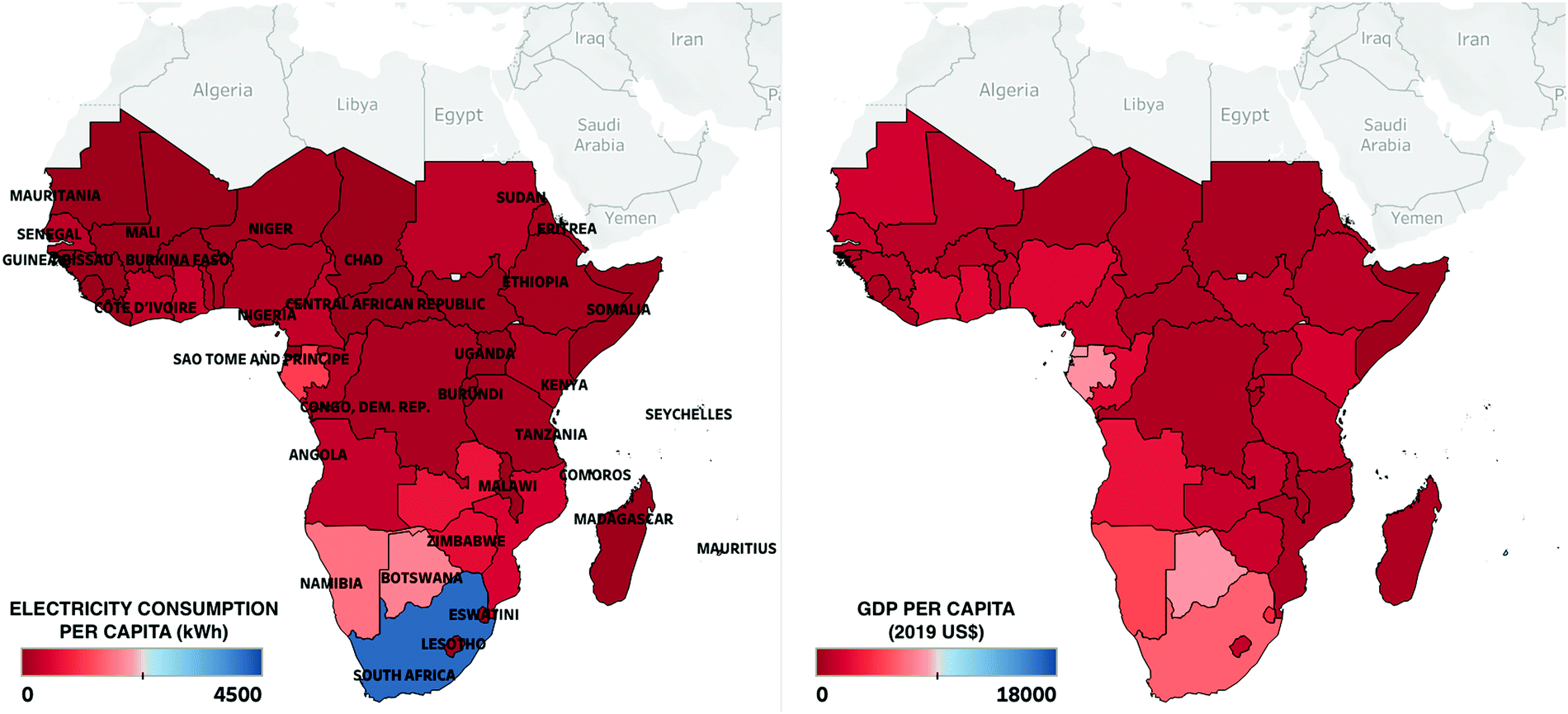
Exhibit 1: Per capita electricity consumption and gross domestic product (GDP) of sub-Saharan African countries
Source: Daggash & Dowell (2021)
Antithetical Behaviour and Carbon Emission Reduction Commitment
Following an examination of several experts’ and public affairs’ positions, as well as the government’s coal power plant projects in some states, our analyst concludes that the government’s and other stakeholders’ actions are incompatible with the country’s commitment to mitigating climate change effects. It also goes against a number of policy measures, goals, and objectives outlined in various strategic policy instruments or plans, such as the National Climate Change Plan and National Climate Change Adaptation Communication Plan recently submitted to important global climate change bodies.
Nigeria pledges in its Intended Nationally Determined Contributions to the Paris Agreement to devote resources to renewable energy in order to achieve an unconditional reduction of 20% of economy-wide GHG emissions compared to the baseline scenario, and a conditional reduction of 45 percent if sufficient international support is provided.
Ending gas flaring by 2030; generating off-grid solar PV of 13 GW (13,000 MW); increasing energy efficiency by 2% annually, resulting in 30% efficiency by 2030; increasing the use of public transportation such as buses, trains, and light rail; increasing the capacity and efficiency of the electricity grid; and promoting the use of climate-smart technologies are among the key measures for achieving Nigeria’s emission reduction commitment. As a result, the NDCs target important carbon-intensive economic sectors like oil and gas, energy, transportation, agriculture, and land use and transportation. The estimated cost of implementing the NDC’s mitigation and adaptation actions is $142 billion, with a projected national benefit of $142 billion, while the estimated national benefit for implementing these measures is roughly $304 billion.
It is, however, surprising that by 2037, the federal government wants to add six new coal-fired power facilities to the 23 now in operation. It also wants to add nine gas plants, bringing the total number of power plants on line to 15 by 2037. Though, our analysis of the project registry of the country’s NDCs reveals that 61.7% of 695 projects were planned and being implemented and would also be executed with the intent of creating access to solar electricity. Over 13% of the projects were also found to be on creating access to water through solar electricity, while 8.6% and 1.7% focus on enabling accessing to electricity through hydropower plant and gas to energy respectively.
Though our analyst does not directly examine the link between coal plant operation and carbon emissions generated between 2016 and 2020, a direct examination of the country’s urbanisation growth rate over that time period shows a 29.8% increase in carbon emissions generated. The urbanisation growth rate was responsible for over 75% of carbon emissions from gas, 62.2 percent from flaring, 84.9 percent from oil, and 2.1 percent from cement.
What is Better for Mitigating Carbon Emissions from Nigeria’s Energy Sector?
According to the emerging insights, the Nigerian government must concentrate on creating a stable and supportive policy environment, as well as a balanced commitment to the implementation of acceptable initiatives. In light of various studies and expert opinions, which indicate that hydropower, renewable energy, and solar power plants have a greater potential to reduce GHG emissions than coal power plants, our analyst recommends that concerned stakeholders should explore available resources that could assist in generating electricity for current users without jeopardising their health or the ability of future generations to use the same electricity.
Concerned stakeholders really need to listen to the voice of the International Hydropower Associations (IHA), which reveals that “more than 4 billion metric tonnes [estimates] of additional greenhouse gases would be emitted annually, and global emissions from fossil fuels and industry would be at least 10 per cent higher.”
The Innoson Vehicles Manufacturers (IVM) vs Guaranty Trust Bank (GTB) legal tussle has taken a new turn following the decision of the supreme court of Nigeria to revisit the case.
The Supreme Court in a fresh ruling has overturned its previous decision which dismissed an appeal by GTB (now a subsidiary of Guaranty Trust Holdings Company plc, GTCO). A Federal High Court in Ibadan had awarded N2.4 billion (700,000,000 plus accrued 22% interest per annum until the final liquidation) in favor of Innoson against the Nigerian Custom Service in 2010, ordering the bank to release NCS’ fund in its care to Innoson by way of garnishee order.
A garnishee order is one of the options open to a judgment creditor to enforce a judgment made in its favor.
GTB did not accept the judgment and appealed. Consequently, on February 27, 2019, in a judgment marked SC/694/2014, the Supreme Court, however, dismissed GTB’s appeal and affirmed the judgment of the Federal High Court. And again, the bank filed an application seeking the re-listing of the appeal on the grounds that it was wrongly dismissed.
In the new turn of events, a five-member panel led by Justice Olukayode Ariwoola, on Friday, delivered a unanimous judgment which admitted that the Supreme Court erred its ruling that dismissed GTB’s appeal.
In the lead judgment written by Tijani Abubakar but read by Abdu Aboki, the court held that it was misled by its registry, who failed to promptly bring to the notice of the panel that sat on the case on February 27, 2019, that GTB had already filed its appellant’s brief of argument.
The Supreme Court stated that if the panel hearing the case on February 27, 2019, had been informed of the availability of the appellant’s brief of argument, the judgment would not have been issued.
Relying on Order 8 Rules 16 of the Supreme Court Rules, the apex court held that it has the power to set aside its decision in certain circumstances, like any other court. The Court cited circumstances that may warrant reversing its decision, including when the parties obtained judgment by fraud, default or deceit; where such a decision is a nullity or where it is obvious that the court was misled into giving a decision.
Thus, Justice Tijani held that the circumstances of the GTB case fall into the category of the rare cases where the Supreme Court could amend or alter its own order on the grounds that the said order or judgment did not present what it intended to record.
“I am convinced that at the material time that the appellant’s appeal was inadvertently dismissed by this court, there was in place, a valid and subsisting brief of argument filed by the applicant.
“It will be unjust to visit the sin of the court’s Registry on an innocent, vigilant, proactive and diligent litigant.
“It is obvious from the material before us, that there were errors committed by the Registry of this court, having failed to bring to the notice of the panel of Justices that sat in chambers on the 27th February 2019 that the appellant had indeed filed its brief of argument.
“This is a case deserving of positive consideration by this court.
“Having gone through all the materials in this application, therefore, I am satisfied that the appellant/applicant’s brief of argument was filed before the order of this court made on the 27th of February 2019 dismissing the applicant’s appeal.
“The order dismissing the appeal was therefore made in error. It ought not to have been made if all materials were disclosed. The application is, therefore, meritorious and hereby succeeds,” Justice Tijani said.
Therefore, the court set aside its previous ruling and ordered that the appeal marked: SC/694/2014 “be relisted to constitute an integral part of the business of this court until its hearing and determination on the merit.”
The Innoson Vs Nigerian Custom Service and GTB legal saga has lingered for over a decade. This new development means it may take many more years to reach conclusion. And with 22% yearly accrued interest tied to the litigation, which has now surpassed N32 billion, the prolongation of the case may cause the bank more financial harm.
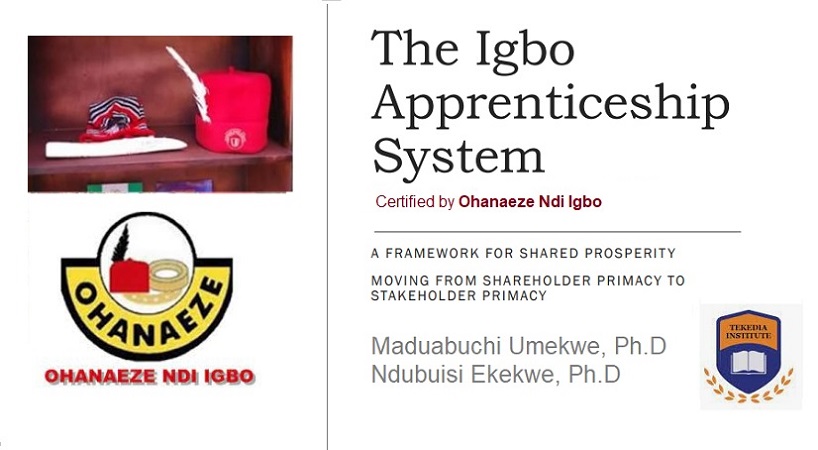
Good People, Tekedia Institute has submitted the Igbo Apprenticeship System course to the custodians of Igbo Culture, the venerable Ohanaeze Ndi Igbo, for certification. After the article in Harvard and interests from around the world, Dr Maduabuchi Pascal Umekwe, PhD, PMP and my humble self got into action to create a course to educate, train and prepare people on this framework which posits stakeholder capitalism over just shareholder primacy.
But tradition demands that we follow procedures. Yes, for everything we think we know, there are custodians who know better. So, we want the blessing of Ohanaeze to make sure that we get it right. I have spoken with leaders of the Igbo Nation including the Worldwide Sec General of Ohanaeze.
Once Ohanaeze Ndi Igbo has finished its work, we will open up the course. It will run for 8 weeks with business cases, manuals, pre-recorded videos and live sessions. The Japanese have Kaizen. China Confucius. Africa has Ubuntu and Igbo Apprenticeship System.
The Igbo Apprenticeship System is a business philosophy of shared prosperity where participants co-opetitively participate to attain organic economic equilibrium where accumulated market leverageable factors are constantly weighted and calibrated out, via dilution and surrendering of market share, enabling social resilience and formation of livable clusters, engineered by major participants funding their competitors, with success measured on quantifiable support to stakeholders, and not by absolute market dominance.
Being an entrepreneur is difficult because it requires one to pave their own way. Therefore, an entrepreneur does not need one skill but should be a master of skills to ensure that the start-up that they are working on does great. An entrepreneur can first master the skills and then proceed with the start-ups or can pick up the skills required throughout their entrepreneurial journey. The latter is inevitable because new challenges will teach new lessons to an entrepreneur throughout their entrepreneurial journey. Here are 10 must-have skills for an entrepreneur.
1. Problem-solving skills
An entrepreneur starts a start-up with the aim to solve a problem. Therefore, problem-solving skills are a must for an entrepreneur. Not only an entrepreneur but also someone appearing for the Sarkari Exam should be equipped with problem-solving skills. Different problems require different tactics and therefore, it is a good idea to go through different case studies to know how to solve a problem.
2. Networking skills
Working with a start-up requires networking skills. For instance, if you want to start a business, you will need guidance for the same. With the help of networking skills, you can find a mentor who has already worked on your niche. Networking skills can also help you in preparing for an interview after a Sarkari Result. This skill will help you not only to start a business but also in growing the business.
3. Communication skills
Communication skills and networking skills go hand in hand. Communication skills are very handy when one needs to pitch their business to investors or communicate with the audience. With great communication skills, one can ensure that they are able to communicate their vision well with the masses and hence, gain confidence for their business.
4. Money management skills
The ultimate aim of any business is to make money and therefore, money management skill is a must-have skill for any entrepreneur. Cash flow, how accessible the money is and what to do with the profit is something that an entrepreneur should know to avoid the problem of financial crunch in the future. Money management skills also come in handy when one needs to cut costs and make difficult decisions.
5. Team management skills
To build a successful business, it is important that an entrepreneur has a good team with talented people and people filled with motivation to work towards the vision of the business. However, it is crucial to realize that the vision of your business matters to the founder of the company the most and therefore, he/she has a task in hand to ensure that the team members are also motivated to work for the business and stay aligned with the vision of the company.
6. Sales skill
Starting any business means that one has to sell something, it can either be products or services, but the bottom line is that sales skill is important to ensure that a business is running. Not everyone is equipped with the skill to sell because it requires the strength to convince people to buy their products and services and this is something that an entrepreneur should learn.
7. Concentration power
Intense concentration is required to start a business and solve the problems that a business may encounter. Getting distracted with tiny notifications on the phone is never an option for an entrepreneur. Also, the ability to concentrate hard allows one to think clearly which is extremely helpful for business scenarios.
8. Learning ability
Learning ability is a skill that everyone should possess. The ability to learn, to be curious, empower one with knowledge. The best part is that the learning ability of a person is not only helpful in professional life but in managing all aspects of life. Whenever encountered with a tough situation, it’s a good strategy to check what exactly you can learn from it.
9. Leadership skills
Even if an entrepreneur is facing a situation where is doubting the business, an entrepreneur cannot show it to the team members. All that an entrepreneur can do is work towards the problem and inspire others to do the same and that is what leadership skill is about. Leadership skill is all about ensuring that everyone around them is motivated.
10. Stress management skills
The life of an entrepreneur is not easy. Even though there are wins in the journey, it is filled with many setbacks. The setbacks are sometimes enough to impact the mental and emotional state of an entrepreneur and in such a scenario, one needs to know how to manage the stress to stay strong and focus on the problem instead of engaging in self-pity.
A combination of all these ten skills will help an entrepreneur to succeed in their entrepreneurial journey and create a name in the start-up ecosystem.