DD
MM
YYYY

PAGES

DD
MM
YYYY

spot_img

PAGES

Home Blog Page 5382

Meta Hit With $3.1bn Class Action Lawsuit for Misuse of UK Facebookers’ Private Data

0

The whirlwind of antitrust misfortune continues to hunt Meta with more lawsuits hitting the social media conglomerate in both the U.S. and Europe.

Facebook has been caught in many antitrust allegations involving anticompetition and misuse of private data, prompting investigations and lawsuits by watchdogs and consumers.

In the latest episodes, Meta is facing a £2.3bn ($3.1 billion) class action lawsuit that claims 44 million Facebook users in the UK had their data exploited after signing up to the social network.

The lawsuit was brought by legal expert Dr Liza Lovdahl Gormsen, on the argument that Meta has broken the 1998 Competition Act, which provides a framework for identifying and dealing with restrictive business practices and abuse of a dominant market position.

According to the argument, Meta set an “unfair price” for Facebook’s UK users when they are given access to the service. Lovdahl Gormsen argues that although Facebook doesn’t charge users to sign up, they pay for using the platform with the personal data they generate during use, which the company uses for profit.

“They are exploiting users by taking their personal data without properly compensating them for taking that data,” said Lovdahl Gormsen, who added that Facebook had a “completely disproportionate” relationship with its users. “I don’t think the users are entirely clear when they click on the terms and conditions how unfair that deal is.”

Meta generates 98% of its revenue selling targeted ads. To reach the right demographics and consumers, the company harvest users’ data by monitoring their online activity. This means, Meta has enough of every of its users private information and uses it for income.

The misuse of private data by tech companies has become a global concern and Facebook has been at the center of it. In early 2018, Facebook and political data analytics firm, Cambridge Analytica, were implicated in a massive data breach. Personal data of more than 87 million Facebook users was improperly obtained by Cambridge Analytica, drawing one of the biggest antitrust fines in history. The FTC slapped Facebook with a $5 billion fine for misuse of private data.

Since then, both regulator and class action lawsuits against Meta over misuse of private data have accelerated.

On Tuesday, a U.S. federal judge ruled that the FTC, who has been seeking a legal backing to break up Meta, should proceed with its lawsuit against the social media giant. The US competition watchdog had filed a lawsuit seeking to force Meta to sell Instagram and WhatsApp, arguing that the company has been on an “anticompetitive shopping spree”, buying rival companies to “maintain its monopoly.”

Per The Guardian, Lovdahl Gormsen, a competition law specialist at the British Institute of International and Comparative Law, is bringing the class action at the Competition Appeal Tribunal in London as an opt-out case. This means Facebook users covered by it do not need to actively join the case to receive damages and will be part of the claim unless they decide to opt out from it.

The period under question is from October 1 2015 to December 31 2019. The Guardian reports that the £2.3bn compensation number cited by the cases’ backers represents an estimate of the damage caused to users, and the judge will determine how Facebook users involved will be settled, if the plaintiffs win.

The lawsuit is being funded by Innsworth, a firm that pays for litigation in exchange for a share of any damages, and Lovdahl Gormsen is being represented by Quinn Emanuel Urquhart & Sullivan law firm, the report said.

Meta has been notified of the claim, which will be heard by a judge at the tribunal, by Lovdhal Gormsen’s lawyers. The judge will then decide whether the case should go ahead. The case is expected to take between 6 and 12 months if the judge rules that it should proceed.

Responding to the lawsuit, a Meta spokesperson said: “People access our service for free. They choose our services because we deliver value for them and they have meaningful control of what information they share on Meta’s platforms and with. We have invested heavily to create tools that allow them to do so.”


Tekedia Mini-MBA Congratulates Dr. Temitope Farombi MD and OHealth for the Recognition

0

Congratulations Dr Temitope Farombi MD,  CEO of Online Health Company (Ohealth) for this recognition. Your testimonial after your Tekedia Institute Mini-MBA program brought many medical doctors to the Institute. We want to thank you for your support and joyfully celebrate this recognition with the whole team. Continue to innovate to fix market frictions. We love having doctors here and it was a great moment co-learning with dozens from Lily Hospitals .

Social Payment App, Byte, Continues to Grow

0

They just sent a note: we’ve hit the milestone well ahead of time. Byte, a social payment is making payment social, beginning with Nigeria. With Byte, you can use an email, phone number, or byte tag to pay people directly from your bank account or credit card.

KHALID ISMAIL and the team have a new target on transaction volume, user growth, etc for this quarter. And I ask you to download their app here  and visit their website https://www.mybyte.app/ to help them meet the numbers.

At Tekedia Capital, we make friends with innovators.

Exceptions to the rule that a law enforcement agent must first obtain a warrant before carrying out a search or an arrest.

0

Exceptions to the rule that a law enforcement agent must first obtain a warrant before conducting a search or an arrest. 

As it is the case that in every general rule there must be an exception. There are also exceptions to the fact that a law enforcement officer cannot legally search or arrest you without a search or an arrest warrant but these can only come into play on some peculiar occasions.

Recall that in one of our previous posts, we wrote that a law enforcement agent in the execution of his statutory duties of search and arrest must be conscious of the fact that citizens have rights to privacy and dignity of human person as provided in the constitution, hence the reason the police officer must first obtain a warrant from a court of competent jurisdiction  before breaking into the home of a citizen to carry out a search or carrying out an arrest, if not such search or arrest conducted will be deemed illegal and void. 

But there are exceptions to this rule as we earlier highlighted. We will be discussing some of these exceptions here:

A police officer can arrest or conduct a search on an individual when the officer has every reason to believe that such individual has committed a crime or broken a law and the law creating such offense does not prohibit a search or arrest without warrant.

Secondly, a police officer or other law enforcement agents can search and arrest an individual if that individual commits a crime or breaks a law in the presence of the law enforcement agent.

Moreso, a police officer or other law enforcement agents can arrest a person without a warrant if that person obstructs the law enforcement agent from carrying out his duty.

Law enforcement agents can also arrest an individual without a warrant if that individual escapes or attempts to escape from lawful custody.

A law enforcement agent can arrest or conduct a search on a person if the person who is reasonably believed to have stolen an item is still in possession of the item he’s accused of stealing.

A law enforcement agent can also arrest an individual without a warrant when the person is suspected to be a deserter of the Nigerian armed forces or a “run away soldier”.

Finally, law enforcement agents can also arrest an individual without a warrant when a person is reasonably suspected to be concealing himself in order to commit a crime or when a person is reasonably suspected to be planning to commit a crime.

These are some of the peculiar situations where a law enforcement agent can arrest an individual or conduct a search on an individual without an arrest warrant or a search warrant and the arrest made or search conducted will still be legal.

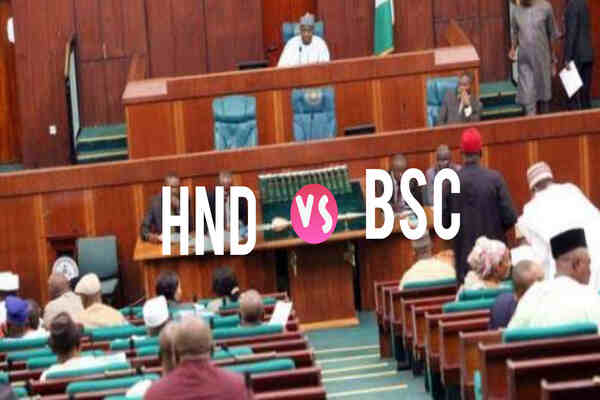
Revisiting The Proposed Scrap of HND Certificates In Nigeria

0

Recently, the President Muhammadu Buhari-led Federal Government (FG) abruptly introduced a new policy in Nigeria’s education sector.

The decision, which was unanimously reached at the Federal Executive Council (FEC) meeting held on Wednesday, 6th June 2018 where the approval of a comprehensive reform of the country’s tertiary education system was made, had it that the ongoing Higher National Diploma (HND) certificate invariably awarded by the Polytechnics would no longer be valid.

The resolution disclosed that the HND honour would, from date, be bestowed on only the students that had already been admitted for the programme in the country’s various polytechnics. Hence, the affected institutions would henceforth be limited to award of the National Diploma (ND).

Under the policy, the polytechnics would now become campuses of the proximate universities whereby the Vice-Chancellors (VCs) would be eligible to appoint the Provosts for their respective affiliate Polytechnics, subject to the ratification of the universities’ councils. In view of this, the students who are desirous of further education would be awarded a Bachelor of Technology (B.Tech) degree by the concerned proximate university.

In addition, all the programmes being run by polytechnics that aren’t technology-based or technically-inclined, which constitute over 70 per cent of the overall programmes currently offered by the institutions, would outrightly be scrapped by the mandate of the new policy.

The FEC further directed that to kick-start the policy, the nation’s two most prominent polytechnics – the Yaba College of Technology and Kaduna Polytechnic – would henceforth be known and addressed as City University of Technology, Yaba and City University of Technology, Kaduna, respectively.

With education being on the concurrent list, the states are enjoined to follow suit. And to give legal backing to the resolutions, the FEC approved the submission of two Executive Bills to the National Assembly (NASS) through the Attorney General of the Federation for onward enactment.

The first bill would concretize the setting-up of the two named city universities while the second one would approve the preparation and consolidation of all federal polytechnics as well as colleges of education as campuses of their proximate universities.

The Minister of Education, Mr. Adamu Adamu while briefing newsmen immediately after the meeting, further highlighted that “the HND certificate will remain a legal tender in Nigeria and holders of such certificate will continue to be recognized as the equivalent of first degree holders without discriminatory remunerations and limit to progression in the work place”. Similarly, the boss stated “the NCE certificate will be retained as the minimum teaching qualification at the basic level of education”.

When I received the entire content of the new policy, I didn’t cease to be worried owing to various pertinent factors that might in the long run pose a barrier to the progress of the policy, thereby bedevilling Nigeria’s education sector as well as the country’s labour market and the existing work places.

As at then, I stated that to aptly address – or better still avoid – the foreseen anomaly, the bill to be sent to the NASS must be well detailed and all-inclusive devout of any clause that may ensue a crisis in the future. Hence, all parties involved were meant to consider the interest of the country at large as priority.

First, I saw no reason granting the VCs of the proximate universities the immunity to appoint the heads (provosts) of their affiliated tertiary institutions. Rather, the emergence of such leaders ought to be strictly via election among the interested and qualified candidates who must be academic staff of the affected polytechnic or college of education, as may be the case.

Secondly, there was no need to rename the various polytechnics to ‘City University of Technology’ since they would all be recognized as campuses of their proximate universities. Rebranding them as city universities simply implies that there’s no further need to place them as affiliate institutions.

Thirdly, to introduce uniformity, the bill in question was expected to mandate all the state governments to key into the policy towards avoiding any conflicting situation. It would be abnormal for the federal polytechnics to stop awarding HND to their students whilst those of the states would continue to do so.

Inter alia, it was equally advised by me that, for the policy to be fully appreciated and adored, it would be ideal and wise to totally abolish the recognition and existence of the HND qualification in Nigeria.

This can be achieved by directing those who had already been honoured with the certificate to return to their respective alma-maters with a view to undergoing a one/two-year programme that would make them qualified to receive the B.Tech degree certificate.

The above suggestion was highly consequential because as the policy progresses, the labour market or employers of labour would be forced to abhor the HND certificate or see it as a worthless qualification. The HND has hitherto been discriminated against, let alone when the country’s polytechnics are prohibited from awarding it.

Meanwhile, four years down the line, absolutely nothing has been heard about the way forward of the said policy and no one is even talking about it. It suffices to say that the people are currently kept in the dark regarding the proposed law.

The honourable minister had in his speech stated that holders of such certificates would “continue” to be recognized as the equivalent of first degree holders as if the HND holders had ever in Nigeria been treated as equal to their university counterparts.